Published on:
 Modified on:

 Reading Time: 5 min
 Beard transplant
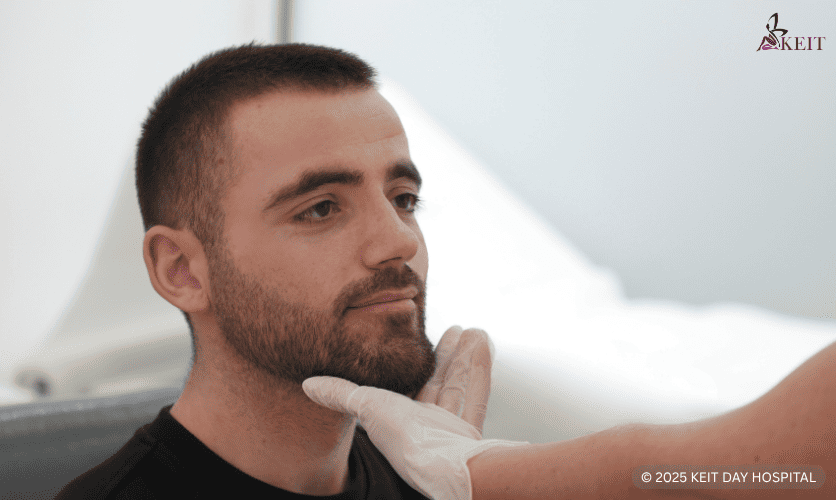
A beard transplant moves healthy hair follicles from a donor area, usually the back of the head, to the face to build a fuller and natural-looking beard. Using Micro FUE or DHI techniques, it’s a minimally invasive procedure that delivers permanent results that grow like real facial hair.
 Table of Contents:
-
1
 What is a beard transplant?
-
2
Who is suitable for a beard hair transplant?
-
3
Main techniques explained: Micro FUE and DHI beard transplant
-
4
How a beard transplant works step-by-step
-
5
How many grafts are needed for a full beard?
-
6
Beard transplant before and after: Setting real expectations
-
7
Beard transplant gone wrong? Possible risks and safety tips
-
8
Beard transplant cost: How much will you pay in the UK?
In this article, you’ll find everything you need to know about beard transplant, from how the procedure works to what kind of results you can expect. We’ll explain who is a suitable candidate and how the two main techniques Micro FUE and DHI differ. You’ll also learn how many grafts are needed for a full beard hair transplant and realistic beard transplant before and after results. Finally, we’ll cover potential risks and safety tips, the average UK cost to help you make an informed decision.
What is a beard transplant?
A beard transplant is a minor surgical procedure designed to restore or thicken facial hair. It involves taking hair follicles from the scalp, usually the back or sides of the head and implanting them into the beard area. The goal is to fill patchy or uneven zones and create a denser, natural-looking beard. Because the transplanted follicles come from your own scalp, the new beard hair grows permanently and can be trimmed, shaved, or styled like natural hair.
For more guidance, visit the International Society of Hair Restoration Surgery (ISHRS) for expert insights on beard transplants.
Who is suitable for a beard hair transplant?
This treatment suits men who have uneven beard growth, thin or bald patches, or scars that prevent facial hair from growing evenly. Candidates need to have healthy donor hair and realistic expectations about the result. It’s not recommended for those with active skin conditions, poor donor density, or expectations of instant fullness. A proper medical consultation is essential to evaluate suitability and determine how many grafts are needed.
Main techniques explained: Micro FUE and DHI beard transplant
A beard transplant is mainly performed using two advanced techniques: Micro FUE (Follicular Unit Extraction) and DHI (Direct Hair Implantation), which are both minimally invasive and permanent but differ in how the grafts are handled and implanted.
Micro FUE beard transplant
Micro FUE is the most established and widely used beard restoration method. It involves extracting individual hair follicles from the donor area, usually the back or sides of the scalp, using a micro-punch less than 1 mm wide. Each graft is preserved in a sterile solution and then implanted manually into tiny incisions made in the beard area, following the natural direction and density of facial hair. The technique allows precise control over angle, depth and spacing, achieves natural coverage without visible scarring and offers faster recovery compared to older strip methods.
DHI beard transplant
DHI (Direct Hair Implantation) is an advanced technique that uses a Choi implanter pen to open channels and place grafts simultaneously. Follicles are implanted right after extraction, reducing time outside the body and improving survival. This method gives precise control over angle and depth, ideal for detailed areas like the moustache or jawline. DHI provides dense, natural results with less trauma and quicker recovery, though it’s slightly more expensive and less widely available in UK clinics.
Book your FREE
Online Consultation Now

How a beard transplant works step-by-step
The procedure is carried out through a structured series of steps that ensure precision, safety and natural results.
- The journey begins with a consultation, where the surgeon assesses your facial hair pattern, donor hair quality and desired beard shape to determine the number of grafts and best technique Micro FUE or DHI.
- During preparation, local anaesthesia is applied to both donor and recipient areas. The scalp is trimmed if needed, cleaned and marked for extraction, while the beard area is mapped for placement.
- Next comes extraction, where individual follicles are removed from the donor zone using fine instruments to avoid visible scarring. The grafts are then sorted, cooled and prepared for implantation.
- During implantation, the surgeon positions each follicle at the correct angle and density for a natural look. In Micro FUE, tiny channels are created before placement, while in DHI, grafts are implanted directly with an implanter pen.
- After surgery, mild redness or crusts are normal. Patients usually return to light work within a few days.
How many grafts are needed for a full beard?
The number of grafts needed for a beard transplant depends on your beard style, face shape, and donor hair density. A moustache typically requires 300–600 grafts, a goatee about 600–800 and the cheeks or sideburns around 800–1,100. For a full beard, most patients need between 2,000 and 3,000 grafts to achieve balanced coverage. The exact count is determined during consultation, based on donor quality and desired density, ensuring even distribution and a natural, long-lasting result.
Beard transplant before and after: Setting real expectations
The transformation after a beard transplant happens gradually, with visible changes in each phase of recovery.
- Immediately after surgery: Mild redness, small scabs and slight swelling. The donor area shows tiny extraction marks.
- 1 week after: Crusts begin to fall naturally, redness fades and the skin starts to return to normal.
- 3–6 months after: New hairs become visible, giving the beard fuller coverage and the donor site is fully healed.
- 9–12 months after: Final results achieved with dense, even growth. Transplanted hairs blend naturally and can be trimmed or styled like a normal beard.
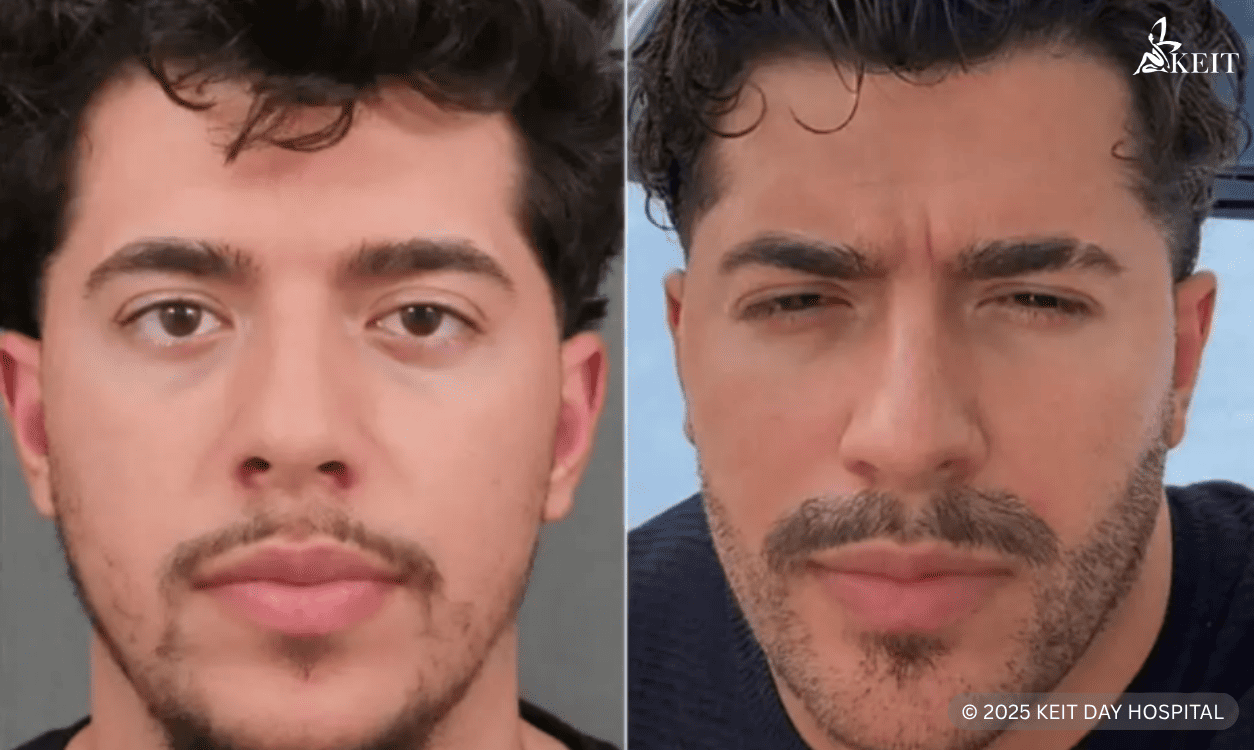
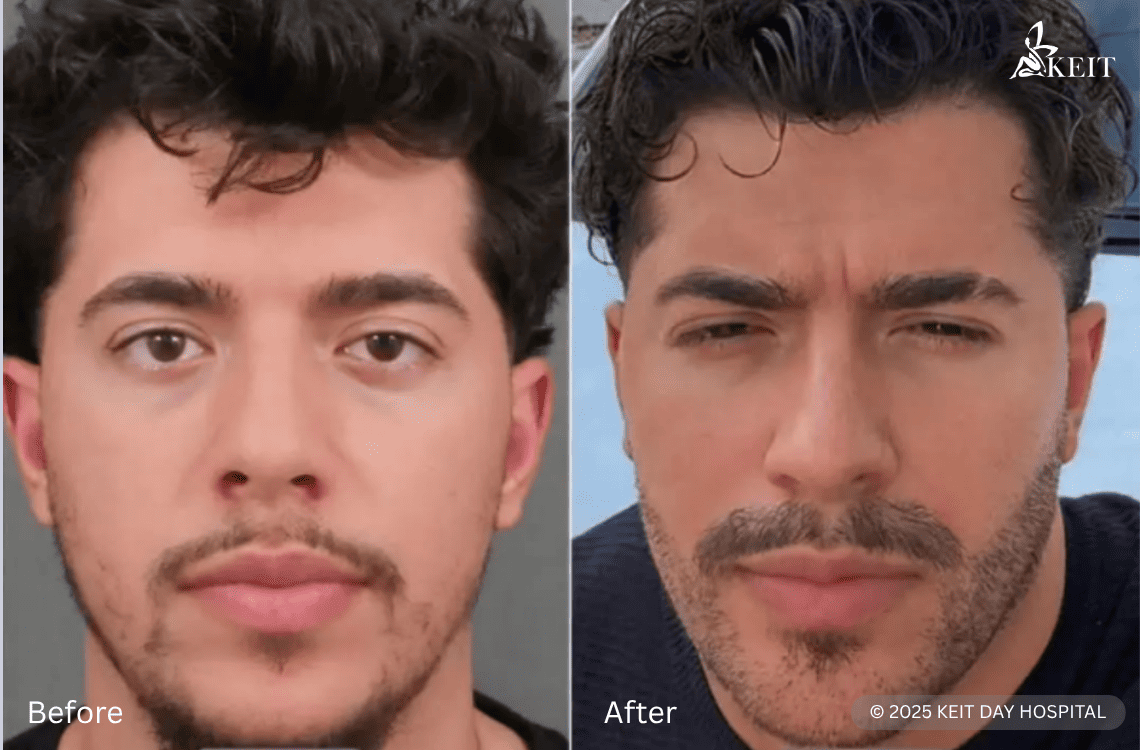
Viewing beard transplant before and after pictures helps set realistic expectations based on donor hair quality, graft count and technique used.
Beard transplant gone wrong? Possible risks and safety tips
Even though beard transplants are safe and minimally invasive, complications can occur if the procedure or aftercare is not properly managed.
- Common risks: Include mild redness, swelling, or discomfort that fades within a few days. Temporary numbness or tingling may also occur but resolves quickly.
- More serious risks: Include infection, patchy growth, or small donor scars. Ingrown hairs or delayed healing may appear if aftercare isn’t followed.
- Rare risks: Include low graft survival, prolonged numbness, or small cysts from trapped follicles. Allergic reactions to anaesthesia are extremely rare.
Always choose a qualified surgeon, follow your aftercare plan carefully and attend follow-up visits. Proper care reduces complications and ensures natural, lasting results.
Beard transplant cost: How much will you pay in the UK?
The beard hair transplant price depends on several factors, including the technique used, the number of grafts required and the experience of the surgeon. In the UK, the beard transplant price typically ranges from around 4,000 to 8,000 euro, depending on the clinic and treatment plan. Both Micro FUE and DHI techniques affect pricing, with DHI technique being higher due to its precision and advanced implantation method.