Published on:
 Modified on:

 Reading Time: 5 min
 Blepharoplasty
Non-surgical blepharoplasty is a category of aesthetic treatments designed to improve the appearance of the upper and lower eyelids without surgical incisions. It focuses on early signs of aging such as mild skin laxity, fine lines, crepey texture and a tired or heavy-looking eye area. Unlike surgical blepharoplasty, which removes excess skin or fat, non-surgical approaches work by tightening the skin, stimulating collagen or improving tissue quality. While results are more subtle, these treatments can offer visible refreshment of the eye area when used on carefully selected patients.
 Table of Contents:
-
1
 What is non-surgical blepharoplasty?
-
2
Types of non-surgical blepharoplasty techniques
-
3
Who is a suitable candidate for non-surgical blepharoplasty?
-
4
Contraindications: Who should avoid non-surgical blepharoplasty?
-
5
Non-surgical blepharoplasty: From consultation to treatment day
-
6
Non-surgical blepharoplasty before and after: Setting real expectations
-
7
Recovery, downtime and healing stages explained
-
8
Risks, side effects and safety considerations to be aware of
-
9
Non-surgical blepharoplasty cost in the UK: What to expect
In this article, we explain what non-surgical blepharoplasty is and why it’s used for early eyelid ageing, then break down how these treatments work and the main techniques available. We’ll cover who typically benefits, who should avoid treatment and what the consultation-to-treatment journey looks like. Finally, we outline realistic before and after expectations, recovery and downtime, key risks and safety points, plus what non-surgical blepharoplasty cost in the UK typically includes so you can make an informed decision.
What is non-surgical blepharoplasty?
Non-surgical blepharoplasty refers to non-invasive or minimally invasive procedures used to refresh the upper or lower eyelids without incisions. The goal is to improve skin tightness, texture and overall eye contour by encouraging tissue contraction or regeneration. These treatments do not remove large amounts of excess skin or fat but instead focus on skin quality and mild laxity.
Types of non-surgical blepharoplasty techniques
Non-surgical blepharoplasty is not a single procedure but a group of techniques that may be used alone or in combination, depending on the patient’s anatomy and concerns. Common options include:
- Plasma pen (fibroblast) / PLEXR: Creates controlled micro-injuries that tighten the skin surface and stimulate collagen.
- Radiofrequency (RF) / ultrasound tightening: Heats deeper layers to boost collagen and improve firmness gradually.
- Laser resurfacing: Improves texture and fine lines and can tighten mild laxity through collagen remodelling.
- Injectables (selected cases): Fillers restore volume in under-eye hollows, while Botox softens dynamic wrinkles and may create a subtle lifting effect.
- Skin boosters / regenerative injectables: Improve hydration and elasticity, particularly in crepey eyelid skin.
Each method has specific indications, benefits and limitations.
Who is a suitable candidate for non-surgical blepharoplasty?
Non-surgical blepharoplasty may be suitable for individuals who:
- Have mild to moderate eyelid skin laxity.
- Notice fine lines, crepey skin or early sagging.
- Want subtle improvement without surgery.
- Are not ready for surgical blepharoplasty.
- Have realistic expectations about outcomes.
It is most effective when skin laxity is mild and structural changes are limited.

Contraindications: Who should avoid non-surgical blepharoplasty?
Non-surgical blepharoplasty may not be appropriate for everyone. It is generally avoided or approached with caution in cases of:
- Significant excess eyelid skin or fat.
- Severe eyelid drooping affecting vision.
- Active skin infections or inflammatory conditions.
- Poor wound healing or certain autoimmune disorders.
- Pregnancy or breastfeeding (depending on technique).
A clinical assessment is essential to determine suitability.
Non-surgical blepharoplasty: From consultation to treatment day
A typical non-surgical blepharoplasty session is performed on an outpatient basis and follows a clear, step-by-step process focused on safety, precision and personalised results:
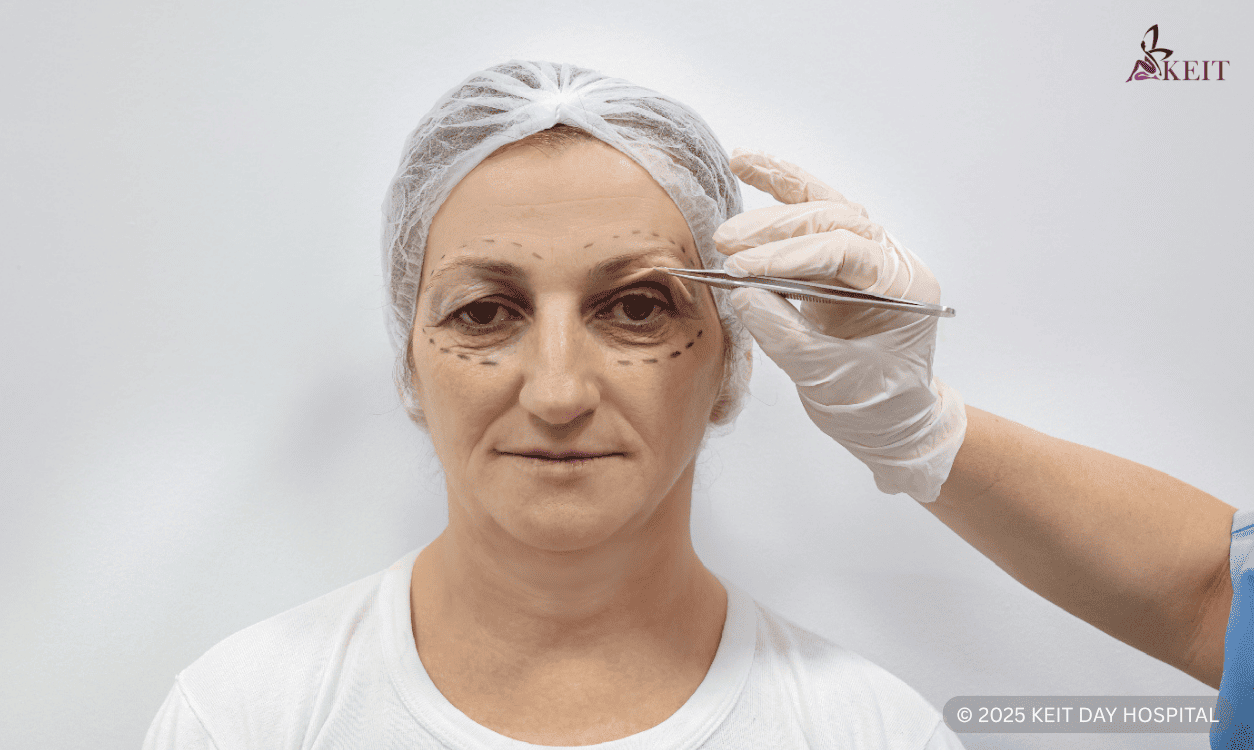
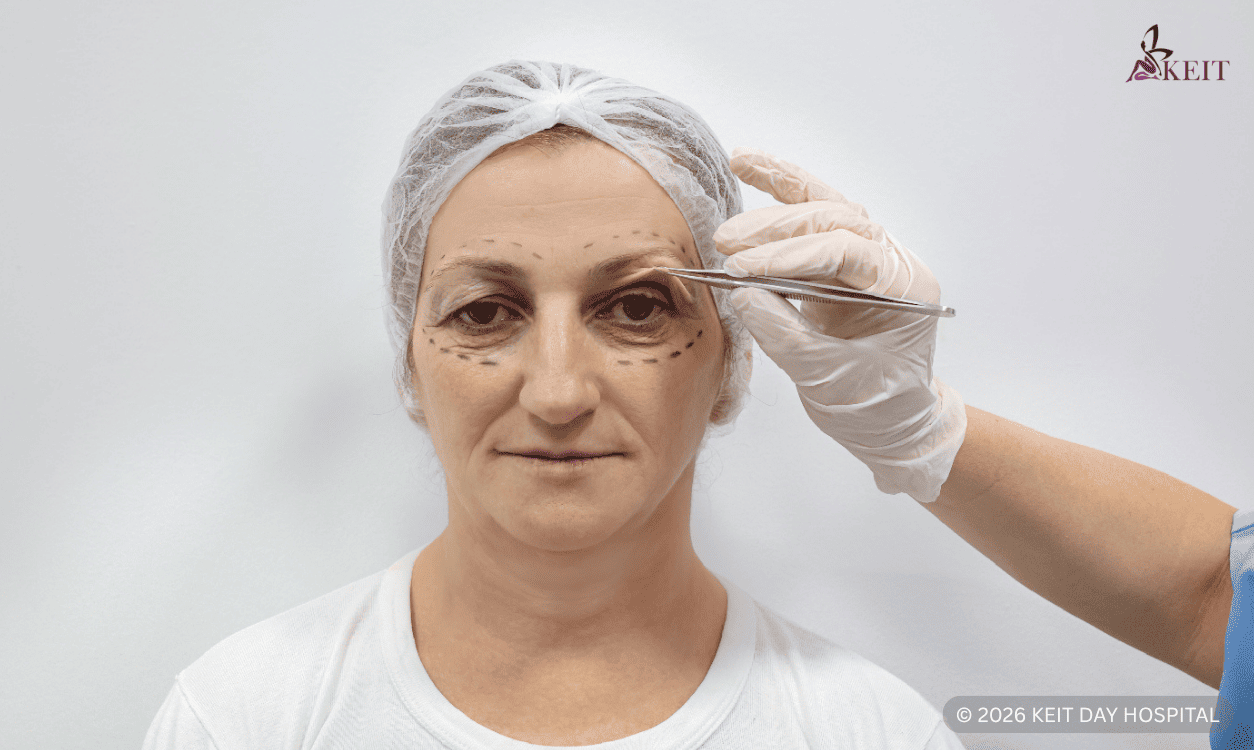
- Initial assessment: Your doctor evaluates eyelid laxity and sets the goal (tighten, improve texture, compact), then chooses the best technique.
- Preparation: The area is cleansed and a topical anaesthetic may be applied, depending on the method.
- Treatment: The procedure is performed precisely on the upper and/or lower lids in a controlled, targeted way.
- Sensation: You may feel warmth or a mild burning sensation, usually brief and manageable.
- Sessions needed: Varies by severity—mild often 1–2, moderate usually 2–3 or a combined plan.
Non-surgical blepharoplasty before and after: Setting real expectations
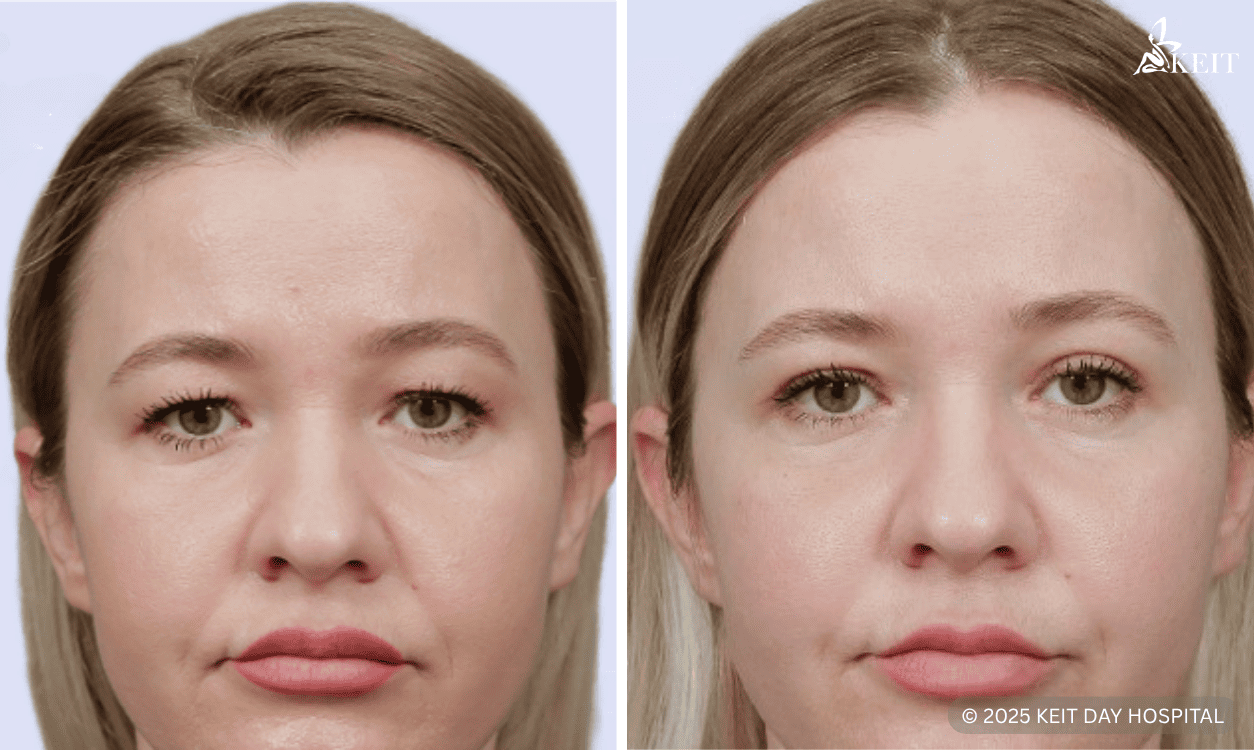
Before and after results from non-surgical blepharoplasty are typically subtle but visible, making the eyes look more rested rather than dramatically “lifted.” Most patients notice tighter eyelid skin, smoother texture and less crepiness, with a mild opening effect in selected cases. The best improvements are seen when the main issue is skin quality and mild laxity, not heavy excess skin or prominent fat pads. Results aren’t permanent and often last around 6–18 months, depending on the technique, skin quality and lifestyle, with maintenance treatments helping to extend them.
Recovery, downtime and healing stages explained
Recovery is usually short and depends on the technique used. Common healing stages include:
- Immediately after treatment: Redness, warmth, swelling and small surface marks may appear (more common with plasma/laser).
- First few days: Mild puffiness or tightness is common; the area can feel dry or sensitive, and makeup is often paused temporarily.
- 1–2 weeks: Skin heals and surface changes settle; any small crusting (if present) resolves naturally with correct aftercare.
- Weeks following: Collagen stimulation continues and results gradually improve as the skin remodels.
UV exposure can worsen irritation and increase pigmentation risk, so SPF and avoidance are key during healing. Most patients return to daily activities quickly, but downtime can be longer with more intensive plasma or laser settings.
Risks, side effects and safety considerations to be aware of
When performed by experienced and appropriately trained professionals, non-surgical blepharoplasty is considered a safe and well-tolerated treatment. As with any aesthetic procedure, potential risks may occur:
- Common side effects: Temporary redness, swelling, mild bruising, tightness, dryness or sensitivity of the eyelid skin.
- Procedure-related risks: Temporary texture changes (such as flaking or small surface marks), mild inflammation, uneven tightening or short-term pigment changes, particularly if aftercare instructions are not followed.
- Rare complications: Infection, prolonged healing, scarring, significant pigmentation changes or noticeable asymmetry that may require medical evaluation.
Non-surgical blepharoplasty cost in the UK: What to expect
The cost of non-surgical blepharoplasty in the UK varies based on:
- The technique used (plasma/PLEXR, RF/ultrasound, laser, injectables).
- Whether upper lids, lower lids or both are treated.
- Number of sessions required and treatment intensity.
- Practitioner expertise, clinic standards and location.
- Whether follow-up reviews or aftercare products are included in the plan.
Average UK prices typically range from 350 to 1,750 euro per session. Some treatments require multiple sessions, so the total cost is usually best judged as a full plan rather than a single appointment price.