Published on:

 Reading Time: 4 min
 Arm lift
Bat wings refer to loose skin and excess tissue hanging from the underside of the upper arms, commonly caused by ageing, significant weight loss, or reduced skin elasticity. Treatment options depend on the severity and may include lifestyle changes, non-surgical treatments, or arm lift surgery to remove excess skin and improve arm contour.
 Table of Contents:
-
1
 What are bat wings?
-
2
What causes bat wings on the arms?
-
3
Can exercise remove bat wings?
-
4
How can bat wings be treated?
-
5
When is arm lift surgery recommended for bat wings?
-
6
How is arm lift surgery performed?
-
7
Arm lift before and after: recovery timeline and results
-
8
Risks and complications of arm lift surgery
In this article, we explain what bat wings are, why they develop, and the treatment options available to improve the appearance of the upper arms. We also discuss when arm lift surgery may be recommended, how the procedure is performed, expected recovery and results, and the possible risks and complications.
What are bat wings?
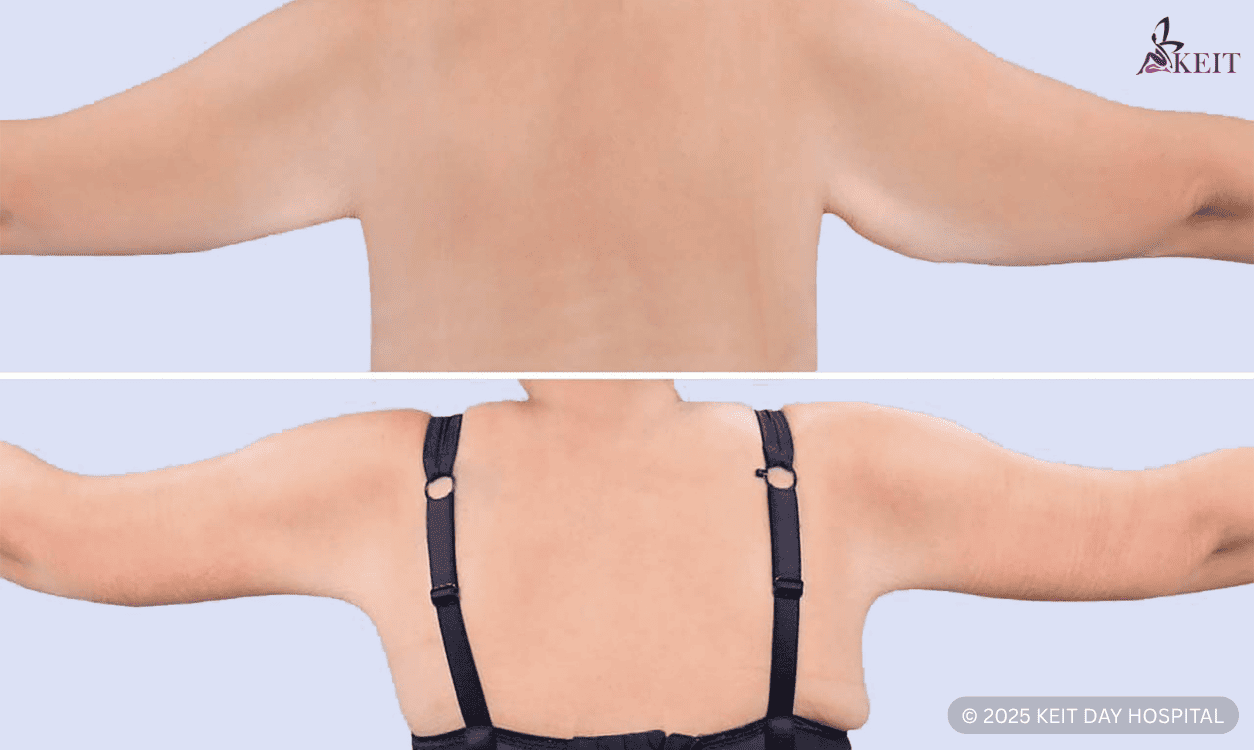
Bat wings refer to loose skin and excess tissue that hang from the underside of the upper arms, creating a less defined arm contour. The term is commonly used to describe sagging upper arm skin, also known as bingo wings or upper arm skin laxity. Bat wings can vary in severity, ranging from mild skin looseness to more significant excess tissue that affects the overall appearance of the arms.
What causes bat wings on the arms?
Bat wings develop when the skin and soft tissues of the upper arms lose elasticity, leading to excess skin and reduced arm definition. Common causes include:
- Ageing: Reduced collagen and elastin production can cause the skin to become thinner and less firm.
- Significant weight loss: Losing a large amount of weight can leave excess skin that does not retract fully.
- Genetics: Some individuals are more prone to reduced skin elasticity and upper arm skin laxity.
- Changes in body composition: Loss of muscle volume or changes in fat distribution can affect upper arm appearance.
Can exercise remove bat wings?
Exercise cannot remove bat wings caused by significant skin laxity, but it can improve arm muscle tone and overall definition. Strength training, particularly exercises targeting the triceps, may improve the appearance of the upper arms when reduced muscle tone is a contributing factor. However, exercise cannot tighten stretched skin or remove significant excess tissue caused by reduced skin elasticity or major weight loss.
How can bat wings be treated?
The treatment for bat wings depends on the severity of skin laxity and the amount of excess tissue present. Treatment options include:
- Lifestyle changes and exercise: Can improve muscle tone and overall arm appearance but cannot remove excess skin.
- Non-surgical treatments: Skin tightening procedures may provide improvement in mild cases where skin laxity is limited.
- Arm lift surgery: Removes excess skin and reshapes the upper arms when significant skin laxity is present.
For patients with significant skin laxity, surgical correction may provide a more effective and predictable improvement in arm shape.
When is arm lift surgery recommended for bat wings?
Arm lift surgery is recommended when significant skin laxity and excess tissue on the upper arms cannot be improved through exercise or non-surgical treatments. The procedure, also known as brachioplasty, may be considered for patients with excess skin after major weight loss, age-related skin laxity, or reduced upper arm definition. Arm lift surgery removes excess skin and reshapes the upper arm to create a smoother and more defined appearance.

How is arm lift surgery performed?
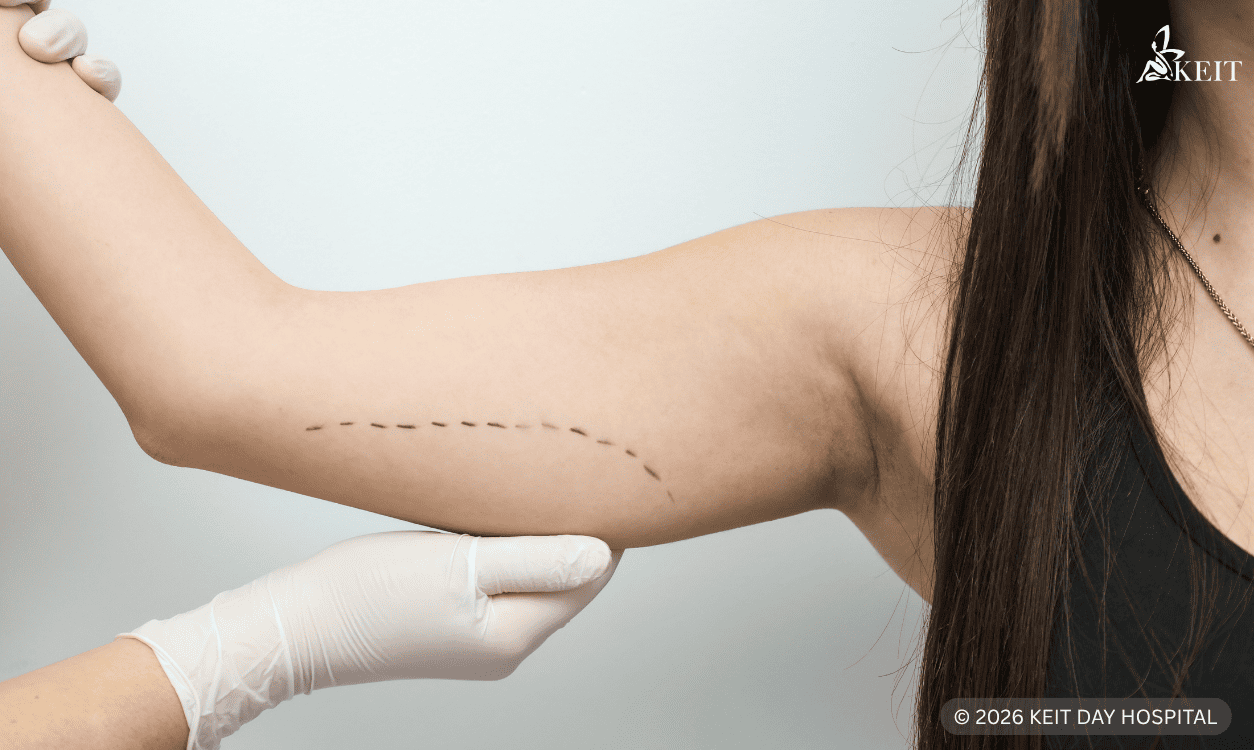
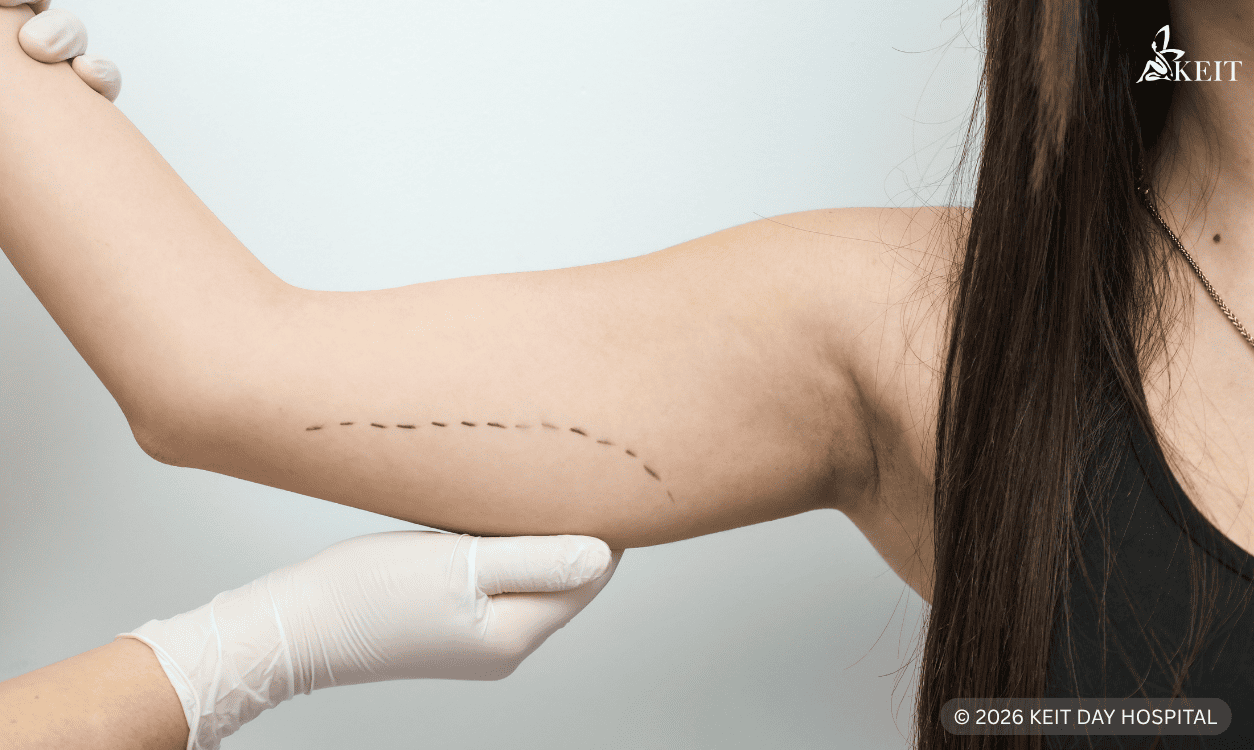
Arm lift surgery is performed under general anaesthesia and usually takes around 2–3 hours, depending on the amount of excess skin and the complexity of the correction required. The procedure involves making an incision along the inner or back of the upper arm, removing excess skin and tissue, and tightening the remaining tissues to improve arm shape. The incision is then closed with sutures, and dressings or compression garments may be applied to support healing.
Arm lift before and after: recovery timeline and results
Arm lift recovery usually takes around 6 weeks for initial healing, while final results become visible within 6–12 months as swelling reduces and tissues fully heal.
- First 1–2 weeks: Swelling, bruising, tightness, and discomfort are common. Compression garments are typically worn, and arm movement may be limited during early healing.
- Weeks 3–6: Most patients gradually resume normal daily activities, while strenuous exercise and heavy lifting should still be avoided.
- 3–6 months: Swelling continues to improve, the upper arm contour becomes more defined, and scars begin to mature.
- 6–12 months: Final results become visible as the tissues settle and scars continue to fade.
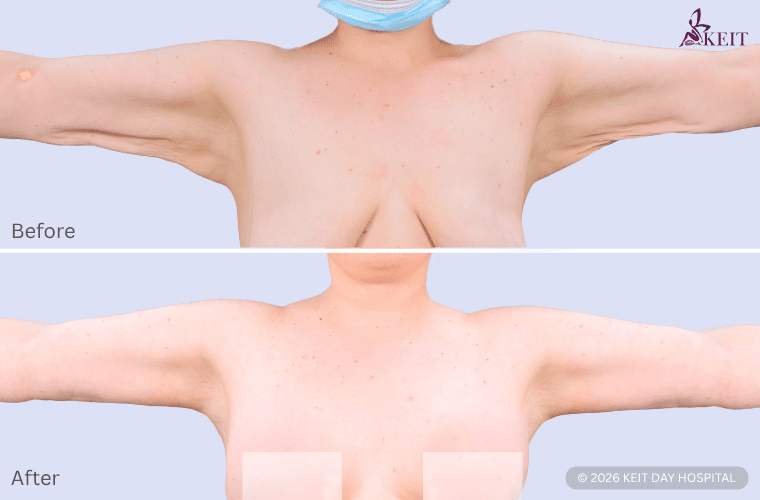
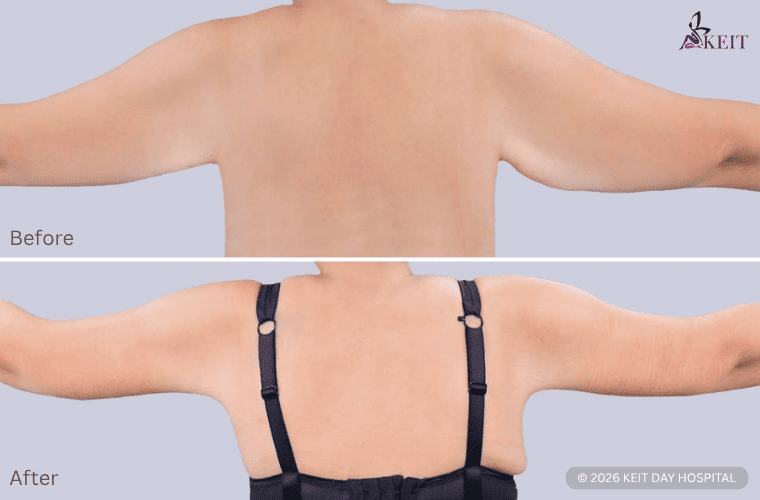
Arm lift before and after results show a reduction in excess skin, improved upper arm definition, and a smoother arm contour. The final outcome depends on factors such as skin quality, the amount of tissue removed, and individual healing.
Risks and complications of arm lift surgery
Arm lift surgery is generally safe when performed by an experienced surgeon, but like any surgical procedure, it carries potential risks and complications, which include:
- Scarring: Visible scars may remain along the incision sites but usually improve over time.
- Infection or delayed healing: Surgical wounds may require additional treatment if healing is affected.
- Bleeding or seroma: Fluid or blood collection may occur after surgery.
- Changes in sensation: Temporary or permanent changes in skin sensitivity may occur.
- Asymmetry or contour irregularities: Differences in healing may affect the final arm shape.