Published on:
 Modified on:

 Reading Time: 5 min

 Direct Brow lift
Brow ptosis is the downward displacement of the eyebrow from its normal position. It is most commonly associated with age-related changes in the skin and supporting tissues, but can also result from facial nerve dysfunction, trauma, muscle disorders or botulinum toxin treatment. Depending on its severity, brow ptosis may cause eyebrow asymmetry, upper-eyelid heaviness or visual field obstruction.
 Table of Contents:
-
1
 What is brow ptosis?
-
2
What causes brow ptosis?
-
3
What are the symptoms of brow ptosis?
-
4
Can brow ptosis affect vision?
-
5
How is brow ptosis diagnosed?
-
6
Brow ptosis vs. eyelid ptosis: what is the difference?
-
7
Brow ptosis after Botox: why do eyebrows droop?
-
8
How is brow ptosis treated?
-
9
When should you see a specialist about brow ptosis?
In this article, we explain what brow ptosis is, its common causes and symptoms, whether it can affect vision, and how it is diagnosed. It also compares brow ptosis with eyelid ptosis, explains why brow drooping can occur after Botox, and outlines available treatment options and when specialist assessment is recommended.
What is brow ptosis?
Brow ptosis is the downward descent of the eyebrow from its normal position above the upper orbital rim. It occurs when the tissues supporting the brow descend or lose structural support, most commonly as part of age-related changes. Brow ptosis often affects the outer or temporal portion of the eyebrow more noticeably than the medial portion. It may occur on one or both sides and can exist alongside upper eyelid ptosis or excess upper eyelid skin.
What causes brow ptosis?
Brow ptosis can result from age-related tissue changes, facial nerve dysfunction, trauma, muscle disorders, or certain treatments. Common causes include:
- Ageing: Loss of skin elasticity and changes in the supporting soft tissues can cause the brow to descend.
- Facial nerve dysfunction: Weakness or injury affecting the frontal branch of the facial nerve can reduce frontalis muscle activity.
- Trauma or previous surgery: Damage to the facial nerve or surrounding tissues may lead to brow descent or asymmetry.
- Neuromuscular disorders: Conditions affecting the muscles responsible for brow elevation can contribute to ptosis.
- Botulinum toxin: Botox injections can temporarily weaken the muscles that elevate the brow, causing a droopy eyebrow.
- Congenital causes: Rarely, brow ptosis may be present from birth due to abnormalities affecting the facial nerve or frontalis muscle.
Identifying the underlying cause is important because treatment depends on the type and severity of brow ptosis.
What are the symptoms of brow ptosis?
The main signs of brow ptosis are a low or droopy brow, upper-eyelid heaviness and changes in eyebrow symmetry. Common symptoms include:
- A droopy brow or eyebrow sagging.
- A heavier or more hooded appearance of the upper eyelids.
- Asymmetry between the eyebrows.
- Excess upper-eyelid skin appearing more prominent.
- Forehead tension from repeatedly raising the eyebrows to compensate.
- In more pronounced cases, obstruction of the upper or peripheral visual field.


Can brow ptosis affect vision?
Yes, significant brow ptosis can contribute to visual field obstruction when the descended brow and overlying soft tissue weigh down the upper eyelid. The effect is usually related to the degree of brow descent and the amount of upper-eyelid tissue involved. Patients may describe a sensation of heaviness or difficulty seeing comfortably in the upper or peripheral field.
A clinical assessment is important to determine whether the visual limitation is caused by brow ptosis, eyelid ptosis, excess upper-eyelid skin (dermatochalasis), or a combination of these conditions, as each may require a different treatment approach.
How is brow ptosis diagnosed?
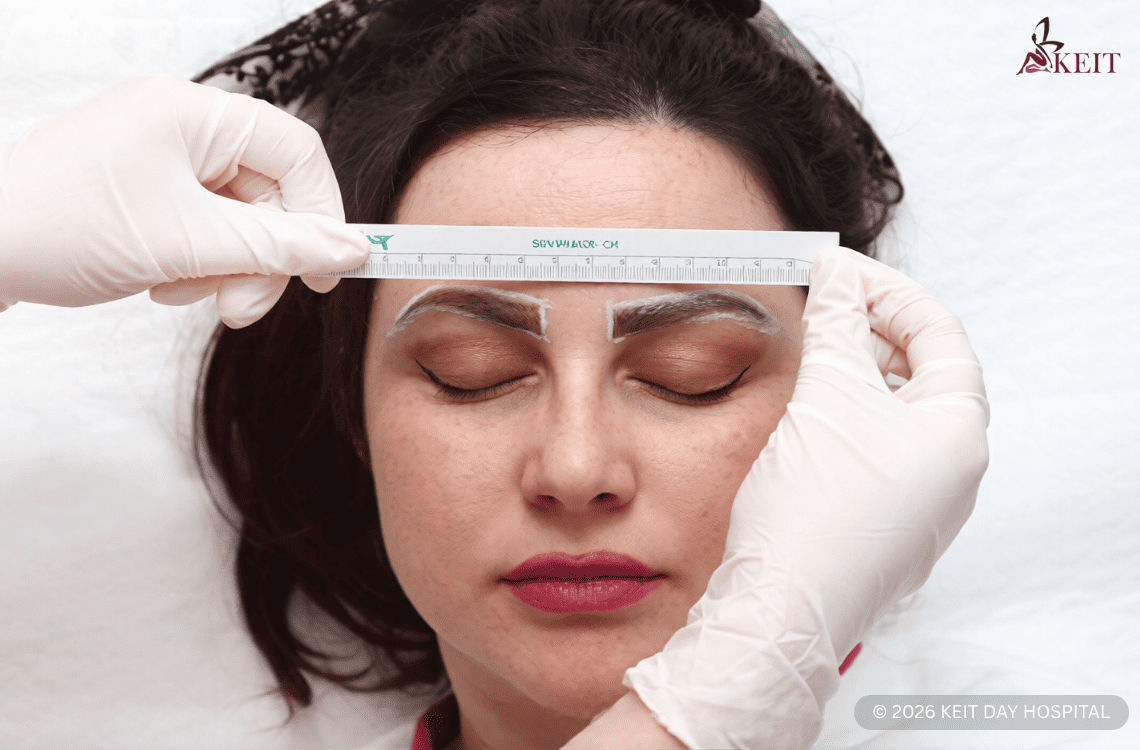
Brow ptosis is diagnosed through a clinical assessment of the eyebrow, upper eyelids and surrounding facial structures to identify the cause and extent of brow descent. The specialist will assess:
- Brow position and symmetry: to determine the degree and pattern of descent.
- Upper eyelids: to assess whether excess skin or true eyelid ptosis is also present.
- Frontalis muscle and facial nerve function: to identify any weakness affecting brow elevation.
- Visual function: particularly if the patient reports heaviness or reduced peripheral vision.
- Medical and treatment history: including previous facial surgery, trauma or Botox injections.
This assessment helps distinguish brow ptosis from eyelid ptosis or dermatochalasis and guides the appropriate treatment.
Brow ptosis vs. eyelid ptosis: what is the difference?
Brow ptosis is a downward displacement of the eyebrow, whereas eyelid ptosis is a lowering of the upper eyelid itself. The distinction is clinically important:
| Feature | Brow ptosis | Eyelid ptosis |
|---|---|---|
| What is affected? | The eyebrow sits lower than its normal position. |
The upper eyelid margin sits lower than normal. |
| Appearance | Often creates upper-eyelid heaviness or hooding. |
Directly covers more of the eye. |
| Underlying cause | May result from ageing or frontalis weakness. |
Can result from problems involving the eyelid elevator mechanism. |
| Clinical term | May produce pseudoptosis. | Represents true eyelid ptosis when the lid itself is affected. |
Brow ptosis and eyelid ptosis can occur together, so a clinical examination is important to determine which structures are responsible for the drooping.
Brow ptosis after Botox: why do eyebrows droop?
Brow ptosis after Botox can occur when botulinum toxin temporarily weakens the muscles responsible for elevating and supporting the eyebrow. Botox works by reducing muscle activity, and when the balance between the muscles that raise and lower the brow is altered, the eyebrow may sit lower than intended. The likelihood of brow ptosis depends on factors such as the injection technique, treatment area, dose and individual facial anatomy. Botox-related brow ptosis is usually temporary and gradually improves as the effect of botulinum toxin wears off and normal muscle activity returns.
How is brow ptosis treated?
Treatment for brow ptosis depends on its cause, severity and whether it causes cosmetic or functional concerns. Mild or temporary cases, including those following Botox, may improve without surgery as muscle function returns.
For persistent brow ptosis, surgical brow elevation may be recommended. Depending on the patient’s anatomy and the degree of brow descent, options include:
- Endoscopic brow lift: Elevates the brow through small incisions within the scalp.
- Direct brow lift: Raises the brow through an incision placed directly above or within the brow.
- Temporal or lateral brow lift: Primarily elevates the outer portion of the eyebrow.
- Combined brow and eyelid surgery: Elevates the brow while removing excess upper-eyelid skin through upper blepharoplasty when both areas require correction.
When should you see a specialist about brow ptosis?
A specialist assessment is recommended when brow drooping is persistent, progressive, noticeably asymmetric or associated with visual or neurological symptoms. You should seek medical evaluation if:
- The brow drooping develops suddenly or rapidly.
- There is significant asymmetry between the eyebrows.
- You experience facial weakness or other neurological symptoms.
- Your vision or peripheral visual field is affected.
- Brow descent develops following trauma or facial surgery.
- Drooping persists after Botox treatment and does not improve as expected.
A specialist can identify the underlying cause and recommend the most appropriate treatment.