Published on:
 Modified on:

 Reading Time: 6 min
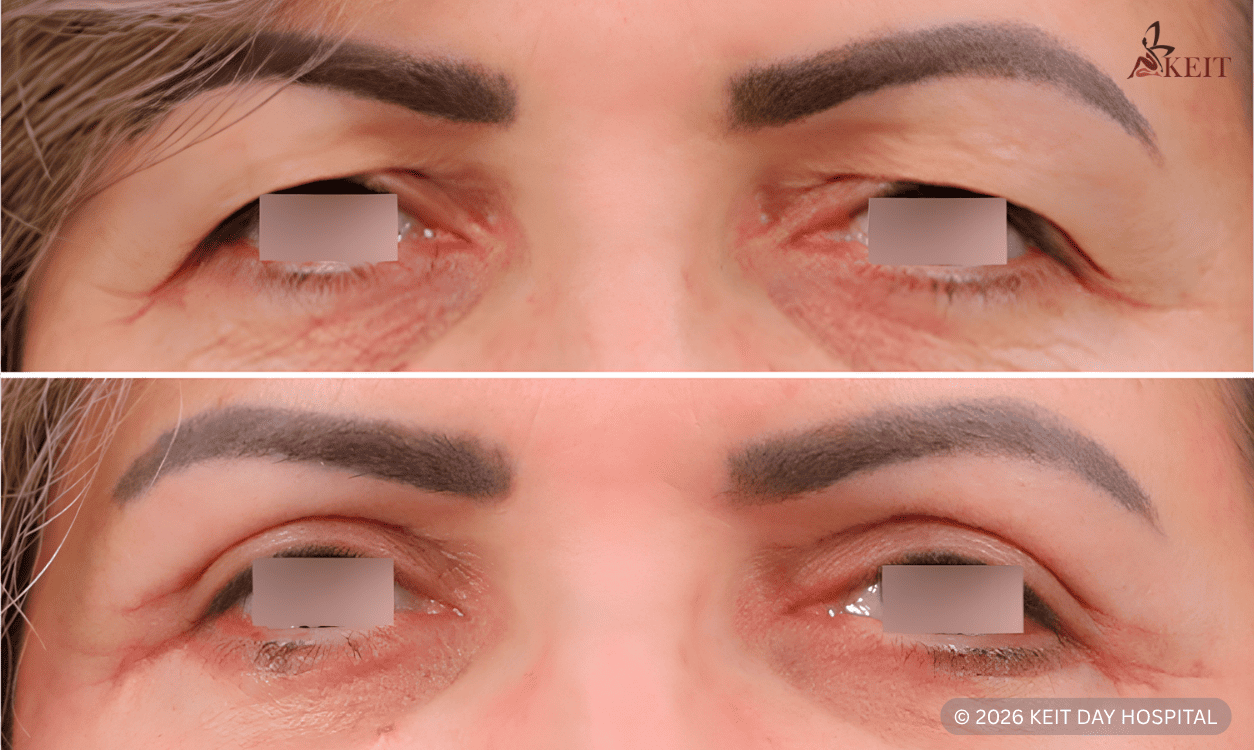
 Total Blepharoplasty
Upper blepharoplasty is a cosmetic eyelid surgery that removes excess upper eyelid skin and, when necessary, conservatively reshapes small fat pads or tightens the underlying tissues to correct drooping or hooded lids. Incisions are carefully placed within the natural eyelid crease, so scars are typically minimal and fade over time. In some patients, especially when the eyelid skin weighs down over the lashes, upper blepharoplasty can also improve peripheral vision and reduce the strain that leads to constant eyebrow lifting.
 Table of Contents:
-
1
 What is upper blepharoplasty and when is it recommended?
-
2
What causes droopy upper eyelids and how they are classified
-
3
Who is the ideal candidate for upper blepharoplasty?
-
4
Upper blepharoplasty techniques explained
-
5
How upper eyelid blepharoplasty is performed
-
6
Upper blepharoplasty before and after: Setting real expectations
-
7
Upper eyelid blepharoplasty: Recovery timeline, duration of results and aftercare
-
8
Upper blepharoplasty risks and possible complications to be aware of
-
9
Upper blepharoplasty cost: What influences the price in the UK?
-
10
Alternatives to upper blepharoplasty: When surgery is not necessary
In this comprehensive guide, you’ll learn what upper blepharoplasty is, when it is recommended and how to distinguish true eyelid skin excess from temporary swelling or fatigue-related puffiness. We explain why upper eyelids droop, who is an ideal candidate and how the procedure is performed. You’ll also discover what to expect from before and after results, recovery, potential risks and realistic costs in the UK, as well as when non-surgical options may help and when surgery is the only definitive solution.
What is upper blepharoplasty and when is it recommended?
Upper blepharoplasty is a surgical procedure that removes excess skin and, when necessary, repositions or conservatively reduces small fat deposits from the upper eyelids. Upper blepharoplasty is typically recommended when:
- Excess upper eyelid skin creates a heavy, tired or aged appearance.
- Skin laxity causes hooding that hides the natural lid crease.
- The upper eyelid fold contributes to makeup “smudging” or creasing.
- Drooping skin partially obstructs peripheral vision (functional indication).
- Non-surgical treatments have failed or are unsuitable.
It is not a treatment for temporary swelling caused by allergies, poor sleep, or short-term fluid retention.
What causes droopy upper eyelids and how they are classified
Droopy upper eyelids develop due to a mix of anatomical, age-related and sometimes genetic factors. The most common causes include:
- Skin laxity (dermatochalasis): Loss of collagen and elasticity leads to loose skin that folds over the upper eyelid.
- Fat prolapse: Small fat pads can become more prominent, contributing to eyelid “fullness.”
- Brow descent: A lowering eyebrow can push tissue downwards, worsening eyelid hooding.
- Genetic predisposition: Some patients develop hooded lids early, even in their 20s or 30s.
- Ptosis (lid margin droop): Weakness of the eyelid lifting muscle causes the eyelid edge itself to sit lower. This may require a different procedure in addition to blepharoplasty.
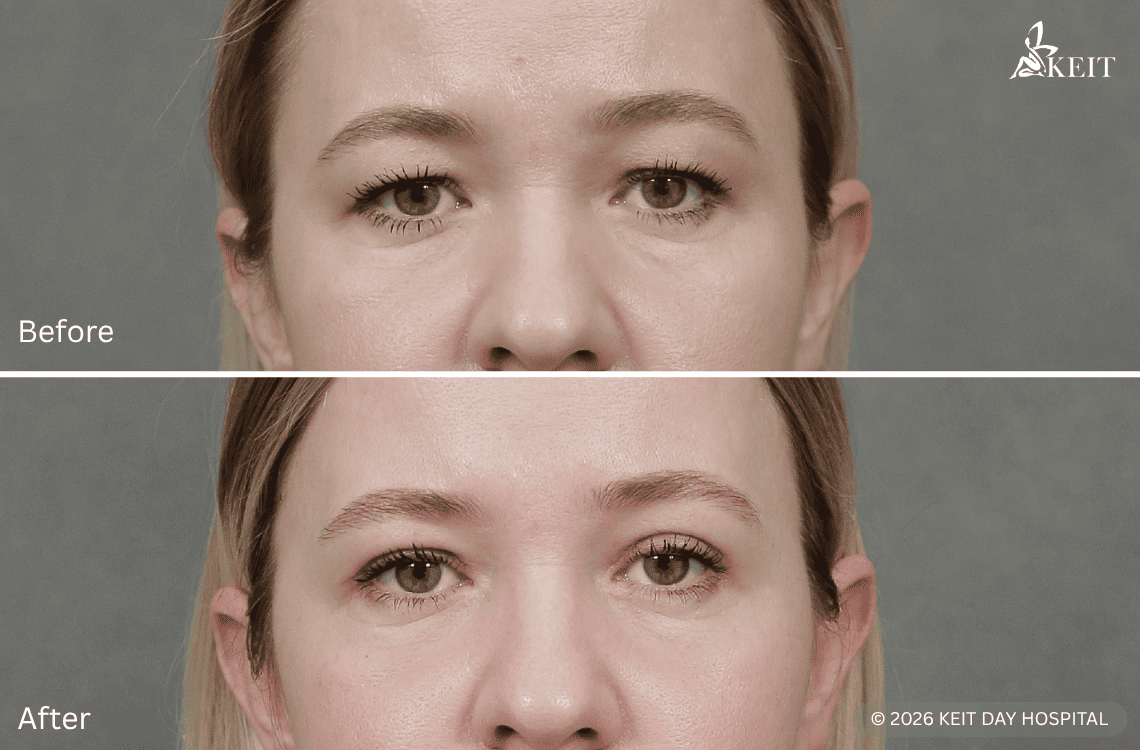
Main types of upper eyelid concerns
- Dermatochalasis (skin excess): The most common and best treated with upper blepharoplasty.
- Brow-related hooding: May require a brow lift or combined approach.
- True ptosis: Often needs ptosis repair, with or without blepharoplasty.
- Pseudo-hooding: Puffiness or swelling from non-structural causes.
Correct diagnosis matters, because not every “droopy eyelid” is solved by skin removal alone.
Who is the ideal candidate for upper blepharoplasty?
Ideal candidates for upper eyelid surgery typically meet the following criteria:
- Have visible upper eyelid skin excess or hooded eyes.
- Feel their eyes look heavy, tired or older than they feel.
- Have stable eye health without significant ocular surface disease.
- Have realistic expectations and understand that results should look natural.
Patients with significant dry eye, uncontrolled medical conditions, severe ptosis or major brow descent may require further evaluation or a combined surgical plan.
Book your FREE
Online Consultation Now

Upper blepharoplasty techniques explained
There are two main approaches, selected based on anatomy and the underlying cause of eyelid heaviness.
Standard upper blepharoplasty
This technique removes excess skin and, when needed, conservatively reshapes or repositions small fat pads. The incision is placed in the natural eyelid crease, where it heals discreetly over time. It is ideal for patients whose main concern is hooded upper eyelid skin.
Upper blepharoplasty with ptosis repair or brow support (combined approach)
When the main issue is true ptosis (low eyelid margin) or brow descent, upper blepharoplasty may be combined with a targeted correction (such as ptosis repair or brow support). This ensures the eye looks more open for the right reason, and prevents under-correction.
Below is a comparison table outlining the key differences between the most common upper blepharoplasty approaches.
| Feature | Standard APPROACH | Combined approach |
|---|---|---|
| Main Goal | Remove excess skin | Restore eye opening + correct underlying cause |
| Best for | Hooding from skin laxity | True ptosis or brow-related hooding |
| Visible scars | Minimal, hidden in crease | Minimal, hidden in crease |
| Complexity | Moderate | Higher (more individualized) |
| Recovery | Usually faster | May be slightly longer |
| Key benefit | Cleaner, lighter upper lids | More functional + precise eye-opening result |
How upper eyelid blepharoplasty is performed
Upper blepharoplasty is usually performed under local anaesthesia with sedation or, in selected cases, general anaesthesia. The procedure typically lasts between 45 and 75 minutes, depending on complexity. Key surgical steps include:
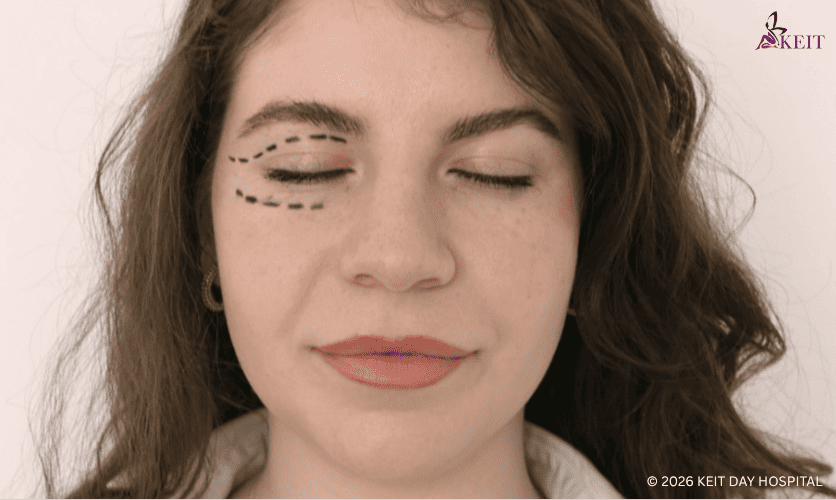
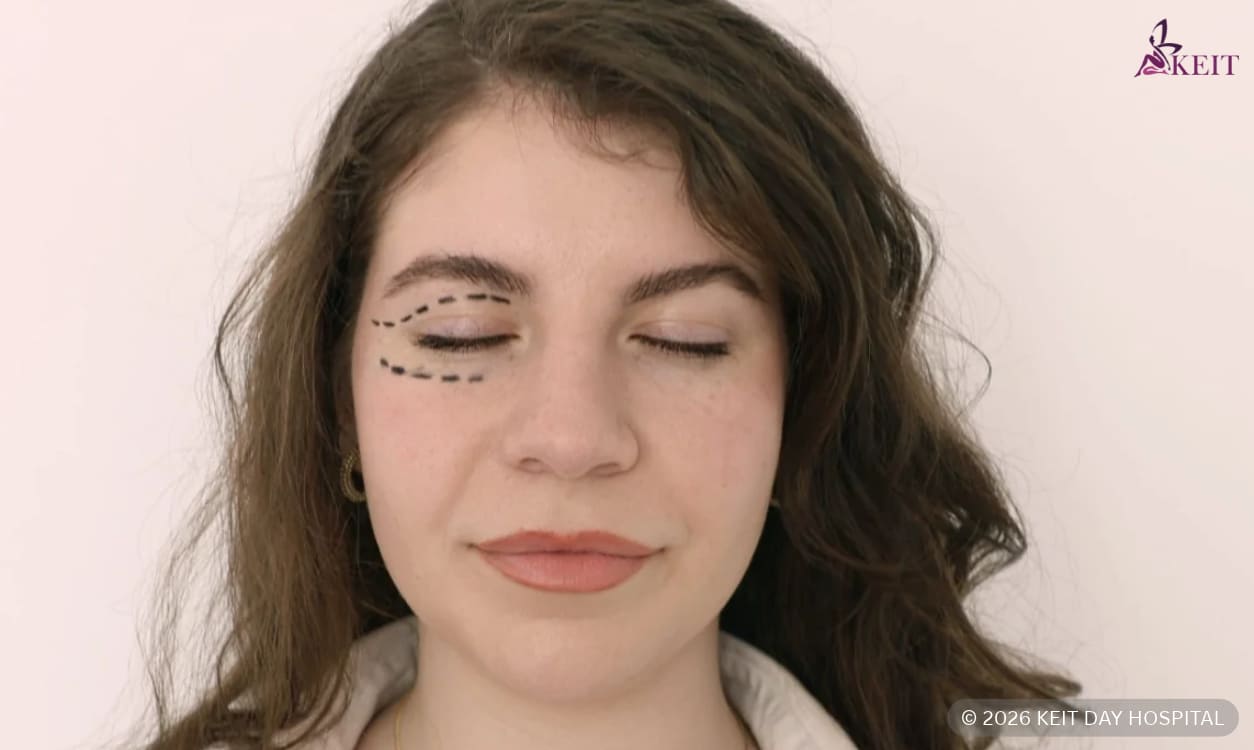
- Careful marking and pre-operative planning (important for symmetry).
- Precise skin removal along the eyelid crease.
- Conservative fat reshaping or repositioning if required.
- Careful closure using fine sutures to minimise scarring.
Modern upper blepharoplasty focuses on preserving natural eyelid shape and avoiding excessive removal, which can create a “hollow” or unnatural look.
Upper blepharoplasty before and after: Setting real expectations
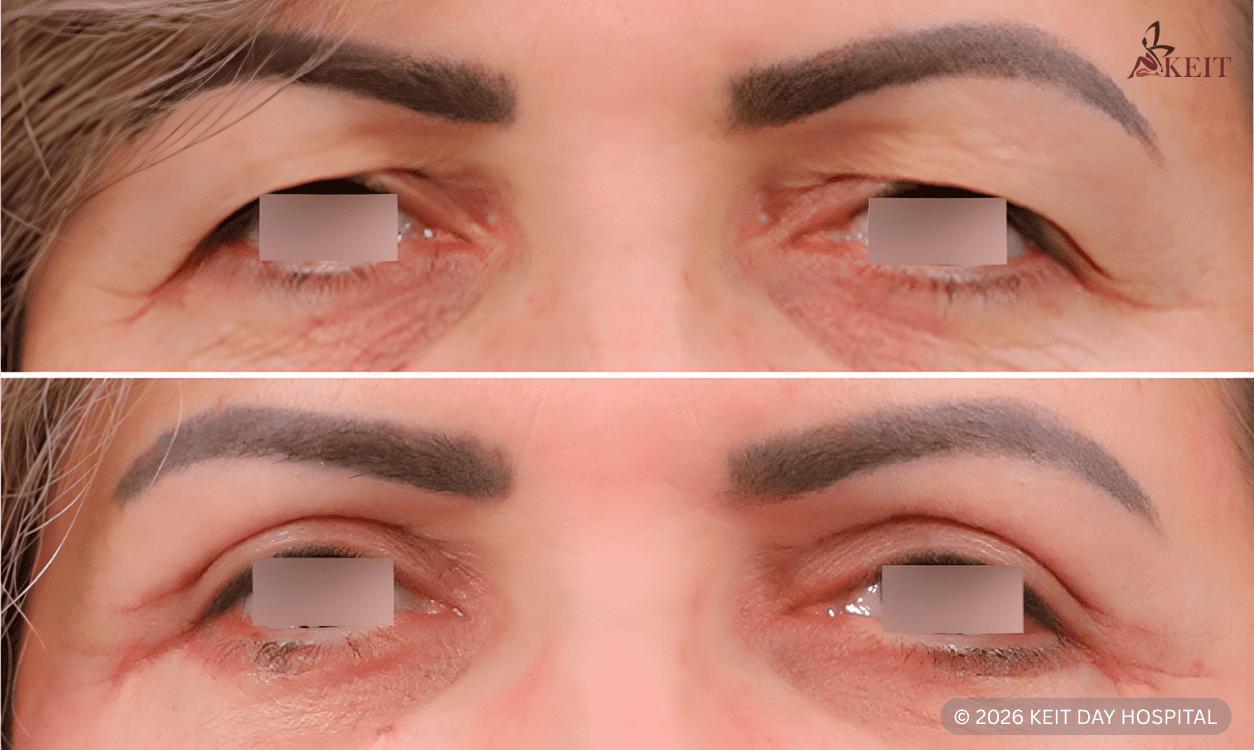
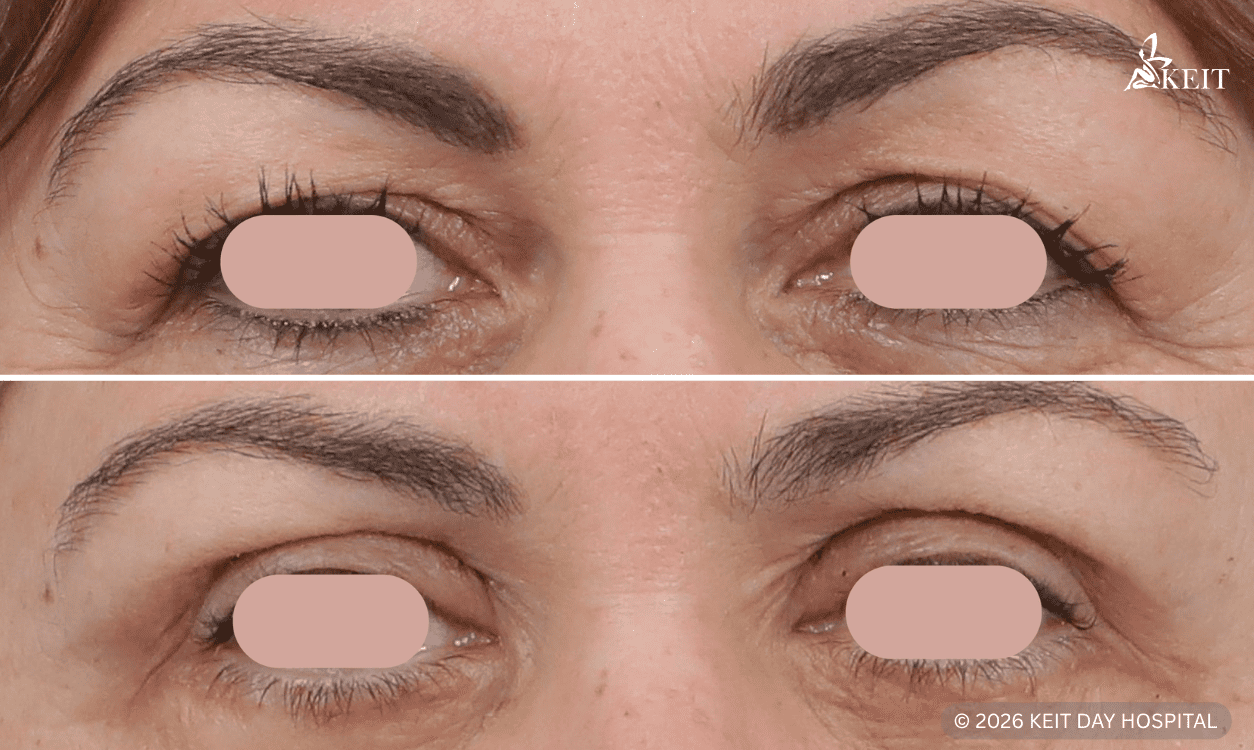
Upper blepharoplasty before and after results show a cleaner upper eyelid crease, reduced hooding and a more open, refreshed appearance. The aim is natural improvement, not an “over-lifted” look. Mild swelling and bruising are normal at first, while final results develop gradually over several weeks. For this reason, outcomes should be evaluated only after complete healing, when the eyes appear brighter and more rested rather than “operated on.”
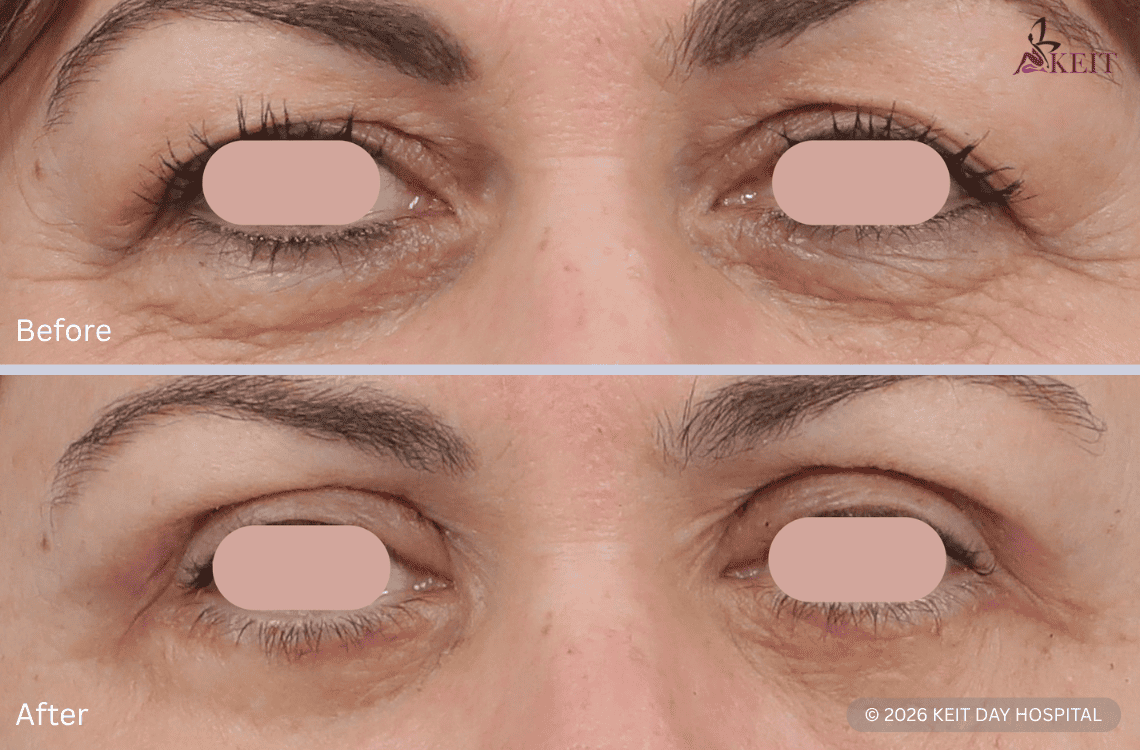
Upper eyelid blepharoplasty: Recovery timeline, duration of results and aftercare
Recovery after upper blepharoplasty is usually straightforward when the procedure is performed conservatively and with accurate pre-operative planning.
- First 48 hours: Mild to moderate swelling and bruising are normal. A sensation of tightness or dryness may occur.
- Days 5–10: Swelling and bruising progressively resolve. Stitches are often removed in this window if non-absorbable sutures are used. Most patients return to daily activities and social life.
- Weeks 3–6: Residual swelling settles and the eyelid crease looks smoother and more natural.
- After 6 weeks: Results can be evaluated reliably, although subtle refinement can continue.
Upper blepharoplasty provides long-lasting results because excess skin has been removed. Aftercare includes head elevation, cold compresses in the early phase, avoiding strenuous activity for 2–3 weeks, and protecting the incision line from sun exposure.
Upper blepharoplasty risks and possible complications to be aware of
Upper blepharoplasty is considered a safe procedure when performed by an experienced surgeon.
- Common temporary effects include: Swelling, bruising, temporary dryness, mild asymmetry during healing and a sensation of tightness.
- Less common complications may include: Prolonged swelling, temporary eyelid closure discomfort, visible scarring in patients prone to hypertrophic scars, or eyelid position changes if excessive tissue is removed.
Serious complications are rare when proper assessment and surgical technique are used.
Upper blepharoplasty cost: What influences the price in the UK?
The cost of upper blepharoplasty in the UK depends on surgical complexity and technique. Main factors influencing price include:
- Skin-only vs skin + fat reshaping.
- Need for combined correction (ptosis repair or brow support).
- Surgeon’s expertise and clinic standards.
- Anaesthesia type.
Typical price ranges in the UK are 3,000 – 4,500 euro for standard upper blepharoplasty. Combined procedures such as (blepharoplasty + ptosis correction) may cost more. A personalized consultation is required to define the final cost accurately.
Alternatives to upper blepharoplasty: When surgery is not necessary
Non-surgical treatments may be considered only when upper eyelid concerns are mild and not caused by true skin excess or structural drooping. Possible alternatives include:
- Laser or resurfacing treatments: May improve skin quality but cannot remove significant excess skin.
- Radiofrequency or ultrasound tightening: Helpful for mild laxity, but results are limited.
- Dermal fillers (select cases): Can support the brow/temple area, but must be used cautiously around the eye.
These treatments do not remove excess skin. When upper eyelid hooding is structural and visible at rest, upper blepharoplasty remains the most definitive solution.