Published on:
 Modified on:

 Reading Time: 6 min
 Gynecomastia
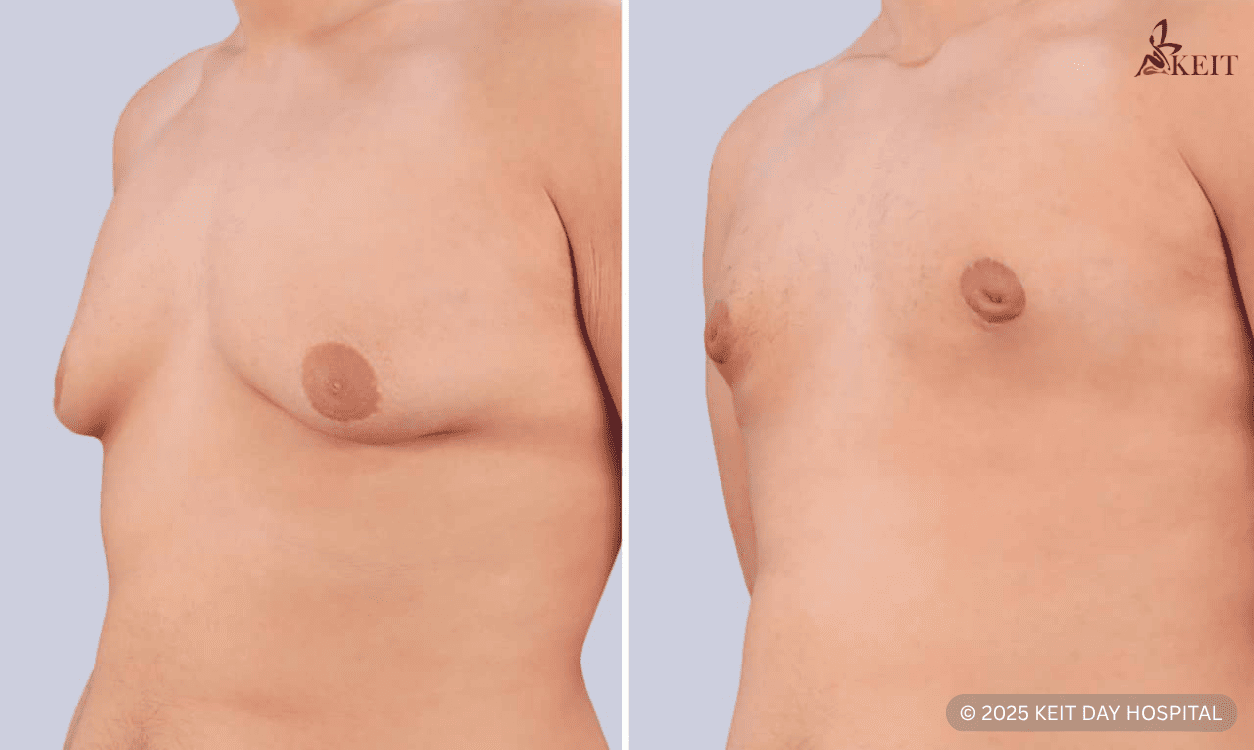
 in men is a condition where excess glandular tissue, fat, or both lead to enlargement of the male chest, often resulting in a fuller or rounded appearance sometimes referred to as male breasts. It can develop due to hormonal changes, puberty, weight fluctuations, medication, or genetics, and may affect one or both sides of the chest. Many men search for gynecomastia before and after results to understand how surgery can change chest shape and restore a flatter, more masculine contour.
 Table of Contents:
-
1
 Gynecomastia before and after: Chest shape changes and visible results
-
2
Gynecomastia surgery types and their results
-
3
Gynecomastia results timeline: From surgery day to final outcome
-
4
Gynecomastia recovery: Healing stages and what to expect day by day
-
5
Gynecomastia aftercare: Medical instructions for safe recovery
-
6
Gynecomastia scars: Location and healing process
-
7
Gynecomastia results: How long they last and can they come back?
-
8
When results look uneven after gynecomastia surgery
-
9
When to contact your surgeon after gynecomastia surgery
This article explains gynecomastia surgery before and after results, including how the chest changes in shape and definition, what happens during gyno surgery before and after, the different treatment techniques, the recovery and post-op healing process, and what final results typically look like over time.
Gynecomastia before and after: Chest shape changes and visible results
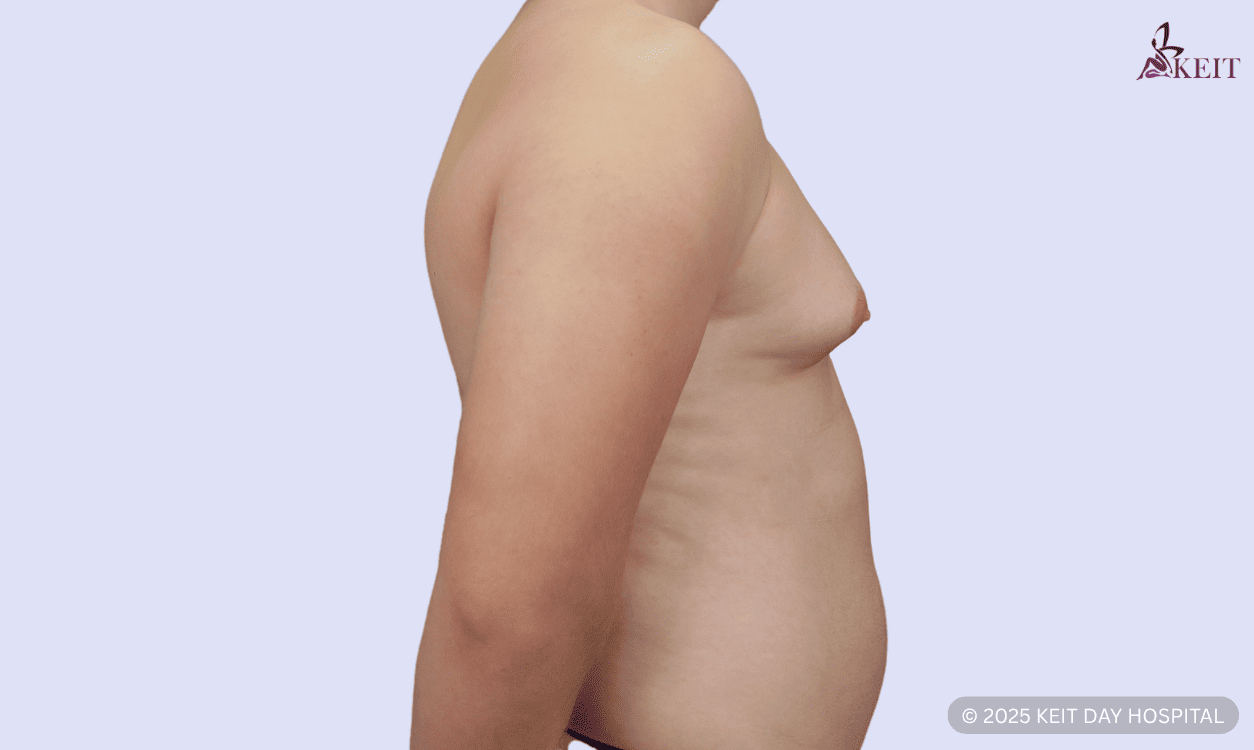
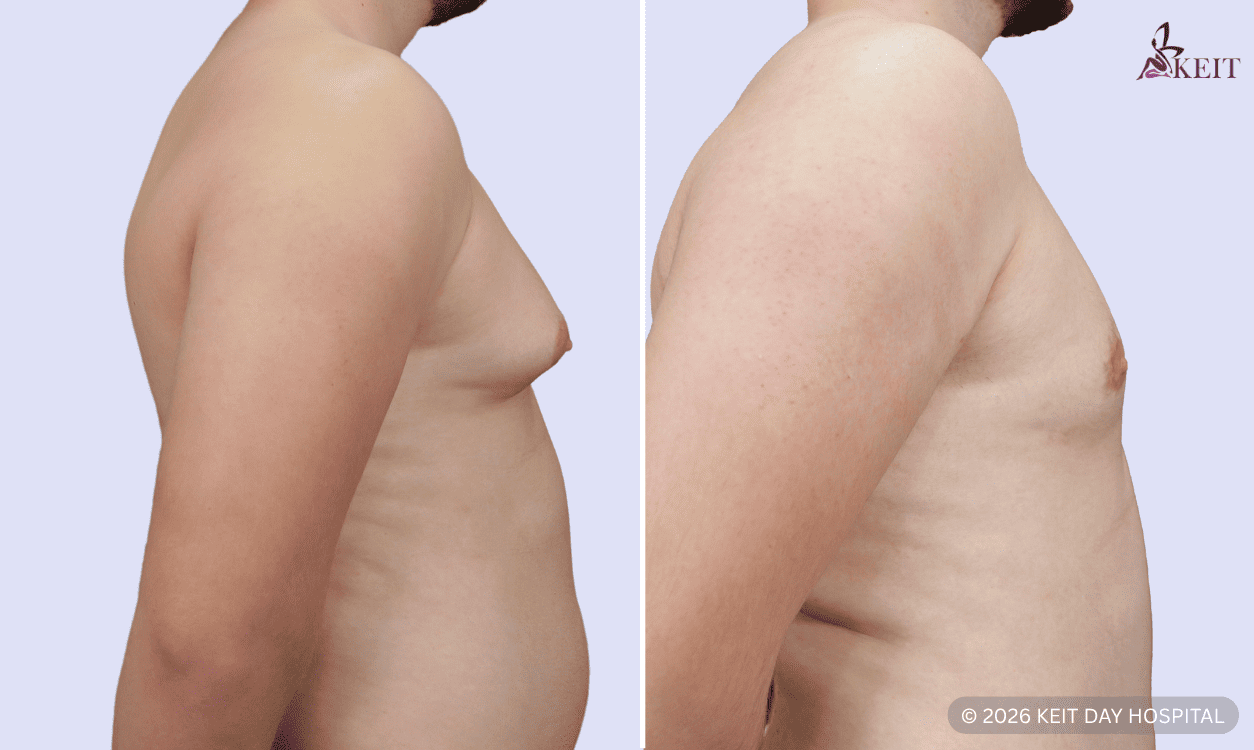
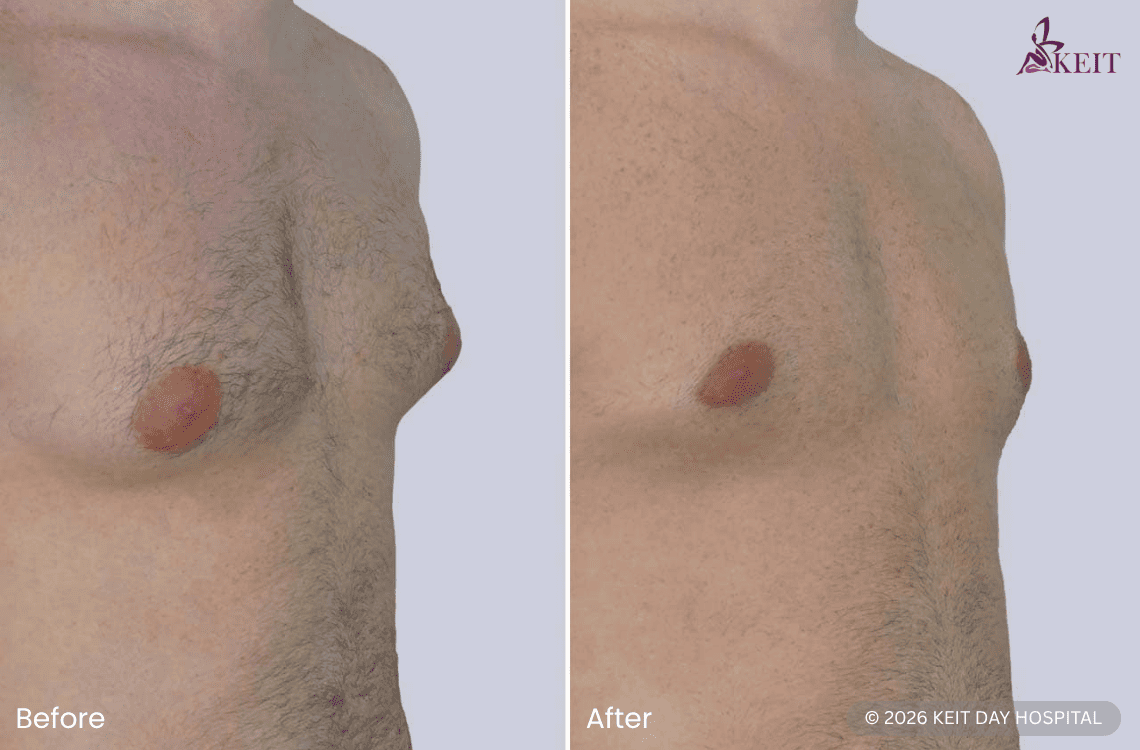
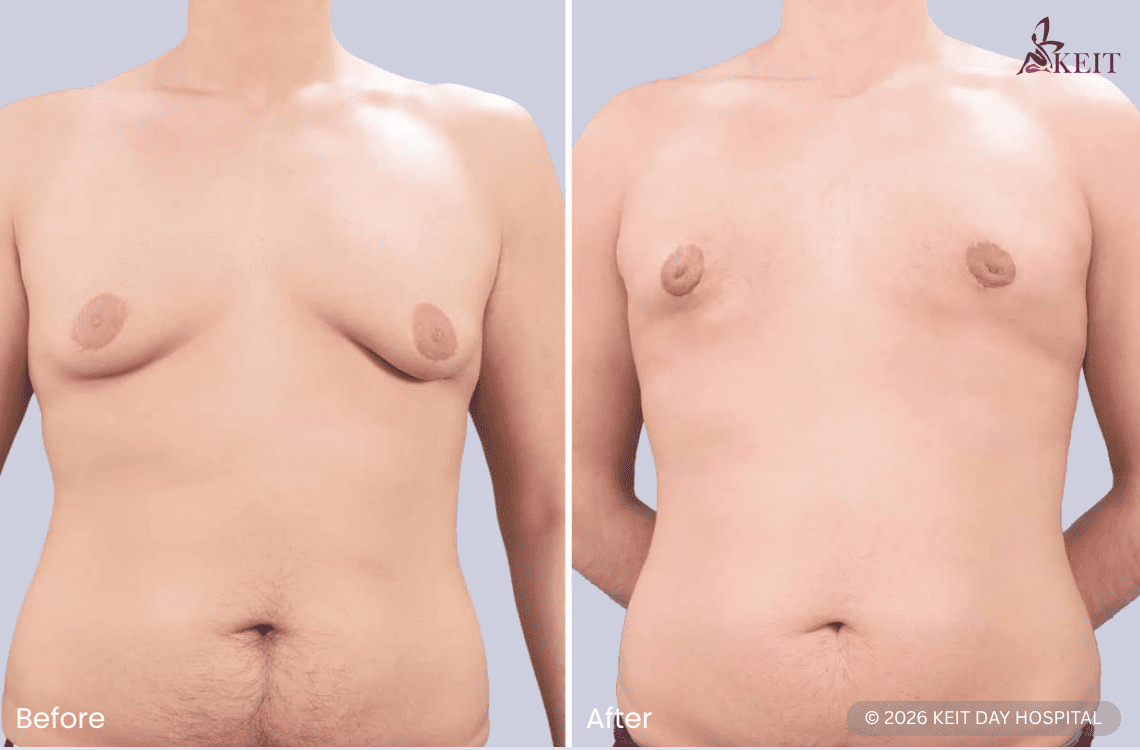
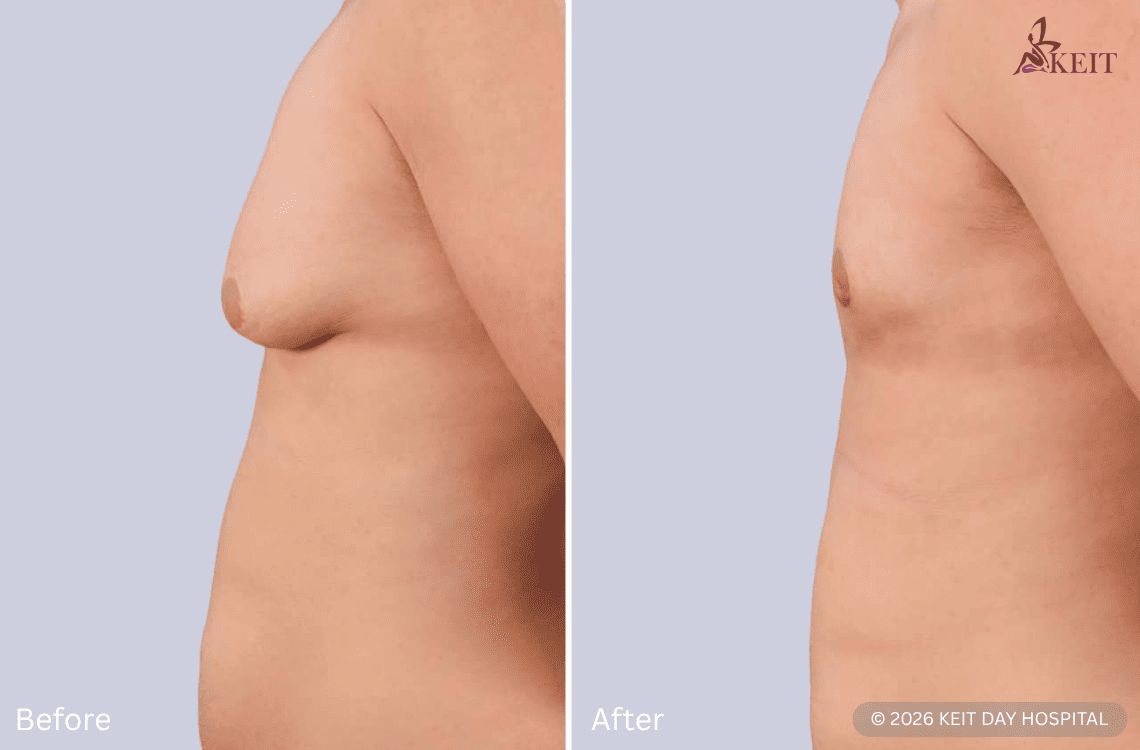
Gynecomastia before and after results are most clearly seen in the overall chest shape, where an enlarged male chest becomes flatter, firmer, and more defined. Before surgery, the chest may appear rounded or enlarged under clothing, sometimes described as male breasts, which can affect body proportions and confidence. After surgery, the chest becomes flatter, tighter, and more naturally contoured, restoring a more masculine chest appearance.
These changes are achieved by removing excess glandular tissue, fat, or both. Once removed, the chest becomes more structured and defined as swelling reduces and the skin adjusts to the new contour. In some cases, the nipple and areola also sit in a more natural position relative to the chest. Overall, gyno before and after results typically show a flatter chest, reduced fullness, and a more balanced, athletic-looking male chest shape.
Gynecomastia surgery types and their results
Gynecomastia treatment results vary depending on whether excess tissue is mainly fat, glandular tissue, or a combination of both. The surgical approach is selected based on the underlying cause and severity of the condition, with each technique producing different changes in chest shape, definition, and contour.
Liposuction for gynecomastia
Liposuction is used when excess fat is the main cause of chest fullness. This technique reduces soft tissue volume, creating a smoother, flatter, and more defined chest contour with improved overall shape.
Gland removal for gynecomastia
Liposuction is used when excess fat is the main cause of chest fullness. This technique reduces soft tissue volume, creating a smoother, flatter, and more defined chest contour with improved overall shape.
Combined gynecomastia surgery
Combined surgery treats both fat and gland tissue. This is one of the most commonly used approaches, as many patients present with a combination of both factors. It produces the most complete correction, creating the flattest and most defined masculine chest contour.

Gynecomastia results timeline: From surgery day to final outcome
Gynecomastia results change gradually as swelling reduces and the chest settles into its final contour over several months. The healing process follows clear stages, with predictable visual changes at each phase:
- Immediately after surgery: the chest appears flatter but swollen, with tightness and early contour changes due to initial healing.
- Weeks 1–2: swelling and bruising are most noticeable, and the chest may still look uneven as early healing continues.
- Weeks 3–8: swelling begins to reduce and the chest starts to look more defined and natural.
- 3–6 months: most of the final contour becomes visible, with improved symmetry and chest definition.
- 6–12 months: final gynecomastia before and after results are visible once all swelling has fully resolved and tissues have settled.
Gynecomastia recovery: Healing stages and what to expect day by day
Gynecomastia recovery follows a structured healing process over the first few weeks, with swelling and chest shape gradually improving as the body heals.
- Day 1–3: swelling, tightness, and discomfort are most noticeable as the body responds to surgery. Rest and compression garments are essential during this phase.
- Day 4–7: swelling and bruising remain present but begin to gradually reduce, and light movement is usually encouraged.
- Week 2: discomfort continues to improve, and most patients can return to non-strenuous daily activities.
- Weeks 3–4: swelling decreases further and the chest starts to appear more defined and closer to its final shape.
- Weeks 5–6: most swelling has resolved, and patients are typically cleared for exercise and normal physical activity with medical approval.
Gynecomastia aftercare: Medical instructions for safe recovery
Gynecomastia aftercare is essential for proper healing and for achieving optimal chest contour after surgery. Following post-operative instructions helps reduce swelling, support skin retraction, and minimise the risk of complications during the recovery period.
- Compression garment: a medical compression vest should be worn as directed to control swelling and support the new chest shape.
- Wound care: incision sites must be kept clean and dry, with dressings changed according to medical instructions.
- Activity limits: heavy lifting, chest training, and upper-body strain must be avoided during early healing.
- Sleeping position: patients are advised to sleep on their back with the upper body slightly elevated to reduce swelling.
- Medication: prescribed pain relief and any antibiotics should be taken exactly as instructed by the surgeon.
- What to avoid: smoking and alcohol (as they delay healing), soaking incisions (baths, pools, saunas), and any sudden chest movements or pressure on the surgical area.
Gynecomastia scars: Location and healing process
Gynecomastia surgery scars are usually small and placed in discreet areas to minimise visibility while allowing effective removal of glandular tissue and fat. While all surgical procedures leave some form of scar, modern techniques are designed to make them as subtle as possible and allow them to fade significantly over time.
- Periareolar incision: the most common approach, placed along the edge of the areola where the darker skin meets the chest. This helps the scar blend naturally into the skin transition.
- Liposuction incisions: very small entry points used to remove fat, typically placed in natural creases of the chest or armpit area to keep them less visible.
- Extended or skin removal incisions: used in more severe cases where excess skin must be removed, with scars placed along natural chest folds for better concealment.
Over time, scars typically become less noticeable as they flatten and fade, with the most visible improvement occurring between 3–6 months and continued refinement up to 12 months depending on skin type and healing response.
Gynecomastia results: How long they last and can they come back?
Gynecomastia surgery results are generally permanent and long-lasting because the main glandular tissue responsible for chest enlargement is physically removed during surgery. In most patients, this prevents the condition from returning, and the chest remains flatter and more defined compared to the pre-operative appearance.
Recurrence is rare but can occur in some cases, usually due to significant hormonal changes, major weight gain, steroid use, or certain medications. For the majority of patients, gyno before and after results remain stable long-term, especially when weight and hormone levels are maintained.
When results look uneven after gynecomastia surgery
It is normal for gynecomastia before and after results to look uneven during the early healing phase. Swelling, bruising, and different healing rates on each side of the chest can temporarily affect symmetry and overall contour.
In most cases, this uneven appearance improves gradually as swelling reduces over 3–6 months and the chest settles into its final shape. Minor differences may still be visible in some patients after full healing, usually due to natural anatomy or skin elasticity.
When to contact your surgeon after gynecomastia surgery
It is important to monitor your recovery closely to ensure healing is progressing normally. While most symptoms are part of the normal healing process,certain symptoms require medical attention.
You should seek medical help if you experience:
- Increasing pain that worsens instead of improving: pain that does not gradually settle or becomes more intense over time.
- Excessive or one-sided swelling: noticeable swelling that is significantly worse on one side of the chest.
- Redness, warmth, or discharge from the incision sites: signs that may indicate infection or delayed healing.
- Fever or raised temperature: an elevated body temperature during recovery.
- Fluid buildup under the skin: swelling that feels like fluid or persistent localized puffiness.
- Sudden changes in chest shape during recovery: unexpected changes in contour, symmetry, or firmness.