Published on:
 Modified on:

 Reading Time: 5 min
 Secondary rhinoplasty
Revision rhinoplasty is a secondary nasal procedure performed to correct aesthetic or functional problems after a previous rhinoplasty. It is indicated when the initial surgery results in an unsatisfactory appearance, breathing difficulties, or structural changes that become apparent during healing. Revision surgery is more complex than primary rhinoplasty, so choosing a highly experienced surgeon in revision procedures is essential.
 Table of Contents:
-
1
 What is revision rhinoplasty and what concerns can it correct?
-
2
Why might a first rhinoplasty fail or lead to dissatisfaction?
-
3
When should revision rhinoplasty be considered and how is it planned?
-
4
Revision rhinoplasty with structural grafting
-
5
Revision rhinoplasty recovery and post-operative care
-
6
Risks and complications of revision rhinoplasty
-
7
Cost of revision rhinoplasty and factors influencing the price
-
8
How to choose the right revision rhinoplasty surgeon?
In this guide, we explain what revision rhinoplasty is and the concerns it can correct, the reasons a first rhinoplasty may fail, when revision surgery should be considered and how it is planned. Then we cover the surgical techniques used, recovery, potential risks, the cost of revision rhinoplasty, and how to choose the right surgeon.
What is revision rhinoplasty and what concerns can it correct?
Revision rhinoplasty is a secondary procedure performed to improve or correct the results of a previous rhinoplasty. Patients may consider a revision when the first surgery does not meet expectations or when functional problems develop during healing.
Revision rhinoplasty may be indicated when the initial surgery results in:
- Asymmetry or contour irregularities: Uneven shape, visible bumps or an unbalanced nasal bridge or tip.
- A drooping or poorly defined tip: The nasal tip may appear lowered, heavy, rounded, or insufficiently refined.
- Over-reduction of nasal structures: Too much cartilage or bone may have been removed, creating an unnatural, pinched, or overly small nose.
- Breathing problems: Weakness or narrowing inside the nose may obstruct airflow and cause nasal blockage.
- Post-operative deformity: Healing may lead to stiffness, irregular thickening, distortion, or visible changes in shape.
- Structural collapse: Weakened nasal structures may lose support, causing external collapse, internal valve compromise, or difficulty breathing.
Why might a first rhinoplasty fail or lead to dissatisfaction?
A first rhinoplasty may lead to dissatisfaction or require revision for several reasons, including:
- Healing and tissue response: Swelling, scar tissue, skin contraction, and individual healing patterns can change the final appearance of the nose over time.
- Technical or structural limitations: Too much cartilage may be removed, or nasal support may be insufficient, leading to long-term changes in shape or breathing.
- Functional problems: Nasal breathing may be affected after surgery due to septal deviation, valve dysfunction, or airway narrowing.
- Scar tissue and post-operative change: Scar formation may cause stiffness, distortion, asymmetry, or persistent irregularities.
- Unrealistic aesthetic expectations: The surgical result may be technically successful, but still not match the patient’s expectations.
Book your FREE
Online Consultation Now

When should revision rhinoplasty be considered and how is it planned?
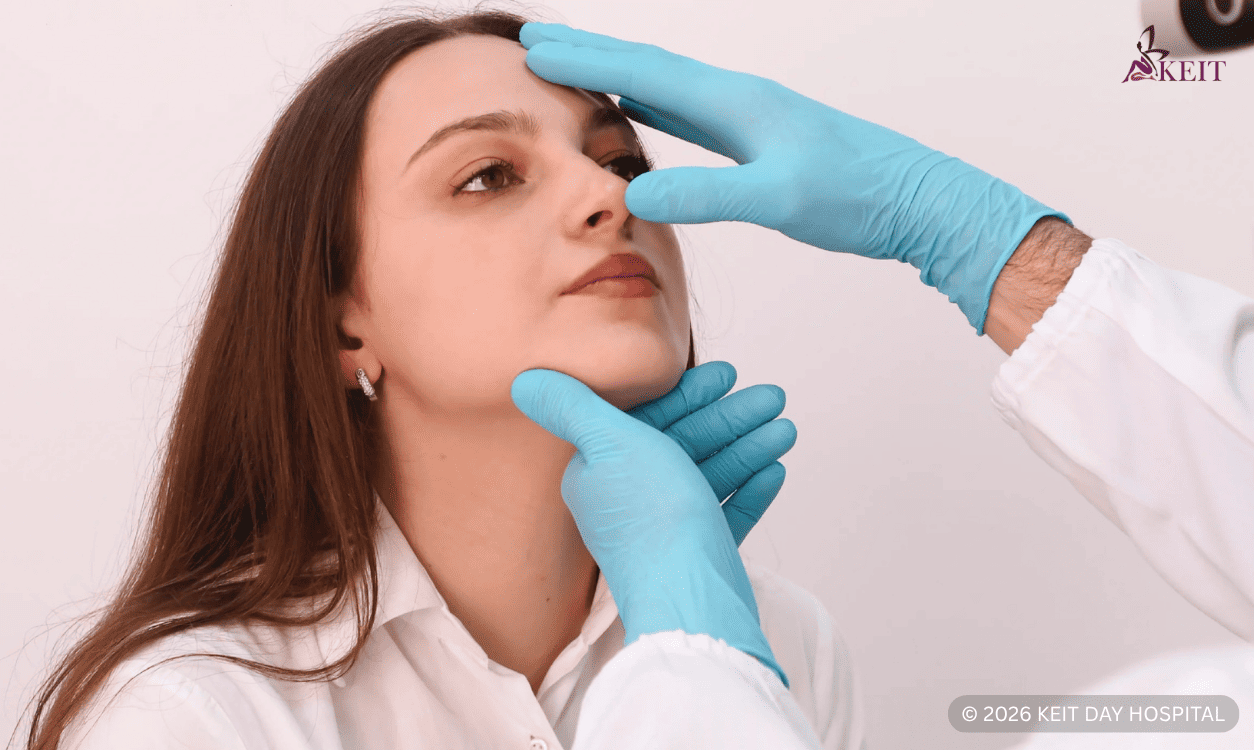
Patients are advised to wait at least 9 to 12 months after the initial rhinoplasty before considering revision surgery. This allows swelling to settle, scar tissue to mature, and the nasal structures to stabilize, so the final result of the first procedure can be assessed more accurately.
During planning, the surgeon performs a detailed assessment of the nose, including the external shape, skin quality, septum, internal airway, and overall structural support. The previous surgery, current healing, and, when needed, photographs or imaging are reviewed to define the surgical approach, identify the areas requiring correction, and determine whether cartilage grafting may be necessary.
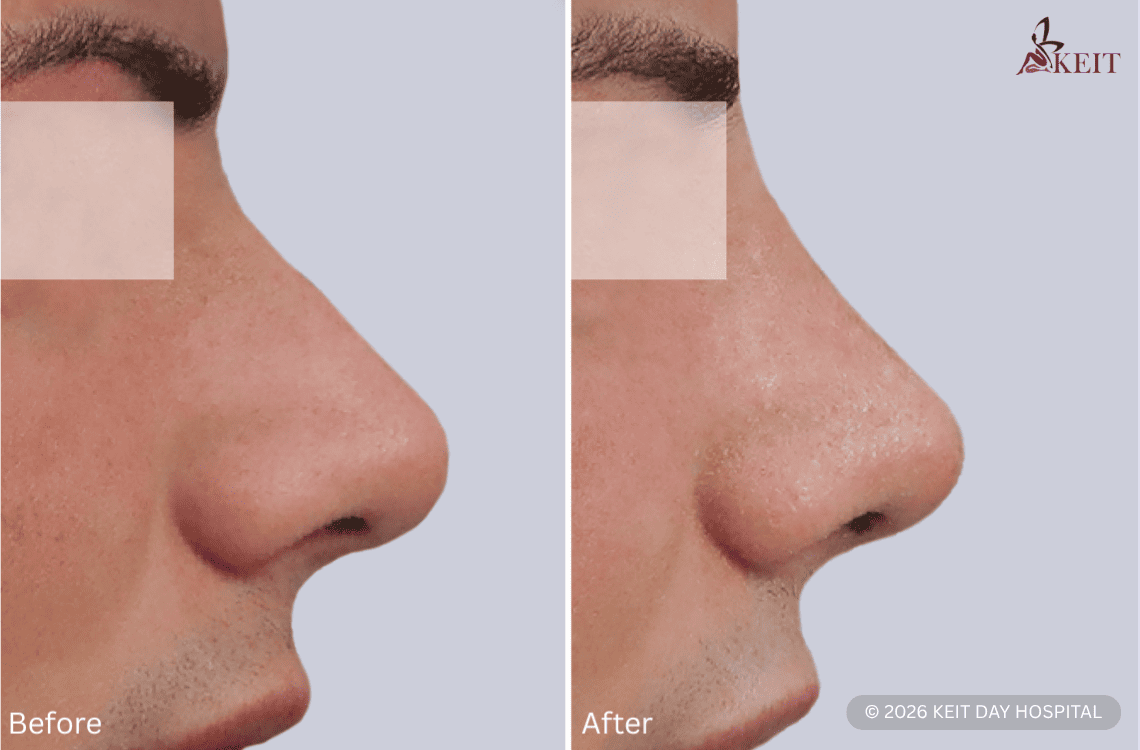
Revision rhinoplasty with structural grafting
In revision rhinoplasty, structural grafting is used when the nose needs additional support, shape correction, or functional improvement after a previous surgery. This is often necessary in more complex cases, especially when too much cartilage has been removed or the nasal framework has become weakened. Grafts are taken from the nasal septum, ear, or rib, depending on how much tissue is needed and the complexity of the case.
Cartilage grafts help:
- Restore structural support by reinforcing areas of the nose that have become weak, unstable, or over-resected after the first surgery.
- Improve breathing function by helping reopen narrowed internal passages and support the nasal valves, which are important for normal airflow.
- Refine the shape of the nose by improving contour, projection, symmetry, or definition in areas such as the bridge or tip.
- Correct collapse or over-resection from the first surgery by rebuilding parts of the nasal framework that no longer provide enough support or balance.
Revision rhinoplasty recovery and post-operative care
Revision rhinoplasty healing takes longer than recovery after primary rhinoplasty. Swelling and bruising are most noticeable in the first few days, and the splint is removed after about one week. Although early swelling improves over the following weeks, the nose continues to settle for several months, with final results becoming clearer between 6 and 12 months.
During recovery, patients are advised to avoid strenuous exercise, heavy lifting, and any pressure or trauma to the nose. Keeping the head elevated, following post-operative instructions carefully, and attending follow-up visits are important for proper healing and early identification of any concerns.
Risks and complications of revision rhinoplasty
Revision rhinoplasty carries potential risks and complications, which include:
- Persistent swelling: Swelling may last longer than after primary rhinoplasty.
- Infection: Although uncommon, infection can occur after surgery and may require antibiotics or additional treatment.
- Asymmetry or contour irregularities: Healing differences or scar tissue may lead to uneven shape or minor surface irregularities.
- Breathing difficulties: Structural changes inside the nose may affect airflow if the nasal valves or septum are compromised.
- Scar tissue formation: Excess scar tissue may cause stiffness, distortion, or persistent irregularities in the nasal structure.
- Skin or soft tissue changes: In rare cases, skin thinning, thickening, or altered sensation around the nose may occur.
Careful surgical planning, appropriate technique, and close post-operative follow-up help minimize these risks and support proper healing.
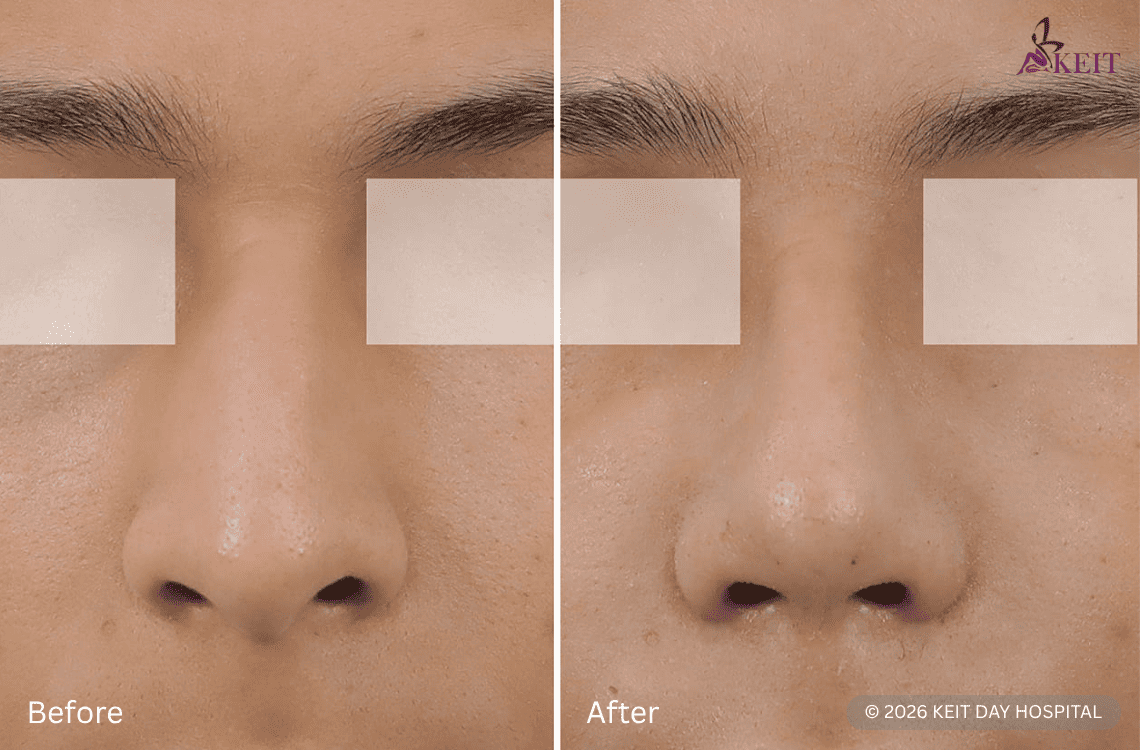
Cost of revision rhinoplasty and factors influencing the price
The cost of revision rhinoplasty in the UK is higher than primary rhinoplasty because the procedure is more complex. In the UK, the cost of revision rhinoplasty ranges from 8,000 to 17,000 euro, depending on the surgeon and the complexity of the case.
Several factors influence the final price of revision rhinoplasty, including:
- Surgical complexity and the extent of correction required.
- Surgeon experience and specialization, particularly in revision rhinoplasty.
- Hospital or clinic facility fees.
- Anaesthesia costs and operating time.
- Use of cartilage grafts or reconstructive techniques.
- Pre-operative assessment and post-operative follow-up care.
Because each revision rhinoplasty case is different, an accurate cost estimate is usually provided after a detailed consultation and clinical assessment.
How to choose the right revision rhinoplasty surgeon?
Choosing a surgeon for revision rhinoplasty requires particular care, as secondary nasal surgery is more complex than a primary procedure. When assessing a surgeon, it is important to consider:
- Specific experience in revision rhinoplasty, not only primary rhinoplasty.
- Recognised qualifications, accreditation, and specialist training.
- Documented experience with complex revision cases.
- A thorough consultation process, including assessment of previous surgery, current anatomy, and surgical limitations.
- Clear communication about realistic outcomes, risks, and the possibility of residual limitations.
- A structured post-operative follow-up plan.