Published on:

 Reading Time: 7 min

 Scientific Articles
Body mass index (BMI) is one of the most commonly used parameters in the preoperative assessment of patients undergoing plastic and cosmetic surgery. Available meta-analyses show an association between higher BMI and an increased risk of certain complications, but they also indicate that BMI should not be interpreted as an absolute contraindication to surgery. More recent evidence suggests that risk varies according to the procedure. The association is particularly evident in body contouring and breast surgery, whereas not all complications increase uniformly with increasing BMI.
 Table of Contents:
-
1
 How the evidence was selected: PubMed criteria for the most recent meta-analyses
-
2
BMI and overall risk in plastic surgery
-
3
Body contouring surgery: does BMI increase the risk?
-
4
Reduction mammoplasty: BMI as a risk factor
-
5
How much does the degree of obesity matter?
-
6
BMI after bariatric surgery: a more complex picture
-
7
Which complications are most strongly associated with higher BMI?
-
8
BMI, comorbidities and individual surgical risk
-
9
Key evidence on the relationship between BMI and complications in cosmetic surgery
-
10
Bibliography: The five PubMed meta-analyses considered
How the evidence was selected: PubMed criteria for the most recent meta-analyses
A targeted PubMed search was conducted, limited to studies classified as meta-analyses and systematic reviews with meta-analysis published in recent years. Priority was given to studies that directly evaluated the relationship between BMI or obesity and postoperative complications in plastic, cosmetic, breast or body contouring surgery.
The final selection comprises five meta-analyses published between 2022 and 2026, with particular attention to the most recent studies and those most relevant to cosmetic surgery: a 2026 meta-analysis on abdominoplasty after metabolic and bariatric surgery, a 2025 meta-analysis on reduction mammoplasty, a 2024 meta-analysis on cosmetic abdominal body contouring, a 2023 meta-analysis on reduction mammoplasty, and a general 2022 meta-analysis on the impact of obesity on plastic surgery outcomes.
BMI and overall risk in plastic surgery
The largest and most general meta-analysis included in this review analyzed 93 studies, of which 91 were included in the quantitative synthesis, to assess the impact of obesity on plastic surgery outcomes.
Obese patients had a 1.62-fold higher likelihood of developing one of the main outcomes considered, including surgical complications, medical complications and reoperation. The increase in risk was even more evident in cosmetic procedures, with an RR of 1.80 (95% CI 1.43–2.32) compared with non-obese patients. Overweight, compared with normal weight, was also associated with an increased risk of complications (RR 1.16; 95% CI 1.07–1.27).
These data therefore support a general association between obesity and complications in plastic surgery, but they do not indicate that BMI has the same prognostic significance in every procedure.

Body contouring surgery: does BMI increase the risk?
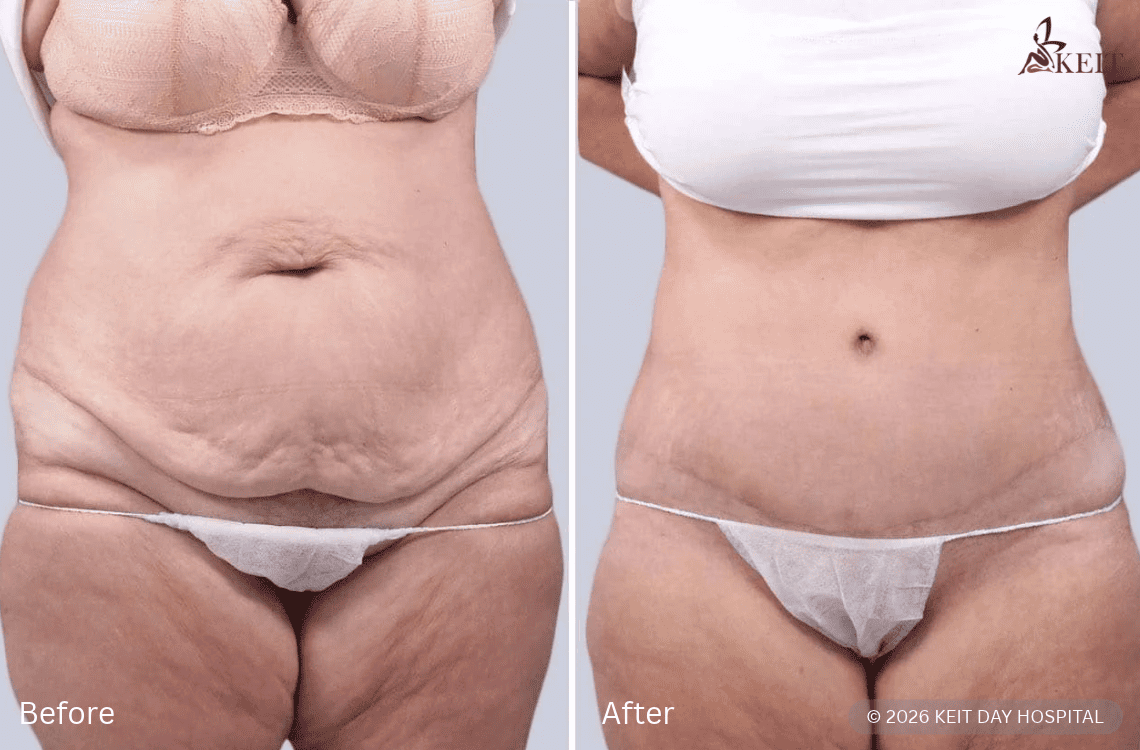
The relationship between BMI and complications is particularly relevant in body contouring surgery. A 2024 meta-analysis specifically focused on cosmetic abdominal body contouring included 16 studies, of which 9 were included in the quantitative meta-analysis. In patients with a BMI ≥30 kg/m², obesity was associated with an increased risk of:
- Seroma: OR 1.45;
- Hematoma: OR 2.21;
- Overall surgical-site complications: OR 1.99.
No significant differences were identified for all other complications analyzed. Furthermore, risk did not progressively increase with increasing obesity class. The authors therefore concluded that a BMI ≥30 kg/m² should not be considered an absolute contraindication to cosmetic abdominal body contouring. Assessment should be individualized.
Reduction mammoplasty: BMI as a risk factor
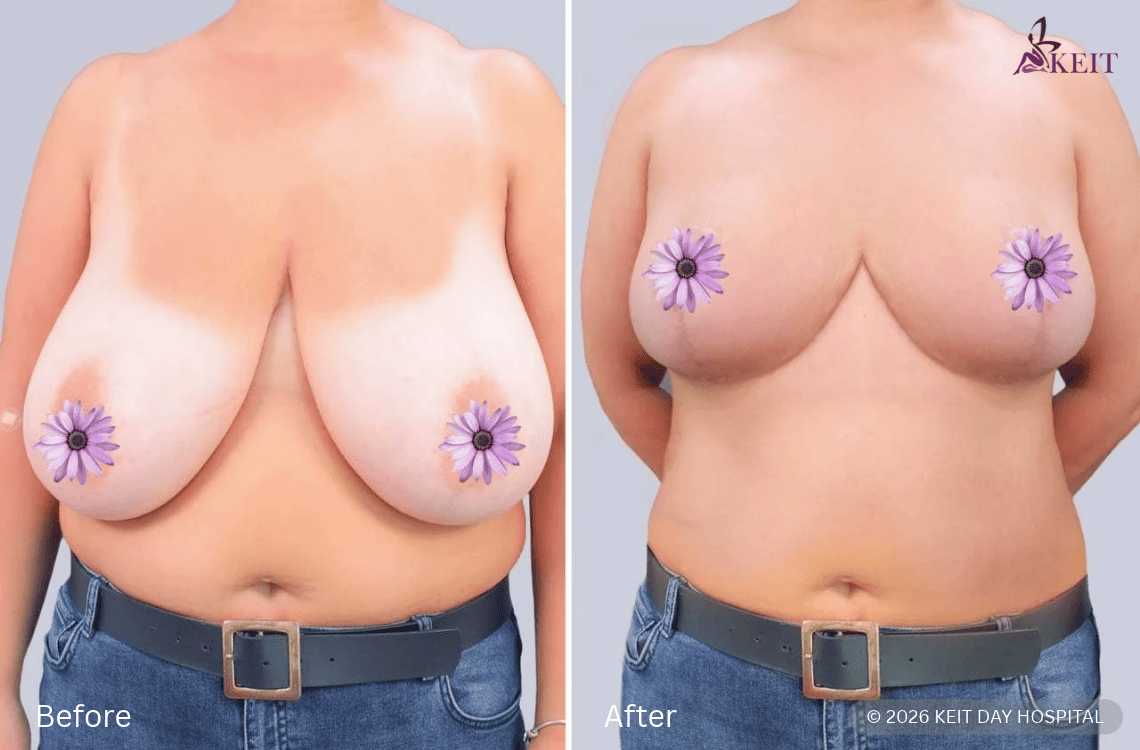
Evidence from breast surgery shows a particularly consistent association between higher BMI and complications. A 2025 meta-analysis included 61 studies and 71,149 patients who underwent reduction mammoplasty. A BMI ≥30 kg/m² was associated with a significant increase in the overall risk of complications, with an OR of 1.59 (95% CI 1.45–1.74).
Obesity was also associated with an increased risk of:
- Delayed wound healing;
- Fat necrosis;
- Wound infection;
- Wound dehiscence.
The study also identified smoking, diabetes and previous radiotherapy as additional factors associated with complications. These findings are important because they demonstrate that BMI does not necessarily act as an isolated factor: overall risk depends on the interaction between obesity, comorbidities and procedural characteristics.
How much does the degree of obesity matter?
A meta-analysis on reduction mammoplasty evaluated the association between different BMI categories and the risk of complications. The main findings were:
- 40 studies and 5,908 patients included in the analysis.
- BMI ≥30 kg/m²: associated with a significant increase in complications (OR 1.65; 95% CI 1.35–2.02).
- BMI ≥40 kg/m²: associated with an even greater risk (OR 1.97; 95% CI 1.26–3.08).
- Obese patients also showed an increased risk of fat necrosis and infection.
Overall, the data suggest that risk may increase with the degree of obesity, but they do not identify a BMI threshold that should automatically be considered a contraindication to surgery.
BMI after bariatric surgery: a more complex picture
The relationship between BMI and complications may be less linear in patients who have undergone bariatric surgery. A 2026 meta-analysis analyzed 27 studies and 6,328 patients who underwent abdominoplasty after metabolic and bariatric surgery. No significant differences were observed in wound dehiscence, surgical-site infection, skin necrosis, fat necrosis, deep vein thrombosis or reoperation compared with patients without previous bariatric surgery.
Seroma and hematoma, however, were more frequent in patients with a history of bariatric surgery. The meta-regression finding was also noteworthy: in this population, a lower BMI at the time of abdominoplasty was associated with a higher risk of wound dehiscence. This finding is particularly important because it demonstrates that the relationship between BMI and surgical risk is not necessarily linear and cannot be interpreted independently of the clinical context.
Which complications are most strongly associated with higher BMI?
Considering the selected meta-analyses as a whole, the association between higher BMI and complications is more consistent for certain categories of events than for others.
The complications most strongly supported by the available evidence include:
- Wound infections;
- Wound dehiscence;
- Delayed wound healing;
- Fat necrosis;
- Seroma;
- Hematoma;
- Overall surgical-site complications.
However, risk does not necessarily increase for all of these complications in every procedure. For example, in the meta-analysis on cosmetic abdominal body contouring, the clearest associations concerned seroma, hematoma and overall surgical-site complications.
BMI, comorbidities and individual surgical risk
BMI should not be considered in isolation because the risk of complications depends on the interaction between patient characteristics and procedural factors.
For this reason, preoperative assessment should consider:
- BMI and degree of obesity;
- Metabolic comorbidities, particularly diabetes;
- Smoking status;
- Type, duration and extent of the procedure;
- Tissue quality;
- Any history of previous bariatric surgery.
In other words, two patients with the same BMI may have very different risk profiles. BMI is therefore a useful parameter for risk stratification, but it should be integrated into an overall clinical assessment.
Key evidence on the relationship between BMI and complications in cosmetic surgery
The PubMed meta-analyses considered allow the relationship between BMI and surgical risk to be summarized in several key points:
- Obesity: Associated with an increased risk of complications in plastic surgery, with a particularly evident effect in cosmetic procedures.
- BMI ≥30 kg/m²: Associated with an increased risk of complications in reduction mammoplasty and abdominal body contouring.
- Higher BMI and breast surgery: Primarily associated with infection, dehiscence, delayed wound healing and fat necrosis.
- BMI and abdominal body contouring: Particularly associated with seroma, hematoma and overall surgical-site complications.
- Post-bariatric patients: The relationship between BMI and risk is more complex, and not all complications increase with higher BMI.
- BMI as a decision-making criterion: Current evidence does not support using a BMI threshold as the sole contraindication to cosmetic surgery.
Bibliography: The five PubMed meta-analyses considered
- Esparham A, Safieddine M, Ahmadyar S, et al. The association of metabolic and bariatric surgery and postabdominoplasty complications: a systematic review and meta-analysis. Surg Obes Relat Dis. 2026;22(8):930-941. PMID: 42150971.
- Ran R, Wang H, He X, Li J, Yu M, Mou E, Liu C. Risk factors for complications after reduction mammoplasty: a systematic review and meta-analysis. Eur J Med Res. 2025;30(1):440. PMID: 40452064.
- Niu EF, Honig SE, Wang KE, et al. Obesity as a Risk Factor in Cosmetic Abdominal Body Contouring: A Systematic Review and Meta-Analysis. Aesthetic Plast Surg. 2024;48(11):2121-2131. PMID: 37644187.
- Liu D, Wu M, Xu X, et al. Risk Factors and Complications in Reduction Mammoplasty: A Systematic Review and Meta-analysis. Aesthetic Plast Surg. 2023;47(6):2330-2344. PMID: 37253843.
- Bigarella LG, Ballardin AC, Couto LS, et al. The Impact of Obesity on Plastic Surgery Outcomes: A Systematic Review and Meta-analysis. Aesthet Surg J. 2022;42(7):795-807. PMID: 35037936.