Published on:
 Modified on:

 Reading Time: 7 min
 Scientific Articles
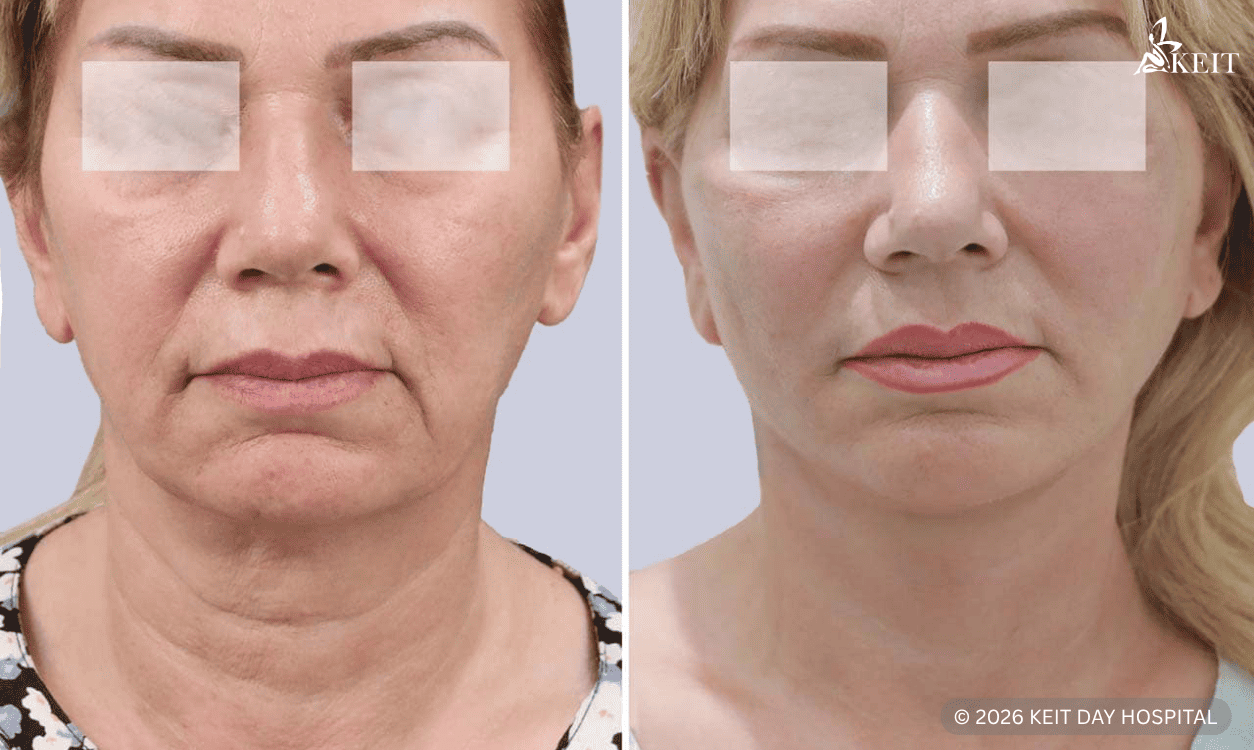
Neck lift surgery is generally safe in well-selected patients, but recent PubMed-indexed meta-analyses identify measurable risks, including hematoma, nerve injury, sialoma, platysma band recurrence and technique-related complications. This review summarizes current evidence for risk assessment, prevention and clinical counseling.
 Table of Contents:
-
1
 How the evidence was selected: Criteria for PubMed meta-analysis evidence
-
2
Core complication profile in neck lift surgery
-
3
Hematoma and bleeding: The most important early surgical risk
-
4
Nerve injury: Low pooled incidence, high patient impact
-
5
Platysma band recurrence and contour relapse
-
6
Sialoma and salivary-related fluid complications
-
7
Technique-related risk: SMAS and deep plane evidence
-
8
Prevention strategies supported by meta-analysis evidence
-
9
Key predictors of neck lift surgery risk identified across the evidence
-
10
Clinical implications: What the evidence means for practice
-
11
Bibliography: Recent PubMed-indexed meta-analyses considered
How the evidence was selected: Criteria for PubMed meta-analysis evidence
A targeted PubMed search identified recent systematic reviews, pooled analyses and meta-analyses on neck lift surgery, platysmaplasty, neck rhytidectomy, facelift complications and complication-prevention strategies. Studies were prioritized when they were PubMed-indexed and provided pooled quantitative estimates or meta-analytic comparisons. Because meta-analysis evidence focused exclusively on isolated neck lift surgery is limited, closely related rhytidectomy and facelift meta-analyses were included when their findings applied directly to neck lift–relevant complications, including hematoma, drainage, nerve injury, tissue sealant use and technique-related risk.
The final evidence set included five PubMed-indexed studies: a 2025 pooled analysis of platysma-based neck lift procedures, a 2025 meta-analysis of facelift-related nerve injury, a 2025 meta-analysis comparing SMAS and deep plane facelift safety, a 2024 meta-analysis of tranexamic acid for facelift bleeding outcomes and a 2023 meta-analysis of tissue sealants in facial rhytidectomy.
Core complication profile in neck lift surgery
Across the selected PubMed-indexed meta-analyses, the most clinically relevant complication categories are:
- Hematoma and postoperative bleeding.
- Motor or sensory nerve injury.
- Sialoma or salivary fluid collection.
- Platysma band recurrence.
- Drainage burden and fluid accumulation.
- Technique-related complication variability.
The direct neck-lift pooled analysis reported a pooled platysma band recurrence rate of 1.4%, pooled overall nerve damage of 0.9%, pooled hematoma of 1.8% and a pooled sialoma rate reported in the PubMed abstract.
Hematoma and bleeding: The most important early surgical risk
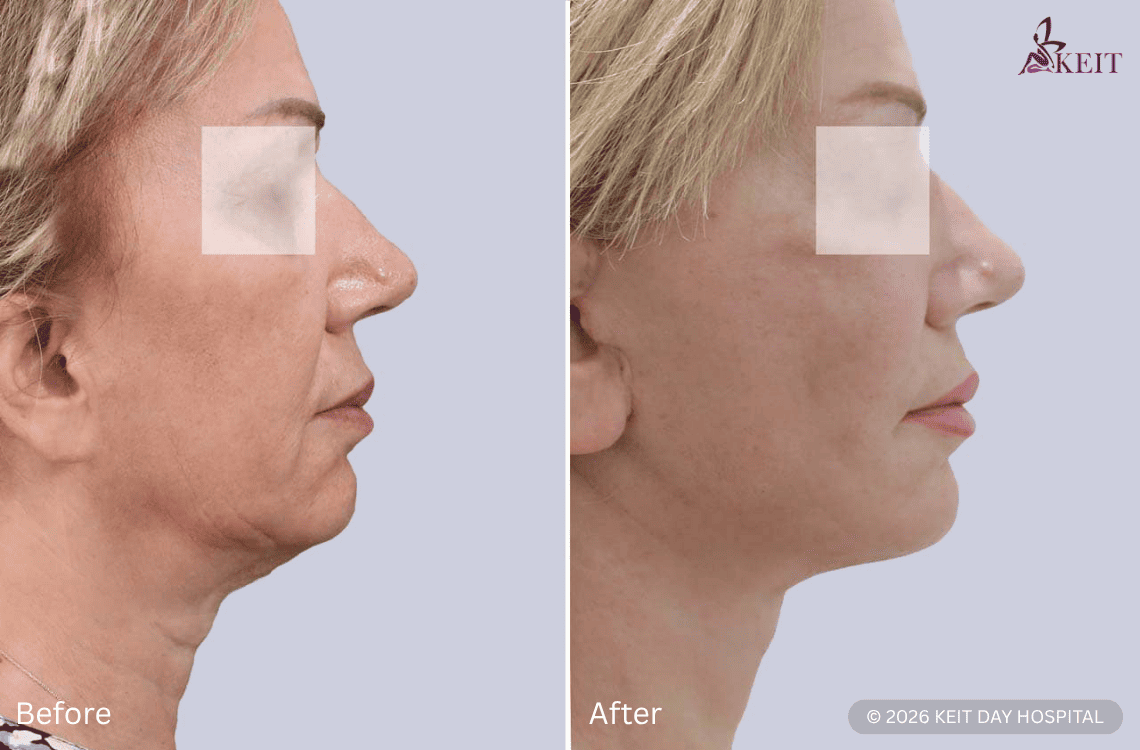
Hematoma is a key early complication after neck lift and lower-face rhytidectomy because cervical soft tissues are mobile, surgical undermining may be broad and postoperative swelling is highly visible.
- In the direct neck-lift pooled analysis, hematoma was reported at a pooled rate of 1.8%.
- Facelift meta-analysis evidence is relevant because many neck lifts are performed as part of lower-face/neck rhytidectomy.
- A 2024 PubMed meta-analysis found that tranexamic acid reduced postoperative drainage compared with controls, with a mean difference of −25.59. It also reported reduced minor hematomas without increased major complications.
- A 2023 PubMed meta-analysis of randomized controlled trials found that tissue sealants reduced drainage volume and lowered hematoma incidence, with a hematoma risk ratio of 0.29 and 95% CI 0.08–0.99.
Bleeding prevention should be treated as a core safety issue in neck lift counseling because hematoma may require urgent evaluation, delay recovery and compromise aesthetic outcome.
Nerve injury: Low pooled incidence, high patient impact
Nerve injury is uncommon after neck lift and lower-face rhytidectomy, but it remains clinically important because even temporary motor or sensory changes can affect expression, symmetry, sensation and patient satisfaction.
- The direct neck-lift pooled analysis reported an overall pooled nerve damage rate of 0.9%.
- A broader 2025 PubMed meta-analysis on facelift-related nerve injury included 67 publications, 15,404 patients and 15,441 procedures.
- In that meta-analysis, pooled motor nerve damage was 0.66%, while pooled sensory nerve damage was 0.39%.
- Permanent nerve injury was much rarer, with permanent motor nerve damage estimated at 0.047% and permanent sensory nerve damage at 0.045%.
Nerve injury should be presented as a low-frequency but high-impact complication, especially when counseling patients about possible functional, sensory and aesthetic consequences after neck lift surgery.
Platysma band recurrence and contour relapse
Platysma band recurrence is a neck-lift-specific outcome and one of the most relevant long-term risks. The 2025 pooled analysis of neck lift procedures involving platysma muscle reported 26 recurrence events among 2,106 patients, with a pooled recurrence rate of 1.4%. This risk matters because recurrence is not only a cosmetic issue. It may reflect persistent muscular pull, incomplete correction, tissue laxity progression or technique-patient mismatch. A neck lift should not be evaluated only by short-term improvement. Long-term durability, platysma control and cervical-angle stability are central risk-reduction outcomes.
Sialoma and salivary-related fluid complications
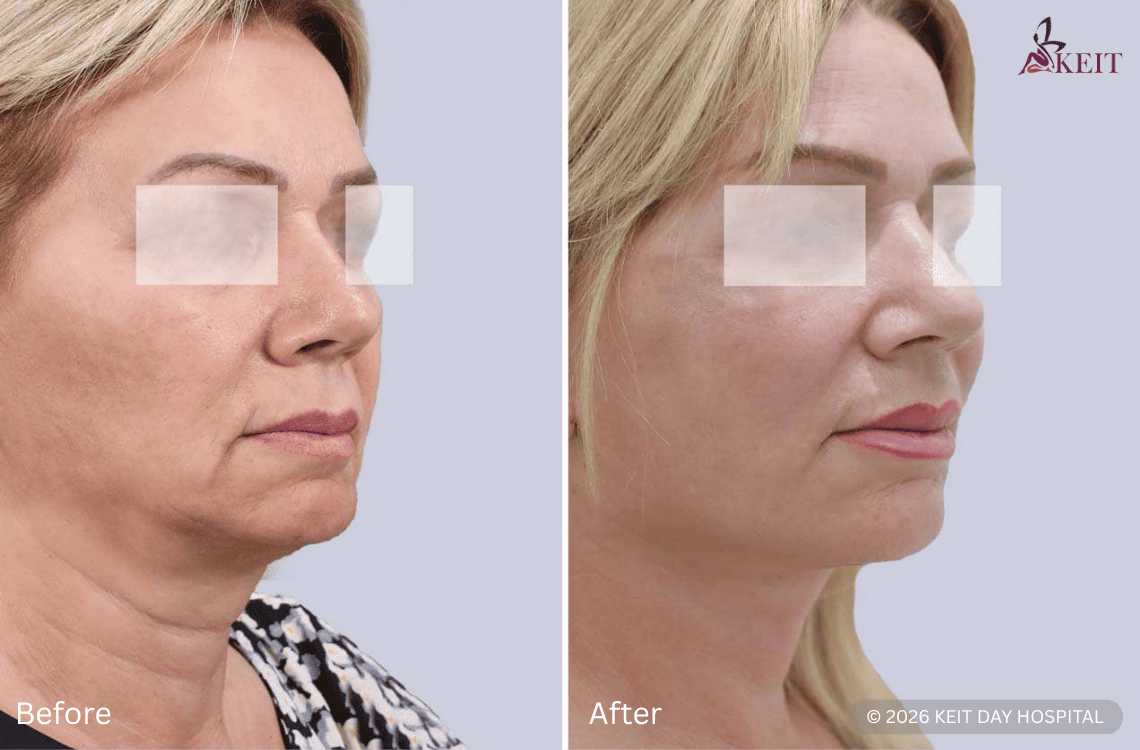
The direct neck-lift pooled analysis identified sialoma as a measurable postoperative complication. This is clinically important because neck lift surgery may involve dissection near salivary structures, especially when submandibular fullness or deep neck contouring is addressed. Sialoma is less common than swelling or bruising, but it is more specific to deep cervical or lower-face dissection. It should be included in informed consent when deeper neck work is planned.
Technique-related risk: SMAS and deep plane evidence
Modern neck lift procedures often overlap with SMAS, deep plane or lower-face rhytidectomy approaches. A 2025 PubMed-indexed systematic review and meta-analysis comparing SMAS and deep plane facelift techniques concluded that both approaches showed comparable safety profiles, while noting that limited comparative data and heterogeneous outcome measures prevent definitive superiority claims. The evidence does not support simplistic marketing claims that one technique is automatically “risk-free” or universally superior. Technique selection should be anatomy-driven, surgeon-experience-driven and risk-profile-driven.
Prevention strategies supported by meta-analysis evidence
The strongest prevention evidence in the selected PubMed meta-analyses relates to reducing bleeding, hematoma and postoperative drainage.
- Tranexamic acid: Meta-analysis evidence suggests that TXA reduces postoperative drainage and minor hematoma burden in facelift surgery without increasing major complications.
- Tissue sealants: Randomized rhytidectomy evidence shows that tissue sealants reduce drainage volume and lower hematoma incidence compared with controls.
- Meticulous hemostasis: Careful bleeding control remains a core surgical principle for reducing hematoma risk.
- Blood-pressure management: Careful perioperative blood-pressure control may help reduce bleeding-related complications.
- Early postoperative monitoring: Close follow-up helps detect hematoma, swelling or fluid accumulation before complications progress.
Risk reduction in neck lift surgery should be proactive, not reactive. Evidence-supported prevention should be built into surgical planning, especially for patients at higher bleeding or hematoma risk.

Key predictors of neck lift surgery risk identified across the evidence
Across the five PubMed-indexed meta-analyses, the most consistent risk themes are:
- Bleeding and hematoma are among the most important early complications.
- Nerve injury is uncommon but clinically meaningful.
- Platysma recurrence is a neck-lift-specific durability risk.
- Drainage burden can be reduced by adjunctive strategies such as TXA or tissue sealants.
- SMAS and deep plane techniques appear broadly comparable in safety, but the evidence is heterogeneous.
- Deeper or more complex cervical work may introduce different complication patterns than superficial skin-only tightening.
Clinical implications: What the evidence means for practice
Neck lift surgery risk is measurable, although the meta-analysis evidence base is thinner than for facelift surgery overall.
- Patients should be counseled about the main evidence-supported risks: hematoma, nerve injury, salivary-fluid complications and platysma recurrence.
- Risk reduction depends on appropriate patient selection, not just surgical technique.
- Surgical planning should be anatomy-based, especially when platysma work, deep neck contouring or lower-face rhytidectomy is involved.
- Bleeding control and nerve-aware dissection are central to reducing avoidable complications.
- Patients should receive honest counseling about recurrence, revision risk and outcome durability.
A safe neck lift is not defined by the name of the technique. It is defined by patient selection, anatomical planning, surgical precision and realistic risk counseling.
Bibliography: Recent PubMed-indexed meta-analyses considered
Cambiaso-Daniel J, Giordano S, Agnelli B, La Bella L, Gualdi A. Neck Lift to Treat Platysma Bands and Defining Cervical Angle: A Systematic Review and Pooled Analysis. Facial Plast Surg. 2025;41(4):482-490. PMID: 39406360.
Gandra G, Silva BS, Horta R. Facelift Surgery and Nerve Injury: A Systematic Review and Meta-Analysis. Aesthetic Plast Surg. 2025. PMID: 40456989.
Vayalapra S, Guerrero DN, Sandhu V, et al. Comparing the Safety and Efficacy of Superficial Musculoaponeurotic System and Deep Plane Facelift Techniques: A Systematic Review and Meta-analysis. Ann Plast Surg. 2025;95(5):582-589. PMID: 40600822.
Alenazi AS, et al. Impact of Tranexamic Acid on Bleeding Outcomes and Complication Rates in Facelift: A Systematic Review and Meta-analysis. Aesthetic Surg J. 2024. PMID: 39141514.
Chien WY, Huang YL, Chiu WK, Kang YN, Chen C. Tissue Sealants for Facial Rhytidectomy: A Systematic Review and Meta-Analysis of Randomized Controlled Trials. Facial Plast Surg Aesthet Med. 2023;25(2):90-96. PMID: 36260353.