Published on:

 Reading Time: 4 min

 Scientific Articles
This 2024–2025 evidence review synthesizes recent PubMed- and PubMed Central–indexed systematic reviews and cohort-based studies examining risk factors associated specifically with revision rhinoplasty. The selected publications analyze predictors of secondary nasal surgery, including anatomical compromise, graft-related outcomes, healing behavior and surgeon-dependent variables in patients undergoing revision procedures. Together, they provide an updated, evidence-based overview of factors that increase the likelihood of revision rhinoplasty in contemporary practice.
 Table of Contents:
-
1
 How the evidence was selected: Criteria for the latest reviews
-
2
Incidence of revision rhinoplasty reported in recent studies
-
3
Anatomical and structural risk factors in revision rhinoplasty
-
4
Graft-related factors influencing revision outcomes
-
5
Healing behavior and post-operative contributors to revision
-
6
Surgeon’s experience and technical execution in revision rhinoplasty
-
7
Population-specific anatomical considerations
-
8
Key predictors of revision rhinoplasty identified across studies
-
9
Clinical implications: What the evidence means for practice
-
10
Bibliography: Recent PubMed-indexed articles considered
How the evidence was selected: Criteria for the latest reviews
A targeted literature search was conducted using PubMed and PubMed Central to identify publications between 2024 and 2025 addressing revision rhinoplasty outcomes, predictors or risk determinants. Inclusion criteria comprised systematic reviews, meta-analyses and large retrospective or cohort studies focusing on secondary rhinoplasty, graft performance in revision cases or structural failure patterns following previous nasal surgery.
Narrative reviews, isolated technical descriptions and studies not explicitly analyzing revision rhinoplasty were excluded. The final selection reflects methodologically robust evidence directly applicable to revision risk assessment.
Incidence of revision rhinoplasty reported in recent studies
Recent evidence confirms that revision rhinoplasty is neither rare nor inevitable, with reported rates varying according to anatomical complexity, surgical history and follow-up duration. Large cohort analyses and systematic reviews published between 2024 and 2025 report revision rates generally ranging between 5% and 15% among patients undergoing rhinoplasty. Importantly, most revisions are performed for structural or functional deficiencies, rather than isolated cosmetic dissatisfaction, underscoring the reconstructive nature of revision rhinoplasty.
Anatomical and structural risk factors in revision rhinoplasty
Anatomical compromise is the most consistently reported risk factor in revision rhinoplasty literature. Studies focusing on secondary procedures highlight that revision cases frequently involve weakened or altered support structures. Structural features associated with increased revision complexity include:
- Compromised septal framework
- Mid-vault collapse or deviation
- Insufficient dorsal support
- Weak or under-projected nasal tip
In cleft-related, post-traumatic and ethnically specific nasal anatomies, these issues are more pronounced and contribute to higher revision rates.
Graft-related factors influencing revision outcomes
Graft selection and performance play a central role in revision rhinoplasty outcomes. Evidence shows that graft-related complications are among the most frequent reasons for secondary intervention.
Cartilage allografts in revision rhinoplasty
Systematic reviews evaluating fresh frozen rib grafts (FFRG) and irradiated homologous costal cartilage (IHCC) in revision rhinoplasty report variable complication profiles. Identified issues include infection, resorption, warping and displacement, with differing incidence rates between graft types.
While autologous rib cartilage remains the reference standard when available, selected allografts are shown to be safe and effective alternatives in revision settings when donor-site limitations exist and surgical technique is appropriate.
Soft-tissue and fascia-based grafts in revision cases
Cohort studies assessing Tutoplast-processed fascia lata demonstrate favorable long-term outcomes when used in revision rhinoplasty for dorsal refinement and camouflage. These materials are associated with low complication rates and high patient satisfaction, particularly when revision indications involve surface irregularities rather than structural collapse.
Healing behavior and post-operative contributors to revision
Healing variability is a critical factor influencing revision rhinoplasty outcomes. Studies emphasize that abnormal or prolonged healing responses can lead to perceived or real deformities even after technically sound surgery. Reported contributors include:
- Persistent edema
- Excessive fibrosis
- Asymmetric soft-tissue contraction
- Delayed stabilization of nasal contours.
These factors highlight the importance of sufficient follow-up before determining the need for revision surgery.
Surgeon’s experience and technical execution in revision rhinoplasty
Across all analyzed publications, surgeon experience consistently correlates with revision outcomes. Revision rhinoplasty demands advanced structural planning and familiarity with altered anatomy. Evidence shows that:
- High-volume rhinoplasty surgeons report lower secondary revision rates.
- Experience with complex grafting reduces structural failure.
- Inadequate technical execution increases the likelihood of further revision.
Revision risk is therefore more strongly linked to surgical expertise than to procedural approach alone.
Population-specific anatomical considerations
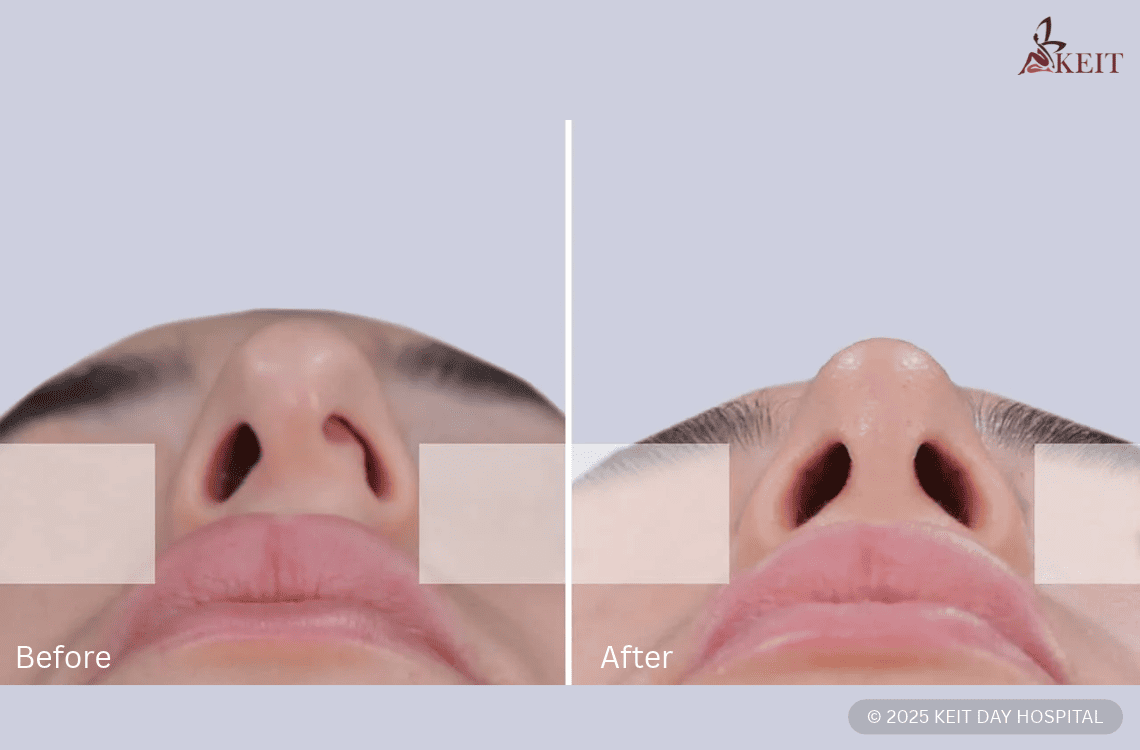
Population-specific nasal characteristics significantly influence revision rhinoplasty risk. Studies focusing on Latin American patients demonstrate a high prevalence of revision-related findings such as excessive dorsal reduction, mid-vault instability and inadequate tip projection. These findings emphasize that revision rhinoplasty risk increases when surgical strategies are not adapted to underlying anatomical characteristics.
Key predictors of revision rhinoplasty identified across studies
Across the reviewed PubMed evidence, consistent predictors of revision rhinoplasty include:
- Structural compromise from previous surgery.
- Inadequate support reconstruction.
- Suboptimal graft selection or fixation.
- Healing variability and fibrosis.
- Surgeon’s experience and case volume.
Revision rhinoplasty is consistently shown to be multifactorial, rarely attributable to a single isolated factor.
Clinical implications: What the evidence means for practice
- Most revision rhinoplasty risks stem from structural issues.
- Graft performance significantly affects long-term stability.
- Healing timelines must be respected before revision decisions.
- Surgeon’s expertise remains a central determinant of outcomes.
Current evidence supports revision risk reduction through comprehensive structural evaluation, appropriate graft selection and long-term follow-up rather than reliance on isolated technical choices.
Bibliography: Recent PubMed-indexed articles considered
- Garbaccio NC. Current Predictors of Revision at Time of Primary Rhinoplasty. Aesthetic Plast Surg. 2025. PMID: 41286173.
- Deng R. Deformity and revision rates after secondary unilateral cleft lip rhinoplasty with different cartilage grafts: A systematic review and meta-analysis. J Craniomaxillofac Surg. 2025. PMID: 40082132.
- Hosseini M. A comprehensive overview of FFRG and IHCC allograft cartilages in revision rhinoplasty: A systematic review. Head Face Med. 2025. PMID: 39833811
- Al-Sebeih KH. Long-Term Safety and Reliability of Using Tutoplast-Processed Fascia Lata to Refine the Nasal Dorsum in Primary and Revision Rhinoplasty. Aesthetic Plast Surg. 2024. PMID: 38379010.
- Perez Willis WA. Secondary Rhinoplasty: Clinical Findings and Alternative Structures for Nasal Reconstruction in Latin American Patients. Plastic and Reconstructive Surgery Global Open. 2025. PMID: 40642259