Published on:
 Modified on:

 Reading Time: 5 min

 Scientific Articles
This 2023–2025 meta-analysis–based review synthesises the latest PubMed-indexed evidence on complications associated with breast reduction (reduction mammaplasty). The selected papers analyse postoperative outcomes such as wound complications, fat necrosis, infection, nipple–areola complex (NAC) changes and technique-related factors. By combining the five most recent systematic reviews and meta-analyses, this article provides an updated, evidence-based overview of risk patterns, predictors and clinical implications in modern breast reduction surgery.
 Table of Contents:
-
1
 How the evidence was selected: Criteria for the latest five reviews
-
2
Complications most frequently reported in recent meta-analyses
-
3
Wound complications, infection and fat necrosis
-
4
Systemic or functional outcomes: Sensation changes and healing quality
-
5
Reconstruction-related insights
-
6
Rare but important risks
-
7
Technique, pedicle and patient factors influencing outcomes
-
8
Overall breast-reduction risk profile: What this means for practice
-
9
Bibliography: The five latest PubMed-indexed articles considered
How the evidence was selected: Criteria for the latest five reviews
A PubMed search identified the five most recent systematic reviews and meta-analyses published between 2023 and 2025 assessing complications after reduction mammaplasty. Only high-level evidence was included, studies reporting pooled incidence, odds ratios or quantitative complication data. These reviews evaluated surgical techniques, pedicle variations, wound-healing outcomes, infection rates, sensory changes and patient-related predictors. Quantitative indicators (RR, OR, pooled incidence) were extracted where available, while qualitative insights were synthesised to reflect consistent trends across the literature.
Complications most frequently reported in recent meta-analyses
Across meta-analytic data, breast reduction complications typically cluster into the following categories:
- Wound-healing complications (minor dehiscence, delayed healing): 8–23%
- Fat necrosis: 2–10%
- Infection: 2–7%
- Hematoma / seroma: 1–5%
- NAC sensory changes: 8–32%
- Major NAC necrosis (partial or total): <1–2%
These ranges outline the core safety profile of reduction mammaplasty.
Wound complications, infection and fat necrosis
Wound-healing problems remain the most frequently reported postoperative issue. Most cases involve small areas of delayed healing or minor breakdown rather than major tissue loss. Higher rates occur consistently in smokers, high-BMI patients and those undergoing large resections.
Fat necrosis, reported in 2–10% of cases, is more common in large-volume reductions and certain pedicle choices. Infection rates range between 2–7% and typically respond well to antibiotics. Vertical scar techniques may show slightly more early inflammation but lower major wound breakdown compared with Wise-pattern closures.
Key risk factors include:
- Smoking
- BMI > 30
- Diabetes
- Resection weights > 1,000 g
- Prolonged operative time.
Systemic or functional outcomes: Sensation changes and healing quality
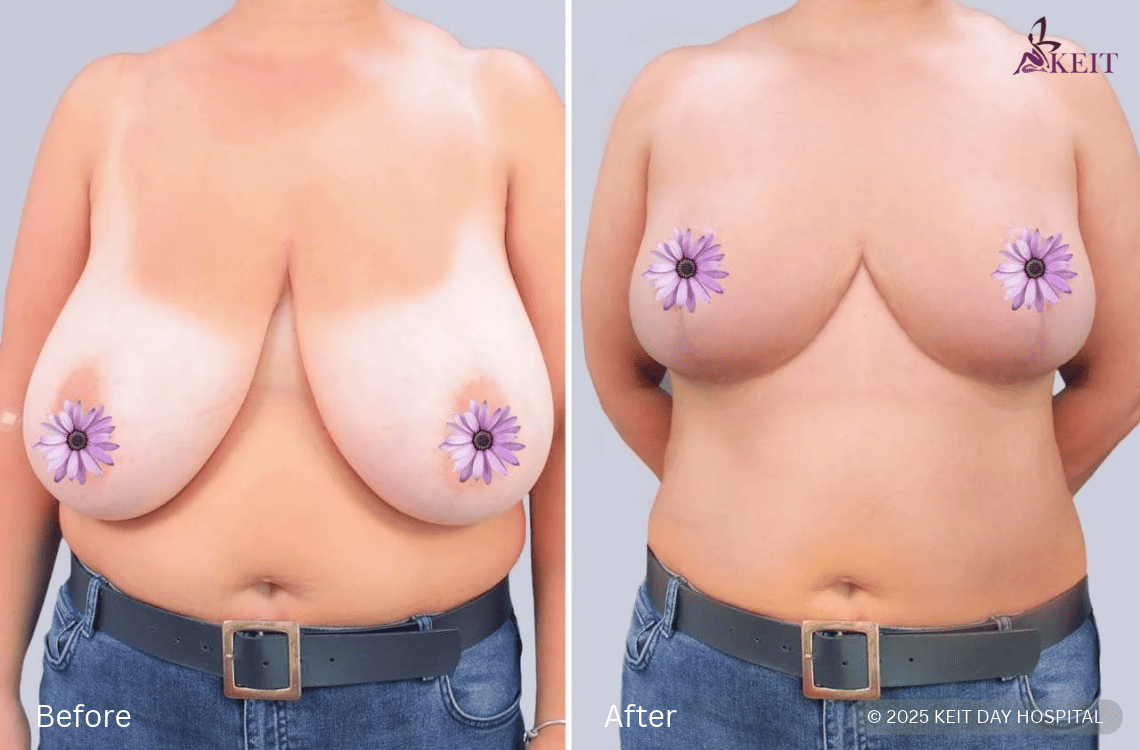
Nipple–areola complex sensation changes are among the most widely discussed functional outcomes. Temporary sensory alteration affects 8–32% of patients, while permanent loss remains around 4–10%.
Pedicle selection strongly influences sensation outcomes:
- Superomedial pedicles: strong perfusion, better sensory preservation.
- Superior pedicles: high sensory preservation but sensitive to high tension.
- Inferior pedicles: reliable but may show slightly higher fat-necrosis rates in very large reductions.
- Free-nipple grafting: highest chance of permanent sensory loss; reserved for extreme cases.
Healing quality depends heavily on tissue perfusion, resection size and patient vascular health. Smoking, diabetes and gigantomastia all raise risks of tissue distress. Most sensory changes improve within months but require clear preoperative explanation.
Reconstruction-related insights
Although breast reduction differs from reconstructive surgery, insights from reconstruction research remain clinically relevant. Patients previously exposed to radiation display substantially higher risks of wound breakdown and infection.
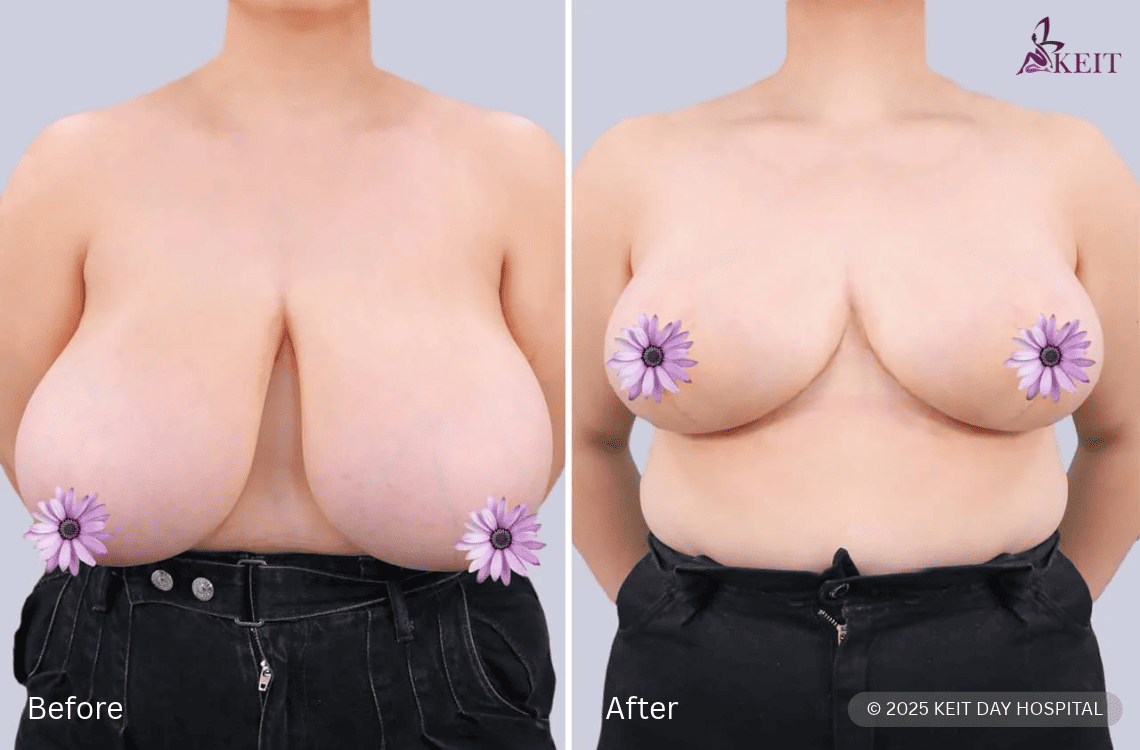
Gigantomastia, a rare condition involving extreme breast enlargement with resections often exceeding 1.5 kg per breast, is associated with higher rates of fat necrosis, venous congestion and NAC compromise due to increased vascular strain. Adolescents usually show low complication rates but may experience long-term shape changes due to continued breast development. These findings highlight the need for tailored planning in anatomically or vascularly complex cases.
Rare but important risks
Although uncommon, certain complications require particular attention.
- NAC necrosis (<1–2%): Partial or complete necrosis is very uncommon and usually linked to gigantomastia, high-risk pedicle choice, or vascular compromise.
- Venous congestion: More likely in very large reductions or patients with impaired tissue perfusion.
- Thromboembolic events: Extremely rare, but highlight the need for proper perioperative assessment and targeted prophylaxis.
Even if infrequent, these complications underscore the importance of meticulous surgical technique and careful risk optimization.
Technique, pedicle and patient factors influencing outcomes
Pedicle design is one of the most decisive elements affecting outcomes.
- Superomedial pedicles provide strong vascular supply, low necrosis rates and stable long-term aesthetics.
- Inferior pedicles offer reliable perfusion but may show slightly higher fat-necrosis rates in large resections.
- Superior pedicles preserve sensation effectively but must be executed carefully in high-tension settings.
- Free-nipple grafts carry the highest risk of sensory loss and pigmentation change and are reserved for extreme cases.
Patient-related factors, such as BMI above 30, smoking, diabetes, thin tissues and large resection play a major role in complication risk. Precision in surgical technique, tension reduction and thorough preoperative optimisation contribute to safer outcomes.
Overall breast-reduction risk profile: What this means for practice
- Meta-analytic evidence confirms breast reduction is usually safe with a predictable, manageable complication pattern.
- Wound-healing issues are the most frequent post-operative event but are usually mild and responsive to conservative care.
- Fat necrosis and infection occur at modest rates and depend on perfusion quality, technique and patient risk factors.
- NAC sensory changes remain a key functional consideration, particularly in large reductions and pedicle choice.
- Optimal results depend on careful surgical planning, modification of risk factors and attentive postoperative monitoring.
- Overall, patient satisfaction remains high when reduction mammaplasty is performed using evidence-based techniques and appropriate patient counselling.
Bibliography: The five latest PubMed-indexed articles considered
- Ran, R. (2025). Risk factors for complications after reduction mammaplasty: a systematic review and meta-analysis. Eur J Med Res, 30(1), 440. PubMed PMID: 40452064.
- Tanas, Y. (2025). Comparative Outcomes of Superomedial and Inferior Pedicles in Breast Reduction and Mastopexy: A Meta-Analysis of 5123 Breasts. Aesthetic Plast Surg, 49(5), 1327–1339. PubMed PMID: 39433614.
- Arbuiso, S. (2025). Sensation Alterations Following Superior and Superomedial Wise Pattern Breast Reductions. Ann Plast Surg, 94(4S Suppl 2), S108–S112. PubMed PMID: 40167054.
- Zelko, I. (2023). Nipple-Sparing Gigantomastia Breast Reduction: A Systematic Review. Ann Plast Surg, 90(3), 267–272. PubMed PMID: 36796050.
- Darras, O. (2025). Effects of Wise Pattern Versus Vertical Approach on The Outcomes of Superomedial Pedicle Breast Reduction: Systematic Review and Pooled Analysis. Plast Reconstr Surg. PubMed PMID: 40833361.