Published on:
 Modified on:

 Reading Time: 6 min

 Scientific Articles
Submuscular and subglandular implant placement are two fundamental approaches in breast surgery, but their comparative risk profiles remain debated. Recent PubMed meta-analyses clarify how implant plane influences outcomes such as capsular contracture, animation deformity, pain, and implant visibility. Rather than supporting a single superior approach, the evidence points to a trade-off model in which implant plane should be selected based on patient anatomy and clinical priorities.
 Table of Contents:
-
1
 How the evidence was selected: PubMed meta-analyses only
-
2
Why is this topic more complex than it appears?
-
3
Direct evidence from primary breast augmentation
-
4
Capsular contracture: the most robust plane-dependent outcome
-
5
Pain and animation deformity: where above-muscle placement gains ground
-
6
Rippling, visibility, and soft-tissue dependence
-
7
Reconstruction evidence: useful, but not interchangeable
-
8
Risk modifiers that often matter more than plane
-
9
Clinical implications: how implant plane should be chosen
-
10
Bibliography: Recent PubMed-indexed meta-analyses considered
How the evidence was selected: PubMed meta-analyses only
A structured PubMed search identified recent systematic reviews and meta-analyses on implant pocket plane selection, focusing on comparisons between submuscular or subpectoral placement and more superficial planes, including subglandular and prepectoral positioning. Priority was given to studies published from 2023 to 2026 that reported pooled quantitative outcomes and direct plane comparisons. The final evidence base includes augmentation-specific meta-analysis comparing subfascial and subglandular placement techniques. A key limitation is that direct modern meta-analytic evidence for cosmetic subglandular versus submuscular augmentation remains limited, so some of the strongest recent comparative data come from implant-based reconstruction and should be interpreted in that context.
Why is this topic more complex than it appears?
Submuscular and subglandular implant placement are often treated as a binary comparison, yet the available evidence indicates that neither plane is consistently superior across all clinically relevant outcomes.
- Submuscular or subpectoral placement is generally associated with better soft-tissue coverage and, in augmentation-focused evidence, a lower capsular contracture signal.
- Subglandular placement and above-muscle approaches, including the prepectoral analogue in reconstruction, are more consistently associated with less animation deformity and, in some studies, less early postoperative discomfort.
No single implant plane performs best across every outcome. The more useful clinical question is not which option is universally better, but which risk profile is the better fit for the patient.
Direct evidence from primary breast augmentation
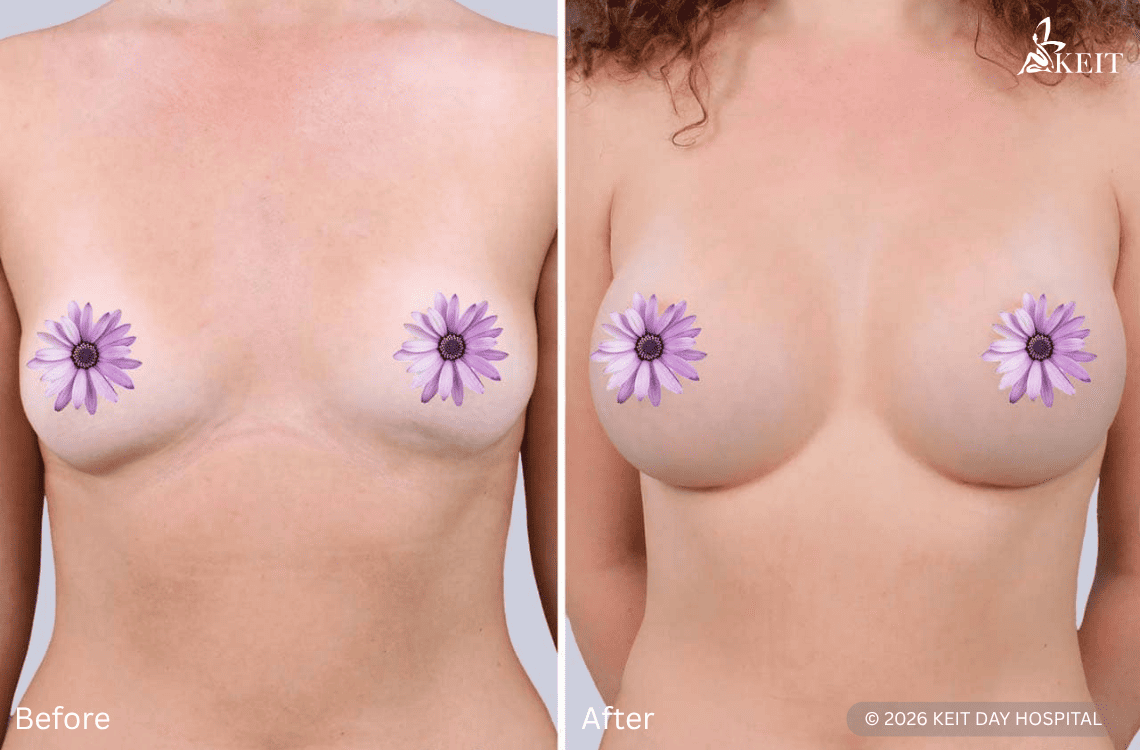
The most relevant augmentation-specific meta-analysis, published by Alderhali and colleagues in 2026, pooled data from 91 studies and more than 51,000 patients. Capsular contracture was reported most frequently with subglandular placement, with pooled rates of:
- 6.85% for subglandular implants
- 1.83% for submuscular implants
- 1.99% for dual-plane augmentation
Pairwise analysis showed a significantly higher capsular contracture risk with subglandular than submuscular placement (RR ≈ 2.84; p=0.041). This remains the clearest augmentation-specific comparative signal in the recent literature.
Capsular contracture: the most robust plane-dependent outcome
Capsular contracture remains the most consistent plane-dependent outcome in the recent literature. It is also the only outcome for which augmentation-specific meta-analytic evidence is available and the direction of effect is relatively consistent across studies. This pattern is reinforced by the 2024 meta-analysis by comparing subfascial and subglandular placement. In these analyses, subfascial augmentation was associated with lower rates of capsular contracture, less rippling, and fewer hematomas than subglandular placement.
Although subfascial and submuscular placement are not equivalent, the broader implication is consistent: implant planes with greater tissue coverage tend to show a lower capsular contracture risk signal than more superficial planes.
Pain and animation deformity: where above-muscle placement gains ground
Recent reconstruction meta-analyses report lower rates of animation deformity with prepectoral placement, along with less early postoperative pain and, in some studies, better early functional recovery. This difference is anatomically intuitive. Subpectoral placement involves elevation and movement of the pectoralis muscle, whereas above-muscle placement avoids this source of dynamic distortion and postoperative discomfort. Although these findings come from reconstruction rather than cosmetic augmentation, the broader implication remains relevant: submuscular placement is more likely to be associated with muscle-related side effects, while above-muscle placement is less likely to cause animation deformity.
Rippling, visibility, and soft-tissue dependence
Across both augmentation and reconstruction studies, limited soft-tissue coverage is consistently associated with a higher risk of visible implant edges and rippling. This issue tends to be more pronounced in more superficial planes, including subglandular and other above-muscle approaches.
The 2024 meta-analysis by Yuan and colleagues supports this pattern, showing a higher rippling risk with subglandular than with subfascial placement. The broader implication is that the implant plane cannot be evaluated in isolation. Coverage thickness is a central determinant of how well a more superficial implant will be masked.
In practical terms, subglandular placement may perform well in a carefully selected patient with adequate tissue coverage, but it is likely to be less forgiving in thinner patients.
Reconstruction evidence: useful, but not interchangeable
Reconstruction meta-analyses provide valuable comparative data, but they arise from a different clinical context than cosmetic augmentation. Important differences include:
- Mastectomy flaps rather than intact breast tissue
- Frequent use of acellular dermal matrix (ADM)
- Exposure to radiotherapy in some patients
- Different baseline complication profiles
Their main value lies in clarifying outcomes that are strongly shaped by implant plane mechanics, particularly animation deformity, pain, and early functional recovery. However, these studies should not be treated as direct substitutes for augmentation-specific evidence, because reconstruction and cosmetic augmentation differ in several important clinical respects.

Risk modifiers that often matter more than plane
Recent meta-analyses suggest that implant plane alone does not determine outcomes. Several additional factors consistently influence complication patterns and aesthetic results, including:
- Soft-tissue thickness, which appears to be a major determinant of rippling, implant visibility, and the overall tolerance of more superficial implant placement.
- Surgical technique, including dual-plane modifications, pocket control, and implant positioning, all of which can materially influence both aesthetic and complication outcomes.
- Follow-up duration, which is especially important for outcomes such as capsular contracture, since shorter follow-up may underestimate late events.
- Implant characteristics, including surface, fill, and size, which may further modify the relationship between implant plane and postoperative results.
Taken together, these factors suggest that the implant plane is best understood as a risk modifier rather than a standalone determinant of outcome.
Clinical implications: how implant plane should be chosen
The most evidence-aligned approach is to base implant plane selection on the outcome that matters most clinically for the individual patient. In practice, this includes:
- Minimizing capsular contracture risk, for which the augmentation-focused evidence favors submuscular placement.
- Avoiding animation deformity, where above-muscle placement appears to offer a clearer advantage.
- Reducing rippling in thinner patients, where submuscular placement may provide more forgiving soft-tissue coverage.
- Improving early recovery and limiting postoperative discomfort, where above-muscle placement may be advantageous in appropriately selected patients.
Taken together, these findings support a priority-based approach in which implant plane is matched to patient anatomy, complication profile, and treatment goals rather than chosen as a one-size-fits-all solution.
Bibliography: Recent PubMed-indexed meta-analyses considered
Alderhali R, Jamel WA, Dehnadi S, Seth I, Khajuria A. Implant Pocket Plane Selection in Primary Breast Augmentation: A Meta-Analysis and Systematic Review of Complication Profiles. Aesthetic Plast Surg. 2026. PMID: 41748776.
Størling R, Johansen R, Lilja C, Damsgaard TE. Prepectoral vs subpectoral breast reconstruction before postmastectomy radiotherapy: A systematic review and meta-analysis. J Plast Reconstr Aesthet Surg. 2026. PMID: 41308380.
Yuan M, Kim PJ, Gallo L, Austin RE, Lista F, Ahmad J. Outcomes in Subfascial Versus Subglandular Planes in Breast Augmentation: A Systematic Review and Meta-analysis. Aesthet Surg J. 2024. PMID: 38825810.
Nolan IT, Farajzadeh MM, Bekisz JM, Boyd CJ, Gibson EG, Salibian AA. Prepectoral versus Subpectoral Breast Reconstruction after Nipple-Sparing Mastectomy: A Systematic Review and Meta-analysis. Plast Reconstr Surg Glob Open. 2024. PMID: 38746948.
Ostapenko E, Nixdorf L, Devyatko Y, Exner R, Wimmer K, Fitzal F. Prepectoral Versus Subpectoral Implant-Based Breast Reconstruction: A Systematic Review and Meta-analysis. Ann Surg Oncol. 2023;30(1):126–136. PMID: 36245049.