Published on:

 Reading Time: 4 min
 Inner thigh lift
Thigh chafing is skin irritation caused by repeated friction, usually where the inner thighs rub against each other or clothing. It can cause redness, burning, tenderness, raw skin and a chafing rash. Treatment focuses on reducing friction, keeping the skin dry and protecting the affected area, while recurrent chafing may require assessment of underlying factors.
 Table of Contents:
-
1
 What is thigh chafing?
-
2
What causes thigh chafing?
-
3
What does thigh chafing look and feel like?
-
4
How to treat thigh chafing?
-
5
How to prevent thigh chafing?
-
6
Can surgery help with persistent thigh chafing?
-
7
Is it thigh chafing or another type of rash?
-
8
When should you see a doctor about thigh chafing?
In this article, we explain what causes thigh chafing, how to recognise its symptoms, and how to treat and prevent it. We also cover when liposuction or thighplasty may be considered for persistent chafing, how to distinguish chafing from other skin conditions, and when medical assessment is recommended.
What is thigh chafing?
Thigh chafing is skin irritation caused by repeated rubbing, usually where the inner thighs come into contact with each other or with clothing. The friction can damage the skin’s protective barrier and cause redness, burning, tenderness, or soreness. It is more common during walking, running, exercise, or hot weather, when movement and sweating increase friction. Continued friction can lead to raw or eroded skin, superficial abrasions and, in more severe cases, blisters or small areas of broken skin.
What causes thigh chafing?
Thigh chafing is mainly caused by repeated friction between the thighs, with moisture and heat often making the irritation worse. The main contributing factors include:
- Skin-to-skin friction between the thighs during walking, running, exercise, or prolonged movement.
- Sweating and moisture, which increase skin friction and irritation.
- Heat and humidity, which promote sweating and make the skin more vulnerable to rubbing.
- Repetitive physical activity, particularly activities involving frequent leg movement.
- Tight, rough, or poorly fitting clothing that increases friction against the inner thighs.
- Thigh anatomy and body composition, which can increase contact between the thighs during movement.
What does thigh chafing look and feel like?
Thigh chafing usually causes redness and irritation of the inner-thigh skin, often accompanied by burning, stinging, or tenderness. The appearance and severity depend on how much friction the skin has been exposed to and may include:
- redness and inflammation;
- burning, stinging, or soreness;
- increased skin sensitivity or tenderness;
- a red or irritated rash;
- raw or peeling skin when friction is more intense;
- small blisters or superficial breaks in the skin in more severe cases.
How to treat thigh chafing?
Treatment for thigh chafing focuses on protecting the irritated skin, relieving discomfort, and allowing it to heal.
- Apply a protective barrier: A thin layer of petroleum jelly can protect irritated skin and reduce further friction while it heals.
- Use a cool compress: A cool, damp compress can help relieve burning, soreness, and irritation.
- Cover raw or broken skin: A non-stick dressing can protect superficial skin damage from further rubbing.
- Stop activities that aggravate the area: Avoid continued friction until the affected skin has recovered, as repeated rubbing can delay healing.
Mild thigh chafing usually improves within a few days to about a week once further friction is avoided and the skin is protected.
How to prevent thigh chafing?
Preventing thigh chafing involves reducing friction and moisture before the skin becomes irritated.
- Apply an anti-chafing barrier: Petroleum jelly, anti-chafing creams, balms, or lubricating products can reduce friction between the thighs.
- Keep the thighs dry: Moisture from sweating increases friction, so moisture-wicking products and changing out of wet clothing can help.
- Wear suitable clothing: Moisture-wicking, close-fitting clothing can reduce skin-to-skin contact and friction during activity.
- Use a physical barrier: Anti-chafing thigh bands or shorts can prevent direct contact between the inner thighs.
- Protect the skin before exercise: Apply an anti-friction product before walking, running, or other activities that typically cause rubbing.
Can surgery help with persistent thigh chafing?
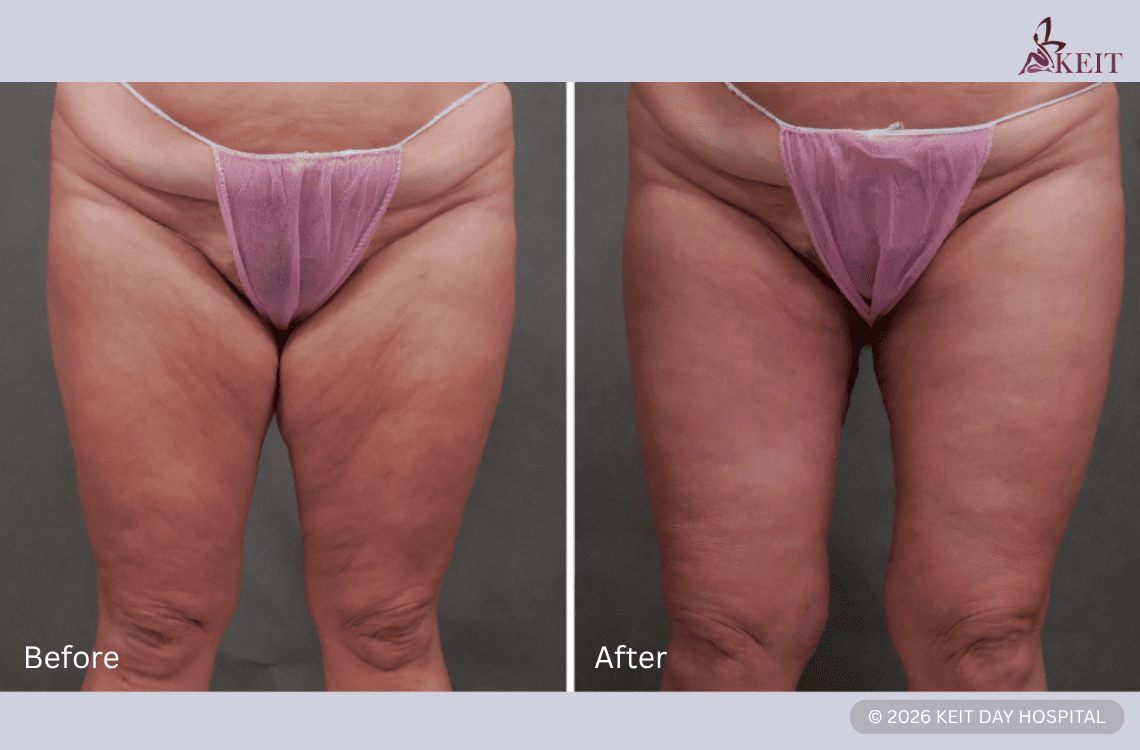
Surgery may be considered when excess fat or loose skin contributes to recurrent thigh chafing and non-surgical measures are not sufficient. The two main options are thighplasty and liposuction, depending on the underlying cause.
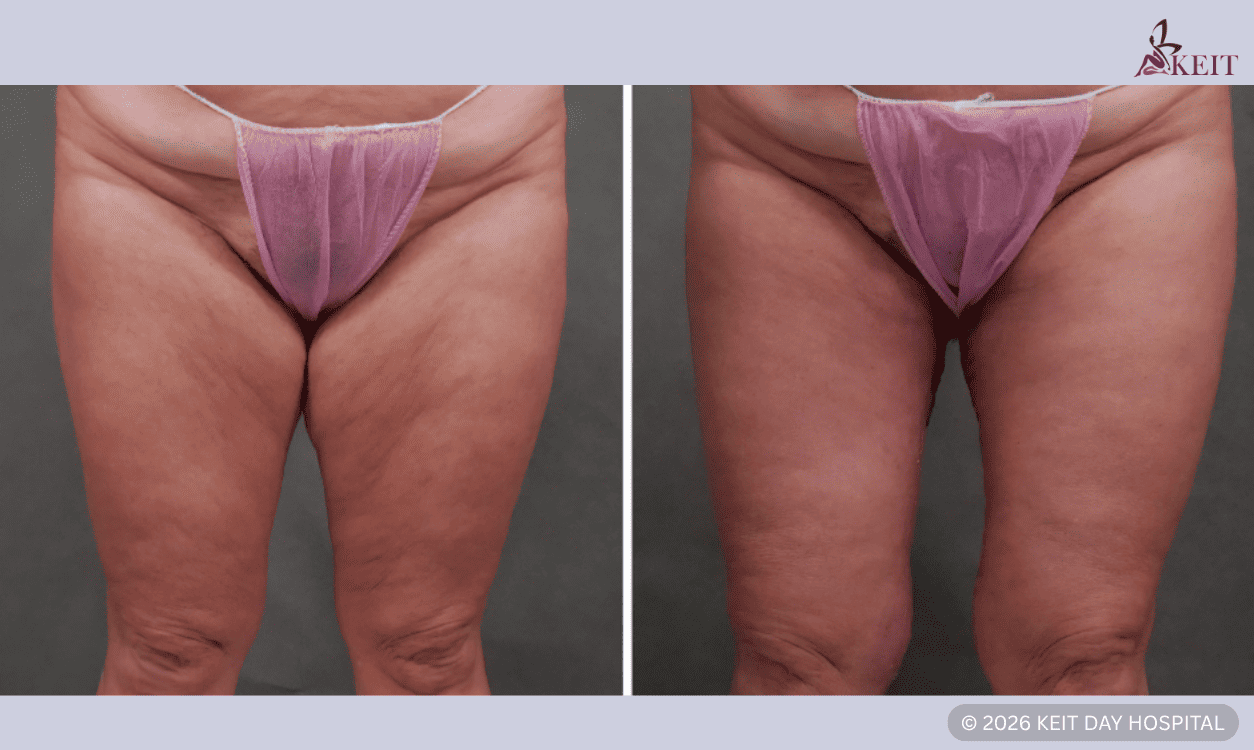
Thighplasty (thigh lift): Removes excess skin and reshapes the thigh when loose or redundant skin contributes to friction. It can be particularly relevant after significant weight loss.
Thigh liposuction: Removes localised fat from the thighs when excess fatty tissue contributes to the thighs rubbing together. It is most suitable when the main cause is excess fat and the skin has adequate elasticity.
The appropriate procedure depends on whether loose skin, excess fat, or both are contributing to the chafing. Surgery does not treat the skin irritation itself and should be considered following a clinical assessment.
Book your FREE
Online Consultation Now

Is it thigh chafing or another type of rash?
Not every inner-thigh rash is caused by chafing. Thigh chafing usually develops where repeated friction causes redness, burning, tenderness, or superficial skin irritation. Similar symptoms can occur with other skin conditions, including:
- Fungal infection: Often causes an itchy, inflamed rash in warm, moist areas.
- Contact dermatitis: Can develop after contact with an irritating substance or allergen.
- Eczema: May cause persistent itching, dryness, and inflammation.
- Intertrigo: Inflammation in skin folds associated with moisture and friction.
A rash that persists, spreads, or does not improve after friction is reduced should be medically assessed to determine the underlying cause.
When should you see a doctor about thigh chafing?
Medical assessment is recommended when thigh chafing is severe, persistent, worsening, or shows signs of infection. Seek medical advice if:
- The skin is severely damaged, blistered or bleeding.
- Pain or inflammation is significant or worsening.
- The area becomes increasingly warm, swollen or painful.
- There is pus, discharge, an unpleasant odour or fever.
- The skin does not improve after about a week of appropriate care.
- Chafing repeatedly occurs despite effective friction prevention.
Persistent or atypical symptoms may indicate another skin condition rather than simple friction-related chafing.