Published on:
 Modified on:

 Reading Time: 4 min
 Inner thigh lift
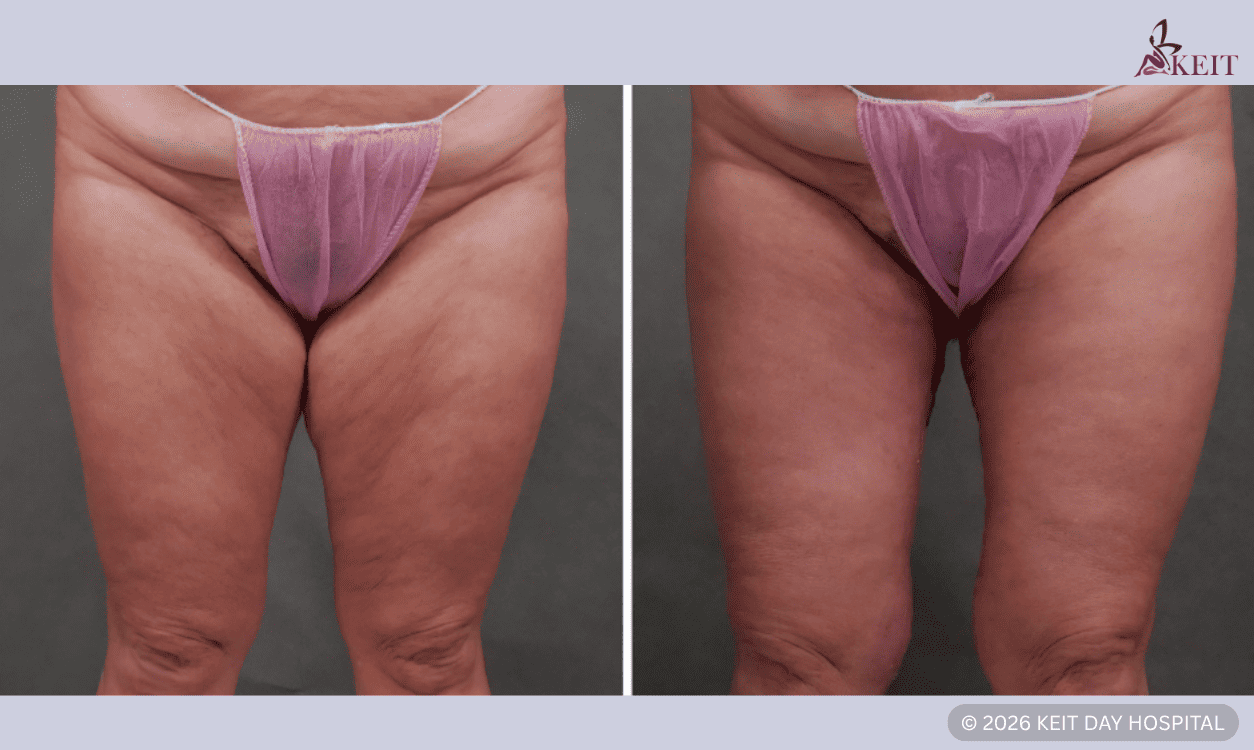
Thigh contouring surgery can improve the appearance of the thighs by addressing excess fat, loose skin or both. Depending on the patient's anatomy and goals, treatment may involve thighplasty, thigh liposuction or a combination of the two.
 Table of Contents:
-
1
 What is thigh contouring?
-
2
What causes excess fat and loose thigh skin?
-
3
Thighplasty: A solution for loose or sagging thigh skin
-
4
Thigh Liposuction: A solution for stubborn fat on the thighs
-
5
Thighplasty vs Liposuction: What is the difference?
-
6
When are thighplasty and liposuction combined?
-
7
Who is a good candidate for thigh contouring surgery?
In this article, we explain what thigh contouring is and how it can improve thigh shape by addressing excess fat, loose skin, or both. We discuss the main causes of thigh contour concerns, the differences between thighplasty and thigh liposuction, when these procedures may be combined, and who may be a suitable candidate for thigh contouring surgery.
What is thigh contouring?
Thigh contouring refers to surgical procedures that improve the shape and appearance of the thighs by addressing excess fat, loose skin or both. The goal is to create a smoother, more balanced and proportionate lower body contour.
Patients may consider thigh contouring when stubborn fat deposits or sagging skin do not improve with diet, exercise or weight management. These concerns can be influenced by genetics, ageing, pregnancy or significant weight changes.
The right approach depends on the main concern. Thigh liposuction may be recommended for localised fat, thighplasty for loose skin, or a combination of both when excess fat and skin laxity are present.
What causes excess fat and loose thigh skin?
Excess fat and loose skin on the thighs can develop for different reasons. In many cases, the cause is not only weight gain, but also skin quality, genetics and changes in body shape over time.
Common factors include:
- Genetics, which can influence where the body stores fat.
- Ageing, which can reduce skin elasticity.
- Pregnancy, which may change body contour and skin firmness.
- Significant weight loss, which can leave excess or stretched skin.
- Weight fluctuations, which may affect both fat distribution and skin laxity.
When the skin has lost elasticity, exercise can improve muscle tone but cannot remove loose skin. This is why the treatment plan depends on whether the main concern is fat, skin laxity or both.

Thighplasty: A solution for loose or sagging thigh skin
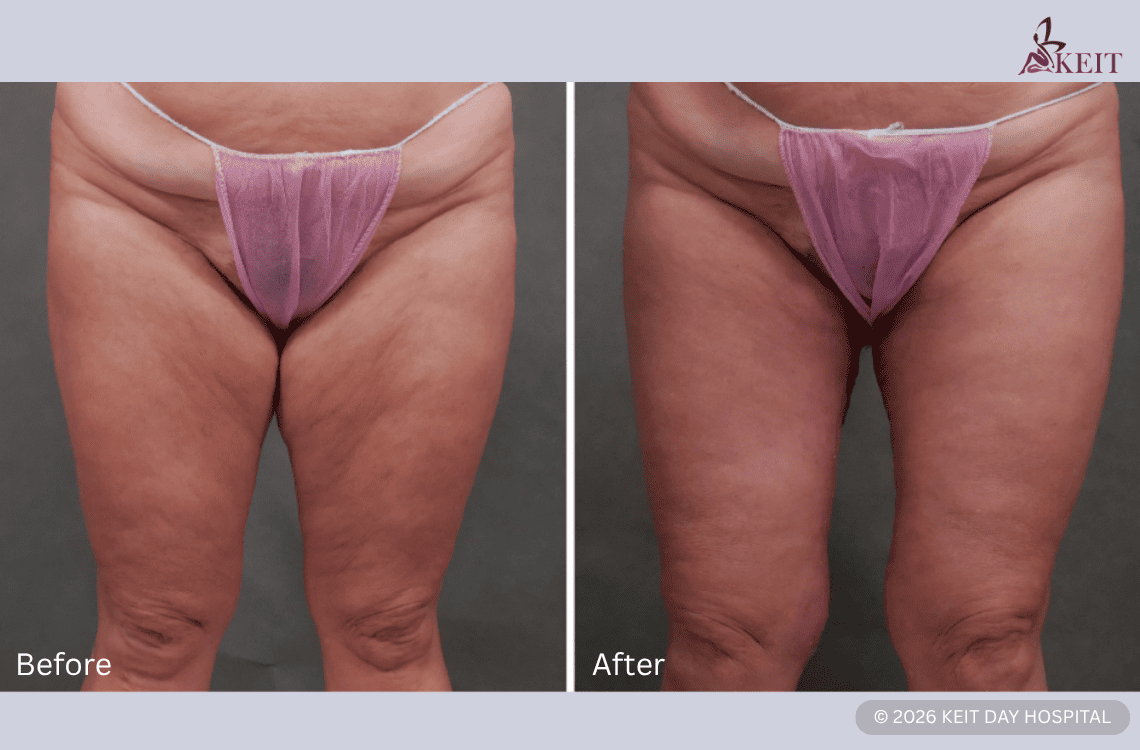
Thighplasty, also known as a thigh lift, is a surgical procedure that removes excess skin and reshapes the thighs for a firmer, smoother contour.
It is usually recommended when loose or sagging skin does not improve with exercise, weight loss or non-surgical treatments. This concern is common after significant weight loss, ageing or reduced skin elasticity.
During the procedure, the surgeon removes excess skin and tightens the remaining tissue to improve thigh shape and firmness. Depending on the patient’s anatomy, skin laxity and aesthetic goals, a medial thigh lift may be recommended to target the inner thighs, or another thigh lift technique may be used for a different area of concern.
Thigh Liposuction: A solution for stubborn fat on the thighs
Thigh liposuction is a surgical body contouring procedure that removes localised fat deposits from the thighs to improve shape and proportion. It is most suitable for patients with stubborn fat and good skin elasticity.
During the procedure, small incisions are made in discreet areas. A thin tube called a cannula is then used to break down and remove excess fat from targeted areas such as the inner thighs, outer thighs, front thighs or back of the thighs.
The aim is to refine the thigh contour while maintaining natural proportions with the rest of the body.
Thighplasty vs Liposuction: What is the difference?
The main difference between thighplasty and thigh liposuction is the concern each procedure treats. Thighplasty removes excess skin and improves laxity, while liposuction removes localised fat deposits and refines thigh shape.
The comparison below shows how the two procedures differ:
| Thighplasty | Thigh Liposuction |
|---|---|
| Treats loose or sagging skin |
Treats stubborn fat deposits |
| Improves skin laxity and firmness | Improves thigh shape and proportion |
| Suitable after significant weight loss or reduced skin elasticity | Suitable when skin elasticity is good |
| Requires surgical incisions to remove skin | Uses small incisions and a cannula |
| Leaves more visible scars | Leaves smaller scars |
When are thighplasty and liposuction combined?
A combined procedure may be recommended when reshaping the thighs requires both fat reduction and skin tightening. In these cases, the surgical plan is designed to first refine the volume of the thighs and then remove the excess skin needed to create a smoother contour.
This approach is often considered after significant weight loss, pregnancy, reduced skin elasticity or long-term changes in thigh shape. During consultation, the surgeon evaluates skin quality, fat distribution and scar placement to decide whether a combined technique is the most appropriate option.
Who is a good candidate for thigh contouring surgery?
A good candidate for thigh contouring surgery is usually a patient who is close to a stable weight but still has concerns in the thigh area that do not improve with diet and exercise.
Thigh contouring may be suitable for patients who:
- have loose or sagging thigh skin;
- have localised fat deposits;
- have irregular thigh contour;
- are in good general health;
- have a stable weight;
- have realistic expectations about the results.
Before any procedure, a consultation with the plastic surgeon is necessary to determine whether the patient is suitable for surgery. During this assessment, the surgeon evaluates skin quality, fat distribution, medical history and whether pre-operative tests are required.