Published on:
 Modified on:

 Reading Time: 5 min
 Breast Lift
Breast mastopexy with implants is a combined breast surgery procedure that lifts sagging breast tissue and restores lost volume using breast implants. It is performed to improve breast position, shape and fullness in patients experiencing breast ptosis, volume loss, or breast changes after pregnancy, ageing, or weight fluctuations.
 Table of Contents:
-
1
 What is breast mastopexy with implants?
-
2
Who is a suitable candidate for breast mastopexy with implants?
-
3
How is breast mastopexy with implants performed?
-
4
What are the different breast lift techniques used with implants?
-
5
Breast mastopexy with implants before and after: expected results
-
6
Breast mastopexy with implants: recovery timeline
-
7
What are the risks and complications of breast lift with implants?
-
8
How long do breast implants last after mastopexy?
In this article, we explain what breast mastopexy with implants is, why it is performed, and who may be a suitable candidate for this combined procedure. We also cover how the surgery is performed, the different breast lift techniques used with implants, expected results, recovery timeline, potential risks, and implant longevity after mastopexy.
What is breast mastopexy with implants?
Breast mastopexy with implants is a combined breast surgery procedure that lifts sagging breasts and restores lost volume using implants. A mastopexy (breast lift) reshapes and elevates the breasts by removing excess skin and repositioning the breast tissue and nipple-areola complex. Implants are added to increase fullness, improve upper breast volume, and enhance breast contour when volume loss is present. Unlike breast implants alone, which increase size but do not correct significant sagging, mastopexy with implants addresses both breast position and volume.
Who is a suitable candidate for breast mastopexy with implants?
A suitable candidate for breast mastopexy with implants has breast sagging, reduced breast volume, and realistic expectations about the surgical outcome. The procedure may be considered for patients with:
- Breast ptosis (sagging breasts): When the breast tissue and nipple position have descended due to ageing, pregnancy, breastfeeding, or reduced skin elasticity.
- Loss of breast volume: When the breasts have become flatter or less full, particularly in the upper breast area.
- Changes after pregnancy or weight loss: When stretched skin and reduced breast fullness affect breast shape and position.
- Reduced skin elasticity: When the skin is unable to support the breast in its previous position.
- Good general health: Patients should be medically suitable for surgery and able to safely undergo anaesthesia and recovery.
During consultation, the surgeon assesses breast anatomy, skin quality, nipple position, breast volume, and aesthetic goals to determine whether mastopexy with implants is the most appropriate procedure.
How is breast mastopexy with implants performed?
Breast mastopexy with implants is performed under general anaesthesia and usually takes around 2–4 hours, depending on the complexity of the procedure. The surgeon removes excess skin, reshapes the breast tissue, and repositions the nipple and areola when required. The implant is then placed according to the patient’s anatomy, existing breast tissue, and desired outcome. The incisions are closed with sutures, with placement and incision pattern determined by the degree of sagging and the amount of correction needed.
What are the different breast lift techniques used with implants?
The main mastopexy techniques used alongside implants are:
- Periareolar mastopexy (donut lift): Uses an incision around the areola and is generally suitable for patients with mild breast sagging and limited skin excess.
- Vertical mastopexy (lollipop lift): Uses an incision around the areola with an additional vertical incision extending towards the breast crease. It allows greater reshaping and is commonly used for moderate breast sagging.
- Anchor mastopexy: Uses incisions around the areola, vertically down the lower breast, and along the breast crease. It is typically used when there is significant breast ptosis and excess skin requiring more extensive reshaping.
The surgeon selects the most appropriate technique after assessing breast shape, skin quality, nipple position, and the patient’s goals.

Breast mastopexy with implants before and after: expected results
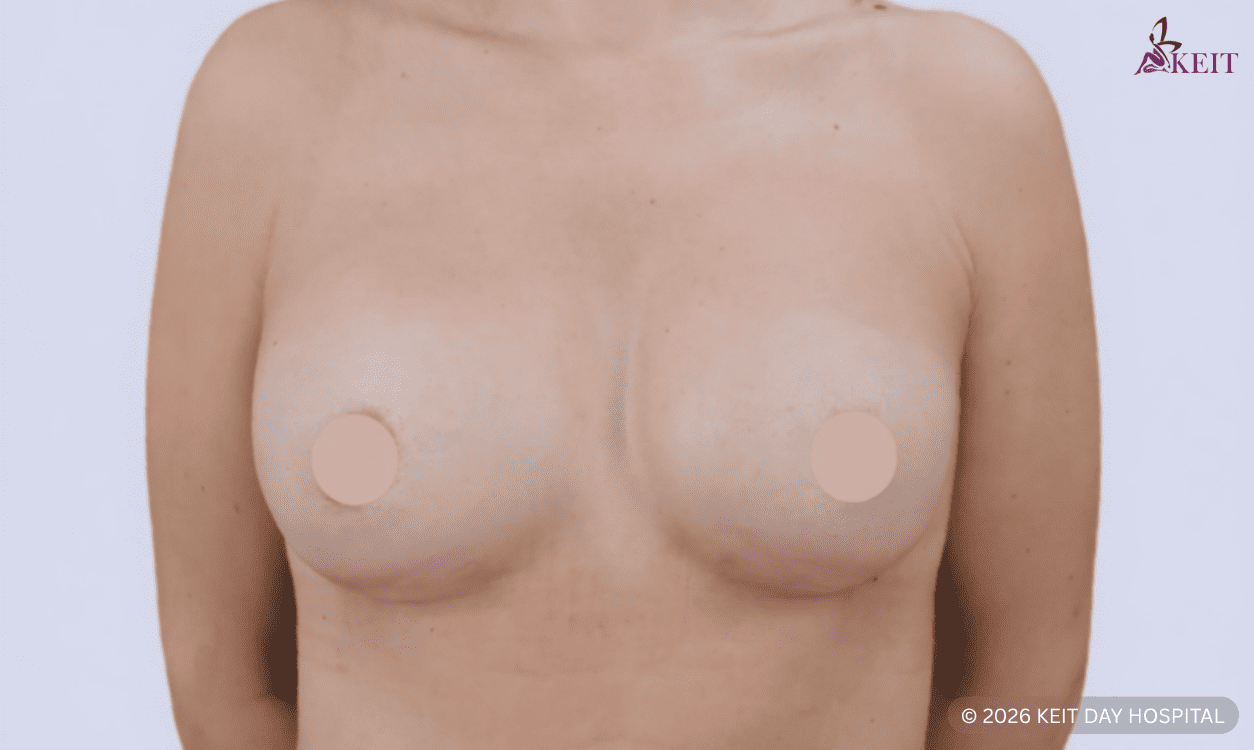
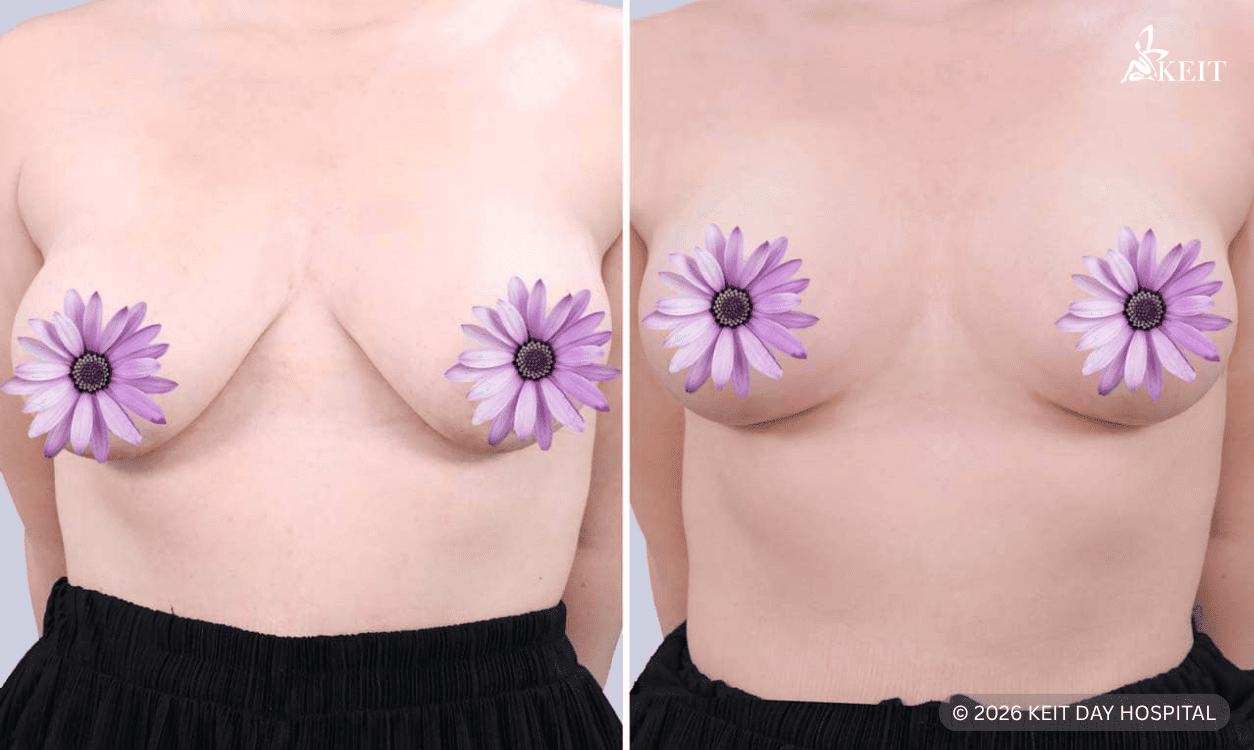
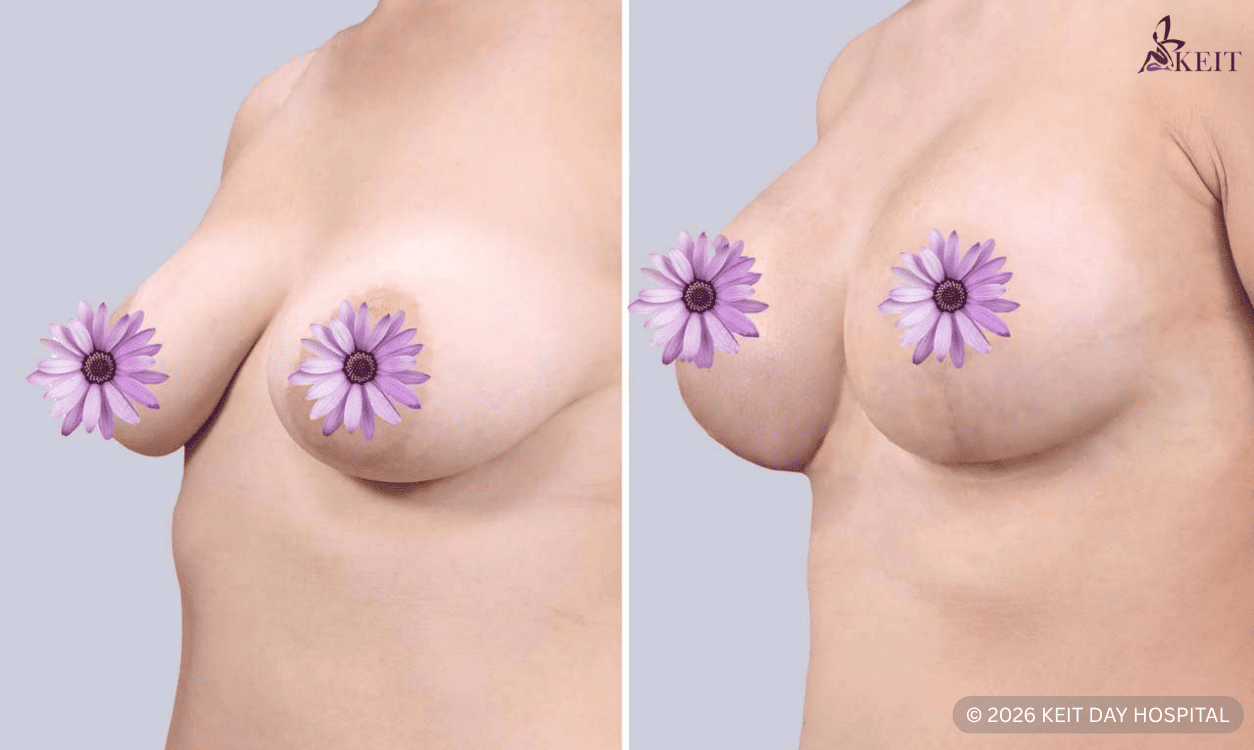
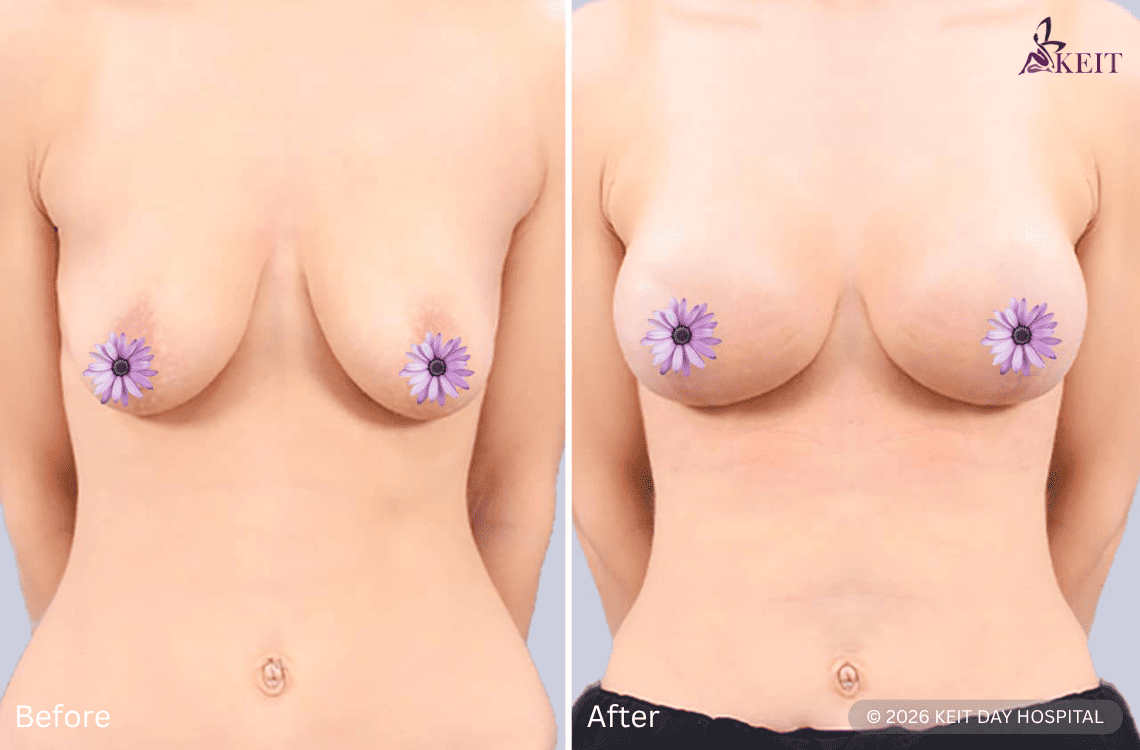
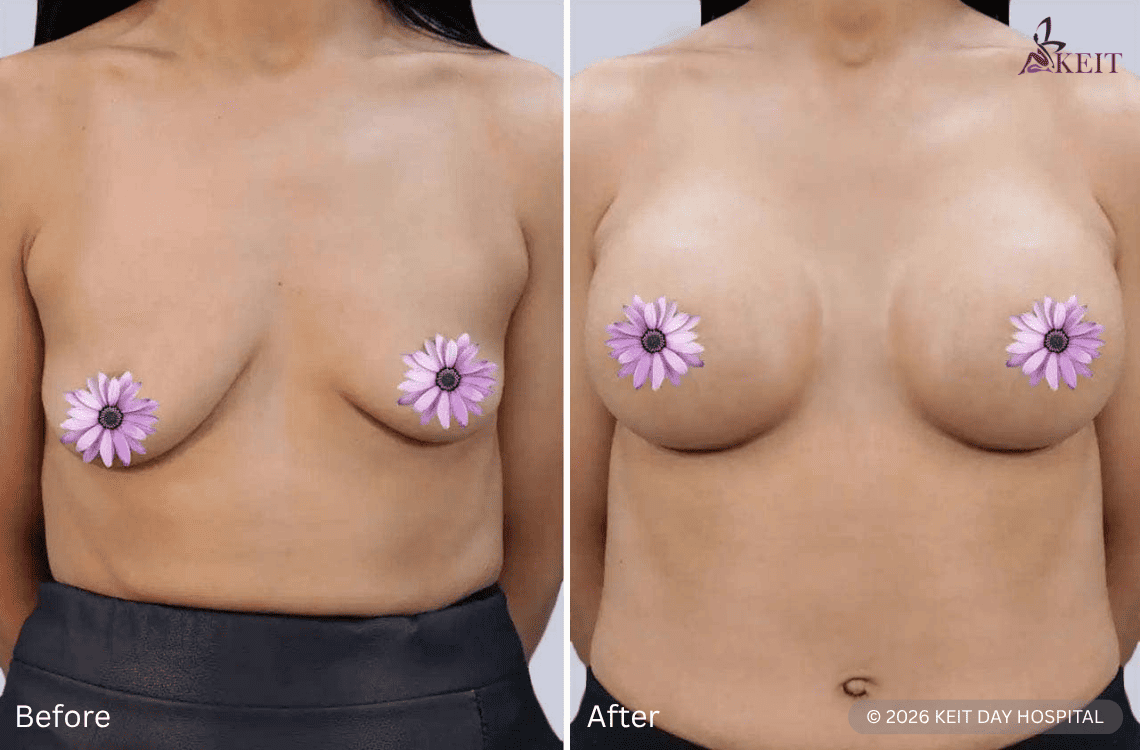
Breast mastopexy with implants before and after results demonstrate a lifted breast position, restored upper breast fullness, and improved breast shape. The procedure is designed to achieve:
- A higher breast position and correction of breast sagging.
- Improved upper breast fullness through implant placement.
- Better breast shape and projection.
- Correction of stretched or excess breast skin.
- Improved balance between breast size and body proportions.
The final outcome of breast lift with implants depends on several factors, including the patient’s anatomy, skin quality, implant selection, surgical technique, and the healing process.
Breast mastopexy with implants: recovery timeline
Recovery after breast mastopexy with implants follows a gradual timeline:
- First week: Patients commonly experience swelling, bruising, tightness, and mild discomfort. Pain medication and post-operative instructions help manage the early recovery period.
- Weeks 2–6: Most patients gradually return to normal daily activities, although strenuous exercise and heavy lifting should be avoided until advised by the surgeon.
- Months 3–6: Swelling continues to reduce, the implants settle into their position, and the breast shape becomes more natural.
- Months 6–12: The final breast contour and scar appearance become clearer as tissues continue to mature.
Recovery varies depending on the extent of the lift, implant size, surgical technique, and individual healing response. Following post-operative instructions and attending follow-up appointments are important for optimal healing.
What are the risks and complications of breast lift with implants?
Breast lift with implants is considered a safe procedure when performed by an experienced surgeon, but like any surgery, it carries potential risks and complications, including:
- Infection: Infection can affect healing and may require antibiotic treatment or further management.
- Bleeding or fluid collection: Blood or fluid accumulation may occur after surgery and may require additional treatment.
- Changes in nipple or breast sensation: Temporary or, less commonly, permanent changes in sensation may occur.
- Asymmetry: Differences in healing, breast tissue, or implant position can affect symmetry.
- Implant-related complications: These may include implant displacement, rupture, or capsular contracture, where scar tissue forms tightly around the implant.
- Visible scars: Breast lift surgery creates scars around the incision areas, which usually soften and fade over time but may remain visible.
- Revision surgery: Additional surgery may be required to address complications or changes in breast appearance over time.
How long do breast implants last after mastopexy?
Breast implants after mastopexy typically last 10–20 years or longer, although they are not considered lifetime devices. Implant longevity varies between patients and depends on factors such as implant condition, changes in breast tissue, and individual healing. Replacement or revision is usually considered if complications develop, such as implant rupture or capsular contracture, or if changes in breast appearance occur over time.