Published on:
 Modified on:

 Reading Time: 6 min
 Additive mentoplasty
Chin disharmony is a condition where the shape or position of the chin is not in balance with the rest of the face. This problem primarily manifests in two opposite ways: as a receding chin, which appears too small and set "backwards," or as a protruding chin, which results in excessive prominence. The definitive solution to correct this bone structure is chin surgery, an intervention that reshapes the chin and restores the ideal facial balance.
 Table of Contents:
-
1
 Microgenia: Defining the receding chin
-
2
Macrogenia: Analyzing the protruding chin
-
3
Chin surgery: The intervention that re-designs facial harmony
-
4
Chin augmentation implant: The definitive solution for a receding chin
-
5
Chin reduction surgery: How to correct a prominent chin
-
6
Double chin surgery: The definitive solution for fat accumulation
-
7
Chin surgery before and after: Setting real expectations
-
8
Risks and complications of chin surgery
-
9
Chin surgery in Albania: Your smart and affordable choice
-
10
How to fix receding chin without surgery
In this definitive article on chin surgery, we will address every aspect of these conditions. We will analyze the receding chin and protruding chin in detail, clarify the solution for double chin fat removal and evaluate the surgical solution of chin augmentation implant and chin reduction surgery. We will also show you the before and after results of the procedure. Our goal is to give you clear and honest information to make an informed choice and finally regain the harmony of your face.
Microgenia: Defining the receding chin
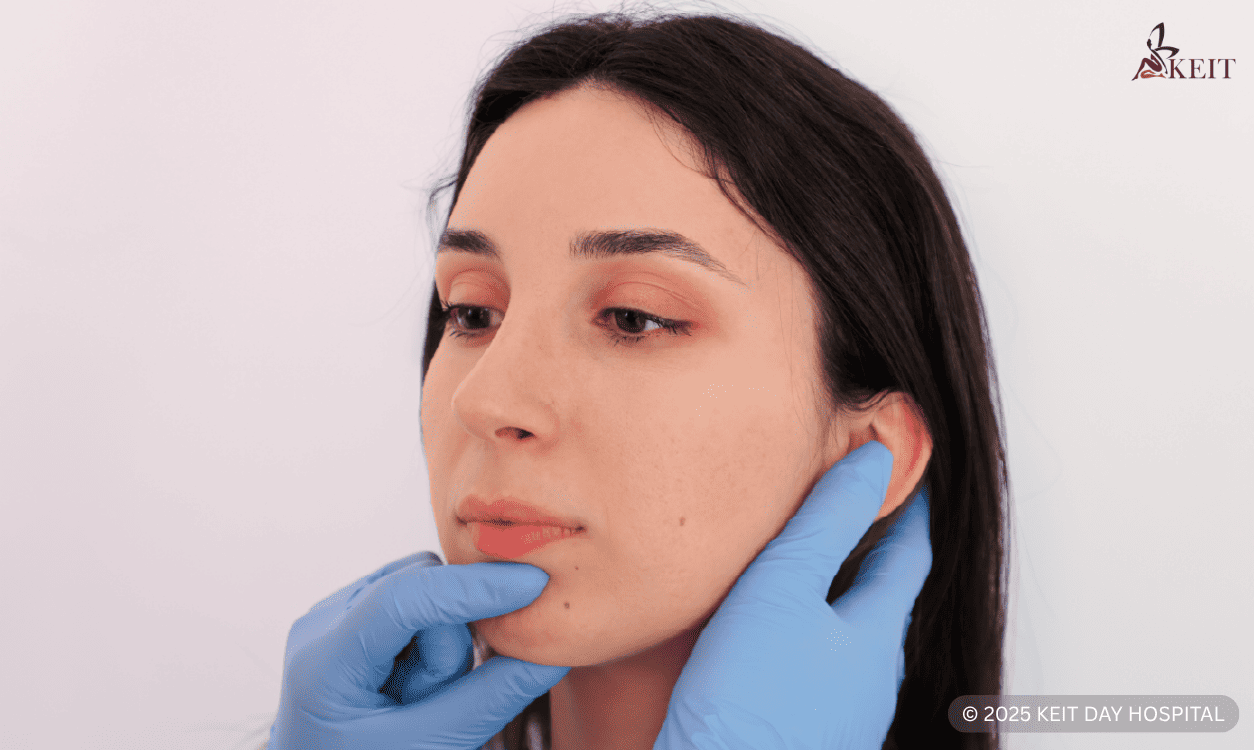
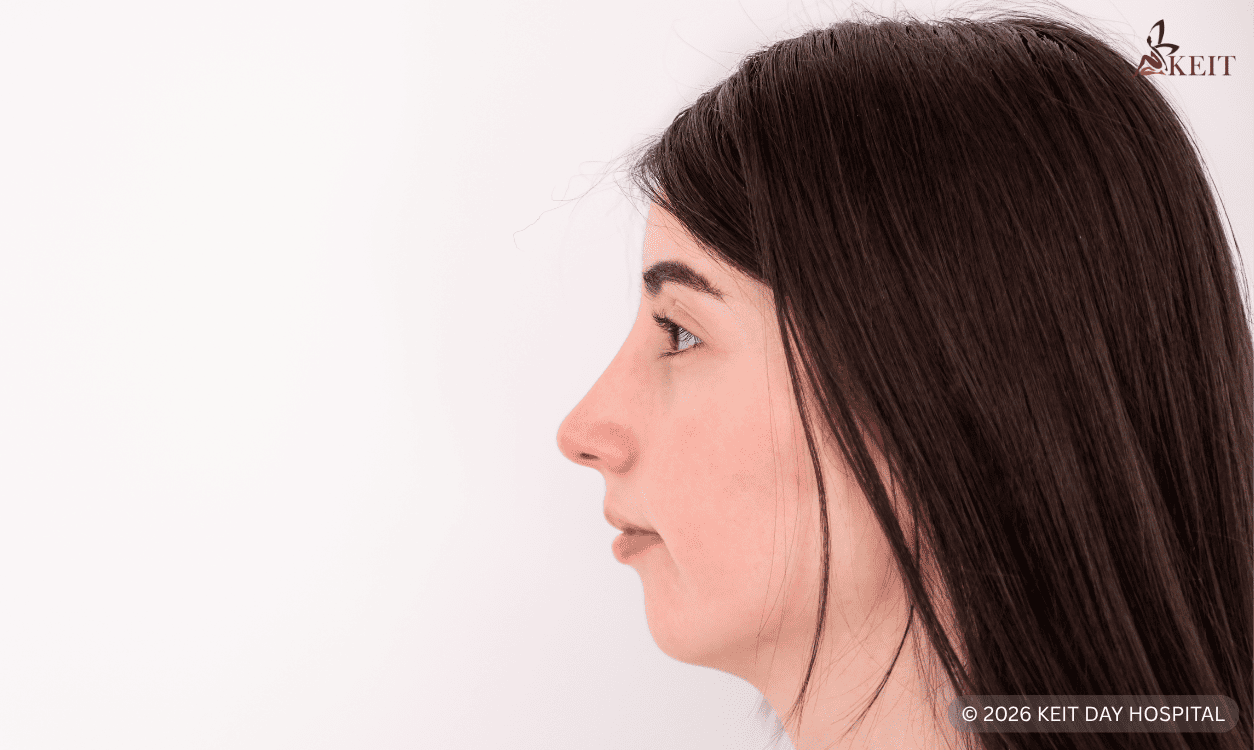
A receding chin, medically known as microgenia or retracted chin, occurs when the lower jaw is underdeveloped or positioned too far back, causing the chin to appear small and reducing facial balance. This condition can make the nose look more prominent and blur the definition between the chin and neck, often creating the illusion of a double chin. Beyond aesthetics, microgenia may also contribute to dental malocclusion, affecting bite alignment and jaw function. Since it influences both facial harmony and functionality, professional evaluation is essential to determine the best corrective approach.
Macrogenia: Analyzing the protruding chin
A protruding chin, medically known as macrogenia or prominent chin, is a condition where the mandible and chin project excessively forward due to skeletal overdevelopment rather than fat accumulation. This forward prominence, often caused by genetic factors or mandibular prognathism, disrupts the natural balance of facial proportions, making the lower third of the face appear overly dominant. More than a simple aesthetic variation, macrogenia reflects a distinct skeletal conformation, frequently linked to Class III malocclusion, where the lower jaw outgrows the upper one. In women, it can create a harsher appearance, reducing the natural softness and facial harmony.
Chin surgery: The intervention that re-designs facial harmony
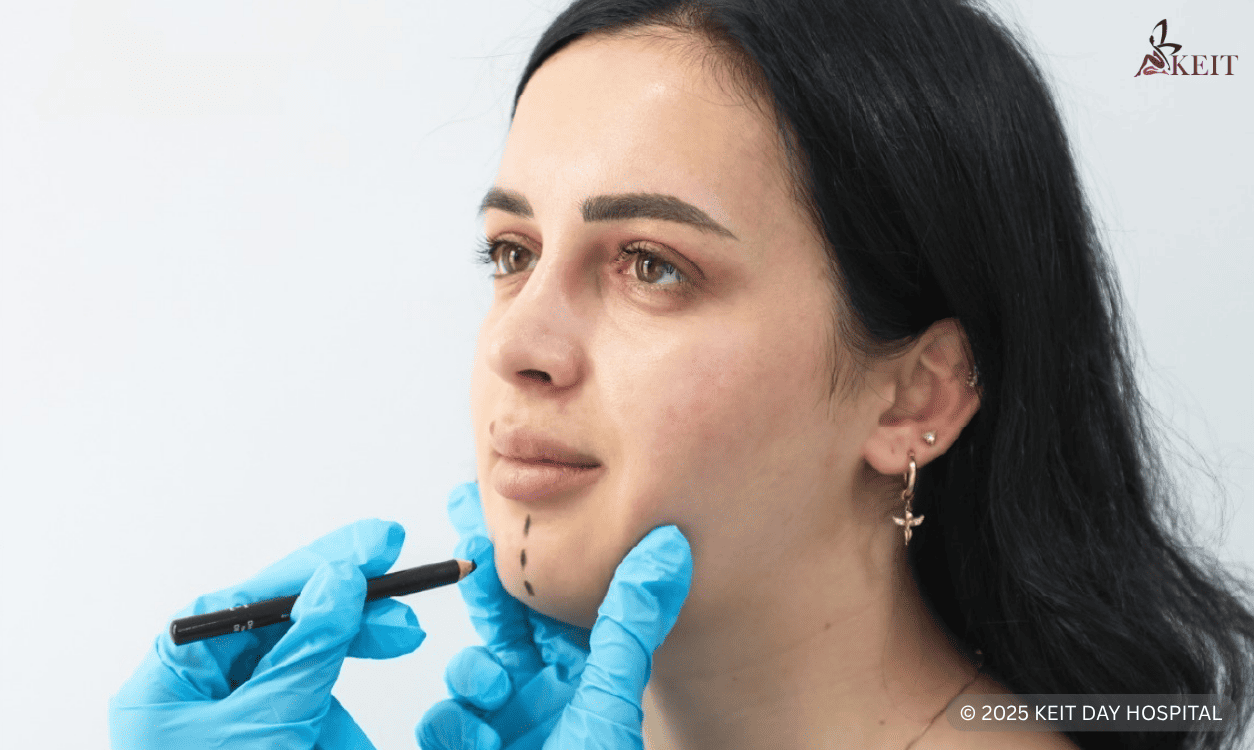
Chin surgery is a personalized procedure that reshapes the chin to restore facial balance. After a detailed consultation, often supported by digital simulations, the surgeon selects the best technique: a chin augmentation implant (silicone or Gore-Tex) for a receding chin, or chin reduction surgery to reshape a protruding chin. The operation lasts about 1–2 hours, under general anesthesia or deep sedation and is typically performed through intraoral incisions to avoid visible scars, finishing with a light compressive dressing for optimal healing. Recovery after chin surgery is usually smooth, with most patients returning to normal activities within one to two weeks as swelling and mild discomfort gradually subside.
For a detailed overview of the procedure and its safety standards, refer to the American Society of Plastic Surgeons’ official article on chin surgery.
Chin augmentation implant: The definitive solution for a receding chin
Chin augmentation implant is the specific surgical procedure to correct a receding chin or a small chin. The procedure consists of increasing the volume and projection of the chin through the insertion of a custom-sized, biocompatible chin implant. This implant is positioned by the surgeon in a pocket created in front of the mandibular bone to give the profile a stronger, more defined, and harmonious look.
The most common and reliable technique for chin augmentation surgery involves the use of a solid silicone or Gore-Tex chin implant, selected for shape and size based on the patient’s physiognomy, which ensures a stable result over time. The surgeon creates a precise pocket, usually through a small incision hidden inside the lower lip or in a submental skin crease, thus eliminating visible scarring. In specific cases, chin augmentation implant procedure may also be performed through osteotomy (sliding genioplasty), which involves cutting and advancing the mandibular bone itself.
Chin reduction surgery: How to correct a prominent chin
Chin reduction surgery is the specific surgical procedure to correct a protruding chin. Unlike implant insertion, this procedure involves direct action on the bone: the surgeon removes a portion of excess mandibular bone to reduce the chin’s projection and size. The goal is to achieve a softer, more proportionate and harmonious profile.
During the chin reduction procedure, to correct a protruding chin, the surgeon performs an osteotomy, a controlled sectioning and removal of the excess bone. Access is almost always through an intraoral incision, hidden inside the lower lip, which eliminates the risk of visible external scars. The chin tip is then reshaped, set back and stably fixed in the new position, guaranteeing a permanent result and a visibly gentler profile.
Double chin surgery: The definitive solution for fat accumulation
If the double chin is caused by excess fat, non-surgical methods like creams or massages are generally ineffective. The most effective approach is double chin fat removal, achieved through procedures such as submental liposuction or a minor surgical excision. These treatments permanently remove the accumulated fat beneath the chin, helping redefine the jawline and, when necessary, tighten the underlying neck muscles for a smoother and more sculpted profile.
Chin surgery before and after: Setting real expectations
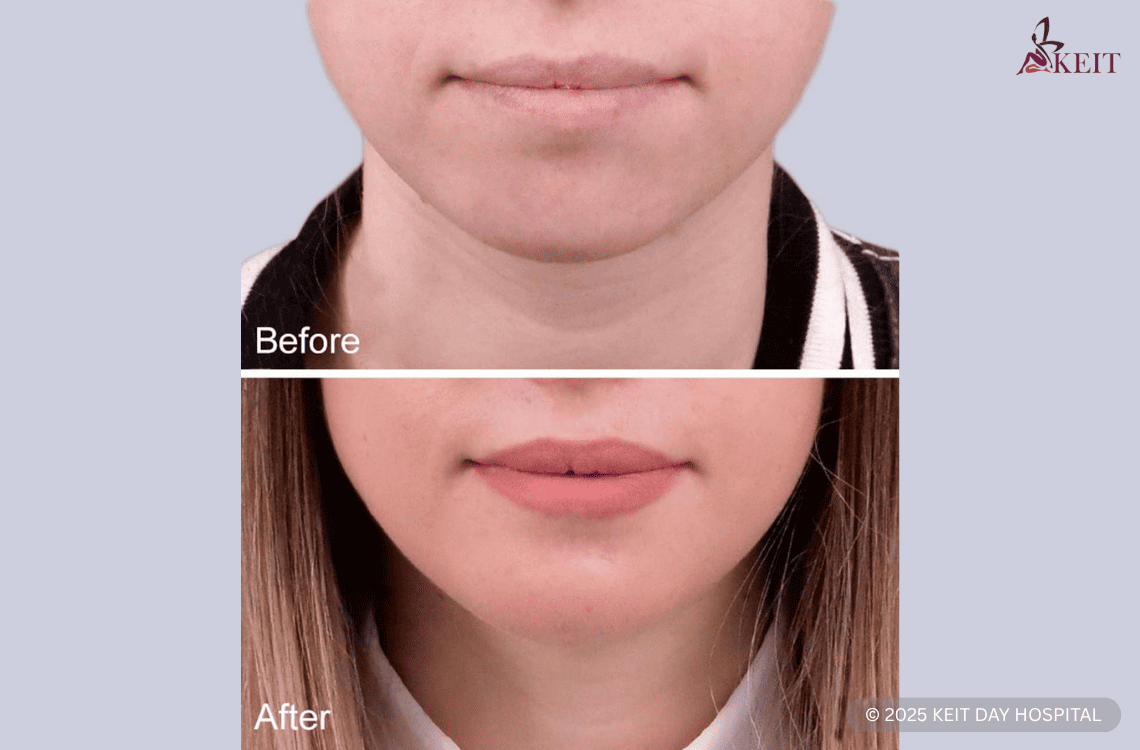
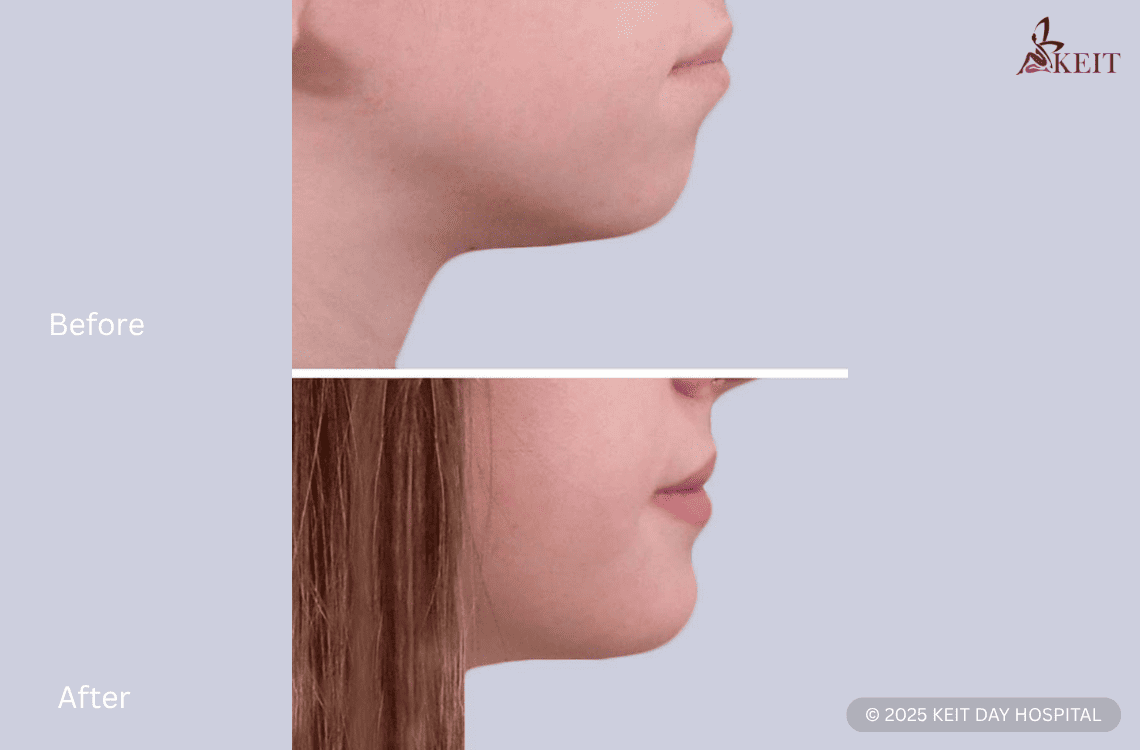
The transformative before and after results of our patients clearly show how chin surgery, from chin augmentation to chin reduction can restore facial harmony and enhance jawline definition. For those with excess fat beneath the chin, double chin fat removal provides lasting refinement, creating a naturally balanced and confident look.
Risks and complications of chin surgery
While chin surgery is typically safe, all procedures carry potential risks, which your surgeon will discuss during consultation. The main complications include:
- Common complications: Temporary numbness, mild swelling and slight asymmetry are common and resolve within a few weeks.
- Less common: Infection is rare and usually treated with antibiotics. Minor fluid or blood buildup may need drainage, while scarring is uncommon and typically hidden inside the mouth.
- Rare complications: The implant may rarely shift and need repositioning, while persistent nerve changes or noticeable asymmetry may require minor corrective surgery.
Chin surgery in Albania: Your smart and affordable choice
The chin surgery cost in Albania starts from around 1,800 euro, where most clinics usually provide all-inclusive packages that cover the surgery, anaesthesia, accommodation, transfers and aftercare. These packages ensure transparency and convenience, allowing international patients to plan their treatment with confidence and no hidden costs.
Private clinics in Albania adhere to European medical and safety standards and often collaborate with Italian-trained surgeons, guaranteeing results comparable to those achieved in top European countries. Language assistance in English and Italian is widely available, helping patients feel comfortable and informed throughout their experience. The lower prices compared to the UK are due to reduced operational expenses, not lower quality, making Albania a safe, affordable and high-quality choice for chin plastic surgery abroad.
For a complete comparison of chin surgery cost in the UK, Turkey and Albania, including the factors that influence pricing, visit our detailed article here.
Book your FREE
Online Consultation Now

How to fix receding chin without surgery
For those looking into non-surgical options to address a receding chin or improve definition, the options are limited and temporary, as they cannot change the underlying bone structure. This section directly addresses the common question: how to fix receding chin without surgery.
- Dermal fillers: Add temporary volume and projection to the chin, ideal for mild cases, but require maintenance every 12–18 months.
- Orthodontics: Corrects bite-related issues that slightly improve chin alignment but is not a cosmetic fix.
Non-surgical options offer only temporary enhancement and cannot match the permanent results of chin reduction surgery or chin augmentation implant.