Published on:
 Modified on:

 Reading Time: 5 min
 Additive mentoplasty
A receding chin, or mandibular retrognathia, is a condition where the lower jaw sits further back than normal, reducing chin projection and jawline definition. It is most often related to genetic and developmental factors affecting jaw growth. Depending on severity, it can be improved with non-surgical treatment or corrected surgically with mentoplasty.
 Table of Contents:
-
1
 Receding chin: What is it and how does it affect facial profile?
-
2
Receding chin: Main causes and contributing factors
-
3
Receding chin: How is it diagnosed?
-
4
How to fix a receding chin without surgery?
-
5
Receding chin: Surgical correction options
-
6
Receding chin: Recovery after mentoplasty
-
7
Receding chin: Before and after results of mentoplasty
-
8
Receding chin: Risks, side effects, and complications of surgery
In this guide we explain what a receding chin is, what causes it, and how it is diagnosed. It also covers non-surgical treatment, surgical correction options, recovery after mentoplasty, before and after results, and the main surgical risks.
Receding chin: What is it and how does it affect facial profile?
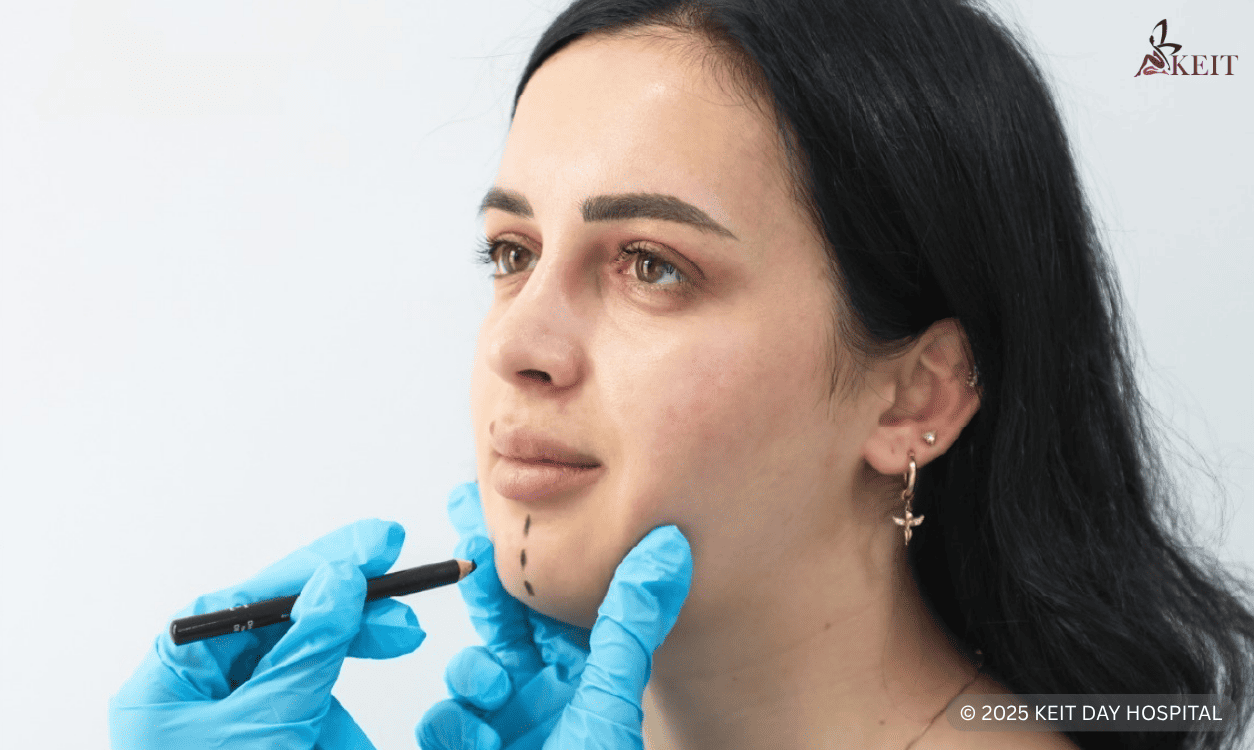
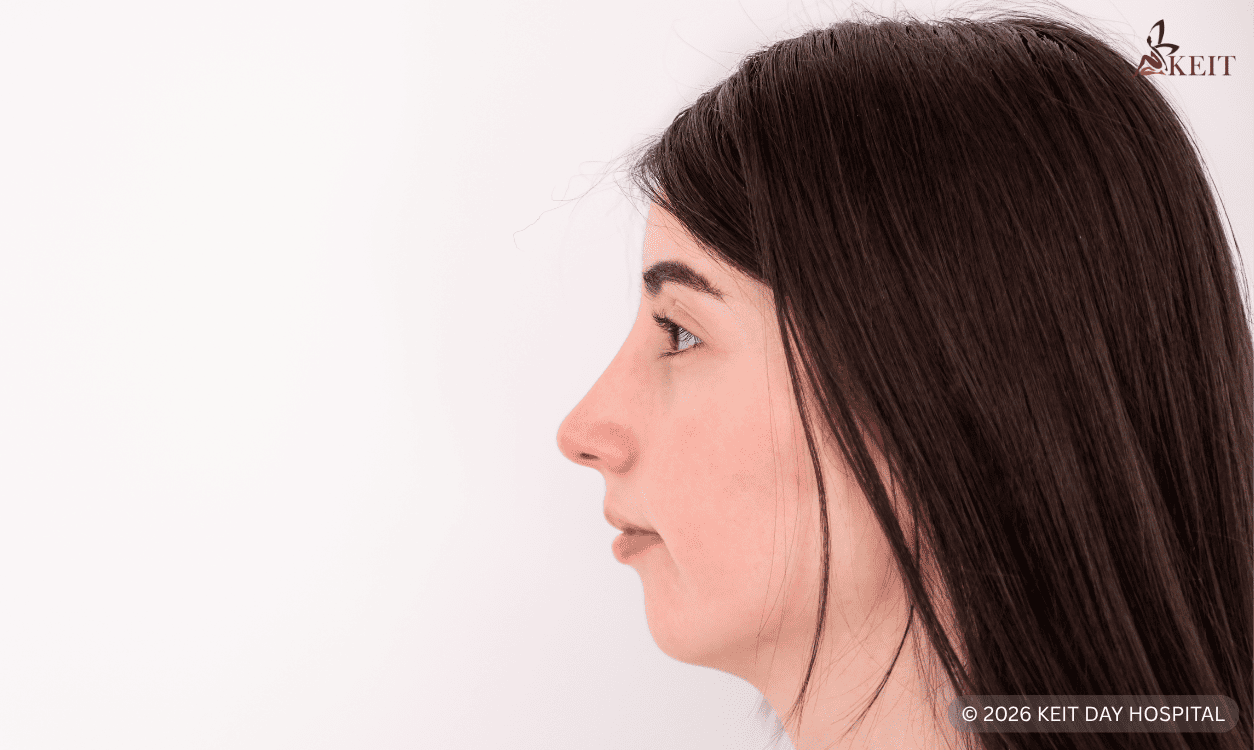
A receding chin is a condition where the lower jaw (mandible) is positioned further back than normal in relation to the rest of the face, resulting in reduced chin projection and a less defined jawline. It is commonly described as a recessed chin, weak chin, or small chin, and may be associated with skeletal patterns such as mandibular retrognathia or a recessed jawline. Depending on severity, it can be a purely aesthetic concern or part of a broader jaw alignment issue.
A receding chin can affect the facial profile by causing:
- Reduced chin projection, with the chin set further back than the rest of the face.
- Less defined jawline, creating a weaker lower facial contour.
- Imbalance between the nose, lips, and chin, especially in side profile.
- A more convex facial profile, which can make the nose appear more prominent.
- A shorter or retruded lower face in more pronounced cases.
Receding chin: Main causes and contributing factors
Receding chin causes are mainly related to genetic and developmental factors that affect the position of the lower jaw. The main causes include:
- Genetic facial structure, which often determines jaw size, chin projection, and overall profile balance.
- Underdevelopment of the lower jaw, as seen in mandibular retrognathia, where the mandible sits further back than normal.
- Dental misalignment, especially an overbite, which can make the chin appear less prominent.
- Growth-related factors, including chronic mouth breathing during development, which may affect jaw formation.
- Congenital or developmental conditions, such as micrognathia, where the lower jaw is unusually small.
Receding chin: How is it diagnosed?
The diagnosis of a receding chin is based on a clinical evaluation. The assessment typically includes:
- Profile analysis, to assess chin projection in relation to the lips, nose, and overall facial balance.
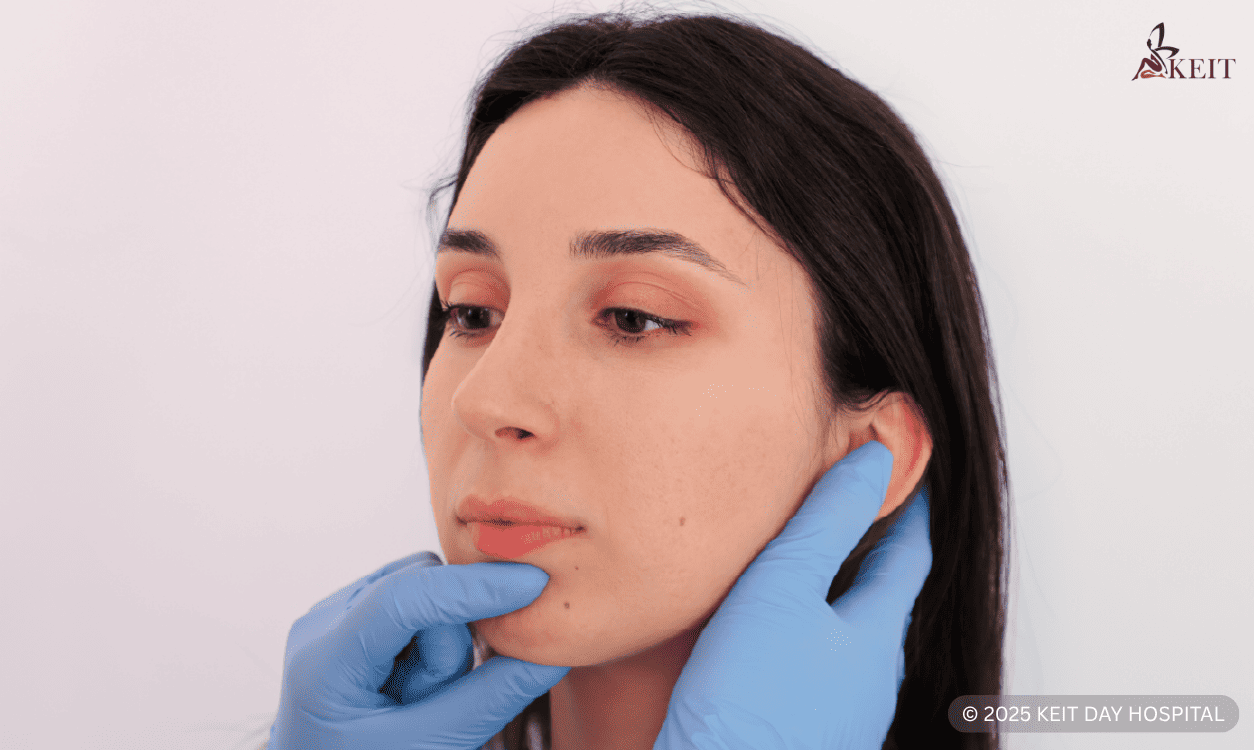
- Jaw examination, to evaluate the position and development of the lower jaw.
- Bite assessment, to identify issues such as overbite or other occlusal discrepancies.
- Imaging when indicated, such as cephalometric X-rays, to assess the underlying skeletal structure.

How to fix a receding chin without surgery?
Chin fillers are the main non-surgical treatment for a receding chin. The procedure involves injecting dermal filler into the chin to increase projection, improve contour, and create better balance in the lower face. Fillers provide immediate improvement, but the results are temporary and do not address the underlying jaw structure. For this reason, they are best suited to patients seeking non-surgical aesthetic enhancement rather than permanent skeletal correction.
Receding chin: Surgical correction options
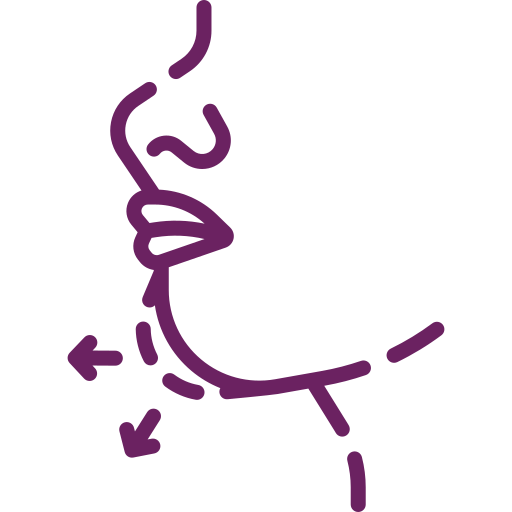
Surgical correction of a receding chin is achieved by increasing chin projection at the skeletal level or by augmenting the chin contour. The main procedures include:
- Sliding Genioplasty (osseous genioplasty) corrects chin retrusion by repositioning the patient’s own chin bone. The incision is usually made inside the mouth, along the lower gum line. Through this approach, the anterior part of the mandible is cut, advanced to the planned position, and fixed with plates and screws. This technique provides precise skeletal correction and increases projection without using an implant.
- Chin Implants (augmentation) improve chin projection by placing a synthetic implant over the existing chin bone. The implant is inserted through an incision made either inside the mouth or in the natural crease beneath the chin, and is then positioned directly on the bone to enhance contour and forward projection. This procedure improves chin definition effectively, but it does not reposition the underlying skeletal structure.
Receding chin: Recovery after mentoplasty
Recovery after mentoplasty occurs gradually in defined stages, with each phase reflecting a normal part of the healing process.
- Days 1–5: Swelling, tightness, and mild discomfort are usually most noticeable.
- Week 1: Swelling begins to improve, but the chin may still look firm or overprojected.
- Weeks 2–4: The contour starts to look more natural as swelling continues to settle.
- Weeks 3–4: Most daily activities are usually resumed, although mild numbness or tightness may persist.
- Weeks 4–6: Definition improves and early results are easier to assess.
- 3+ months: The final result becomes more accurate as residual swelling resolves.
Receding chin: Before and after results of mentoplasty
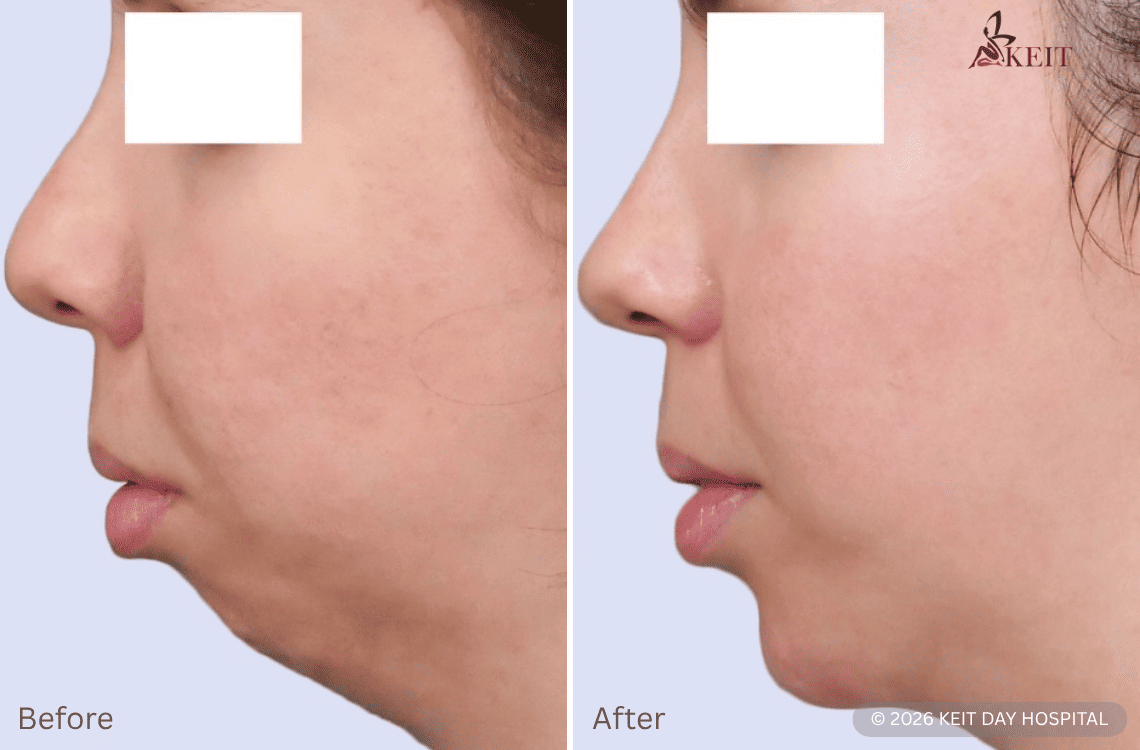
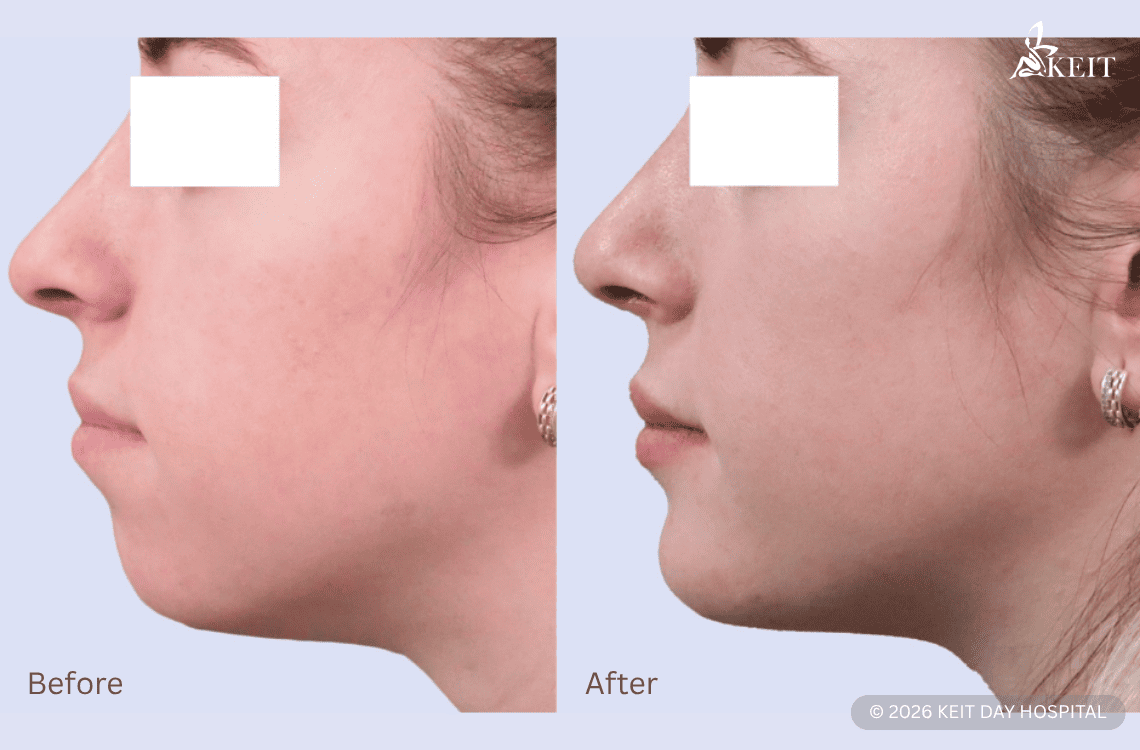
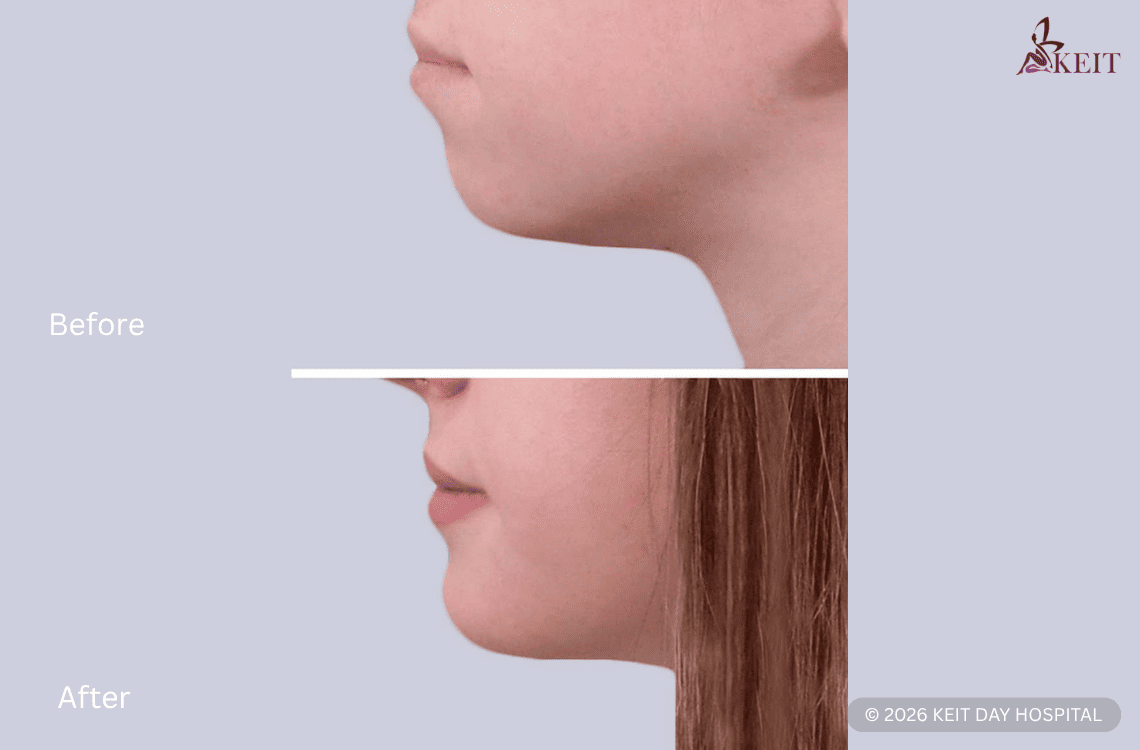
Receding chin before and after results show a clearer improvement in chin projection, jawline definition, and overall facial balance. After surgery, the chin appears more forward and better aligned with the rest of the profile, which creates a stronger lower face and a more harmonious relationship between the chin, lips, and nose. Final results are assessed once swelling has resolved and healing is complete.
Receding chin: Risks, side effects, and complications of surgery
Receding chin surgery carries potential risks and complications, which should be carefully evaluated during the surgical planning process. These include:
- Infection, which can affect healing and may require medical treatment.
- Bleeding, which is uncommon but can occur during or after surgery.
- Delayed healing, which can prolong recovery and affect the final result.
- Asymmetry or contour irregularities, if the chin does not heal or settle evenly.
- Changes in sensation, including temporary or persistent numbness of the chin or lower lip.
- Implant-related complications, such as displacement or poor positioning when an implant is used.
- Revision surgery, if further correction is needed to improve the result.