Published on:
 Modified on:

 Reading Time: 7 min

 Additive mentoplasty
A double chin is an extra layer of fat or tissue that develops under the chin, between the jawline and upper neck. It can develop from localized fat, loose skin, ageing, water retention, or structural factors such as reduced chin projection. Treatment depends on the cause and may include natural methods, non-surgical double chin treatments, liposuction, a neck lift or chin surgery.
 Table of Contents:
-
1
 What is a double chin? Defining submental fullness
-
2
What causes a double chin? Main reasons for under-chin fat
-
3
Double chin: Types and underlying anatomical factors
-
4
How to get rid of a double chin naturally: What actually works?
-
5
Double chin exercises and workouts: Effectiveness and limitations
-
6
Non-surgical double chin treatment options
-
7
Double chin removal: Surgical options and indications
-
8
Double chin liposuction for under-chin fat removal
-
9
Neck lift for loose skin and double chin correction
-
10
Double chin surgery cost in the UK: Price range and what affects it
In this comprehensive guide, we explain what a double chin is, its main causes, the different anatomical types, natural methods that may help, non-surgical treatments, surgical removal options and the cost of double chin surgery in the UK.
What is a double chin? Defining submental fullness
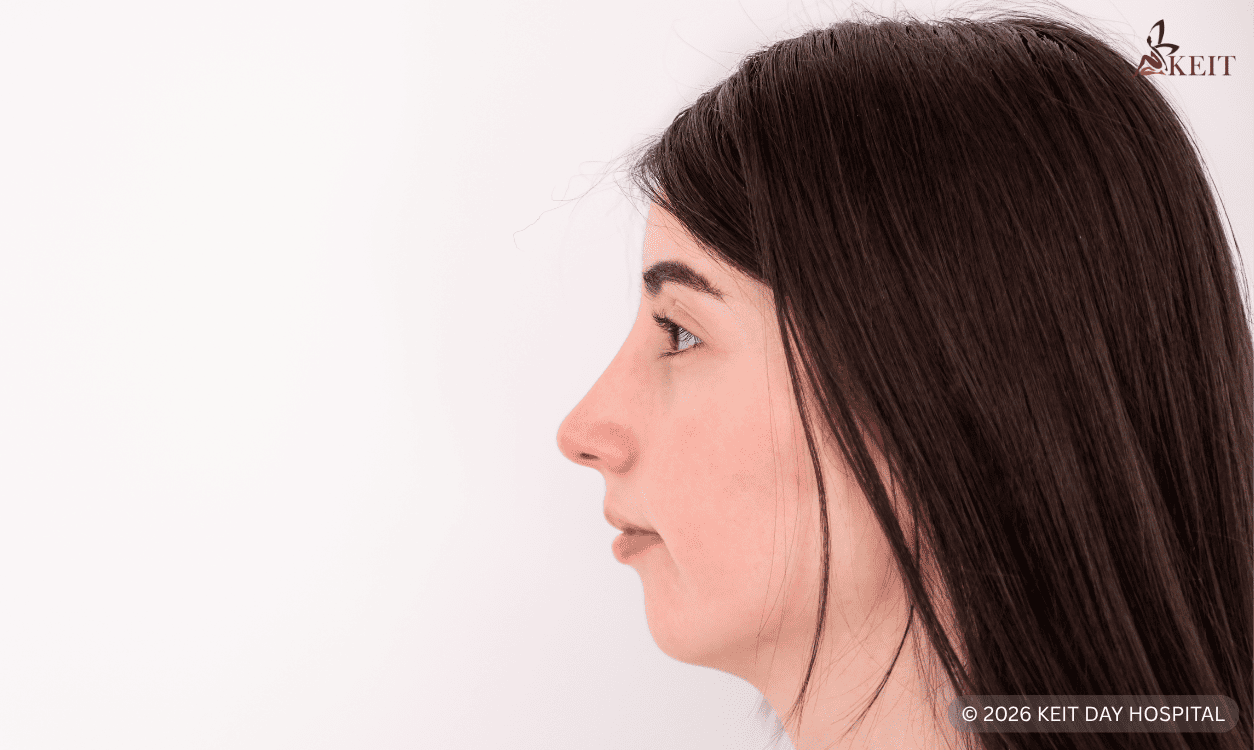
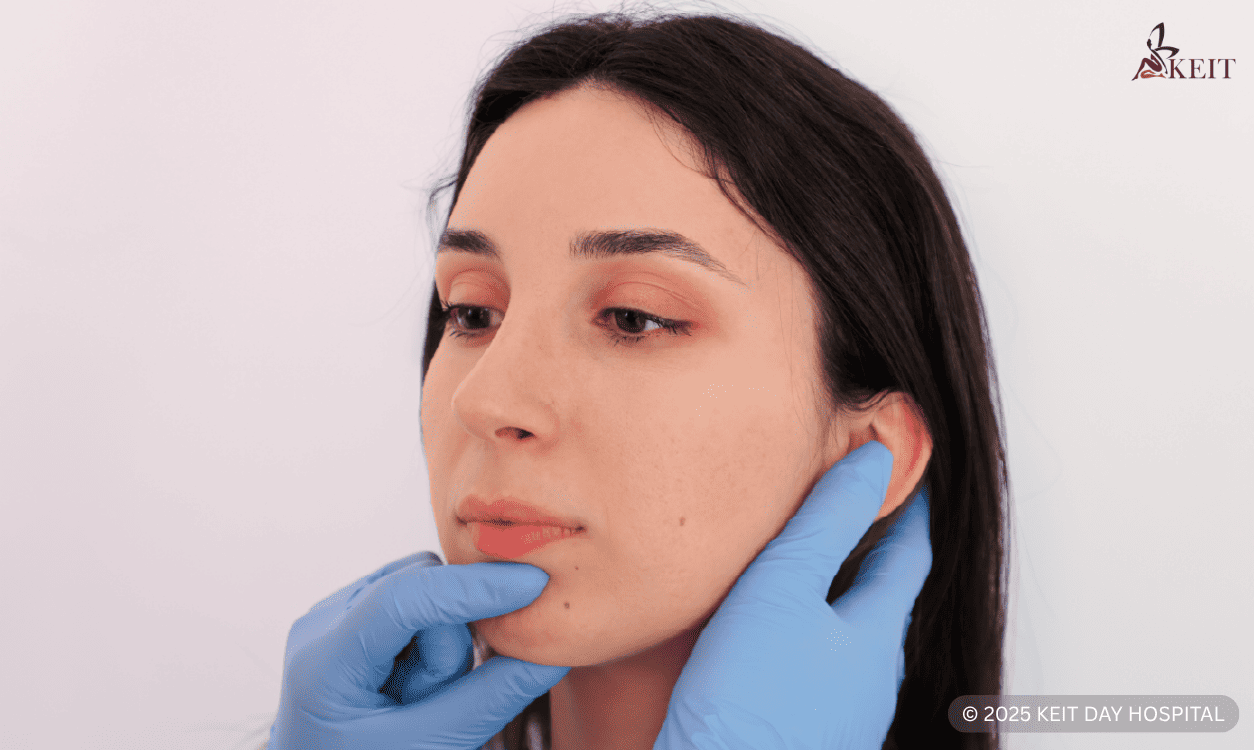
A double chin, also known as submental fullness, is a condition in which a layer of fat develops beneath the chin and jawline, creating fullness between the lower face and neck. It can affect the lower face by making the jawline look softer and the neck less defined. It may appear from the front, side profile, or when the head is tilted downward.
What causes a double chin? Main reasons for under-chin fat
A double chin can develop for several reasons, and identifying the underlying cause is essential for choosing the right treatment. The most common causes of a double chin include:
- Weight gain: Increased body fat can enlarge fat deposits in the lower face, under the chin, and around the neck.
- Ageing: With age, the skin loses collagen and elasticity, while the soft tissues of the lower face and neck gradually lose firmness and support.
- Genetics: Inherited fat distribution can make the under-chin area fuller, even at a stable weight.
- Poor posture: Forward head posture can place the chin and neck in a compressed position, making submental fullness more noticeable.
- Structural factors: A recessed chin, weak jawline, short neck, or lower jaw anatomy can reduce support for the soft tissues under the chin.
- Water retention: Temporary fluid buildup can increase fullness in the lower face and under-chin area, especially when swelling fluctuates during the day.
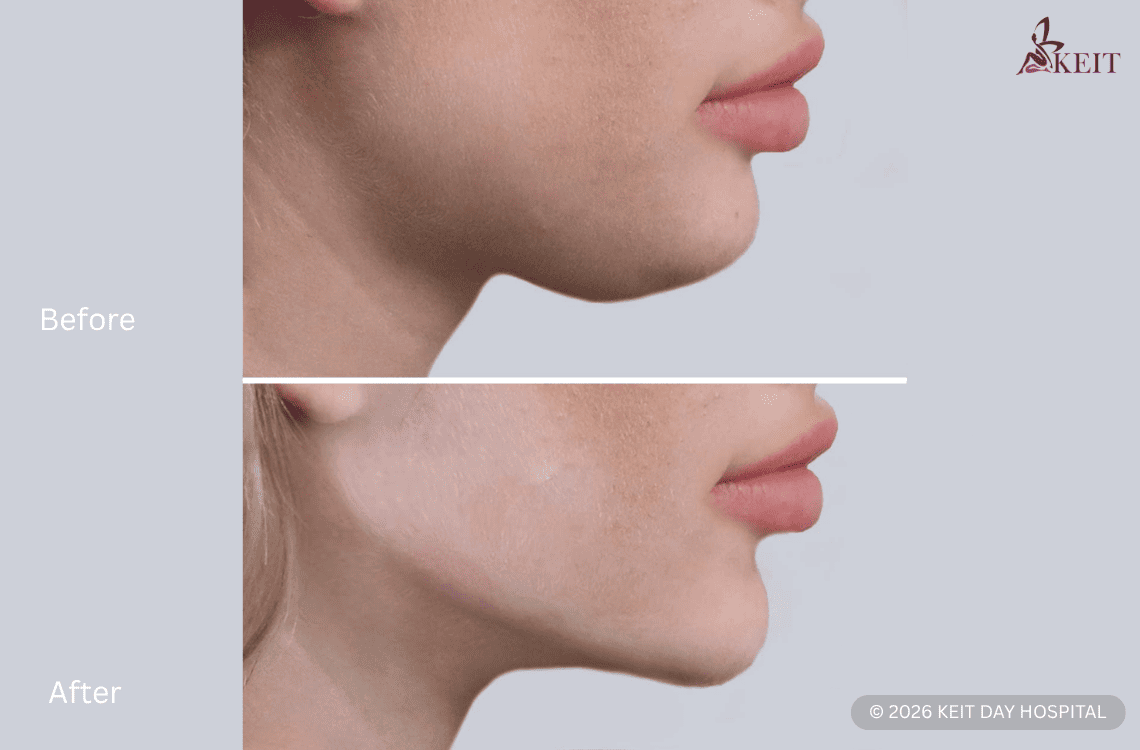
Double chin: Types and underlying anatomical factors
A double chin may originate from fat accumulation, reduced skin support, facial anatomy, muscle laxity, or temporary swelling. The main types of a double chin include:
- Fat-related double chin: Develops when submental fat accumulates beneath the chin.
- Skin-related double chin: Develops when the skin under the chin loses firmness and elasticity.
- Structural double chin: Related to a recessed chin, weak jawline, or lower jaw anatomy that provides limited tissue support.
- Ageing-related double chin: Results from collagen loss, skin laxity, and gradual weakening of lower-face and neck support.
- Muscle-related double chin: Linked to laxity of the platysma muscle, which supports the front of the neck.
- Swelling-related fullness: Caused by fluid retention, enlarged lymph nodes, salivary gland changes, or inflammation.
Book your FREE
Online Consultation Now

How to get rid of a double chin naturally: What actually works?
Natural methods may help when a double chin is related to weight gain, posture, mild fluid retention, or reduced muscle tone, but they cannot reliably remove localized fat, loose skin, or structural causes. The main natural approaches include:
- Weight loss: Reducing overall body fat may decrease fat under the chin when weight gain is a contributing factor.
- Posture correction: Improving forward head posture can reduce compression under the chin and support better neck alignment.
- Facial exercises: Chin and neck exercises may improve muscle tone, but they do not selectively burn fat under the chin.
- Balanced nutrition: A diet that supports stable weight and limits excess salt may reduce fat gain and temporary water retention.
- Regular physical activity: General exercise can help lower overall body fat, including fat stored in the lower face and neck.
Natural methods require consistency and time. If the double chin is caused by genetics, loose skin, significant submental fat, or structural factors, clinical treatment may be needed for visible contour improvement.
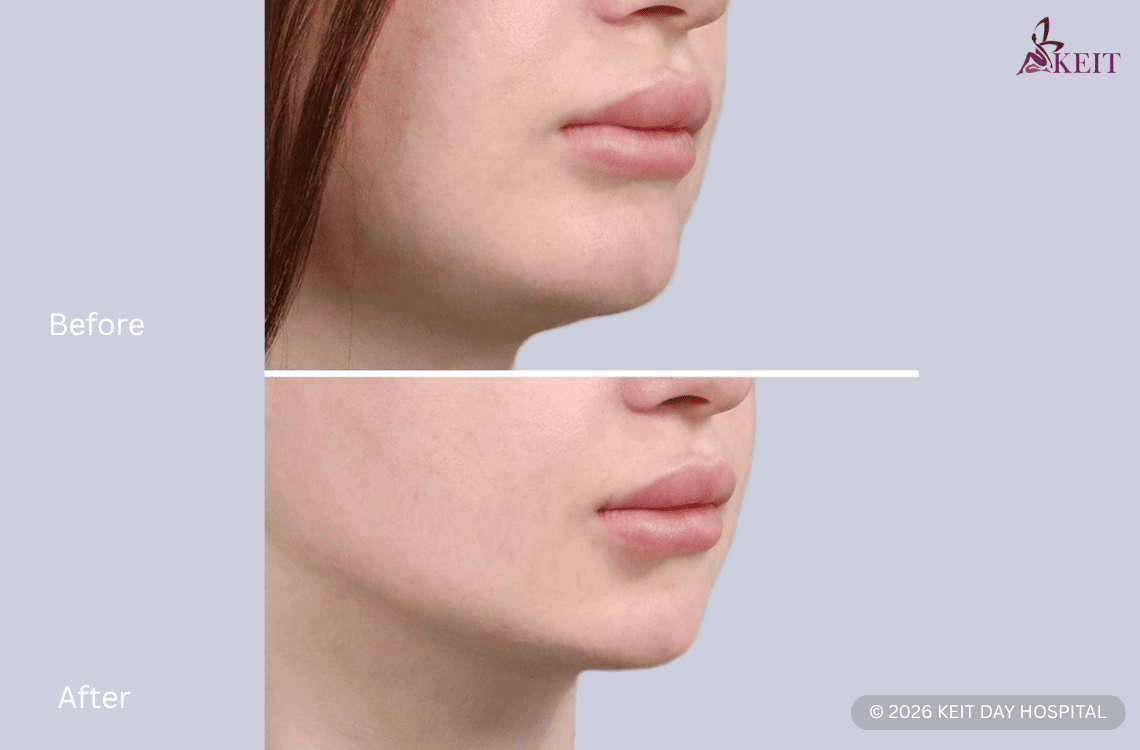
Double chin exercises and workouts: Effectiveness and limitations
Double chin exercises may improve chin and neck muscle tone, posture, and lower-face mobility, but they do not directly remove localized fat under the chin. Face yoga, massage, gua sha, chin straps, and similar at-home methods may temporarily reduce puffiness or tension. However, they cannot selectively burn submental fat, tighten significant loose skin, correct muscle laxity, or change chin and jaw structure. For this reason, double chin exercises are supportive for mild concerns, not a reliable method for double chin removal.
Non-surgical double chin treatment options
Non-surgical double chin treatments may improve mild to moderate under-chin fat or mild skin laxity, but results are gradual and depend on the cause of the double chin. The main non-surgical double chin removal options include:
- Fat-dissolving injections: Reduce small fat deposits under the chin by breaking down fat cells. They are most suitable for mild to moderate submental fat, but they do not tighten loose skin.
- Lipolysis: Targets localized fat under the chin and may be suitable when the double chin is mainly caused by a small fat layer.
- Fat freezing: Uses controlled cooling to reduce pinchable fat under the chin. It is not suitable for significant loose skin or structural causes.
- HIFU and radiofrequency: May improve mild skin laxity by stimulating tissue tightening. They are more suitable when looseness, rather than fat volume, is the main concern.
Double chin removal: Surgical options and indications
Double chin surgery may be considered when the concern is caused by excess under-chin fat, loose skin, reduced tissue support, or a combination of these factors. The main surgical options include:
- Double chin liposuction: Removes localized submental fat beneath the chin and is most suitable for patients with good skin elasticity.
- Neck lift: Corrects loose skin, sagging tissue, and neck laxity. It is recommended when skin quality, not only fat, contributes to the double chin.
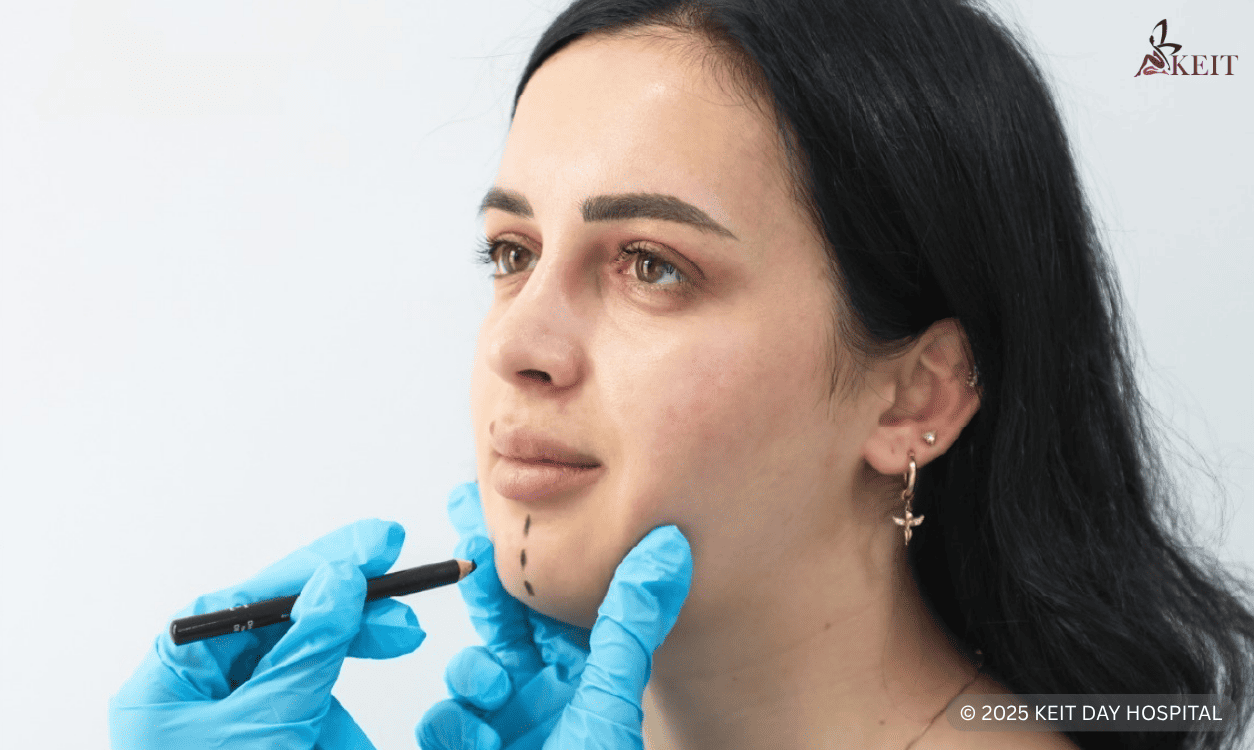
- Chin surgery: Improves chin projection when a recessed chin contributes to poor jawline and neck definition.
- Combined surgery: Uses two or more procedures, such as chin liposuction with a neck lift, when fat, loose skin, and structure all contribute to the double chin.
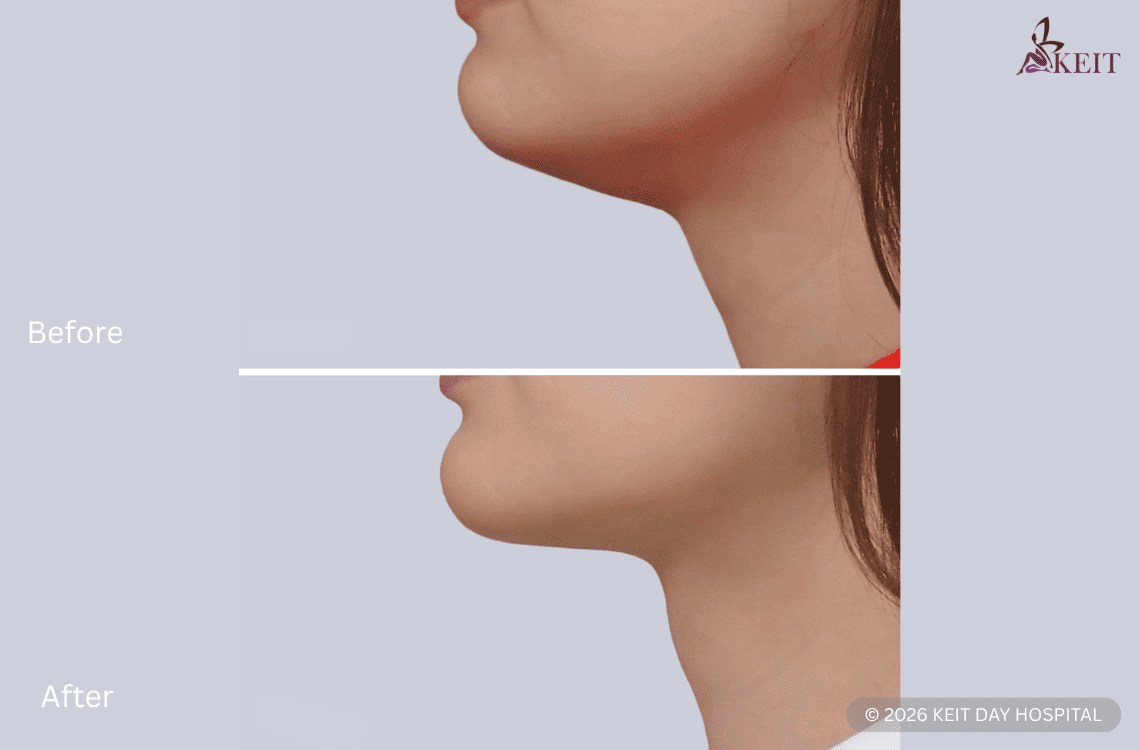
Double chin liposuction for under-chin fat removal
Chin liposuction is a surgical procedure that removes localized fat beneath the chin to improve the contour between the jawline and neck. The procedure is usually performed under local anaesthesia with sedation or general anaesthesia, depending on the case, and typically takes 30–60 minutes. The surgeon makes small access points, usually under the chin or within natural creases, and removes excess fat with a thin cannula and controlled suction.
Recovery usually takes 1–2 weeks and may include swelling, bruising, and a compression garment. Results become clearer as swelling settles over the following weeks to months.
Neck lift for loose skin and double chin correction
A neck lift is a surgical procedure that improves a double chin caused by loose skin, sagging tissue, or ageing-related neck laxity. The procedure is performed under anaesthesia and usually takes 1.5–3 hours, depending on the extent of correction. The surgeon tightens deeper neck tissues, removes excess skin when needed, and may combine the procedure with fat removal if under-chin fat is also present.
Recovery usually takes 2–3 weeks and may include swelling, bruising, tightness, and discreet scars placed around the ears and sometimes under the chin. Results become more defined as swelling settles, with continued refinement over the following months.
Double chin surgery cost in the UK: Price range and what affects it
The cost of double chin surgery in the UK varies depending on the procedure needed and the cause of the under-chin fullness. Typical double chin removal price ranges include:
- Double chin liposuction: Approximately 4,000–7,500 euro for chin or neck liposuction.
- Neck lift surgery: Approximately 8,100–11,600 euro, depending on whether a mini or full neck lift is required.
- Chin surgery: Starts from around 3,500–8,100 euro, depending on whether chin implant surgery or genioplasty is required.
- Combined double chin surgery: The cost is higher and is quoted individually when more than one procedure is required.
The final price is affected by the amount of under-chin fat, skin laxity, the type of surgery, anaesthesia, surgeon expertise, clinic location, facility fees, and aftercare included in the quote. A transparent quote should clearly state what is included before treatment is planned.