 Anaesthetic Safety
KEIT DAY HOSPITAL
Detailed difficult airway management protocol
Official Manual of Clinical, Care and Organizational Protocols
| Document Code | KEIT-SOP-12 | Version | 2.0 |
|---|---|---|---|
| Revision | 02 | Status | Official |
| Issue Date | 28/03/2026 | Next Review | 28/03/2027 |
| Prepared by | Medical Directorate / Quality | Approved by | |
| Signature and Date | Distribution | Controlled - Internal Use |
Purpose of the document. To officially define the scope, responsibilities, operating procedure, KEIT standards, records and protocol review criteria.
1. Document Control Information
| Application | All clinical, nursing, technical and organizational personnel involved in the described process. |
|---|---|
| Archiving | KEIT internal document management system and controlled copy in the relevant areas. |
| Review | At least annually or earlier in the event of regulatory, organizational or technological updates. |
2. Scope of Application
Applicable to all patients undergoing general anesthesia or sedation with a potential risk of airway compromise.
3. Responsibilities
- Anesthesiologist responsible for the case: preoperative assessment, definition of the A-B-C-D plan and leadership of airway management.
- Anesthesia nurse: preparation of the difficult airway cart and immediate operational support.
- Second anesthesiologist or experienced airway specialist: prompt intervention in complex or escalating situations.
4. Operating Procedure
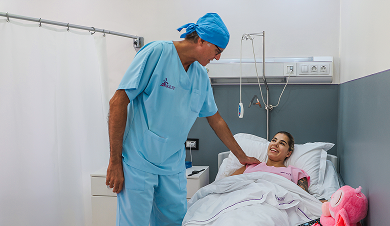
- Perform a preoperative assessment of airway anatomy, mouth opening, cervical mobility, history of difficult intubation, craniofacial abnormalities and the risk of difficult ventilation.
- Document a management plan including the primary strategy and rescue strategies, attempt limits and criteria for requesting assistance.
- Adequately preoxygenate the patient and prepare complete monitoring and all required medications.
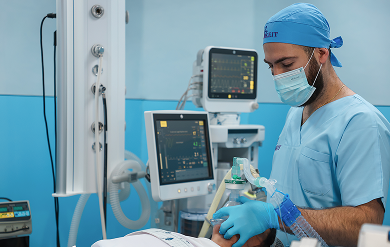
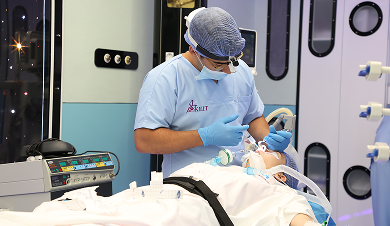
- Prepare the difficult airway cart in the operating room with video laryngoscopes, a flexible bronchoscope, supraglottic airway devices, cannulas, suction equipment and an emergency surgical airway kit.
- Initiate Plan A using the device considered most appropriate for the case, prioritizing continuous oxygenation while minimizing traumatic or repeated attempts.
- If unsuccessful, proceed without delay to Plan B and then Plan C, prioritizing ventilation and oxygenation rather than intubation alone.
- In a cannot intubate–cannot oxygenate scenario, immediately activate the emergency plan and perform the rescue airway access specified by the protocol.
- Document the event in detail, including the devices used, the number of attempts and recommendations for future anesthetic management.
5. KEIT Operational Standards
- KEIT is equipped with conventional laryngoscopes, video laryngoscope systems, a GlideScope video laryngoscope and a video-assisted flexible bronchoscope for the management of complex airway cases.
- The difficult airway cart is checked regularly and before all selected cases.
- The operational philosophy prioritizes oxygenation, early request for assistance and limiting the number of airway attempts.
6. Records and Documentation
- Airway assessment recorded in the anesthesia chart.
- Difficult airway cart checklist.
- Critical incident report and debriefing documentation.
7. Review and Updates
Review after every difficult airway event and periodic simulation-based team training.
Implementation Note
This document is an internal operational draft. Before final adoption, review by the Medical Directorate, Clinical Directorate, Legal Advisor and the relevant department managers is recommended.
This document is an internal operational draft. Before final adoption, review by the Medical Directorate, Clinical Directorate, Legal Advisor and the relevant department managers is recommended.
8. Related Attachments and Forms
- Operational checklists, recording forms, audit sheets and maintenance registers applicable to this protocol.
- Any department-specific or equipment-specific technical attachments are referenced in the relevant local operating instructions.
9. Final Approval
| Position | Name and Signature | Date |
|---|---|---|
| Medical Directorate |
Download this protocol
Get the official PDF version of this protocol.