Published on:

 Reading Time: 5 min
 Scientific Articles
The choice of anesthesia is an important part of planning facial aesthetic surgery. Local anesthesia and sedation may be used separately or in combination for various facial procedures, but the choice depends on the type and duration of the procedure, patient characteristics and the level of comfort required. The most recent PubMed evidence allows assessment of the safety of these approaches and the role of different strategies used for pain control and perioperative management.
How the evidence was selected: the most recent PubMed meta-analyses
A targeted PubMed search was conducted, including only systematic reviews with meta-analyses relevant to anesthesia in facial aesthetic surgery. The selection prioritized the most recent studies and those directly evaluating the safety of local anesthesia, as well as closely related aspects such as comfort, pain, nerve blocks and perioperative pharmacological management.
The most directly relevant meta-analysis is the 2026 study on facial aesthetic surgery performed under local anesthesia, with or without sedation. The other selected evidence primarily concerns nasal surgery and oculoplastic surgery and is used to complement, rather than replace, the data directly available on facial surgery.
Local anesthesia with or without sedation: what does the most recent meta-analysis show?
The meta-analysis published in 2026 is currently the PubMed evidence most directly related to this question. It included 12 studies and 3,283 facial aesthetic surgery procedures performed in an outpatient setting under local anesthesia, with or without sedation.
The main findings were:
- Overall complications: 5.6%;
- Major complications: 1.6%;
- Minor complications: 3.7%;
- Only 9% of patients underwent more than one procedure during the same session.
The authors concluded that facial aesthetic surgery performed under local anesthesia, with or without sedation, has a low overall complication rate. However, they highlighted significant heterogeneity among studies, particularly regarding anesthetic protocols and the definition of complications.
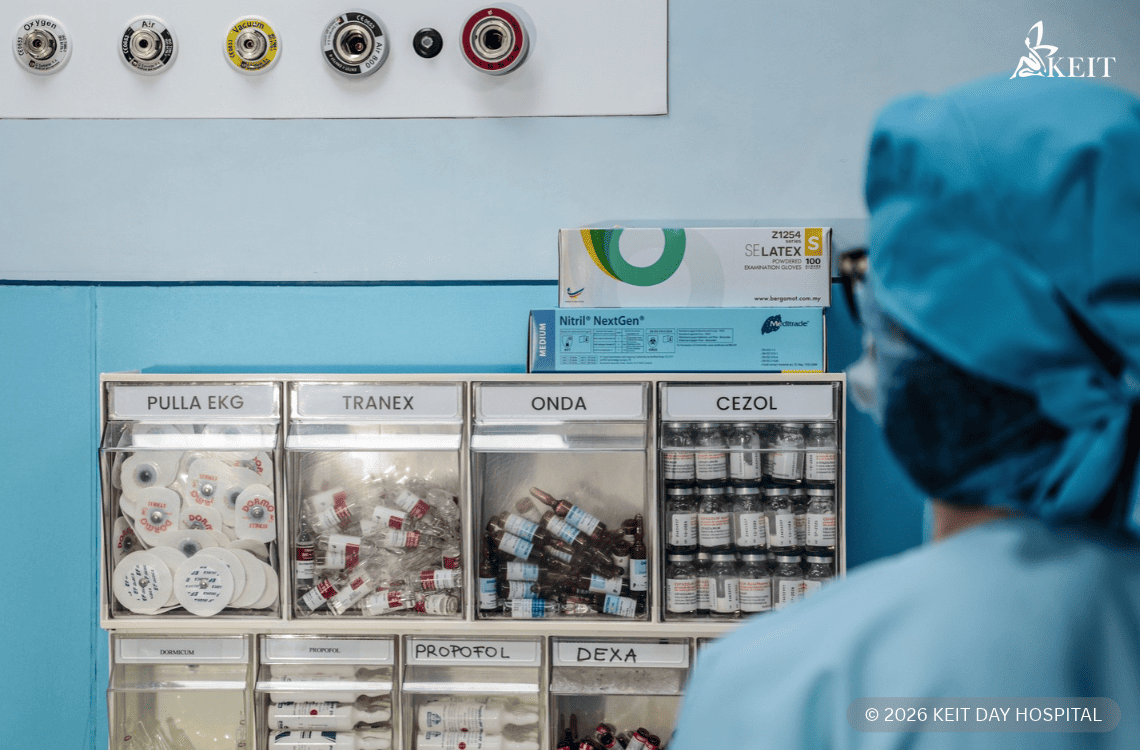
Is sedation always necessary for patient comfort?
Patient comfort does not necessarily depend on the addition of sedation. Appropriate management of local anesthesia can itself help reduce pain and improve the intraoperative experience.
A 2022 network meta-analysis on oculoplastic surgery included 11 randomized studies and 521 patients, comparing different solutions for local infiltration. The combination of buffered lidocaine with bicarbonate and epinephrine was associated with reduced pain during injection compared with some alternatives, although the overall quality of evidence was considered very low.
These findings suggest that intraoperative comfort may also be influenced by the infiltration technique, choice of anesthetic and pain control, rather than exclusively by the use of sedation.
Nasal surgery: the role of nerve blocks in local anesthesia
In nasal surgery, a 2023 meta-analysis evaluated the effectiveness of peripheral nerve blocks as an adjunct to anesthetic management. Four randomized studies involving a total of 265 patients were included. Nerve blocks resulted in a significant reduction in postoperative pain and opioid consumption, as well as increased patient satisfaction. A longer interval before the need for additional analgesics was also observed.
A more recent meta-analysis, published in 2026, specifically evaluated sphenopalatine ganglion block during septorhinoplasty. The five included studies demonstrated reduced intraoperative and postoperative pain, lower analgesic requirements and improved blood pressure control during surgery, as well as reduced bleeding and improved surgical field quality.
These findings do not directly compare local anesthesia with sedation, but they demonstrate how targeted analgesic management may reduce the need for systemic medications.
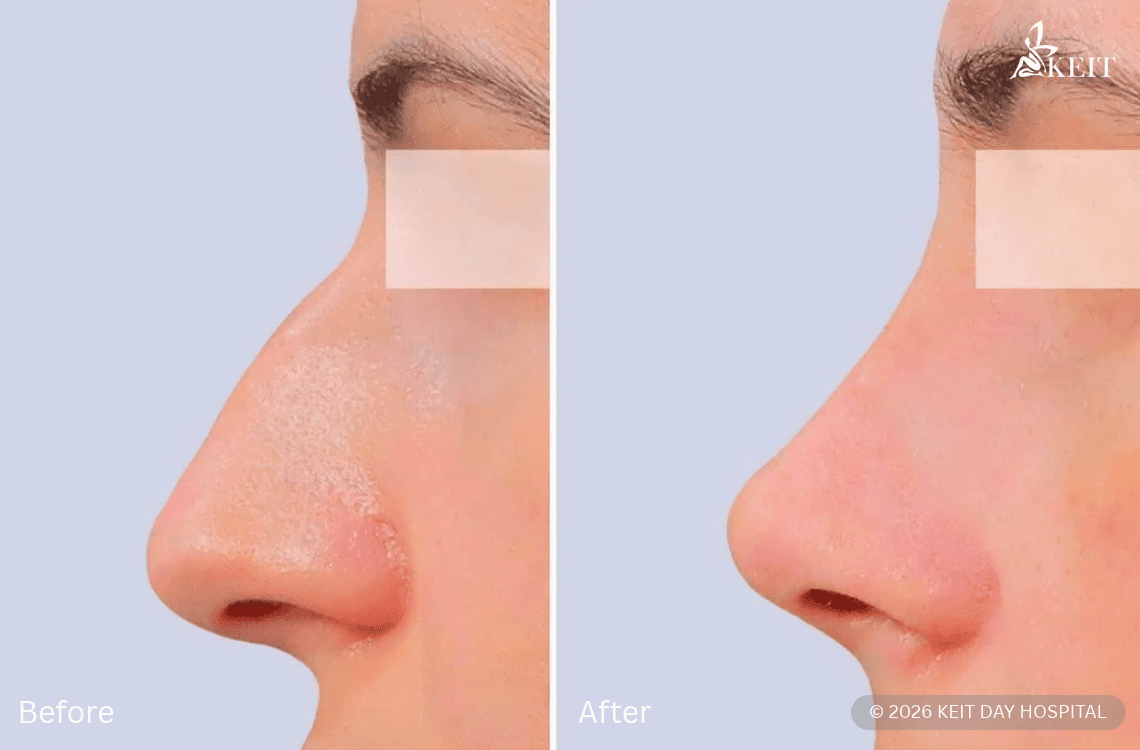
Sedation and pharmacological management: what do meta-analyses in nasal surgery show?
In nasal surgery, the choice of medications used during anesthesia may also influence pain control and perioperative management. A 2024 meta-analysis compared dexmedetomidine with remifentanil or fentanyl during rhinoplasty, demonstrating differences between pharmacological protocols in terms of analgesia and anesthetic management.
However, these findings do not represent a direct comparison between local anesthesia and sedation. They concern different pharmacological strategies used during nasal surgery and should therefore be interpreted specifically within this context, without automatically extending them to other facial aesthetic procedures.
Local anesthesia, sedation and safety: what can we actually conclude?
Overall, the available PubMed meta-analyses indicate that facial aesthetic surgery performed under local anesthesia, with or without sedation, has a low complication rate in selected procedures. The 2026 meta-analysis estimated an overall incidence of 5.6%, with 1.6% representing major complications.
The available evidence also shows that pain control can be improved through appropriate infiltration technique, appropriate anesthetic selection, the use of selected nerve blocks and individualized pharmacological management. The choice between local anesthesia and sedation therefore cannot be considered in absolute terms. It should be adapted to the procedure, its duration and complexity, the patient's condition and the expected level of comfort.

Main findings and clinical implications
The most recent PubMed evidence can be summarized as follows:
- Facial aesthetic surgery performed under local anesthesia, with or without sedation, has a low overall complication rate in the most recent meta-analysis.
- The 2026 meta-analysis reported 5.6% overall complications, 1.6% major complications and 3.7% minor complications.
- Meta-analyses of nasal surgery show that nerve blocks and targeted analgesic strategies may reduce pain and analgesic consumption.
- The available evidence does not demonstrate that sedation is always necessary when a procedure can be adequately performed under local anesthesia.
- At the same time, there are insufficient comparative data to conclude that local anesthesia is universally superior to sedation.
- The choice of anesthetic approach should therefore be individualized according to the procedure, patient and surgical protocol.
- Heterogeneity among studies and anesthetic protocols remains an important limitation of the available literature.
Ultimately, local anesthesia with or without sedation represents a safe option for selected facial aesthetic procedures, but current evidence does not allow a single anesthetic strategy to be established as superior for all patients.
Bibliography: the five PubMed meta-analyses considered
- Giannas E, Jones LS, Kalogeromitros M, et al. Safety Profile of Facial Cosmetic Surgery Under Local Anesthesia, with or without Sedation: A Systematic Review and Meta-analysis. Aesthetic Plast Surg. 2026;50(15):5965-5975. PMID: 42377497.
- Kim DH, Jang DW, Hwang SH. Effects of Sphenopalatine Ganglion Nerve Block on Bleeding and Pain During and After Septorhinoplasty: A Systemic Review and Meta-analysis. Aesthetic Plast Surg. 2026;50(3):955-965. PMID: 41023232.
- Yang J, Wu X, Nie J. Comparative study between remifentanil (or fentanyl) and dexmedetomidine for the analgesia of rhinoplasty: A meta-analysis of randomized controlled trials. Medicine (Baltimore). 2024;103(16):e37020. PMID: 38640315.
- Alaniz L, Vu C, Arora J, et al. Effective Local Anesthetic Use in Nasal Surgery: A Systematic Review and Meta-analysis of Randomized Controlled Studies. Plast Reconstr Surg Glob Open. 2023;11(8):e5151. PMID: 37534108.
- Liu HM, Wu TJ, Liou CM, et al. Patient Comfort with Various Local Infiltration Anesthetics for Minor Oculoplastic Surgery: A Systematic Review and Network Meta-Analysis. J Plast Reconstr Aesthet Surg. 2022;75(9):3473-3484. PMID: 35961926.