Published on:
 Modified on:

 Reading Time: 6 min

 Scientific Articles
This 2023–2026 evidence review summarises PubMed-indexed systematic reviews and meta-analyses relevant to the comparison between open and closed (endonasal) rhinoplasty. The most recent comparative meta-analysis directly evaluating open versus closed approaches is complemented by additional recent meta-analyses that address approach-relevant outcome drivers (bleeding control, perioperative field visibility, postoperative pain control, and the columellar incision scar—unique to open rhinoplasty). Collectively, these studies outline what comparative evidence supports, what remains uncertain, and which variables most influence outcomes in contemporary rhinoplasty practice.
 Table of Contents:
-
1
 How the evidence was selected: Criteria for the latest five meta-analyses
-
2
Defining “open” vs “closed” rhinoplasty in comparative evidence
-
3
Comparative outcomes in open vs closed rhinoplasty: what meta-analysis shows
-
4
Complication patterns and approach-linked risk considerations
-
5
Operative field quality and bleeding control: relevance to approach selection
-
6
Postoperative pain and recovery variables: approach-independent modifiers
-
7
Key takeaways across recent meta-analyses
-
8
Limitations and uncertainty in the comparative evidence
-
9
Clinical implications: What the evidence means for practice
-
10
Bibliography: Recent PubMed-indexed meta-analyses considered
How the evidence was selected: Criteria for the latest five meta-analyses
A targeted PubMed search identified recent (2023–2026) publications classified as systematic reviews and meta-analyses relevant to the comparison between open and closed rhinoplasty. Priority was given to studies directly comparing the two approaches. Because few contemporary head-to-head meta-analyses exist, additional high-level studies were included when they examined approach-related variables that influence outcomes, such as columellar incision scarring in open rhinoplasty, intraoperative bleeding control, and postoperative pain management.
The final selection therefore includes one dedicated open-versus-closed meta-analysis and four recent meta-analyses addressing clinically relevant, technique-dependent factors that inform surgical approach selection.
Defining “open” vs “closed” rhinoplasty in comparative evidence
In the comparative literature:
- Open rhinoplasty typically refers to a transcolumellar incision with elevation of the nasal soft-tissue envelope to expose structural anatomy directly.
- Closed (endonasal) rhinoplasty refers to intranasal incisions without a transcolumellar incision, relying on more limited exposure and tactile/indirect visualisation.
Modern practice often blends structural and preservation concepts within either approach; therefore, “open vs closed” is best understood as a difference in exposure and access, not a single uniform technique.
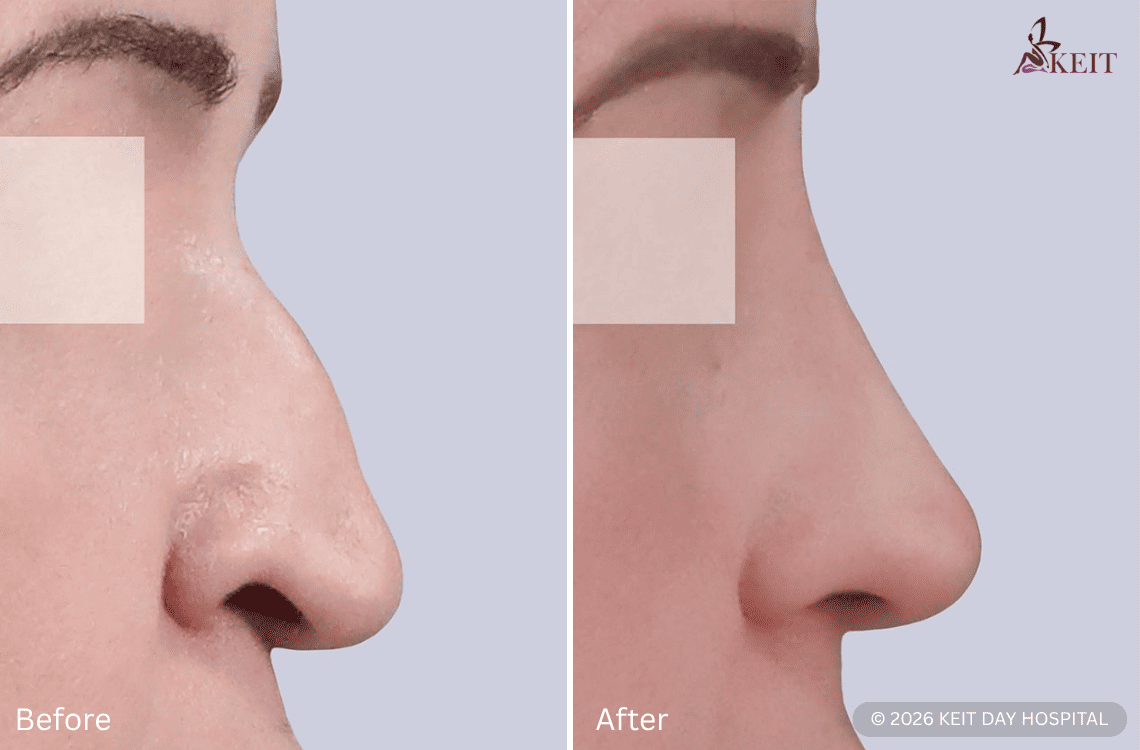
Comparative outcomes in open vs closed rhinoplasty: what meta-analysis shows
The most recent PubMed systematic review and meta-analysis directly comparing open and closed rhinoplasty evaluated multiple endpoints across included comparative studies, including:
- Patient-reported aesthetic outcomes (eg, ROE)
- Patient-reported functional outcomes (eg, NOSE)
- Early postoperative morbidity (edema, ecchymosis)
- Operative time, satisfaction, and complication rates
Across pooled analyses, no statistically significant differences were observed between open and closed approaches in ROE scores, NOSE scores, postoperative edema, ecchymosis, operative time, satisfaction, or overall complication rates. Heterogeneity was high for patient-reported outcomes, reflecting variability in study design, indications, and surgical technique.
Overall, evidence supports comparable functional and aesthetic outcomes, with results more influenced by surgical execution and patient anatomy than by incision approach.
Complication patterns and approach-linked risk considerations
The direct comparative meta-analysis found no consistent difference in overall complication rates between approaches in pooled data. However, certain risk discussions are inherently approach-linked.
Columellar scar: an open-specific variable
Because the transcolumellar incision is unique to open rhinoplasty, scar quality and closure technique become approach-specific considerations. A dedicated meta-analysis comparing absorbable vs non-absorbable suture for columellar incision closure found no significant difference in long-term scar appearance across patient- and physician-reported outcomes. This suggests that—when performed well—closure material choice alone does not meaningfully change scar aesthetics.
Practical implication: the presence of a columellar scar is an open-approach consideration, but within open rhinoplasty, suture absorbability does not appear to be a dominant determinant of long-term scar appearance.
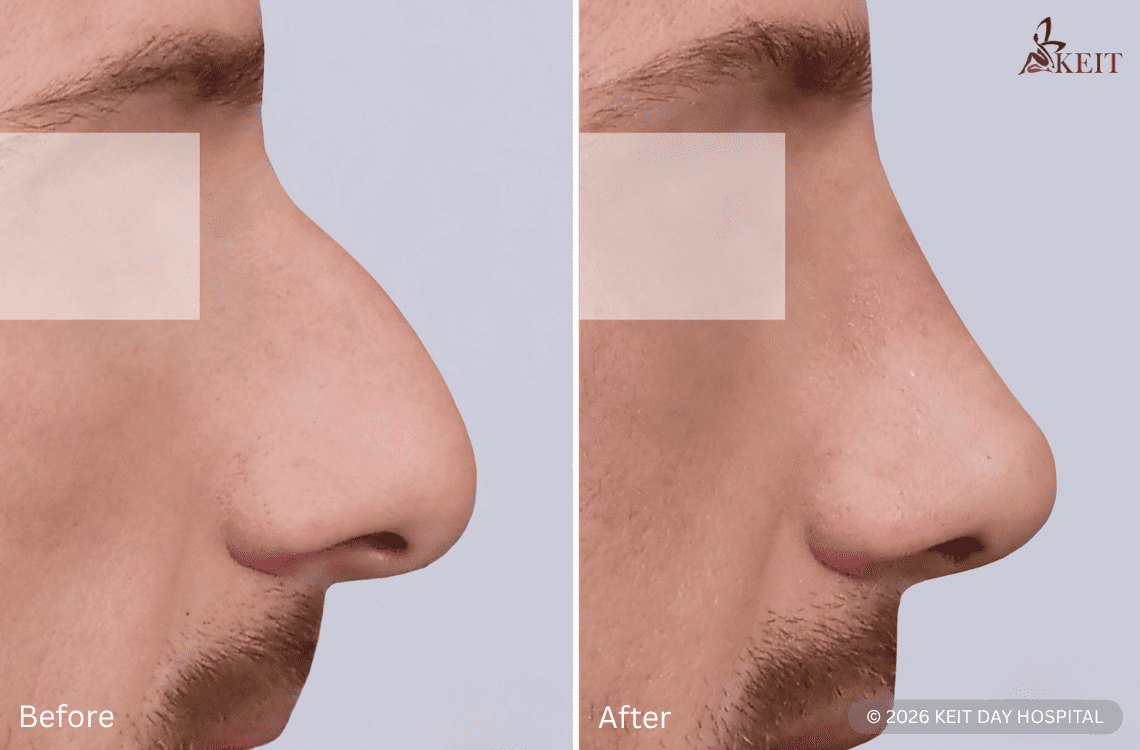
Operative field quality and bleeding control: relevance to approach selection
Bleeding control directly influences intraoperative visualisation and surgical precision in rhinoplasty and septorhinoplasty. A 2026 systematic review and meta-analysis of randomised trials assessing multiple bleeding-reduction strategies (including tranexamic acid and positioning) reported significant reductions in intraoperative bleeding, with the most consistent effects observed for tranexamic acid (TXA) and steroids. A separate 2024 meta-analysis of randomised trials focused on TXA in rhinoplasty/septoplasty similarly found reduced intraoperative blood loss and improved surgeon-rated operative field quality.
These findings are relevant to open vs closed decision-making because limited exposure in endonasal work may increase sensitivity to field clarity; however, improved hemostasis is beneficial for operative precision in both approaches.
Postoperative pain and recovery variables: approach-independent modifiers
A 2023 systematic review and meta-analysis of randomised studies evaluating intraoperative regional nerve blocks in nasal surgery reported lower postoperative pain scores, reduced opioid consumption, and higher patient satisfaction in pooled analyses. These findings indicate that early recovery is substantially influenced by perioperative analgesic protocols.
In the context of open versus closed rhinoplasty, this evidence supports interpreting early postoperative discomfort as a multifactorial outcome. Differences in pain and short-term recovery attributed to surgical access may be modified, or partially accounted for by the use of nerve blocks and other standardized analgesic measures.
Key takeaways across recent meta-analyses
Across the most recent PubMed meta-analytic evidence set:
- Open vs closed rhinoplasty shows no consistent pooled superiority for patient-reported aesthetic (ROE) or functional (NOSE) outcomes, nor for pooled complication rates or early edema/ecchymosis in the latest comparative meta-analysis.
- Approach selection is best framed as an exposure or access decision tailored to anatomy, goals, and surgeon expertise, rather than a predictor of outcomes on its own.
- Open rhinoplasty introduces an approach-specific variable (columellar incision scar); within open rhinoplasty, absorbable vs non-absorbable closure does not appear to change long-term scar appearance in pooled data.
- Bleeding-control strategies (notably TXA and other methods studied in RCTs) improve intraoperative conditions and may indirectly improve precision and workflow regardless of approach.
- Nerve blocks improve postoperative pain outcomes in pooled RCT data and can influence early recovery perceptions independent of open or closed approach.

Limitations and uncertainty in the comparative evidence
Current meta-analytic conclusions are constrained by recurring limitations:
- High heterogeneity in pooled patient-reported outcomes (reflecting varied indications, anatomy, surgeon technique, and reporting standards).
- A relative scarcity of standardised, head-to-head comparative trials designed specifically around the open vs closed decision (many included studies are observational).
Important confounders—such as cartilage work strategy, osteotomy method, adjunctive hemostatic measures, and analgesic protocols—may explain outcome differences more than incision approach itself.
Clinical implications: What the evidence means for practice
- Evidence supports that both open and closed approaches can achieve comparable outcomes when appropriately selected and executed.
- Preoperative planning should prioritise anatomy, functional goals, and technical requirements, using approach as a tool rather than a value judgement.
- Recovery and morbidity are meaningfully influenced by perioperative protocols (bleeding control and nerve blocks), and these factors should be integrated into surgical planning and counselling.
- Informed consent for open rhinoplasty should include discussion of the columellar incision, while emphasising that suture absorbability has not shown clear differences in long-term scar appearance in pooled evidence.
Bibliography: Recent PubMed-indexed meta-analyses considered
- Daou CAZ. Outcomes of Open Versus Closed Rhinoplasty, a Systematic Review and Meta-analysis. Plast Reconstr Surg Glob Open. 2025. PMID: 40771258.
- Zamani MR. Effectiveness of Bleeding Control Methods in Rhinoplasty: A Systematic Review and Meta-Analysis. Arch Plast Surg. 2026. PMID: 41625397.
- Khajuria A. Tranexamic Acid in Rhinoplasty and Septoplasty: A Systematic Review and Meta-analysis of Randomized Controlled Trials. 2024. PMID: 39507311.
- Alaniz L. Effective Local Anesthetic Use in Nasal Surgery: A Systematic Review and Meta-analysis of Randomized Controlled Studies. 2023. PMID: 37534108.
- Kenny H. Columellar Scar Following Open Rhinoplasty Using Absorbable Suture Versus Nonabsorbable Suture: A Meta-Analysis. Facial Plast Surg Aesthet Med. 2023. PMID: 34516890.