Published on:

 Reading Time: 6 min
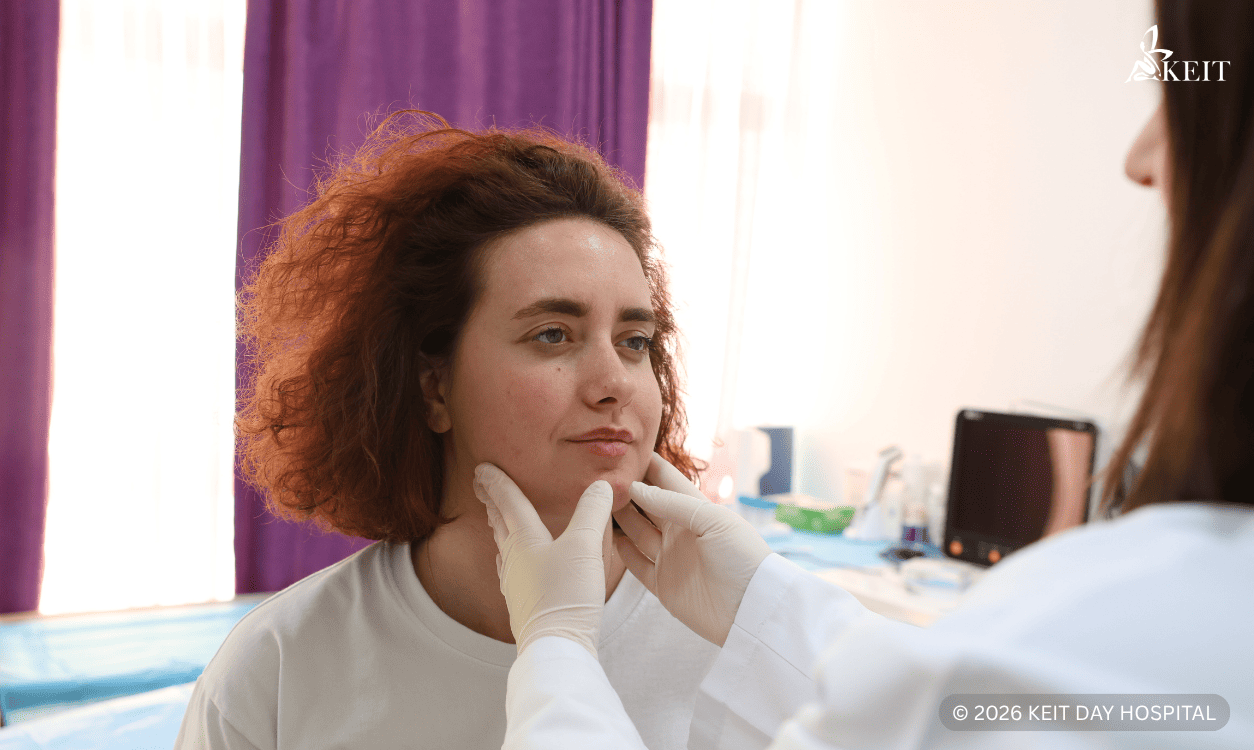
 Scientific Articles
A thread lift is a minimally invasive facial rejuvenation procedure that uses absorbable or permanent sutures to lift and support soft tissues. The technique is increasingly used because it is less invasive than a traditional facelift and generally involves a shorter recovery period. Despite its favourable safety profile, complications may occur and are mainly related to the surgical technique, the type of thread used, tissue quality, and patient selection.
 Table of Contents:
-
1
 PubMed search strategy and evidence selection criteria
-
2
Overall safety profile of thread lifts
-
3
Early complications after a thread lift
-
4
Late complications and material-related problems
-
5
Infection and management of complications
-
6
Factors associated with the risk of complications
-
7
Thread lift vs traditional surgical facelift
-
8
Strategies to reduce the risk of complications
-
9
Clinical implications in aesthetic practice
-
10
Bibliography: PubMed evidence on thread lift complications and safety
PubMed search strategy and evidence selection criteria
A targeted PubMed search was conducted for this review, including systematic reviews and studies with aggregated data on the safety of thread lifts and facial suspension procedures using sutures. Studies were selected if they evaluated the incidence of post-operative complications, types of adverse events, technical factors associated with risk, aesthetic outcomes, patient satisfaction, and the need for revision or suture removal.
Given the limited availability of meta-analyses specifically dedicated to thread lifts, PubMed-indexed systematic reviews and large clinical case series were also included to provide a comprehensive assessment of the safety profile, reported complications, and the main factors associated with clinical outcomes.
Overall safety profile of thread lifts
Available reviews indicate that thread lifts generally have a favourable safety profile, with a lower incidence of complications than traditional surgical facelift procedures. Adverse events reported in the literature are mostly mild or temporary and include swelling, bruising, temporary pain, skin irregularities, asymmetry, thread visibility or palpability, infection, suture extrusion, and, in selected cases, the need for revision.
Overall risk depends primarily on the insertion technique, practitioner experience, the type of thread used, and the patient’s anatomical characteristics.
Early complications after a thread lift
Early complications generally occur within the first few weeks after the procedure and are often temporary. The most frequently reported events include swelling, bruising, local pain, skin irregularities, and temporary asymmetry.
Swelling, bruising, and post-operative pain
Swelling, bruising, and local pain or discomfort are among the most common adverse effects following thread placement. These effects are generally related to the mechanical trauma caused by suture insertion and the inflammatory response of the treated tissues.
In most patients, these effects are temporary and tend to resolve spontaneously within the first few weeks after the procedure without compromising the final outcome. Their severity may vary depending on the technique used, the number of threads inserted, the treatment area, and the individual patient response.
Skin irregularities and asymmetry
Temporary changes in the skin contour may occur when the tension exerted by the thread is not distributed evenly.
These problems are often related to:
- Superficial thread placement;
- Excessive tension;
- Suboptimal technique.
Late complications and material-related problems
Temporary changes in skin contour or differences in symmetry may occur during the early stages following a thread lift, particularly when the traction exerted by the suture is not distributed evenly across the tissues.
These effects are generally related to technical factors and may be associated with:
- Thread placement that is too superficial;
- Excessive tension applied to the tissues;
- Suboptimal insertion technique.
In most cases, these irregularities may improve spontaneously during the healing process as the tissues gradually adapt to the new position of the suture.
Infection and management of complications
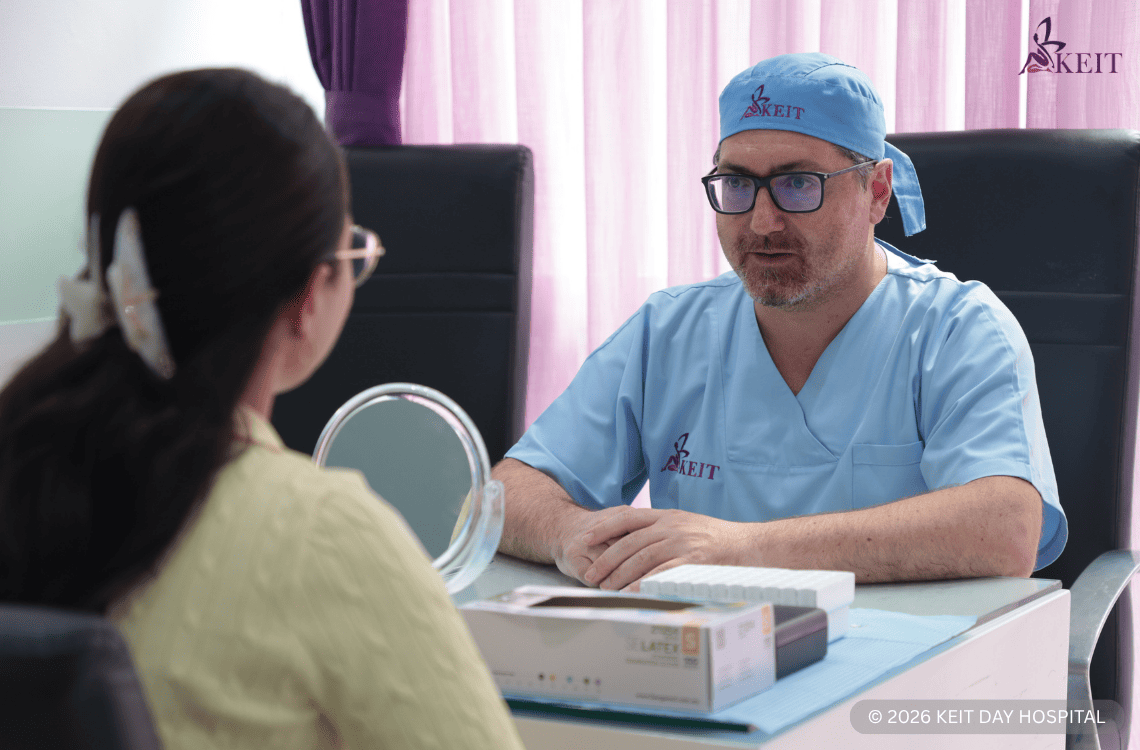
Although uncommon, infections are among the most clinically relevant complications following a thread lift because they can compromise the healing process and the final outcome of the procedure. The risk of infection may increase with inadequate sterile technique, excessively superficial thread placement, contamination of the entry point, or inappropriate post-operative management.
Treatment depends on the severity of the clinical presentation and may include antibiotic therapy, local wound care, drainage when an infected fluid collection is present, and, in persistent cases or those resistant to treatment, thread removal.
Factors associated with the risk of complications
The risk of complications following a thread lift depends on the interaction between individual patient characteristics and technical factors related to the procedure. Appropriate pre-operative assessment and proper technique are essential for optimising outcomes and reducing adverse events.
Patient-related factors
Tissue characteristics and individual expectations can significantly influence the final outcome. The main associated factors include:
- Skin quality and thickness;
- Degree of soft-tissue laxity;
- Unrealistic aesthetic expectations;
- Predisposition to abnormal scarring or tissue reactions;
- Clinical conditions that may impair healing.
Technical factors
The safety and predictability of the outcome also depend on correct procedural execution. The most relevant factors include:
- Practitioner experience and technical precision;
- Depth and plane of thread insertion;
- Number and direction of the sutures used;
- Type of thread material;
- Appropriate distribution of tension across the tissues.
In summary, careful patient selection and a standardised technique are the main determinants in reducing the risk of complications and improving post-operative satisfaction.
Thread lift vs traditional surgical facelift
Compared with a traditional surgical facelift, a thread lift offers several advantages related to the less invasive nature of the procedure, including:
- No extensive surgical incisions;
- Generally shorter recovery time;
- Less tissue trauma.
However, the results achieved with threads are generally less durable than those of a surgical facelift, and the effectiveness of the procedure depends strongly on appropriate patient selection and a suitable clinical indication.
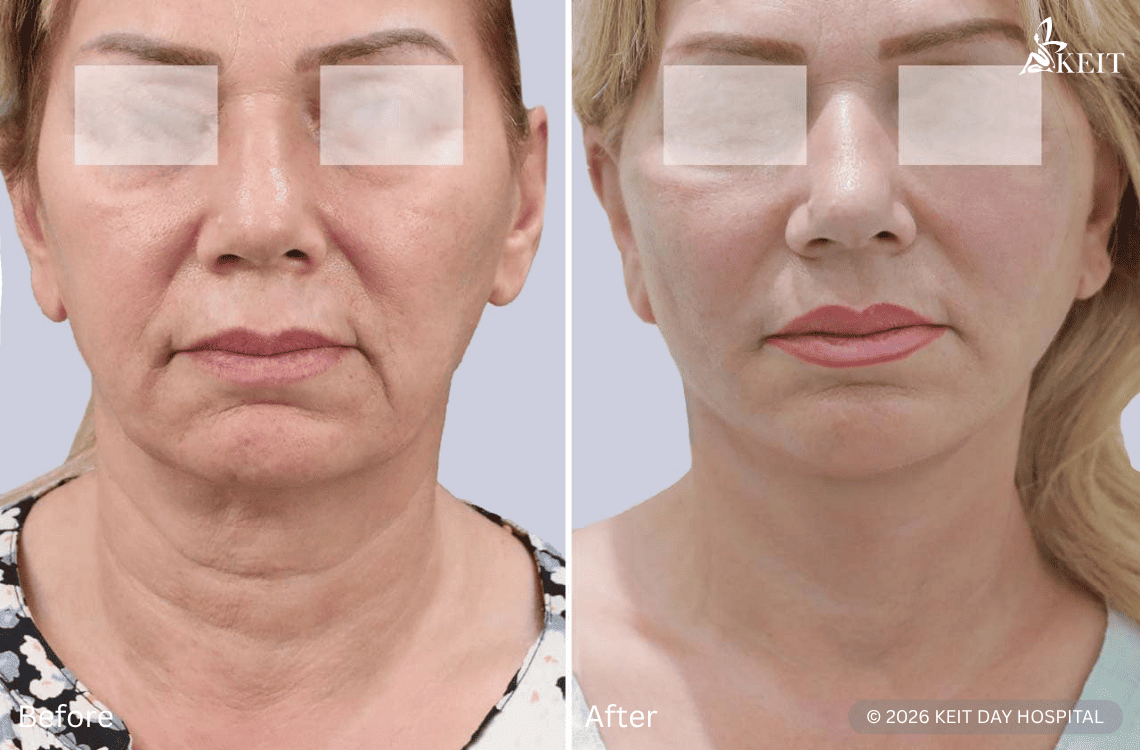
The evidence suggests that thread lifts are a more appropriate option for patients with mild to moderate skin laxity and realistic expectations regarding the degree of aesthetic improvement that can be achieved.
Strategies to reduce the risk of complications
Preventing complications following a thread lift depends primarily on appropriate procedural planning and careful management at every stage of treatment.
Key measures include:
- Careful patient selection;
- Pre-operative anatomical assessment;
- Selection of the most appropriate material and technique;
- Strict adherence to sterile technique;
- Correct thread placement and tensioning;
- Appropriate monitoring during the post-operative period.
The safety of thread lifts therefore depends primarily on the quality of planning, technical precision, and appropriate patient management rather than on the procedure itself.
Clinical implications in aesthetic practice
Thread lifts are minimally invasive procedures with a generally favourable safety profile, but they require appropriate patient assessment and careful risk management.
The most relevant clinical considerations include:
- Careful candidate selection;
- Appropriate indication for the procedure;
- Establishment of realistic expectations;
- Early recognition and management of complications.
Overall, the evidence indicates that satisfactory outcomes can be achieved when thread lifts are performed in appropriately selected patients using a standardised technique and appropriate pre- and post-operative planning.
Bibliography: PubMed evidence on thread lift complications and safety
Niu Z, Zhang K, Yao W, Li Y, Jiang W, Zhang Q, Troulis MJ, August M, Chen Y, Han Y. A Meta-Analysis and Systematic Review of the Incidences of Complications Following Facial Thread-Lifting. Aesthetic Plast Surg. 2021;45(5):2148-2158. PMID: 33821308.
Pham CT, Chu S, Foulad DP, Mesinkovska NA. Safety Profile of Thread Lifts on the Face and Neck: An Evidence-Based Systematic Review. Dermatol Surg. 2021;47(11):1460-1465. PMID: 34699439.
Gülbitti HA, Colebunders B, Pirayesh A, Bertossi D, van der Lei B. Thread-Lift Sutures: Still in the Lift? A Systematic Review of the Literature. Plast Reconstr Surg. 2018;141(3):341e-347e. PMID: 29481392.
Tong LX, Rieder EA. Thread-Lifts: A Double-Edged Suture? A Comprehensive Review of the Literature. Dermatol Surg. 2019;45(7):931-940. PMID: 30893160.
Ojha AS, Farahbakhsh N, Saikaly SK. An Assessment and Comparison of Adverse Effect Rates in Differing Absorbable Thread Lift Suture Materials. Dermatol Surg. 2025;51(3):272-276. PMID: 39442180.