Published on:
 Modified on:

 Reading Time: 6 min
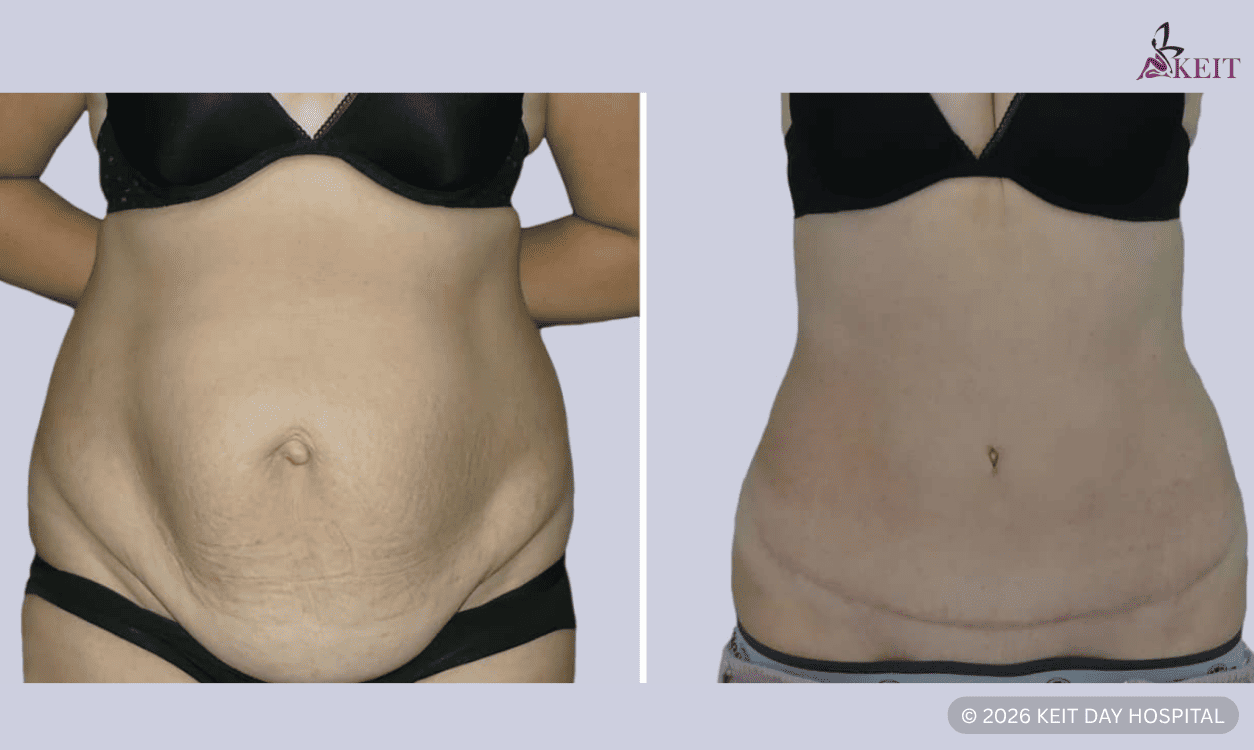
 Abdominoplasty
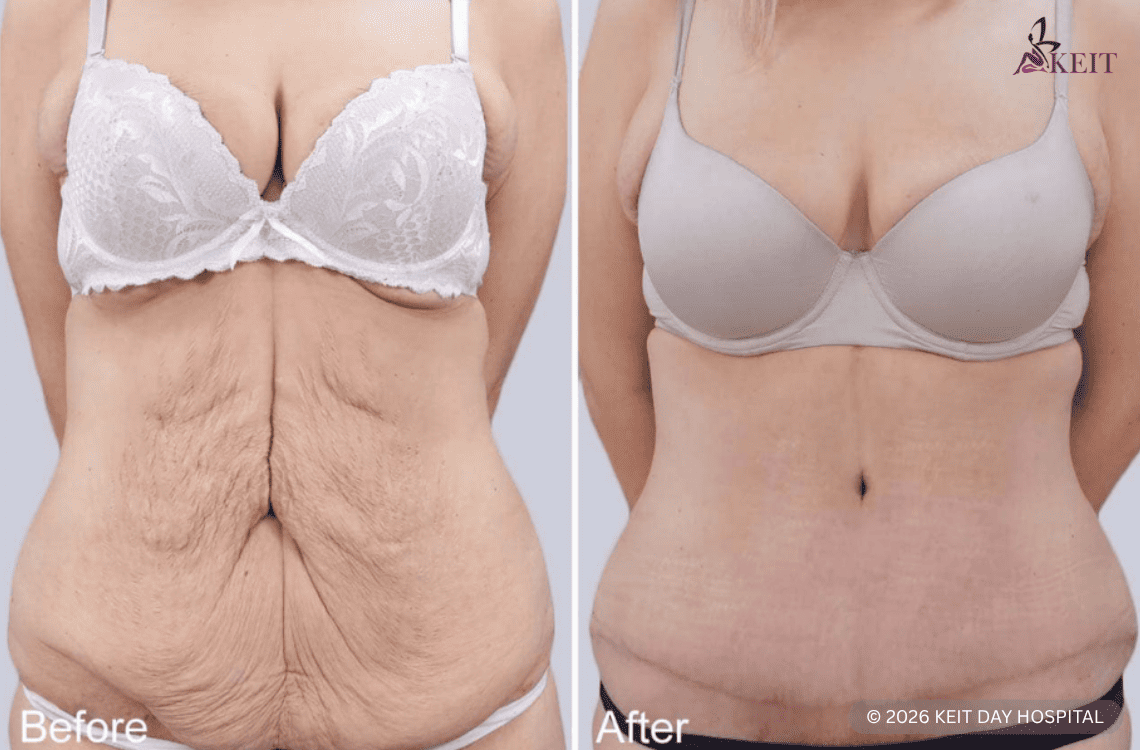
A tummy tuck gone wrong refers to an abdominoplasty outcome where healing does not progress as expected or where lasting problems affect appearance, comfort or function. While swelling, tightness and scar redness are normal parts of recovery, a problematic tummy tuck is typically associated with issues such as abnormal scarring, contour deformities, fluid collections, delayed healing, belly button distortion or persistent abdominal bulging after muscle repair. Distinguishing between normal post-operative changes and signs of a true complication is essential to avoid delayed correction and long-term dissatisfaction.
 Table of Contents:
-
1
 What does tummy tuck gone wrong mean?
-
2
Tummy tuck gone wrong: What are the main causes?
-
3
Normal recovery after a tummy tuck surgery: What’s truly expected?
-
4
Early warning signs of tummy tuck gone wrong
-
5
Tummy tuck gone wrong: When to seek medical evaluation
-
6
How a specialist evaluates a tummy tuck gone wrong
-
7
Tummy tuck gone wrong: The two most common treatments to fix it
-
8
How to reduce the risk of a tummy tuck going wrong
-
9
Choosing KEIT Day Hospital for a safe and reliable tummy tuck surgery
In this comprehensive guide, you’ll learn what a “tummy tuck gone wrong” means from a medical and surgical perspective, why it happens and which factors increase risk. We explain what normal recovery should look like, how to recognize early warning signs, when specialist evaluation is needed and how surgeons assess suboptimal outcomes. You’ll also discover the most effective treatment options, from non-surgical management for minor issues to revision tummy tuck surgery for structural problems and finally what makes KEIT Day Hospital in Albania a reliable choice for safe tummy tuck surgery.
What does tummy tuck gone wrong mean?
A tummy tuck result is typically considered “gone wrong” when the outcome shows persistent issues that go beyond normal healing and do not improve as expected over time. This may involve abnormal recovery patterns such as ongoing wound openings, signs of infection or repeated fluid build-up, or a structurally incorrect shape outcome like contour deformities, a persistent bulge or marked asymmetry. It can also include scars that become widened, thickened or poorly positioned and fail to show gradual improvement, as well as functional problems such as persistent tightness, discomfort or posture-related limitations linked to technique or impaired healing.
Tummy tuck gone wrong: What are the main causes?
Most “tummy tuck gone wrong” cases are caused by a combination of surgical, biological and recovery factors.
Surgical / planning factors:
- Over-tensioning the closure, increasing scar widening or delayed healing risk.
- Uneven fat removal, leading to dents, bulges or “step-offs”.
- Inadequate skin redraping, leaving residual loose skin or folds.
- Inaccurate belly button positioning, creating an unnatural look.
- Muscle repair issues, where diastasis correction is incomplete or fails over time.
Patient and healing factors:
- Smoking / nicotine exposure, impairing circulation and scar quality.
- High BMI or large weight fluctuations, increasing tension and relapse risk.
- Poor tissue quality after major weight loss or multiple pregnancies.
- Medical conditions that affect healing (diabetes or anemia).
Post-operative factors:
- Early physical strain, lifting or intense activity too soon.
- Inconsistent compression garment use, affecting swelling and contour.
- Missed follow-ups, delaying detection of seroma or wound issues.
Normal recovery after a tummy tuck surgery: What’s truly expected?
Normal recovery is often misunderstood because results change week by week. Typical expectations include:
- Days 1–7: Swelling, bruising, tightness, discomfort, difficulty standing fully upright.
- Weeks 2–4: Swelling still visible, firmness under the skin, scar redness, mild unevenness.
- Weeks 6–12: Shape becomes clearer, swelling reduces, scar starts to soften (still pink/red).
- Months 3–6: Improved contour definition, less tightness, scars gradually flatten.
- Months 6–12: Results stabilize. Scar maturation continues and final contour is easier to judge.
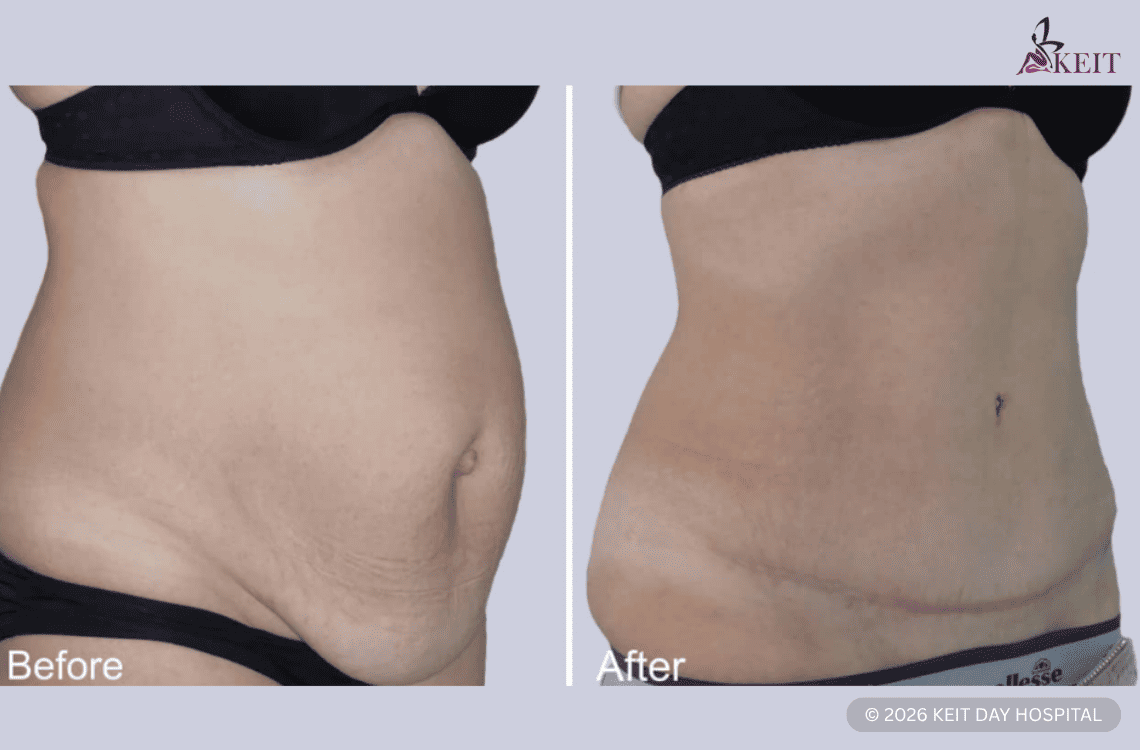
Book your FREE
Online Consultation Now

Early warning signs of tummy tuck gone wrong
Early warning signs are usually identified by worsening rather than gradual improvement. Watch out for:
- Swelling that increases after initially going down.
- Pain that escalates rather than gradually easing.
- Redness, warmth, unusual discharge or odor from the incision.
- Wound edges separating or not closing as expected.
- A soft “fluid-like” bulge that shifts with movement (possible seroma).
- A growing asymmetry that becomes more obvious week to week.
- Persistent bulging suggesting muscle repair issues.
- Early contour or outcome concerns, such as developing dog ears, scar widening, or belly button distortion that does not appear to be settling.
Tummy tuck gone wrong: When to seek medical evaluation
You should seek medical evaluation if your recovery is not improving as expected or if new concerns develop over time. This includes symptoms that worsen after the first one to two weeks, repeated fluid build-up or persistent bulging, scars that widen or wound openings that do not stabilize and shape concerns that remain unchanged once swelling should have reduced, usually after eight to twelve weeks. Assessment is also recommended after a previous tummy tuck if the problem appears structural, such as a persistent bulge, contour collapse or belly button distortion.
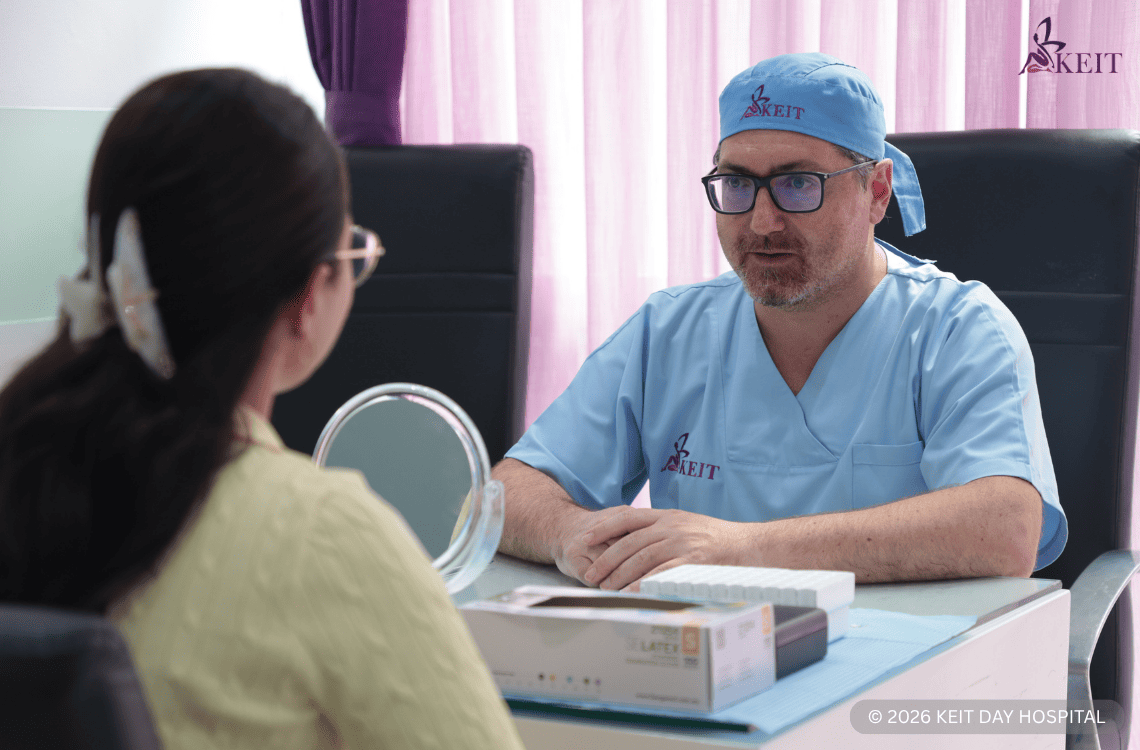
How a specialist evaluates a tummy tuck gone wrong
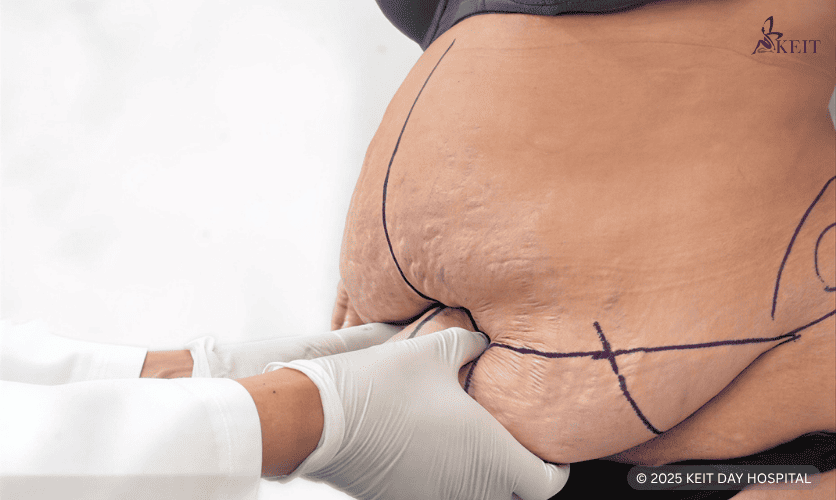
Evaluation is clinical and structured. The specialist focuses on:
- Incision and scar assessment (position, thickness, widening, healing quality).
- Contour assessment (dents, bulges, dog ears, asymmetry).
- Tissue quality (skin thickness, laxity, fat distribution).
- Muscle repair check (signs of persistent diastasis or relapse).
- Fluid collection assessment (swelling type, firmness, movement).
In complex cases, imaging may be used to understand internal structure before planning correction.
Tummy tuck gone wrong: The two most common treatments to fix it
Treatment related to a tummy tuck gone wrong depends on severity and what the specialist evaluation confirms.
Non-surgical options for minor problems
Non-surgical options are typically used when the problem is mild and mainly related to healing, swelling, early contour settling or scar quality, rather than a true structural issue.
Supervised lymphatic drainage massage can be helpful and follow-up visits allow close monitoring of minor unevenness as healing progresses. For scar texture or firmness, targeted treatments such as laser therapy, microneedling, steroid injections, radiofrequency or therapeutic ultrasound may be used depending on the specific issue. These methods can improve minor problems and scar appearance, but they cannot correct major deformities or rebuild internal support.
Revision tummy tuck: How corrective surgery works
Revision surgery is considered when the problem is structural or persistent, such as significant contour deformity, belly button distortion that does not improve, widened or poorly positioned scars that require revision, unresolved bulging related to muscle repair issues, or dog ears that remain after the swelling phase. The goal is to restore contour and stability, not simply to “tighten more.” For this reason, the revision plan is always built around the cause of the problem in the first place, so the correction is targeted, safe and long-lasting.
Recovery and results of revision surgery: What to expect
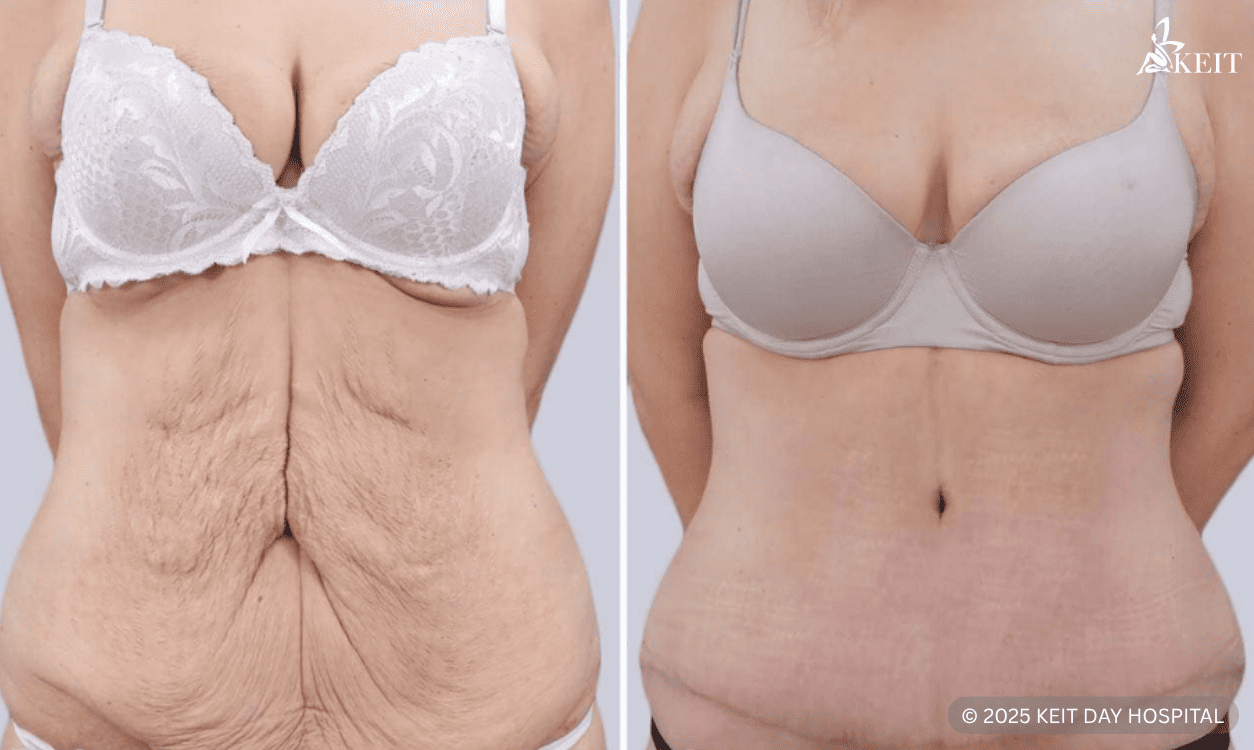
After correction, improvements usually include a smoother contour, better scar positioning or shape and more balanced tension across the abdomen. Swelling still occurs, with the most visible changes typically improving over the first 6–12 weeks, while scar remodeling and full contour refinement continue more gradually over 3–6 months, with final maturation often taking up to 12 months as tissues settle and scars mature.
How to reduce the risk of a tummy tuck going wrong
Risk reduction depends on proper surgical planning and strict adherence to post-operative recovery protocols:
- Choose an experienced surgeon with a clear complication strategy.
- Confirm whether muscle repair is needed and how it’s performed.
- Follow nicotine-free protocols (including vaping and patches).
- Stabilize weight before surgery and avoid major post-operative fluctuations.
- Follow compression and activity restrictions exactly.
- Attend all follow-ups to detect seroma or wound issues early.
Choosing KEIT Day Hospital for a safe and reliable tummy tuck surgery
KEIT Day Hospital in Tirana provides a distinctly advantageous cost range, with tummy tuck procedures typically priced between 2,900 and 3,300 euro, allowing patients to achieve their goals without the premium price tag.
You benefit from a streamlined experience through comprehensive all-inclusive packages that cover the full tummy tuck cost alongside essential services such as airport transfers, comfortable accommodation in a hotel just a two-minute walk from the facility and follow ups directly in the hospital or online. Critically, the standard of care is high: procedures are performed by highly specialized Italian surgeons, with over 23,000 procedures completed and more than 11,000 positive reviews, reinforcing KEIT’s reputation as a trusted reference in European aesthetic surgery. A trilingual team and a written Certificate of Guarantee further support continuity of care and patient peace of mind.