Published on:
 Modified on:

 Reading Time: 12 min
 Abdominoplasty
A tummy tuck (medically known as abdominoplasty) is a transformative surgical procedure that removes excess skin and fat from the abdomen while simultaneously tightening the underlying abdominal muscles. Tummy tuck surgery is the most effective way to achieve a flatter stomach contour, especially for individuals dealing with skin laxity and muscle separation (diastasis recti) caused by pregnancy, significant weight loss, or aging.
 Table of Contents:
-
1
 What is a tummy tuck?
-
2
Tummy tuck cost: How much is a tummy tuck UK?
-
3
Full tummy tuck: Complete abdominoplasty procedure
-
4
Mini tummy tuck: Partial abdominoplasty procedure
-
5
Advanced tummy tuck techniques: When are they applied?
-
6
Non-surgical tummy tuck: The key alternatives explained
-
7
Tummy tuck scar: How to set real expectations?
-
8
Tummy tuck before and after: The journey to the final results
-
9
Avoiding a tummy tuck gone wrong: Risks, complications and surgeon’s expertise
-
10
Tummy tuck in Turkey vs Albania: Cost and care comparison
In this article, we cover everything you need to know about a tummy tuck surgery (abdominoplasty). We start with the basics of what a tummy tuck really is, before addressing the key financial question: How much does a tummy tuck cost in the UK? You’ll then discover the main surgical options, from the full tummy tuck to the mini tummy tuck, as well as advanced techniques for more complex cases. We also review non-surgical alternatives, explain what to expect from tummy tuck scars and show realistic tummy tuck before and after results. To ensure safety, we highlight potential risks and how to avoid a tummy tuck gone wrong. Finally, we compare prices abroad, explaining why Albania is often a better alternative than Turkey.
What is a tummy tuck?
The tummy tuck is the established solution for correcting an enlarged or sagging abdomen that diet and exercise cannot fix. The abdominoplasty procedure permanently addresses both skin laxity and muscle damage. Fundamentally, it involves a surgical approach to remove a significant amount of loose, excess skin and fat and then tighten the stretched or separated vertical abdominal muscles (a condition known as diastasis recti). The tummy tuck operation provides a lasting improvement to the midsection’s contour, eliminating the “pooch” and creating a smoother, more toned profile. While patients often explore a non – surgical tummy tuck first, surgery remains the only viable treatment for repairing the muscle wall and excising excess skin.
The patient journey: From consultation to surgery day
The journey to a successful tummy tuck surgery is a structured process designed for safety and optimal results:
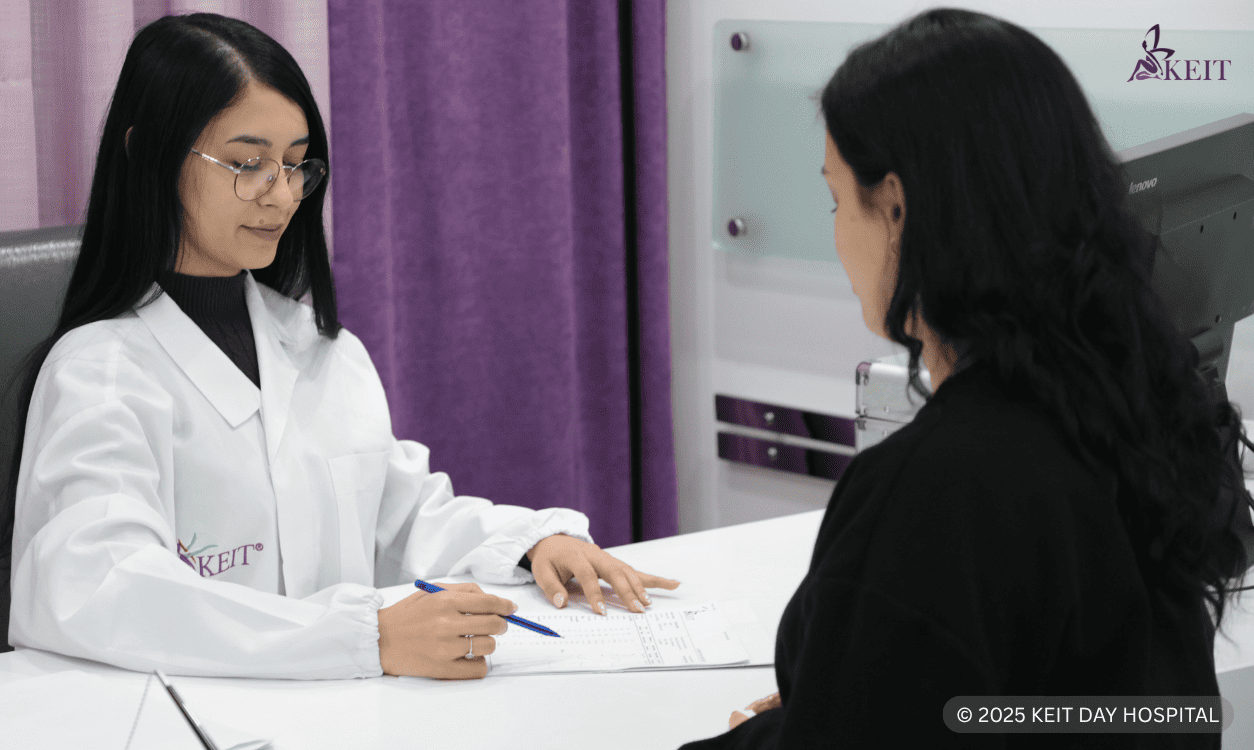
- Initial consultation: Discuss aesthetic goals, medical history, and weight stability to determine the right tummy tuck procedure. This phase sets realistic expectations about the surgery and the resulting tummy tuck scar.
- Pre-surgery preparation: This critical consultative phase ensures you are well-prepared, focusing on maintaining a stable weight and strictly quitting smoking to optimize healing and reduce complication risks.
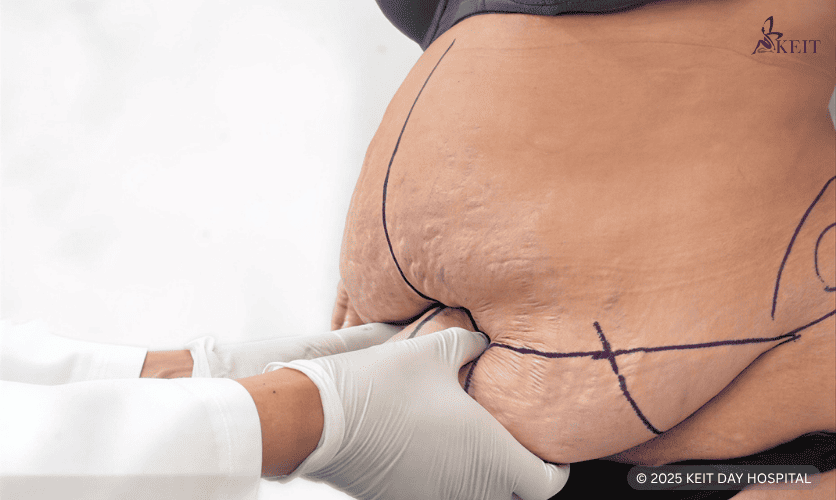
- Day of surgery: You will meet with your Italian specialist surgeon and the anesthesiologist for final markings before the procedure. The surgery is performed under general anesthesia and typically lasts 2 to 4 hours, depending on whether it is a mini or full tummy tuck.
- Post-operation: Following the operation, you are monitored in our day hospital setting for initial recovery and comfort.
Tummy tuck cost: How much is a tummy tuck UK?
The cost of tummy tuck is typically the number one concern for patients, leading to the high search volumes for terms like tummy tuck cost UK and cost of tummy tuck UK. The final tummy tuck cost is not a single price but a variable figure dependent on the procedure type, surgeon’s experience, clinic’s quality and the region.
- Southern England (London, Brighton): A full tummy tuck in this high-cost region typically ranges from 9,000 euro to 13,000 euro.
- Central England (Birmingham, Manchester): Prices are slightly lower but still premium, ranging from 8,500 euro to 11,500 euro.
- Northern England (Newcastle, Leeds): The cheapest tummy tuck UK prices are often found here, with a typical range of 7,500 euro to 10,000 euro.
These figures typically include the surgeon’s fee, hospital facility costs and anesthesia, but may not always cover pre-operative assessments or long-term follow-up. For those seeking the lowest tummy tuck prices in the UK, it is crucial to remember that the limited eligibility for a tummy tuck on the NHS means the vast majority of men and women must finance their tummy tuck procedures privately.
Full tummy tuck: Complete abdominoplasty procedure
The full tummy tuck is the most comprehensive and common tummy tuck procedure requested, especially by women post-pregnancy or individuals who have lost a moderate amount of weight. This tummy tuck operation addresses the entire abdomen, both above and below the tummy tuck belly button.
The procedure involves a horizontal incision placed low, extending from hip to hip (easily hidden in underwear). The surgeon carefully lifts the skin to access the core muscles, where they perform a plication (tightening separated muscles) to repair diastasis recti. This repair is fundamental to creating a narrower waistline, a key surgical step detailed in the official patient guide from BAAPS. The skin is then stretched downward, the excess is removed and a new opening is created for the tummy tuck belly button to ensure a natural look. A full tummy tuck is performed under general anesthesia, typically lasting 2 to 4 hours, depending on the complexity. Most patients stay in the clinic overnight for monitoring and can return to light daily activities within 2 weeks, with full recovery expected in about 6 weeks.

Mini tummy tuck: Partial abdominoplasty procedure
The mini tummy tuck is a popular option for patients who only require correction in the lower abdomen. This procedure is a less extensive tummy tuck surgery designed for individuals who have good skin elasticity above the navel and whose primary concern is a small amount of excess skin or fat (a “pooch”) below the belly button.
The key distinction of the mini tummy tuck procedure is the incision, which is significantly shorter than the full version, often only 4 to 8 inches long and there is typically no incision around the belly button. While it is less invasive, patients must have realistic expectations: a mini tummy tuck cannot correct extensive muscle separation, nor will it eliminate skin laxity from the upper abdomen. For the right mini tummy tuck candidate, it delivers impressive before and after results, especially for concerns like residual fat and skin after a C-section or minor weight changes. This procedure is usually performed under general anesthesia, takes about 1.5 to 3 hours and recovery is quicker than a full abdominoplasty, with most patients resuming light activities within 1 to 2 weeks and full recovery expected in 4 to 6 weeks.
Advanced tummy tuck techniques: When are they applied?
For patients who have undergone massive weight loss (often 50 kg or more), the amount of loose skin extends far beyond the front of the stomach, requiring advanced tummy tuck procedures that address the entire torso circumference.
Circumferential tummy tuck (360 tummy tuck)
This procedure involves a horizontal incision that wraps completely around the body. It is necessary when the skin laxity extends to the waist, hips and lower back, providing a true 360 tummy tuck effect that tightens the torso from all directions. By addressing the entire circumference, it achieves comprehensive tummy tuck before and after results that a full tummy tuck cannot. The surgery is performed under general anesthesia and typically lasts between 4 and 6 hours due to its complexity. Patients usually stay in the clinic for 1–2 nights of monitoring and require about 3 – 4 weeks of downtime before resuming light activities, with full recovery and final results visible within 3 – 6 months.
Fleur-de-Lis tummy tuck (FDL tummy tuck)
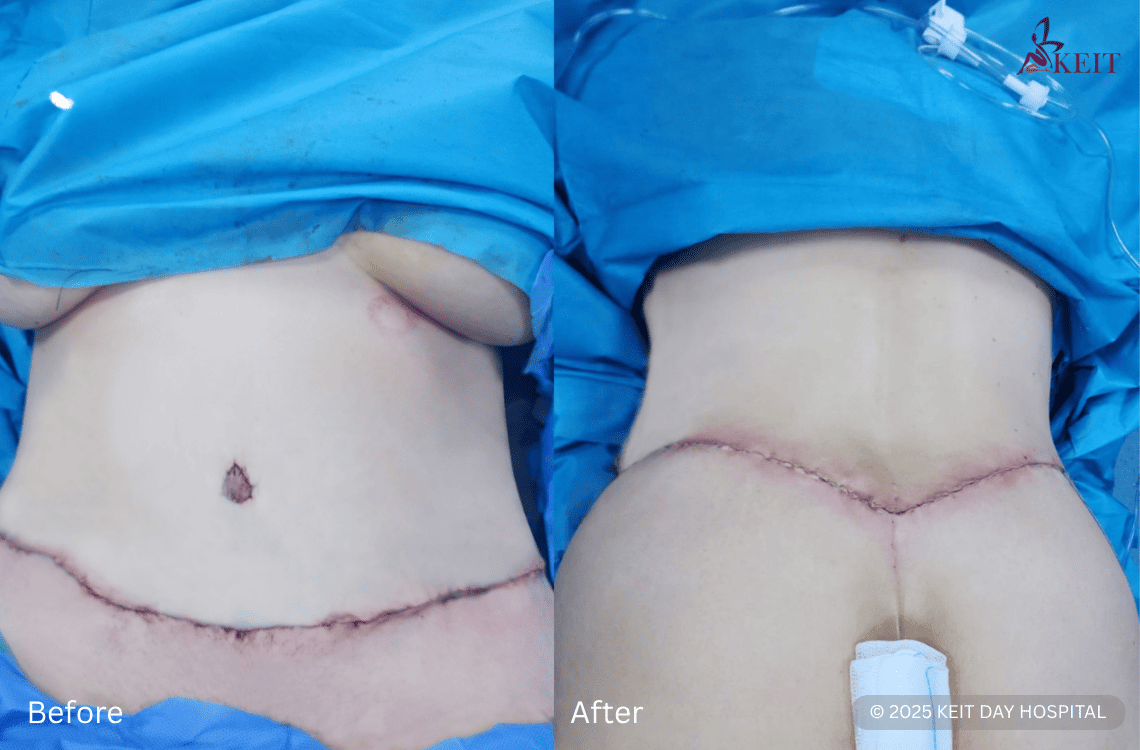
Reserved for the most severe cases of skin excess, Fleur-de-Lis tummy tuck operation involves a horizontal incision and a second vertical incision running up the midline of the abdomen (resulting in an anchor or “T” shape). It is the only way to effectively remove excess skin that hangs both horizontally and vertically. The surgery is performed under general anesthesia and typically lasts 4 to 5 hours. Due to its complexity, patients should expect a longer initial tummy tuck recovery time, with a return to work often requiring 3 to 4 weeks.
Liposuction: The contouring solution for fat-only concerns
The popularity of terms like tummy tuck and lipo and the search for tummy tuck and liposculpture highlights patient interest in contouring. The most effective fat-only solution is liposuction, which is a minimally invasive surgical procedure. Liposuction only is the surgical alternative to a tummy tuck when there is no significant loose skin; it precisely removes localized fat pockets (in the waist and abdomen) for targeted fat reduction but does not correct loose skin or muscle separation (diastasis recti).
Conversely, in the Gold Standard combination (lipo and abdominoplasty) procedure, liposuction is performed first to sculpt the waist, hips and sides, followed by a tummy tuck surgery to remove excess skin and tighten the abdominal muscles. The combined operation takes between three and five hours, is carried out under general anaesthesia and requires a structured recovery plan. Most patients return to light activities within 10 – 14 days, while full recovery and exercise usually resume after 6 – 8 weeks. This comprehensive method achieves the best tummy tuck before and after results, offering not just a flatter stomach but a truly defined midsection, especially in male tummy tuck cases.
Non-surgical tummy tuck: The key alternatives explained
For patients with minimal skin laxity and small, localized fat deposits, several advanced technologies offer a non-surgical tummy tuck alternative without the incisions or downtime of a tummy tuck surgery. These treatments primarily achieve fat reduction by damaging fat cells, which the body then naturally eliminates over the course of several weeks to months. The three most common non-surgical methods are: Cryolipolysis (using controlled cooling to freeze and destroy fat cells), Laser lipolysis (using controlled heat to melt fat cells), and Radiofrequency lipolysis (using electrical energy to heat and break down fat). It is crucial to note that while these treatments can improve the appearance of the abdomen, they cannot remove excess hanging skin or surgically repair separated abdominal muscles (diastasis recti) like a traditional full tummy tuck.
To help you weigh the options, the table below summarizes the key differences in method, effectiveness and results timeline for the most popular non-surgical alternatives:
| Feature | Cryolipolysis | Laser Lipolysis | Radiofrequency Lipolysis |
|---|---|---|---|
| Method focus | Freeze fat cells | Melt fat cells | Heat for fat and collagen stimulation |
| Invasiveness | Non-Invasive | Non-invasive | Non-invasive |
| Downtime | None | None | None |
| Effectiveness | Best for targeted, pinchable fat (up to 25% reduction). |
Good for fat reduction with mild skin tightening. |
Best for skin tightening and mild fat reduction. |
| Results timeline | Gradual; 1 – 4 months for final results. |
Gradual; several weeks to months. |
Gradual; tightening appears over 3 – 6 months. |
Tummy tuck scar: How to set real expectations?
The tummy tuck scar is an unavoidable but necessary outcome of the surgery and its management is a major concern for patients. The primary tummy tuck scar is a long, thin, horizontal line strategically placed along the lower abdomen, designed to be easily concealed by underwear or swimwear.
- Scar placement and maturation: While the scar will be red and raised initially, it will flatten, soften and lighten over 12 to 18 months. Patients often search for tummy tuck scars after 5 years to see the long-term, faded result.
- Minimization techniques: We advise patients to follow a rigorous scar care regimen, which often includes silicone sheeting and massage. For those seeking complete discretion, the artistic tummy tuck tattoo is an increasingly popular and effective choice for camouflage.
Tummy tuck before and after: The journey to the final results
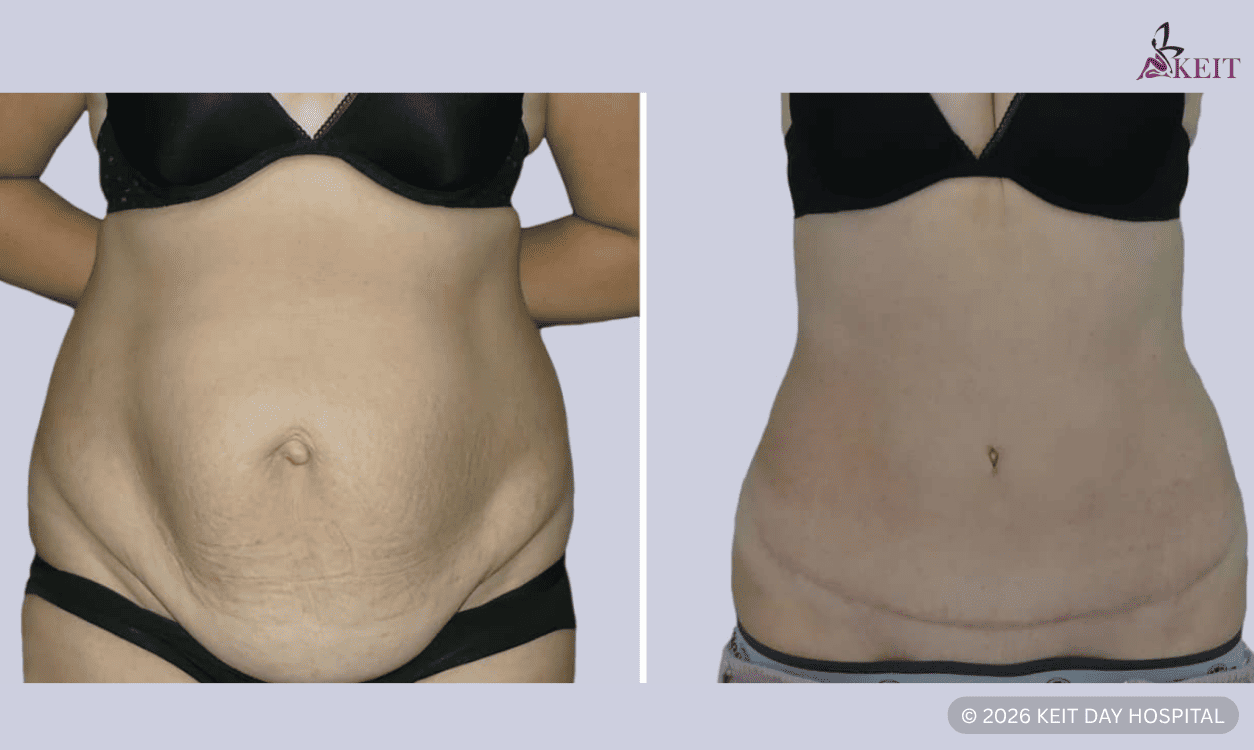
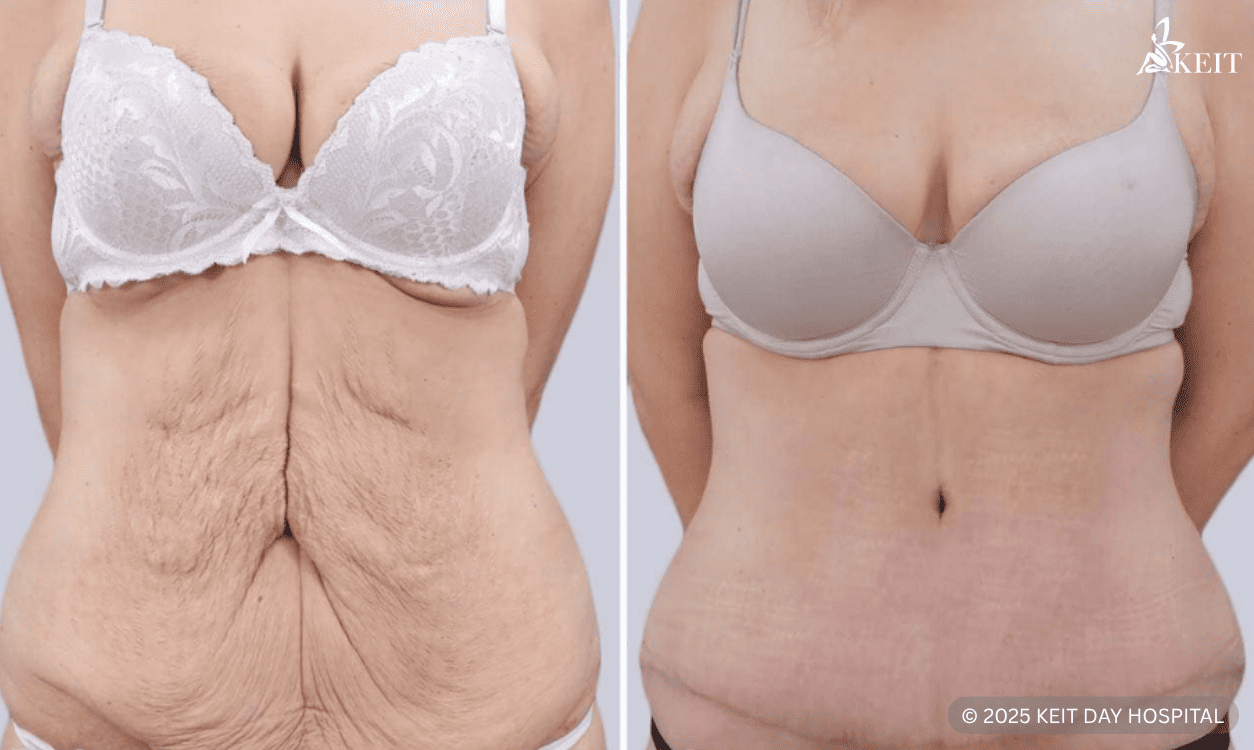
The tummy tuck before and after transformation is life-changing, but achieving the final result requires strict adherence to the tummy tuck recovery time. While the flatter contour is immediately visible, the initial swelling is significant, with final, dramatic tummy tuck results settling in at 12 months.
- First week: Mandatory rest and gentle walking. You will be walking slightly bent over to avoid straining stitches. Pain is managed with medication.
- Weeks 1 – 2: Typical time required off work. Light, non-strenuous activities can be resumed.
- Weeks 6 – 8: Strenuous activities and core-loading exercises (like heavy lifting) must be strictly avoided to protect the internal muscle repair.
- (3 – 6) months: The most dramatic tummy tuck results become fully evident as major swelling subsides.
- Mandatory aftercare: Consistent wear of the compression garment is mandatory for 6–8 weeks to minimize swelling and promote skin retraction.
Avoiding a tummy tuck gone wrong: Risks, complications and surgeon’s expertise
Safety is the absolute cornerstone of any successful tummy tuck surgery. We understand that patients have genuine concerns regarding the potential for a tummy tuck gone wrong and research heavily into topics like tummy tuck risks of death. While abdominoplasty is a major operation, the risks are significantly minimized when performed by a specialist surgeon in an accredited facility, making it crucial to understand the expected outcomes versus the potential complications.
- Common side effects: Expect temporary swelling, bruising, numbness below the navel and the risk of seroma (fluid collection, often requiring simple drainage).
- Serious risks: These include hematoma (blood collection), infection and deep vein thrombosis (DVT), a potentially fatal blood clot risk. We reduce DVT risk by stressing early post-operative mobilization and using prophylactic measures.
The key to a safe tummy tuck surgery is selecting a qualified specialist surgeon and adhering to all pre- and post-operative instructions, ensuring you report any warning signs after tummy tuck immediately.
Tummy tuck in Turkey vs Albania: Cost and care comparison
When considering a tummy tuck surgery, the decision often comes down to balancing quality and tummy tuck cost. Turkey is a well-known destination for plastic surgeries, with tummy tuck prices typically ranging from 2,500 to 6,000 euro, depending on the city, clinic and complexity of the procedure. However, patients should always check what is included in the quoted price, as some packages may not cover flights, accommodation, transfers or post-operative items.
Albania offers a competitive alternative for patients looking for accessible prices and organised medical travel support. At KEIT Day Hospital in Tirana, tummy tuck procedures typically range from 2,900 to 3,300 euro, with packages that may include the surgery, airport transfers and accommodation close to the clinic. KEIT also offers care from specialised Italian surgeons, a trilingual team, extensive experience in medical travel and instalment payment options for eligible patients.