Published on:

 Reading Time: 5 min
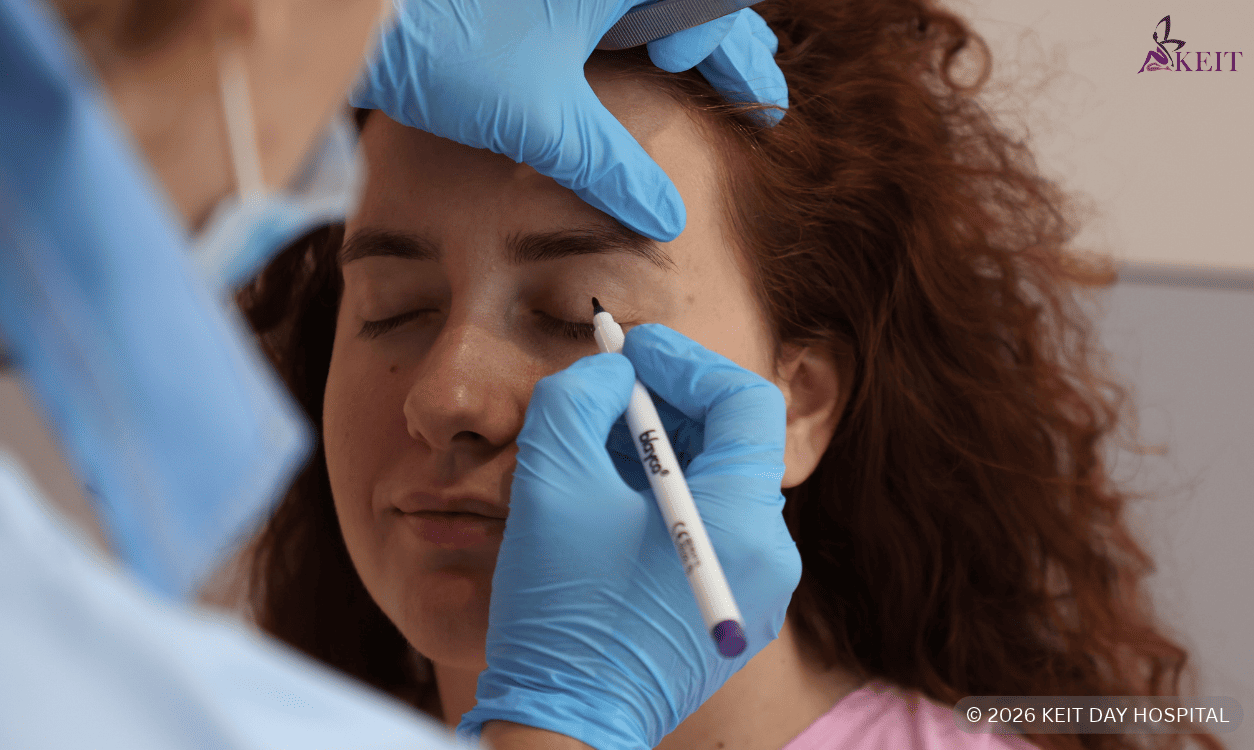
 Total Blepharoplasty
Asymmetrical eyes occur when the eyes differ in apparent size, shape, position or eyelid opening. Mild eye asymmetry is common and often results from natural differences in facial anatomy. More pronounced or newly developed asymmetry may be associated with changes in the eyelids, eyebrows, orbital structures or underlying medical conditions. Treatment depends on the cause and severity of the asymmetry.
In this article, we explain what asymmetrical eyes are, how eye asymmetry presents and what causes it. We also discuss when eye asymmetry becomes a medical concern, how it is assessed and which non-surgical and surgical treatments can improve eye symmetry.
What are asymmetrical eyes and are they normal?
Asymmetrical eyes, also referred to as uneven eyes, describe visible differences in the apparent size, shape, position or opening of the eyes. These differences may involve the eyelids, eyebrows, eyeballs or surrounding facial structures.
Mild eye asymmetry is a normal anatomical variation, as the two sides of the face are rarely identical. Longstanding, stable asymmetry that does not affect visual function generally does not require treatment. However, newly developed or progressive asymmetry may indicate an underlying medical condition and requires clinical evaluation.
How does eye asymmetry present?
Eye asymmetry can present as differences in apparent eye size, eyelid opening, vertical eye position or eyeball prominence. Identifying these anatomical differences is important in distinguishing eyelid asymmetry from abnormalities involving the eyeballs or orbital structures.
Differences in eye size and eyelid opening
When one eye appears bigger or smaller than the other, the difference often involves the palpebral fissure (the opening between the upper and lower eyelids). A wider opening exposes more of the eye, while a narrower opening makes it appear smaller.
Differences in eyelid folds and contours may also affect perceived eye size without any actual difference in eyeball dimensions.
Differences in eye height and position
Vertical eye asymmetry is characterized by one eye appearing higher or lower than the other. This may reflect differences in orbital position, eyebrow height or ocular alignment.
Vertical orbital dystopia refers to a difference in the vertical position of the orbits, while vertical strabismus describes a misalignment in which one eye is directed higher or lower than the other.
Differences in eyeball prominence
Eye asymmetry may also present as a difference in how far forward or deep the eyeballs sit within their sockets. Two clinical presentations include:
- Proptosis: abnormal forward displacement of the eyeball.
- Enophthalmos: abnormal backward displacement of the eyeball within the orbit.
Both can create the impression that one eyeball is larger or smaller than the other, even when their actual dimensions are similar.
What causes asymmetrical eyes?
Asymmetrical eyes can result from natural anatomical variations, age-related changes or acquired conditions affecting the eyelids, eyebrows, eyeballs and surrounding tissues. The main causes include:
- Genetic and developmental factors: natural differences in facial bone structure, orbital anatomy and soft tissue distribution.
- Ageing: uneven loss of skin elasticity, fat redistribution and weakening of supporting tissues.
- Eyelid abnormalities: eyelid ptosis (blepharoptosis), excess eyelid skin (dermatochalasis) and uneven fat pads.
- Eyebrow asymmetry: differences in eyebrow height or brow ptosis.
- Swelling and inflammation: allergies, infections or inflammatory conditions affecting the tissues around the eyes.
- Orbital disorders: thyroid eye disease, orbital masses and silent sinus syndrome.
- Neurological and muscular disorders: myasthenia gravis, Horner syndrome and cranial nerve palsies.
- Trauma or previous surgery: tissue damage, scarring or structural changes affecting eye symmetry.

When is eye asymmetry a medical concern?
Eye asymmetry is a medical concern if it develops suddenly, worsens over time or affects visual function.
Warning signs that require medical evaluation include:
- Newly developed or progressive eye asymmetry.
- Sudden drooping of one upper eyelid.
- Double vision or reduced vision.
- A new difference in pupil size.
- Abnormal protrusion or recession of one eye.
- Persistent eye pain, redness or swelling.
- Changes in eye appearance following facial or orbital trauma.
Sudden onset of these symptoms, particularly when accompanied by severe headache, facial weakness or fever, requires immediate medical attention.
How is eye asymmetry assessed?
Eye asymmetry is assessed through a medical history and clinical examination to identify the anatomical structures involved and determine the underlying cause.
The assessment includes:
- Medical history: onset and progression of asymmetry, associated symptoms, medical conditions and previous injuries or surgery.
- Facial examination: assessment of facial proportions, eyebrow position and soft tissue distribution.
- Eyelid assessment: evaluation of eyelid position, opening and muscle function, including measurements such as palpebral fissure height and marginal reflex distance (MRD).
- Orbital assessment: evaluation of eyeball position and prominence, which may be measured using exophthalmometry.
- Ophthalmological examination: assessment of visual acuity, pupil responses, ocular alignment and eye movements.
- Additional investigations: blood tests or orbital imaging when an underlying medical condition is suspected.
How to fix asymmetrical eyes
Asymmetrical eyes can be corrected through non-surgical or surgical treatments, depending on the underlying cause and severity of the asymmetry. Mild anatomical differences that do not affect visual function generally require no treatment.
Non-surgical management
Non-surgical treatments may help improve eye asymmetry associated with temporary swelling, underlying medical conditions or differences in muscle activity.
Treatment options include:
- Conservative measures: adequate sleep and cold compresses to reduce temporary puffiness around the eyes.
- Medical treatment: management of underlying conditions, such as allergies, inflammation or thyroid eye disease.
Conservative measures cannot correct structural differences in eyelid position, orbital anatomy or eyeball size.
Surgical correction
Surgical correction may be appropriate when eye asymmetry results from structural differences in the eyelids, eyebrows or orbital anatomy.
The main surgical options include:
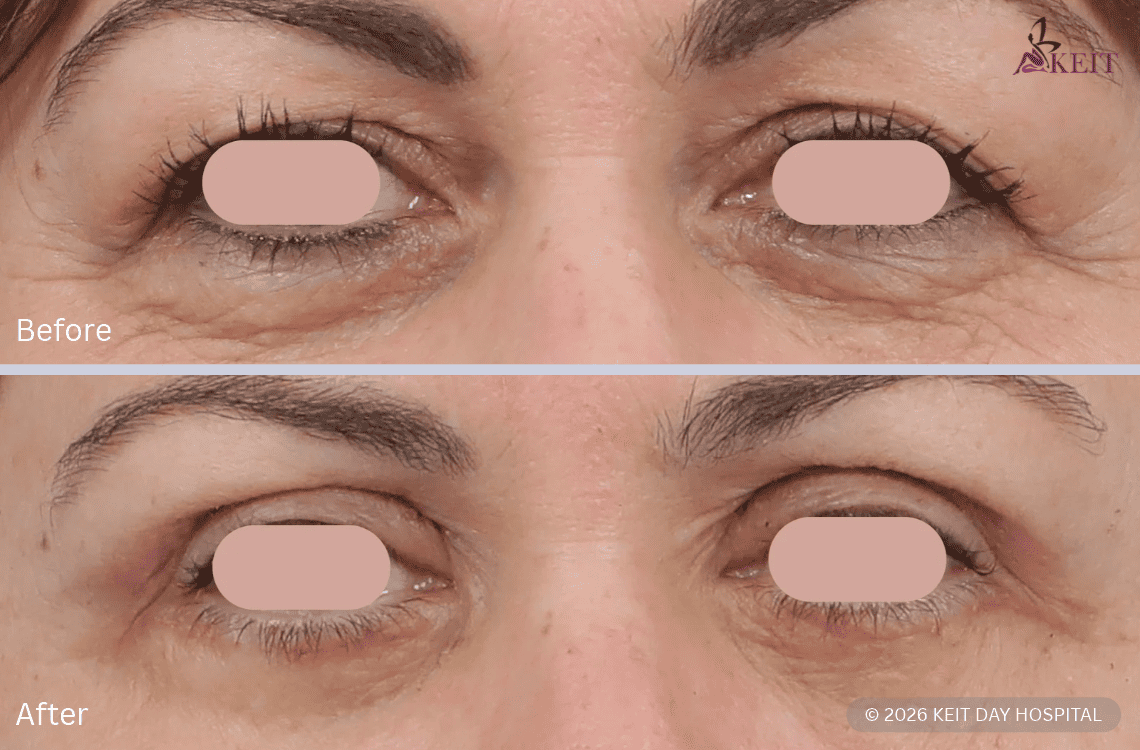
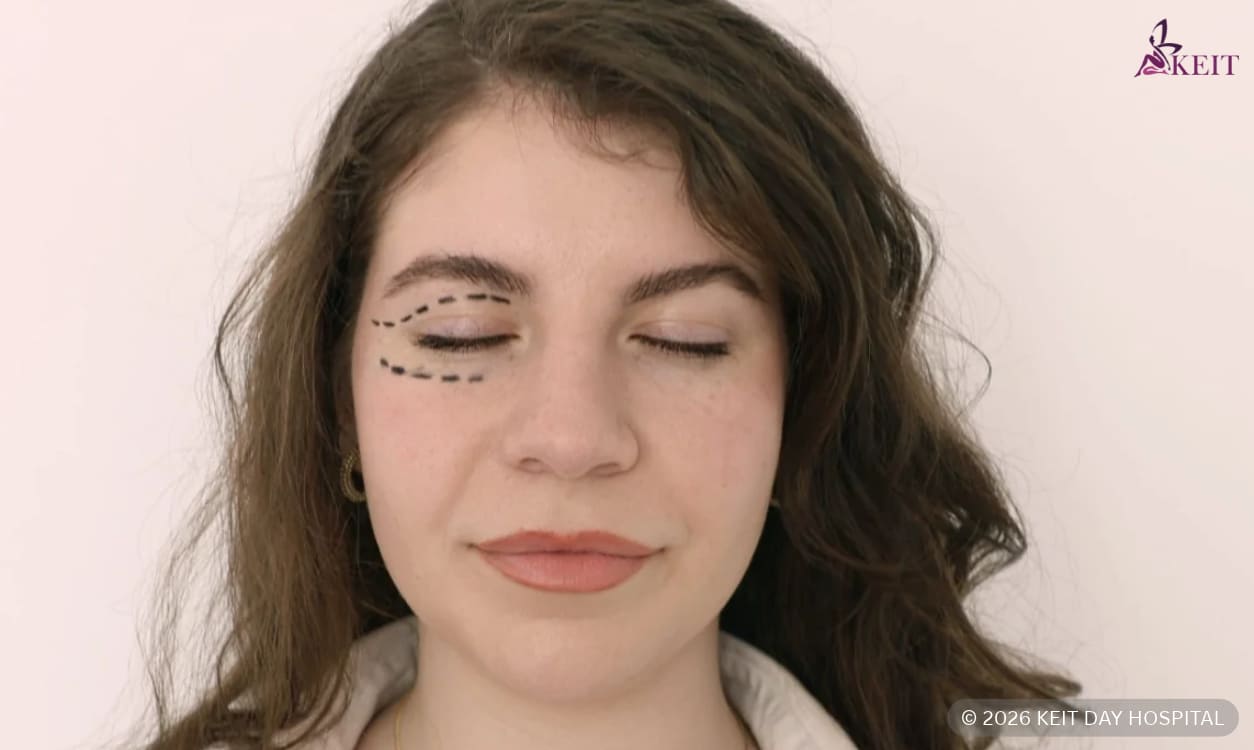
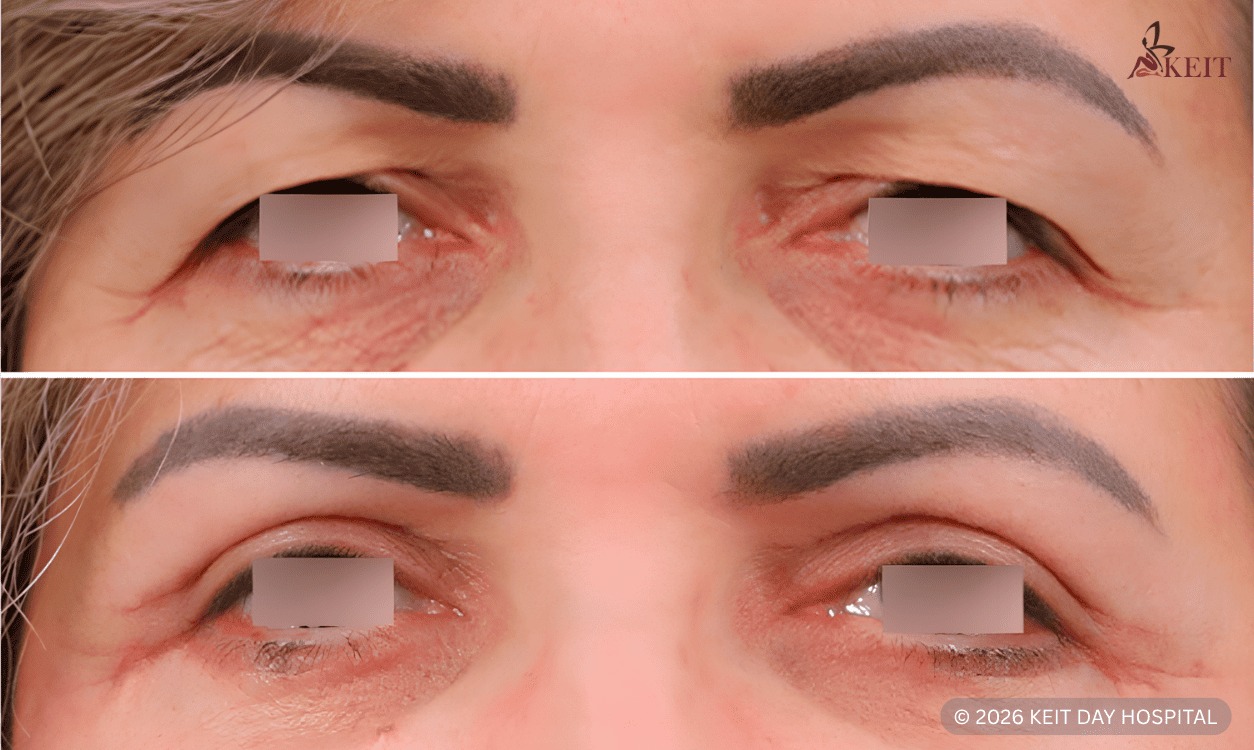
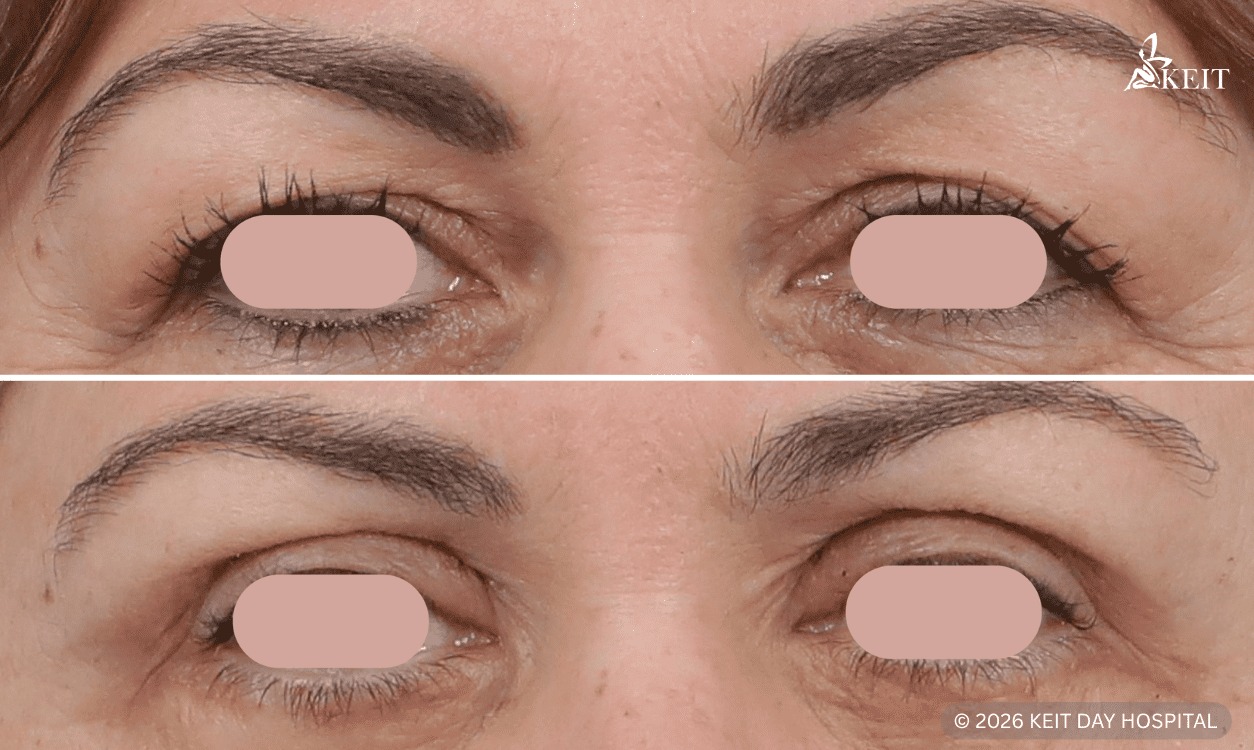
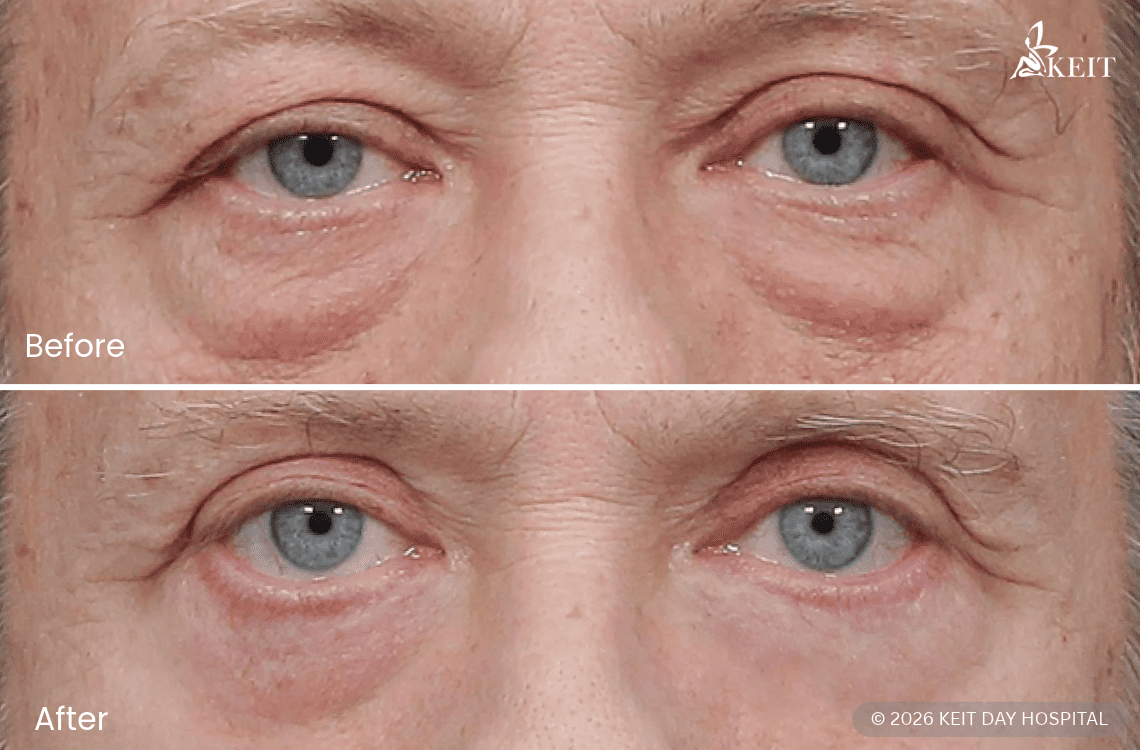
- Blepharoplasty (upper and/or lower): improves eyelid symmetry by addressing uneven excess skin and fat distribution in the upper or lower eyelids.
- Eyelid ptosis repair: corrects the position of a drooping upper eyelid.
- Brow lift: corrects eyebrow asymmetry associated with brow descent.
- Strabismus surgery: improves the alignment of misaligned eyes.
- Orbital surgery: corrects abnormal eyeball position in selected cases.
The choice of procedure depends on the clinical findings and individual anatomical characteristics.