Published on:

 Reading Time: 5 min
 Total Blepharoplasty
Upper blepharoplasty treats excess skin and tissue of the upper eyelids, while lower blepharoplasty addresses under-eye bags, excess lower-eyelid tissue and contour. The two procedures differ in the area treated and surgical approach, and they can be performed separately or together when both eyelids require correction.
 Table of Contents:
-
1
 Upper vs lower blepharoplasty: what is the difference?
-
2
What does upper blepharoplasty correct?
-
3
What does lower blepharoplasty correct?
-
4
Upper vs lower blepharoplasty: incisions and surgical techniques
-
5
Upper vs lower blepharoplasty: which procedure is right for you?
-
6
Upper and lower blepharoplasty recovery: what is the difference?
-
7
Upper and lower blepharoplasty before and after: what results can you expect?
-
8
What are the risks of upper and lower blepharoplasty?
In this article, we compare upper and lower blepharoplasty, explain what each procedure corrects and how their incisions and surgical techniques differ. We also cover which procedure may be appropriate, recovery, before-and-after results, and the risks associated with eyelid surgery.
Upper vs lower blepharoplasty: what is the difference?
Upper blepharoplasty addresses excess skin and tissue of the upper eyelid, while lower blepharoplasty primarily treats under-eye bags, excess lower-eyelid tissue and contour irregularities.
| Feature | Upper blepharoplasty | Lower blepharoplasty |
|---|---|---|
| Area treated | Upper eyelid | Lower eyelid |
| Common concerns | Excess skin, hooding and upper-eyelid heaviness |
Under-eye bags, excess skin and lower-eyelid contour |
| Main goal | Create a more defined and open upper eyelid |
Create a smoother, more balanced lower-eyelid contour |
| Typical approach | Incision within the natural upper-eyelid crease |
Incision below the lashes or inside the lower eyelid, depending on the anatomy and technique |
What does upper blepharoplasty correct?
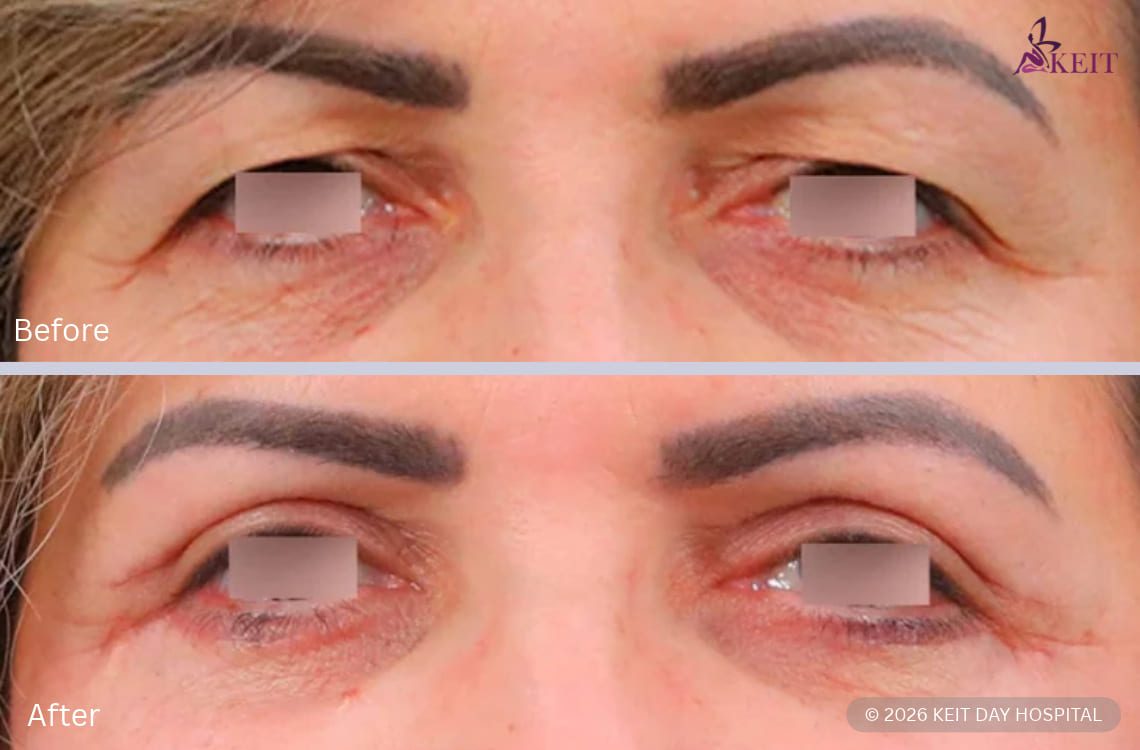
Upper blepharoplasty corrects excess skin and tissue of the upper eyelid that causes hooding, heaviness or a less defined eyelid contour. Depending on the individual anatomy, it may also address prominent upper-eyelid fat. It can improve:
- excess or lax upper-eyelid skin;
- upper-eyelid hooding;
- heavy-looking upper eyelids;
- localised fat prominence;
- visual-field obstruction caused by excess upper-eyelid skin.
If eyelid drooping is caused by true eyelid ptosis or brow ptosis rather than excess skin, blepharoplasty alone may not correct the underlying problem.
What does lower blepharoplasty correct?
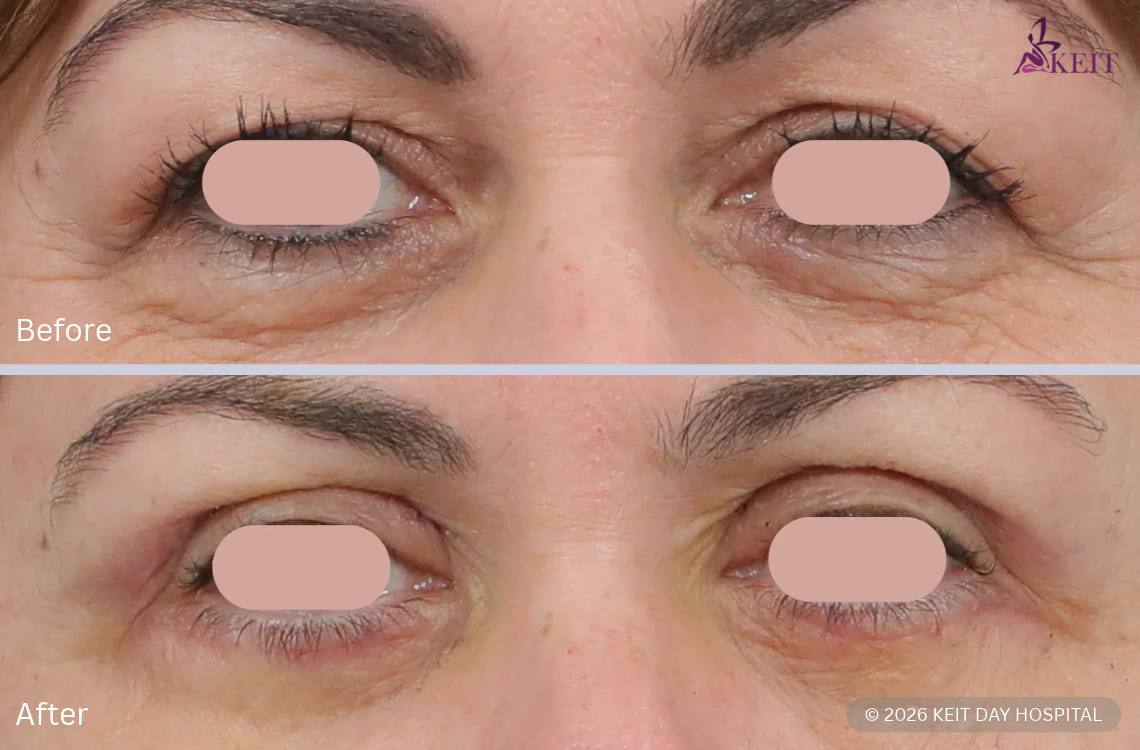
Lower blepharoplasty corrects under-eye bags, excess lower-eyelid skin and irregularities in the lower-eyelid contour. Depending on the patient’s anatomy, it may involve removing or repositioning fat and treating excess skin. It can improve:
- under-eye bags caused by prominent orbital fat;
- excess or loose lower-eyelid skin;
- crepey lower-eyelid skin;
- lower-eyelid asymmetry;
- the transition between the lower eyelid and cheek;
Fat may be removed or repositioned depending on the patient’s anatomy, particularly when both fat prominence and under-eye hollowing are present.
Upper vs lower blepharoplasty: incisions and surgical techniques
Upper and lower blepharoplasty use different incision techniques based on the eyelid area and the correction required.
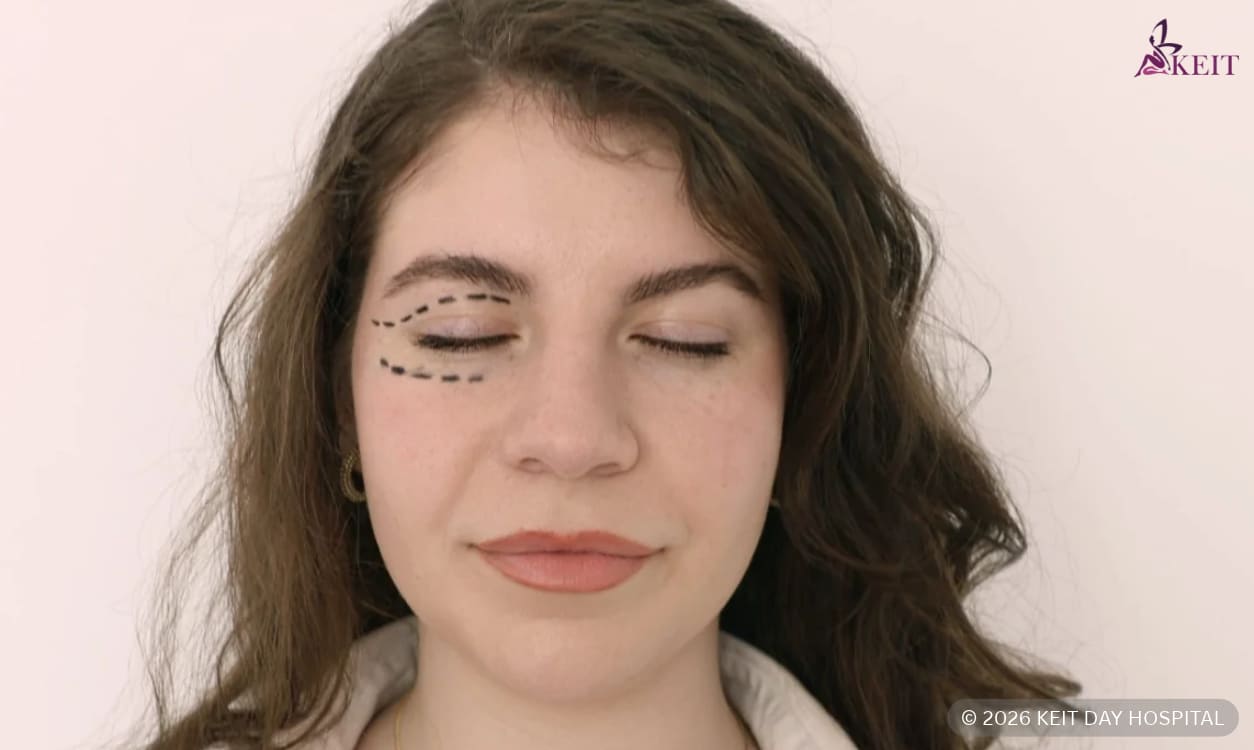
Upper blepharoplasty is performed through an incision placed within the natural upper-eyelid crease, allowing excess skin to be removed and, when necessary, underlying fat or muscle to be addressed. The incision is then closed within the eyelid crease.
Lower blepharoplasty is performed through an incision placed just below the lower eyelashes or inside the lower eyelid (transconjunctival approach). Depending on the anatomy, the surgeon may remove or reposition fat and treat excess skin or lower-eyelid laxity.
Upper vs lower blepharoplasty: which procedure is right for you?
The right procedure depends on which eyelid area requires correction and the specific concerns affecting it.
- Upper blepharoplasty: considered when excess or lax upper-eyelid skin, hooding or tissue fullness affects the appearance or function of the upper eyelid.
- Lower blepharoplasty: considered when under-eye bags, excess lower-eyelid skin or irregularities in the lower-eyelid contour are the primary concerns.
- Upper and lower blepharoplasty: suitable when both the upper and lower eyelids require correction and the patient wants to address both areas during the same surgical treatment.
The final treatment plan is determined after assessing the eyelid anatomy, skin and soft-tissue characteristics, eye health and the patient’s desired outcome.

Upper and lower blepharoplasty recovery: what is the difference?
Upper and lower blepharoplasty both involve swelling and bruising during early recovery, but lower blepharoplasty can require a longer period for swelling and contour to fully settle.
In upper blepharoplasty, swelling and bruising are usually most noticeable during the first few days and improve significantly within the first 1–2 weeks. The eyelid tissues continue to settle over the following weeks as the incision heals and the scar matures.
In lower blepharoplasty, swelling and bruising are often more pronounced around the lower eyelids and can remain noticeable for 2–4 weeks. When fat repositioning or additional lower-eyelid correction is performed, the lower-eyelid contour can take longer to fully settle.
In both procedures, recovery varies according to the surgical technique and individual healing. Following postoperative instructions and attending scheduled follow-ups are important for monitoring recovery.
Upper and lower blepharoplasty before and after: what results can you expect?
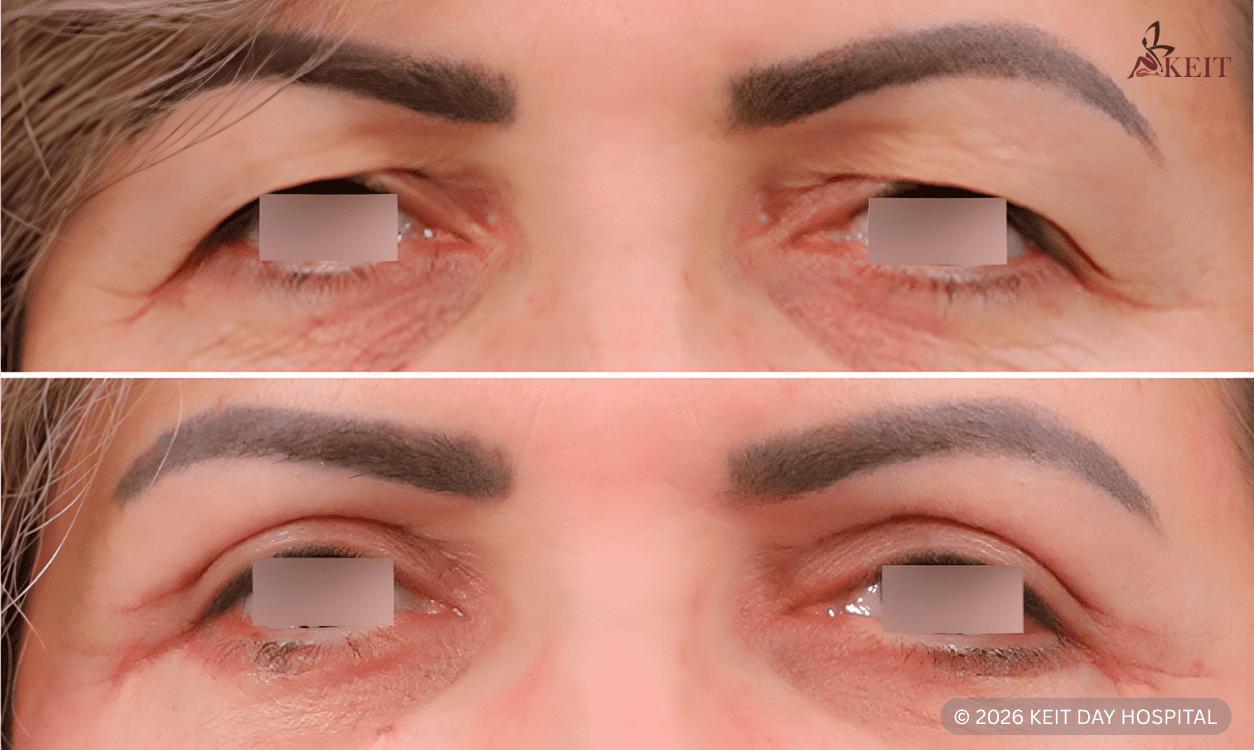
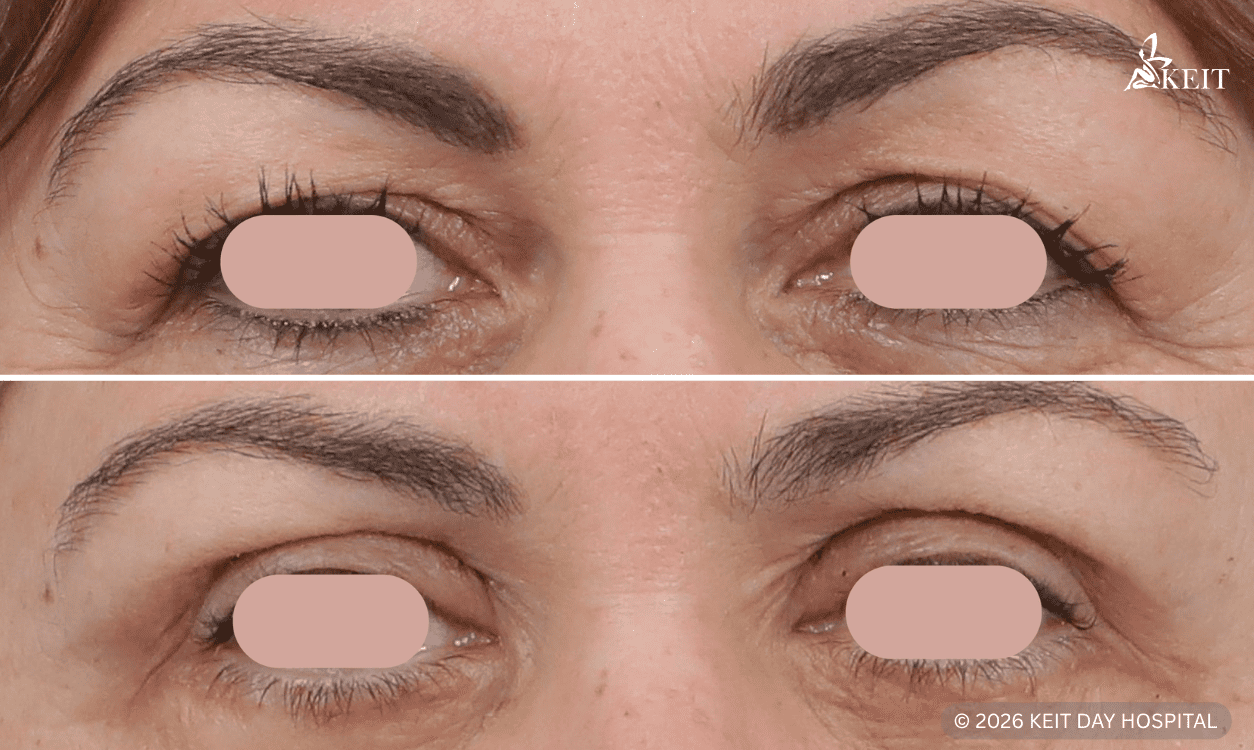
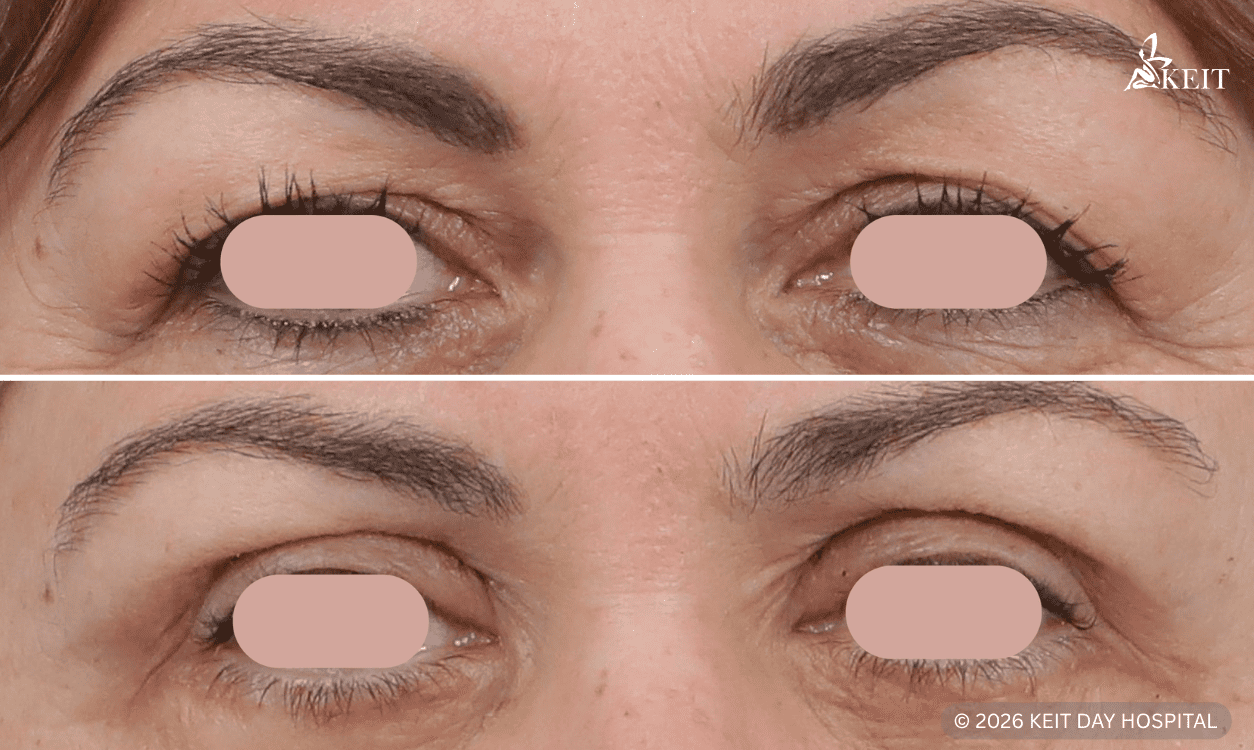
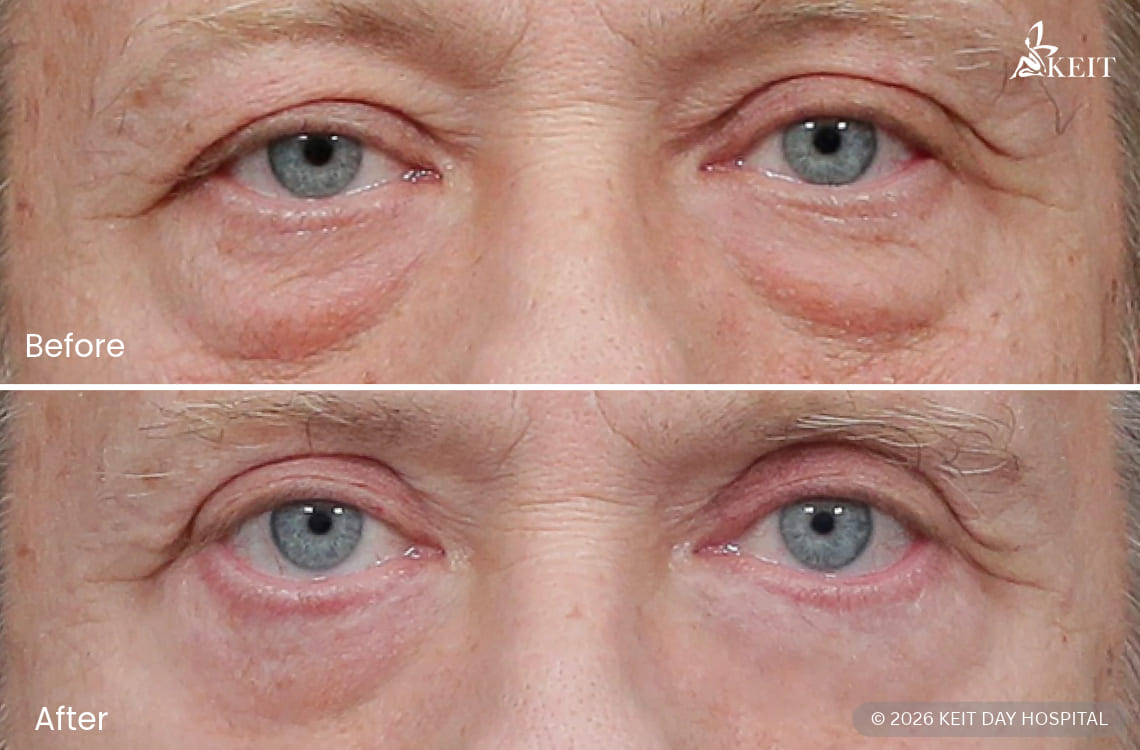
Upper and lower blepharoplasty before and after results show a more defined upper eyelid and a smoother, more refreshed lower eyelid, with the changes depending on the area treated.
- Upper blepharoplasty: reduced upper-eyelid hooding and excess skin, with a more defined upper-eyelid crease and a more open appearance.
- Lower blepharoplasty: reduced under-eye bags and excess skin, with a smoother and more defined lower-eyelid contour.
- Combined upper and lower blepharoplasty: improvement in both areas, creating greater balance between the upper and lower eyelids and the surrounding facial features.
What are the risks of upper and lower blepharoplasty?
Upper and lower blepharoplasty share common surgical risks, while lower blepharoplasty has additional risks related to lower-eyelid position.
Possible complications include:
- swelling and bruising;
- bleeding or infection;
- asymmetry or visible scarring;
- dry or irritated eyes;
- difficulty fully closing the eyes;
- temporary changes in sensation or vision;
- need for revision surgery.
Lower blepharoplasty has additional risks related to lower-eyelid position, including eyelid retraction or ectropion, particularly in patients with pre-existing eyelid laxity or when excessive tissue is removed.
Rare but serious complications in both procedures include eye-muscle injury, significant bleeding behind the eye and permanent visual impairment.