Published on:
 Modified on:

 Reading Time: 5 min
 Total Blepharoplasty
Hooded eyes are an eyelid shape where the upper eyelid skin folds over the natural crease, making the visible eyelid space appear smaller. Hooded eyelids may be genetic or develop with age due to skin laxity, brow descent, or excess upper eyelid skin. Treatment depends on the cause, severity, and whether the hooding affects appearance, comfort, or vision.
 Table of Contents:
-
1
 What are hooded eyes?
-
2
What causes hooded eyes?
-
3
Hooded vs non-hooded eyes: How to tell the difference
-
4
Hooded eyes: Can they cause vision problems?
-
5
How to get rid of hooded eyes: Non-surgical hooded eyes treatments
-
6
Hooded eye surgery: What are the main options?
-
7
Upper blepharoplasty for hooded eyelids
-
8
Hooded eye surgery: How much does upper blepharoplasty cost?
-
9
When should you see a specialist for hooded eyelids?
In this guide, we explain what hooded eyes are, what causes them, and how to identify the difference between hooded and non-hooded eyes. We also cover when hooding may affect vision, available treatment options, surgery cost, and when to seek specialist assessment.
What are hooded eyes?
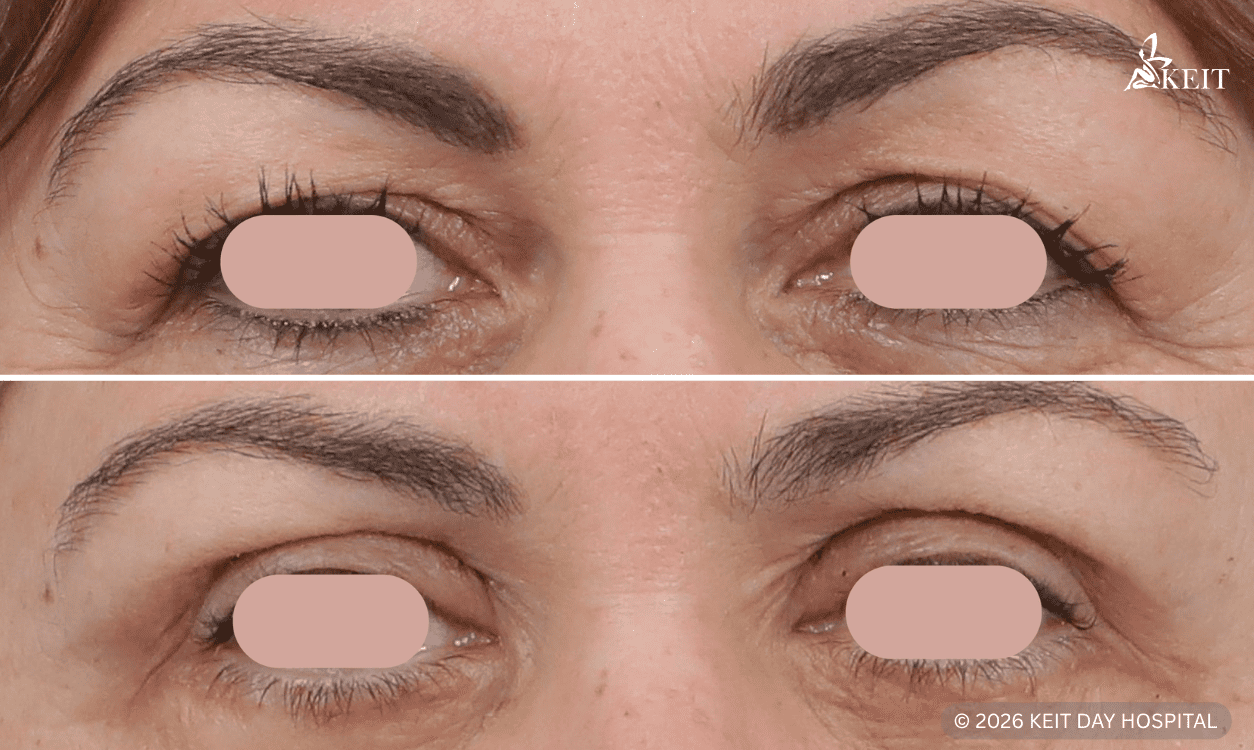
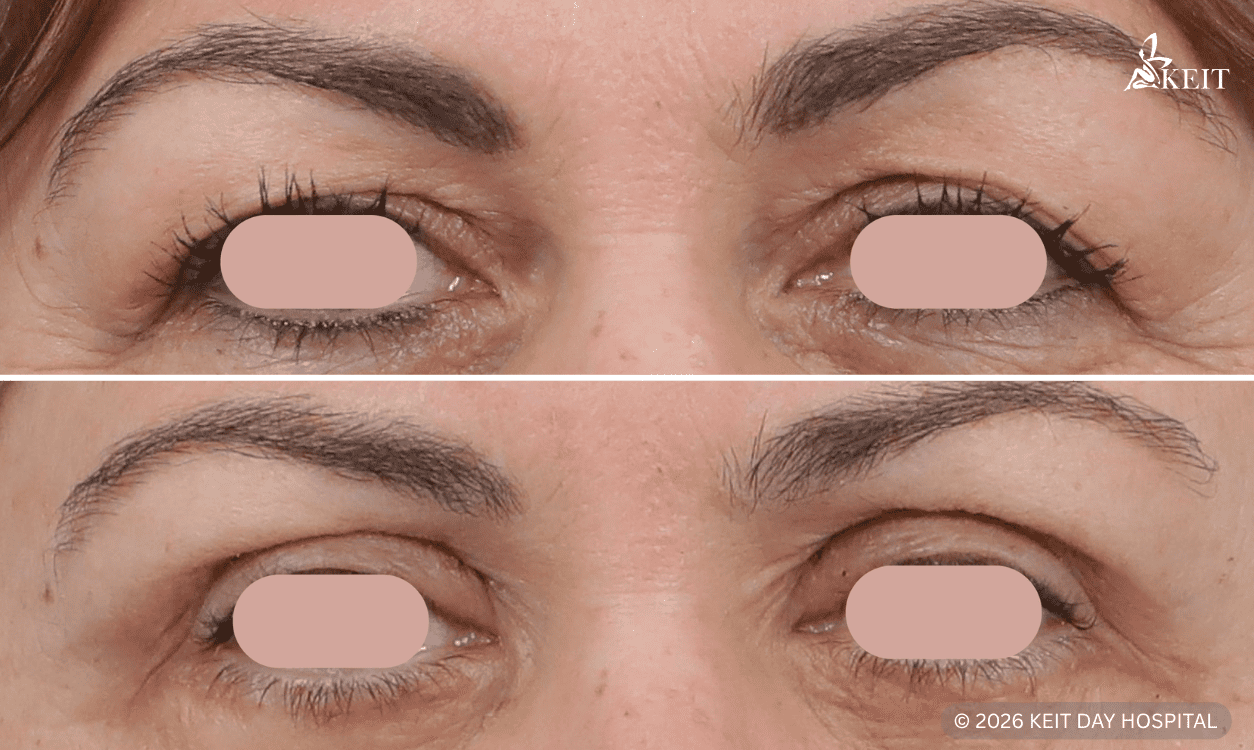
Hooded eyes are an eyelid shape where the upper eyelid skin folds over the natural crease, reducing the visible lid space. This can make the eyes appear smaller, heavier, or less open, especially when looking straight ahead. Hooded eyelids can range from mild to severe and may affect one or both eyes. In some people, the hooding sits only near the outer corner of the eye, while in others it covers most of the upper eyelid.
What causes hooded eyes?
Hooded eyes can develop due to several anatomical and age-related factors affecting the upper eyelid and brow area. Common causes include:
- Genetics: Some people naturally have hooded eyelids because of their inherited eye shape and eyelid anatomy.
- Ageing: Loss of collagen and skin elasticity can cause the upper eyelid skin to loosen and fold over the crease.
- Brow descent: A lower brow position can push soft tissue downward and increase upper eyelid hooding.
- Dermatochalasis: The medical term for excess or lax upper eyelid skin, commonly associated with ageing.
- Fat distribution: Changes in fat distribution can contribute to a heavier upper eyelid appearance.
- Lifestyle and environmental factors: Smoking, chronic sun exposure, and major weight fluctuations may worsen skin laxity over time.
Hooded vs non-hooded eyes: How to tell the difference
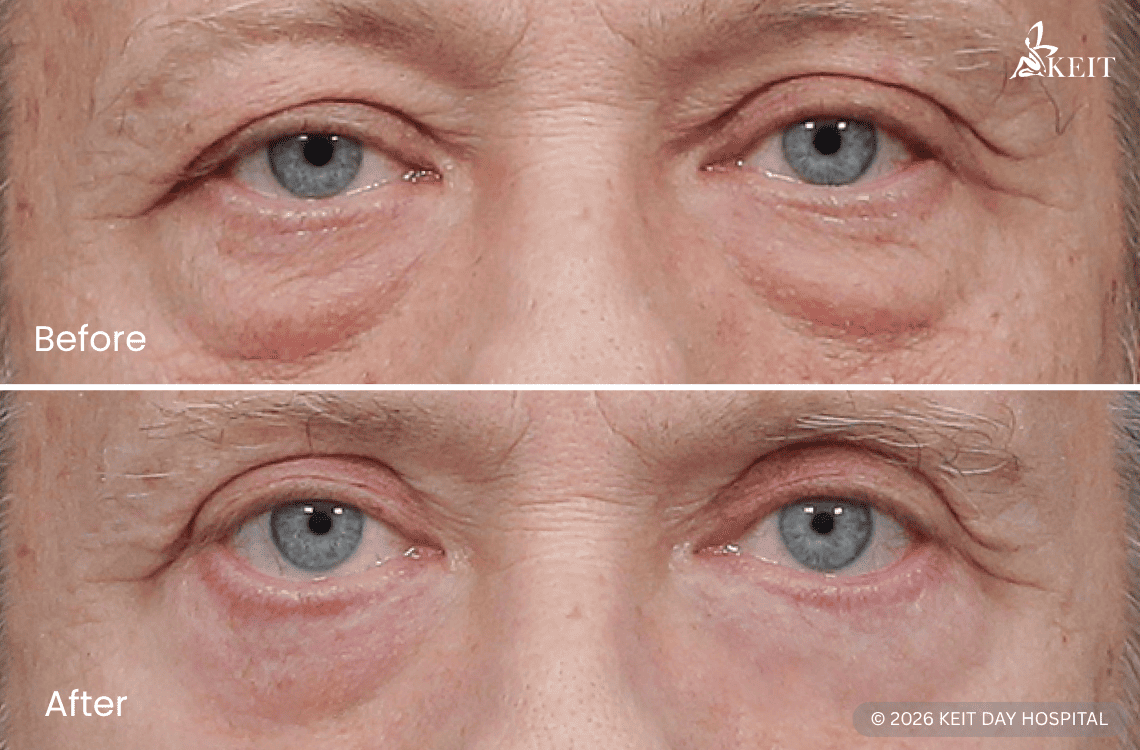
Hooded eyes have less visible eyelid space because the upper eyelid skin folds over the natural crease when the eyes are open. In non-hooded eyes, the crease and mobile eyelid are usually visible. In hooded eyes, part or all of the crease is covered by upper eyelid skin, giving the eye a more folded or heavy-lidded appearance.
You may have hooded eyes if:
- The eyelid crease is partly or fully hidden when your eyes are open.
- The visible lid space is small or difficult to see.
- Eyeliner disappears under the upper lid.
- Eye makeup transfers onto the brow bone or upper eyelid.
- The outer eyelid skin folds downward near the lash line.
Partial hooding is common and does not always require treatment unless it affects vision, causes heaviness, or creates a concern for the patient.
Hooded eyes: Can they cause vision problems?
Hooded eyes can affect vision when excess upper eyelid skin partially blocks the upper visual field. This usually occurs in moderate to severe hooding, especially when the skin sits close to the eyelashes. Common signs include reduced upper vision, eye heaviness, forehead strain from lifting the brows, and difficulty keeping the eyes fully open. In these cases, a specialist may perform an eyelid assessment and visual field test to confirm whether the hooding is affecting vision.
How to get rid of hooded eyes: Non-surgical hooded eyes treatments
Non-surgical treatment for hooded eyes can improve mild hooding caused by brow position or early skin laxity, but it cannot remove significant excess eyelid skin. The main non-surgical options include:
- Botox brow lift: Small amounts of botulinum toxin can relax the muscles that pull the brow downward, allowing a mild elevation of the outer brow. This may improve mild hooding when brow descent contributes to the problem.
- Radiofrequency or ultrasound skin tightening: Treatments such as RF or focused ultrasound aim to stimulate collagen and mildly tighten the upper eyelid skin. Results are usually subtle and temporary.
- Plasma fibroblast therapy: Sometimes used for mild upper eyelid skin tightening, although results vary and the treatment carries a risk of pigmentation changes or scarring if not performed correctly.
Hooded eye surgery: What are the main options?
Hooded eye surgery is selected according to whether the problem comes from excess eyelid skin, brow descent, or both. The main surgical options include:
- Upper blepharoplasty: Removes excess upper eyelid skin and refines the eyelid crease when hooding is caused mainly by skin redundancy.
- Brow lift: Repositions a low or descended brow when brow heaviness is pushing skin down over the upper eyelid.
- Combined blepharoplasty and brow lift: Treats both excess eyelid skin and brow descent when both contribute to a hooded or heavy eyelid appearance.
A clinical assessment is needed to identify the main cause of hooding and choose the most appropriate surgical approach.
Book your FREE
Online Consultation Now

Upper blepharoplasty for hooded eyelids
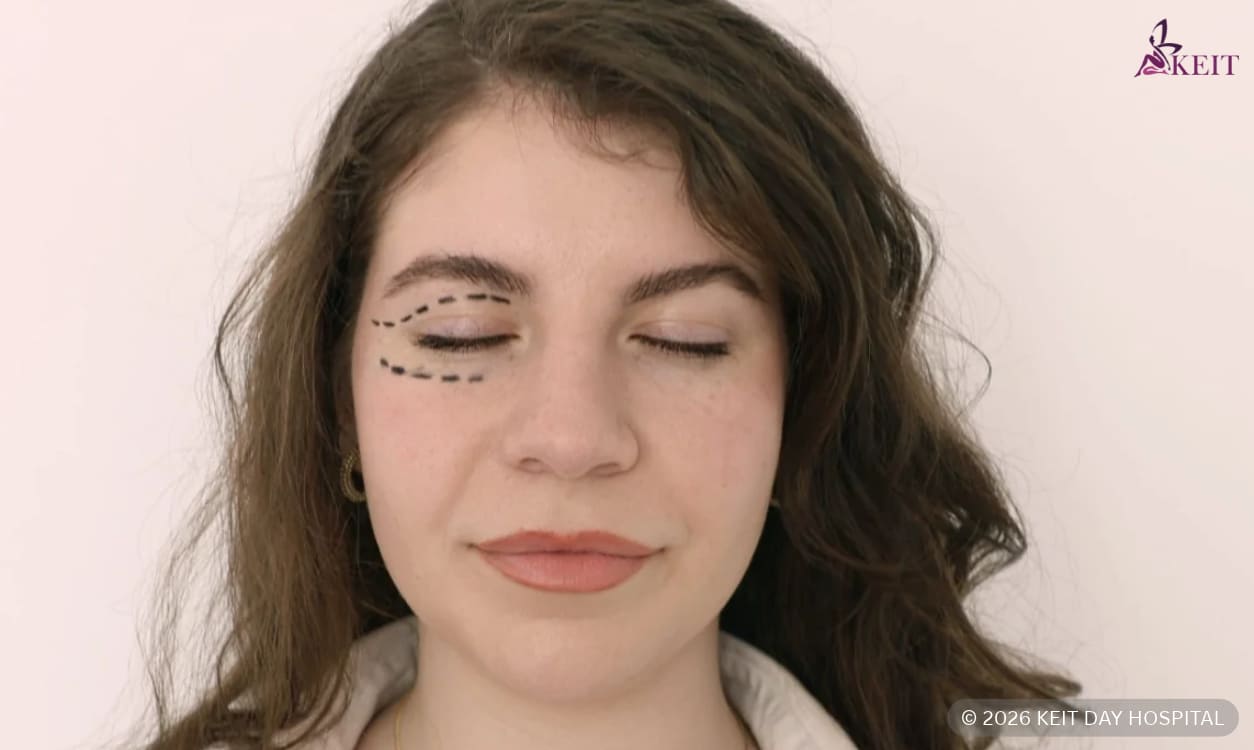
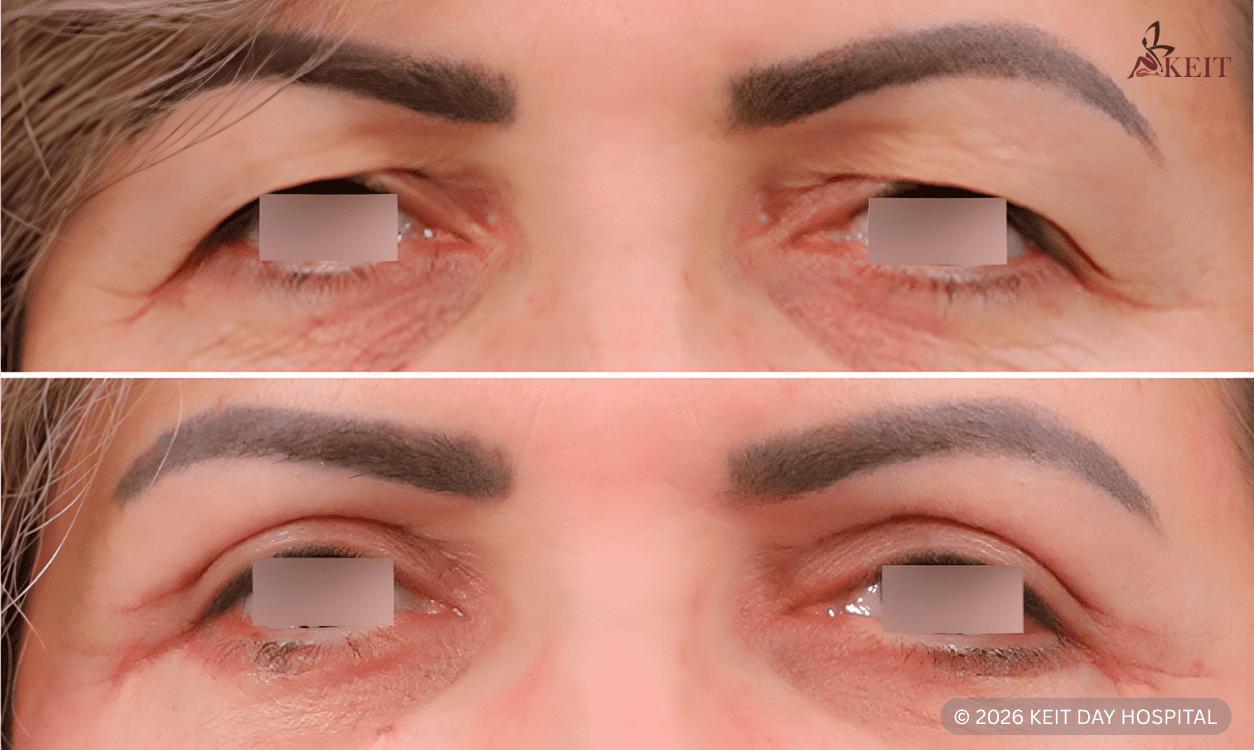
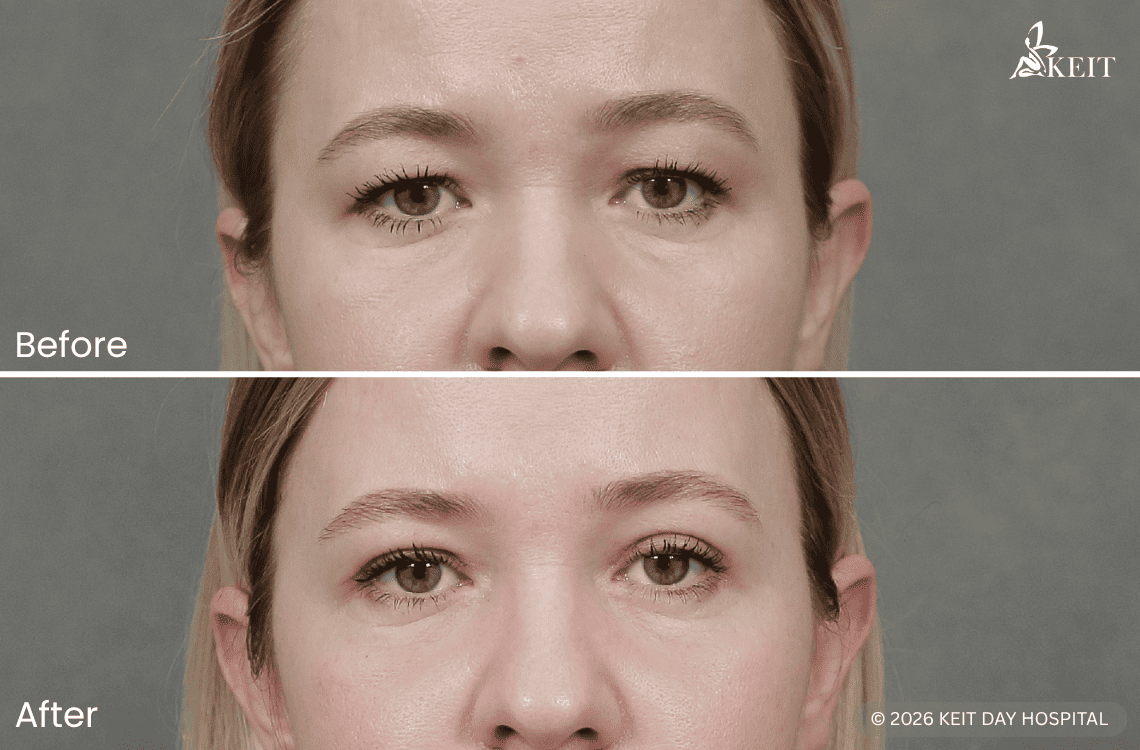
Upper blepharoplasty is the standard surgical option when hooded eyelids are caused by excess upper eyelid skin. The procedure removes a controlled amount of redundant skin through an incision placed within the natural eyelid crease. If clinically needed, minor fat or muscle refinement may be performed to improve the upper eyelid contour. It is considered when hooding creates a heavy upper lid, reduces visible eyelid space, or affects the upper visual field.
Hooded eye surgery: How much does upper blepharoplasty cost?
Upper blepharoplasty for hooded eyes in the UK usually costs between 2,500 and 6,000 euro. The final price depends on the clinic location, surgeon expertise, anaesthesia type, and the complexity of the eyelid correction. Costs may be higher if the procedure requires additional fat or muscle refinement, sedation, or is combined with a brow lift.
When should you see a specialist for hooded eyelids?
A specialist assessment is recommended when hooded eyelids cause functional symptoms, change noticeably, or may require medical or surgical treatment. You should seek evaluation if you notice:
- Vision obstruction: Upper eyelid skin partially blocks your field of vision.
- Sudden eyelid drooping: One or both eyelids begin to droop unexpectedly.
- Increasing asymmetry: One hooded eye becomes more pronounced over time.
- Eye strain or forehead tension: You frequently lift your brows to keep the eyes open.
- Heavy eyelids: The upper lids feel tired, weighted, or uncomfortable.
- Excess skin affecting daily function: Hooding interferes with reading, driving, makeup application, or comfort.
- Interest in treatment: You are considering Botox, brow lift, or upper blepharoplasty.