Published on:
 Modified on:

 Reading Time: 5 min
 Total Blepharoplasty
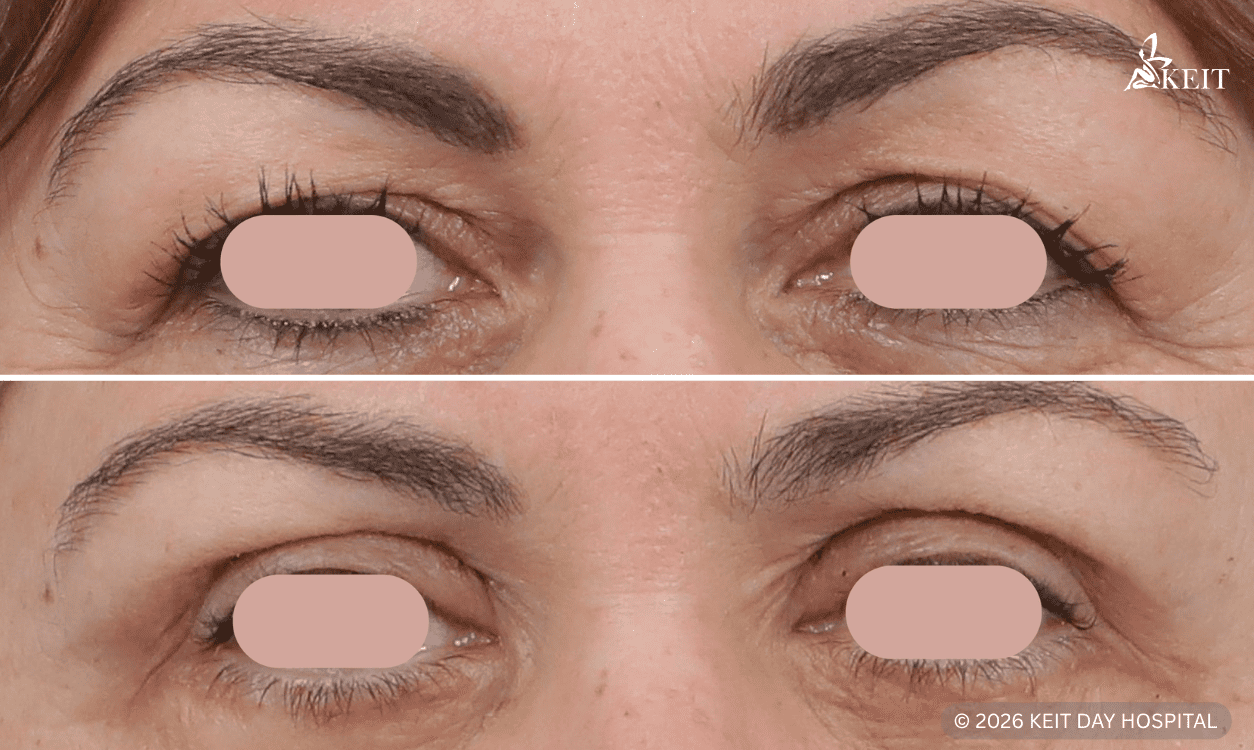
Blepharoplasty before and after results show how eyelid surgery can improve excess upper-eyelid skin, hooding, under-eye bags and eyelid contour. Results develop gradually as swelling reduces, scars mature and the eyelid tissues settle. The final outcome depends on the type of blepharoplasty, eyelid anatomy, skin quality, surgical technique, aftercare and individual healing response.
 Table of Contents:
-
1
 Blepharoplasty before and after: What really changes?
-
2
Upper blepharoplasty before and after: Hooded eyes and upper eyelid results
-
3
Lower blepharoplasty before and after: Eye bags and under-eye results
-
4
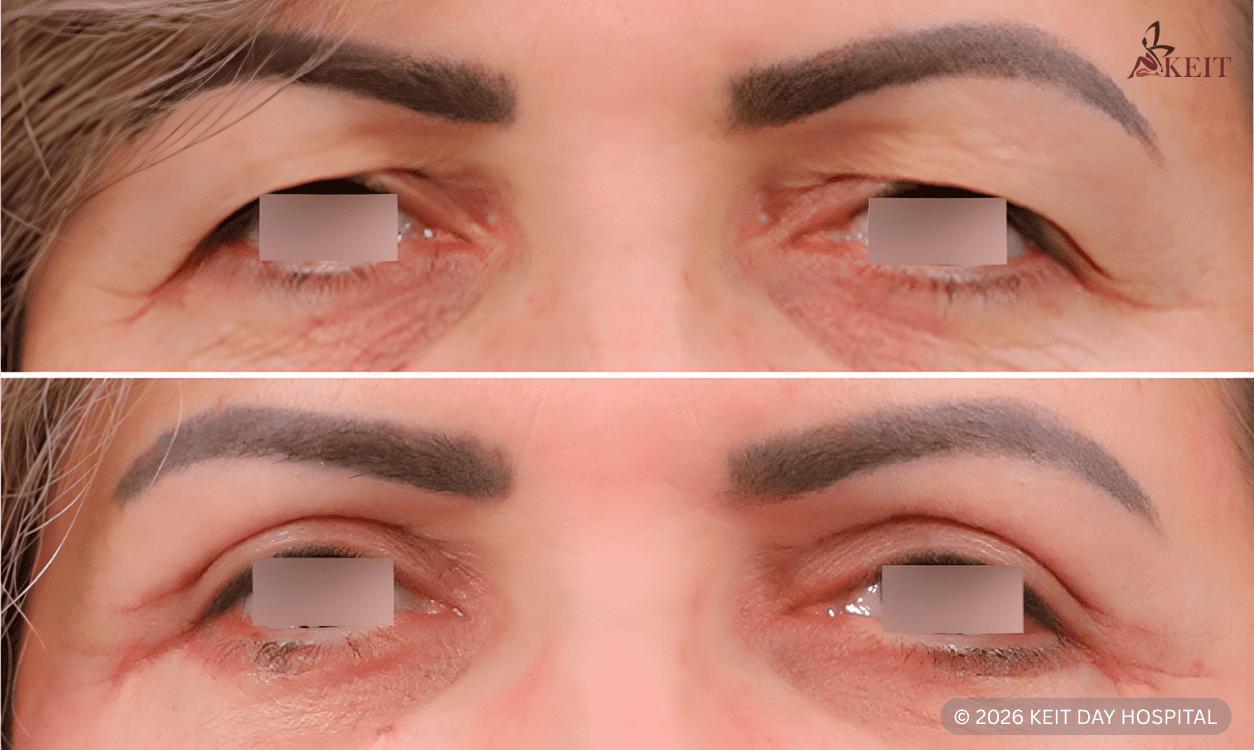
Blepharoplasty scarring before and after: How incisions heal over time
-
5
Blepharoplasty recovery timeline: When results become visible
-
6
Blepharoplasty before and after: What affects the results?
-
7
How to assess before and after blepharoplasty images
-
8
Blepharoplasty before and after: When to contact your surgeon
In this article, we explain what really changes after blepharoplasty, including upper and lower eyelid results. We also cover when results become visible, how scars heal, what affects the outcome, how to assess before and after images safely, and when to contact your surgeon.
Blepharoplasty before and after: What really changes?
Blepharoplasty before and after results show changes in eyelid contour, skin excess, fat prominence and overall eye definition. The main changes include:
- Upper eyelid definition: The upper eyelids appear more visible and better defined after excess skin and hooding are corrected.
- Lower eyelid bags: The natural contour of the eyes often looks smoother and less weighed down when redundant skin or protruding fat is treated.
- Eyelid heaviness: Heavy or folded upper eyelids can appear lighter when redundant skin is removed.
- Lower eyelid contour: The area between the lower eyelid and upper cheek may appear smoother and more even after fat repositioning or tissue tightening.
- Eye expression: The eyes generally look less tired and more refreshed while maintaining natural facial expression and eyelid shape.
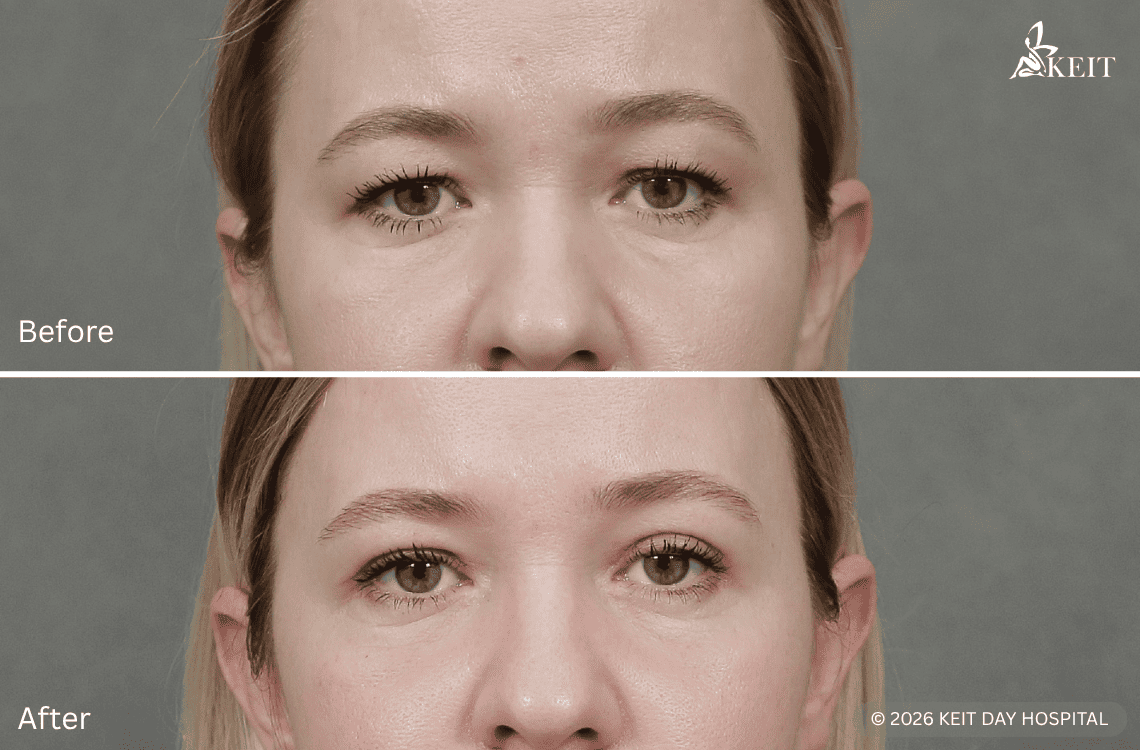
Upper blepharoplasty before and after: Hooded eyes and upper eyelid results
Upper blepharoplasty before and after results show improvement in eyelid hooding, heaviness and upper-eyelid definition. Typical results include:
- Reduced hooding: Excess skin no longer folds as heavily over the upper eyelid.
- Clearer eyelid crease: The natural crease becomes more visible and better defined.
- Lighter eyelid contour: The upper eyelid appears less weighed down after redundant skin is removed.
- More open eye area: The eyes look more visible while maintaining a natural shape.
- Improved balance: Mild asymmetry between the upper eyelids may be softened when clinically suitable.
Lower blepharoplasty before and after: Eye bags and under-eye results
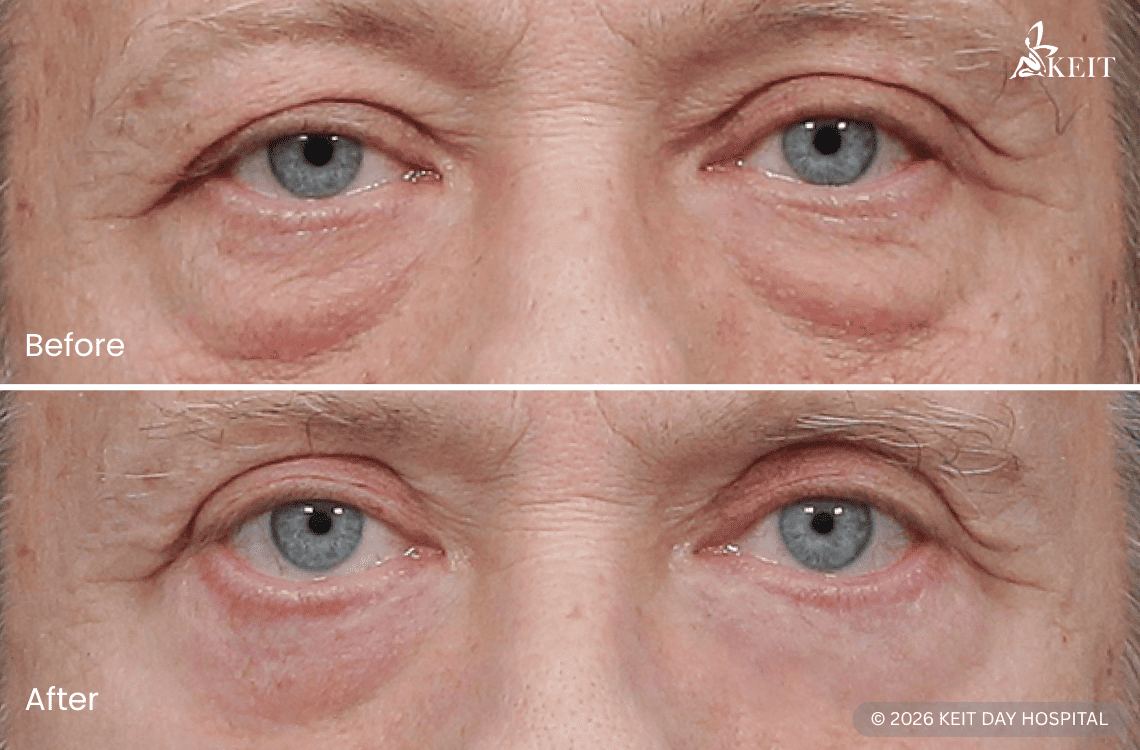
Lower blepharoplasty before and after results show improvement in under-eye bags, lower-eyelid fullness and under-eye contour. Expected results include:
- Reduced under-eye bags: Protruding lower-eyelid fat pads are removed or repositioned to reduce visible bulging.
- Smoother lower-eyelid contour: The lower eyelid appears flatter and more even after excess fat or loose tissue is corrected.
- Improved eyelid-cheek transition: The area between the lower eyelid and upper cheek looks smoother when fat repositioning or tissue support is improved.
- Less loose skin: Mild excess lower-eyelid skin may be removed when needed to refine the result.
- Rested appearance: The under-eye area looks less heavy while preserving the natural shape of the eyes.
Blepharoplasty scarring before and after: How incisions heal over time
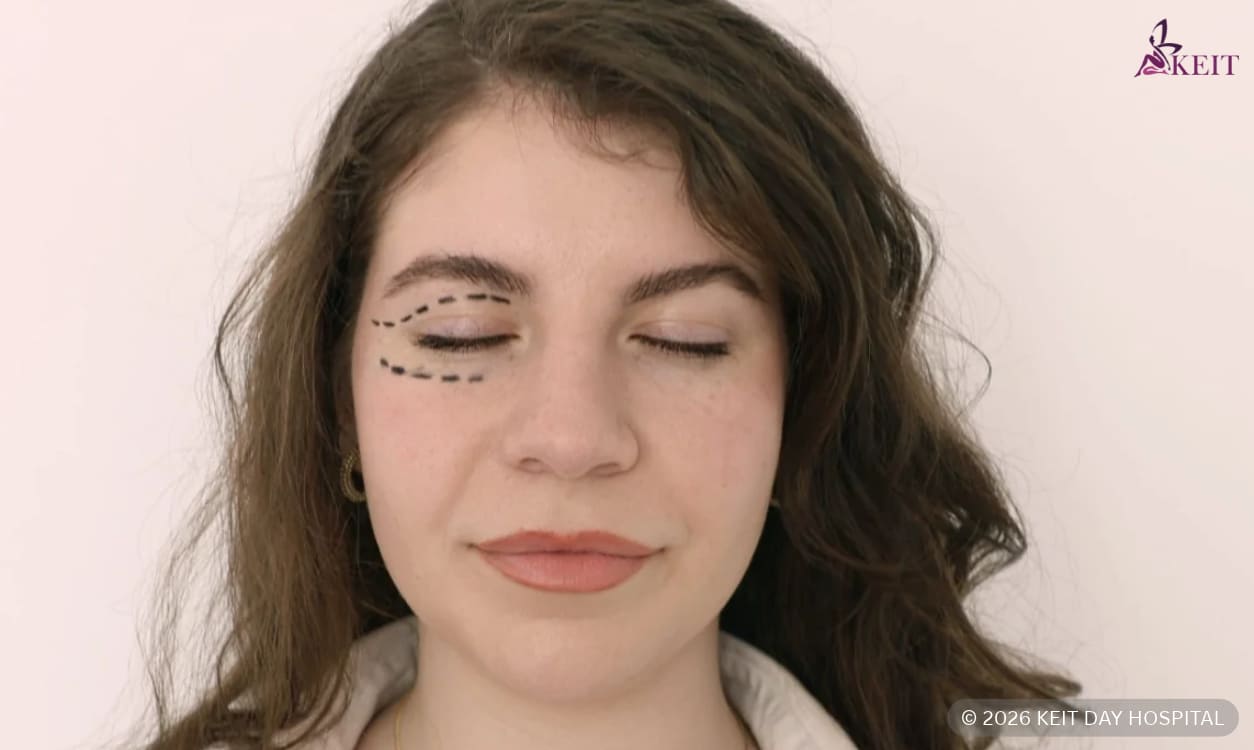
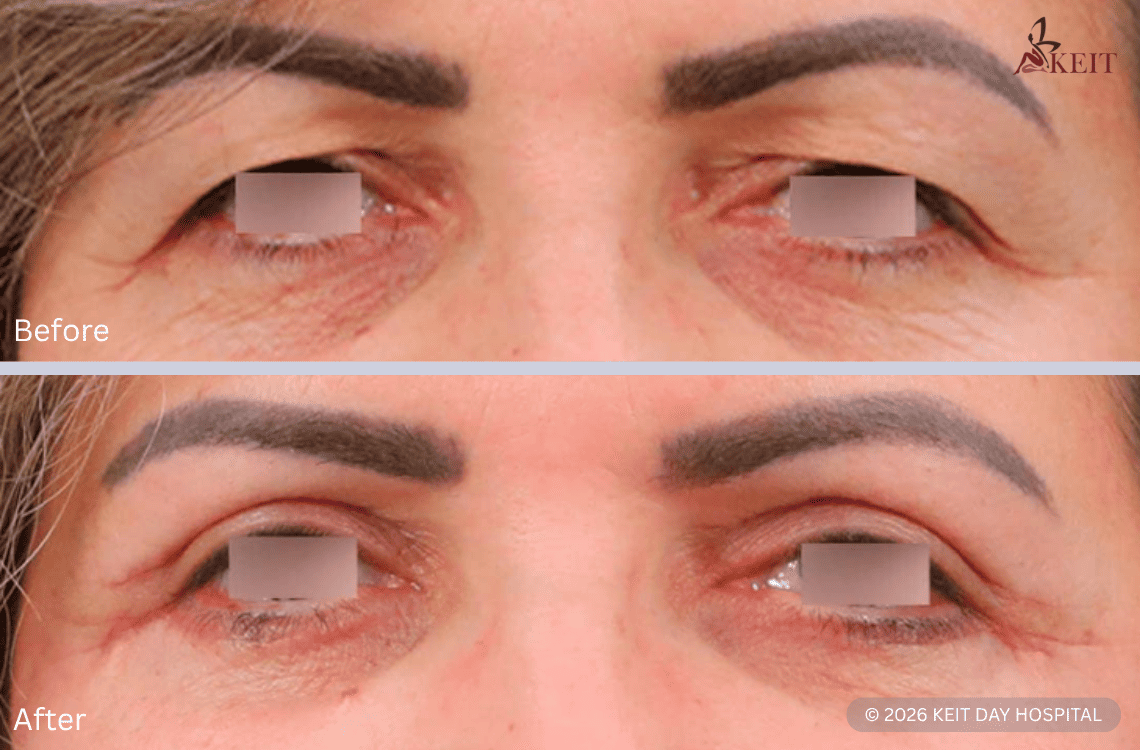
Blepharoplasty scars are placed in discreet eyelid areas and gradually fade as healing progresses. In upper blepharoplasty, the incision is typically hidden within the natural eyelid crease. In lower blepharoplasty, it may be placed inside the lower eyelid or just below the lash line, depending on the technique.
During the first few weeks, scars may appear pink, firm or slightly raised. Most scars soften and become less visible within 2–3 months, while final scar maturation and fading can continue for up to 6–12 months. Final scar appearance depends on skin type, surgical technique, aftercare and individual healing response.
Blepharoplasty recovery timeline: When results become visible
Blepharoplasty results become visible in stages as post-operative swelling reduces and the eyelid tissues settle into their new position.
- First week: Swelling and bruising are usually most visible. Sutures are usually removed around day 7.
- Weeks 2–4: Bruising improves, swelling reduces and the eyelid contour becomes clearer.
- Weeks 6–12: Most visible swelling has reduced, and the upper or lower eyelid shape appears more defined.
- 3–6 months: Tissue firmness softens, scars mature and the result looks more natural.
- Up to 12 months: Minor scar fading and final tissue refinement may continue.

Blepharoplasty before and after: What affects the results?
Blepharoplasty results vary between patients and are affected by several important factors, which include:
- Surgeon expertise: Accurate assessment, conservative tissue removal, precise incision placement and experience with eyelid anatomy are essential for natural-looking results.
- Type of blepharoplasty: Upper, lower or combined blepharoplasty have different results.
- Individual anatomy: Eyelid shape, skin thickness, fat distribution, brow position and lower-eyelid support all affect the final result.
- Skin quality: Elasticity, sun damage, ageing changes and previous procedures can affect healing, scar quality and contour refinement.
- Healing response: Swelling, bruising, scar maturation and tissue settling vary between patients and influence when the final result becomes visible.
- Aftercare: Proper wound care, sun protection and avoiding smoking or eye rubbing support better healing and scar maturation.
How to assess before and after blepharoplasty images
Before and after blepharoplasty images should be reviewed carefully because lighting, angle, swelling and healing stage can affect how the result appears. The key points to assess are:
- Photo consistency: Images should use similar lighting, angle, facial expression and head position.
- Healing stage: Early results may still show swelling, bruising or tightness, so they should not be judged as final.
- Upper eyelid result: Look for reduced hooding and a clearer eyelid crease without an overly tight appearance.
- Lower eyelid result: Look for reduced eye bags and a smoother lower eyelid-to-cheek transition.
- Natural balance: The result should suit the patient’s anatomy and preserve normal eyelid shape.
- Scar visibility: Incisions should be discreetly placed and expected to fade gradually as healing progresses.
Blepharoplasty before and after: When to contact your surgeon
You should contact your surgeon if symptoms after blepharoplasty become worse, appear suddenly, or affect vision. Seek medical advice if you notice:
- Increasing pain or swelling: Especially if symptoms worsen after initially improving.
- Sudden bleeding: Any unexpected or persistent bleeding should be reviewed.
- Vision changes: Blurred vision, reduced vision or eye pain need urgent assessment.
- Severe dryness: Difficulty closing the eyes or severe irritation should be reported.
- Signs of infection: Increasing redness, warmth, discharge or fever.
- Eyelid position changes: Sudden asymmetry, pulling, or abnormal eyelid position.