Published on:
 Modified on:

 Reading Time: 5 min
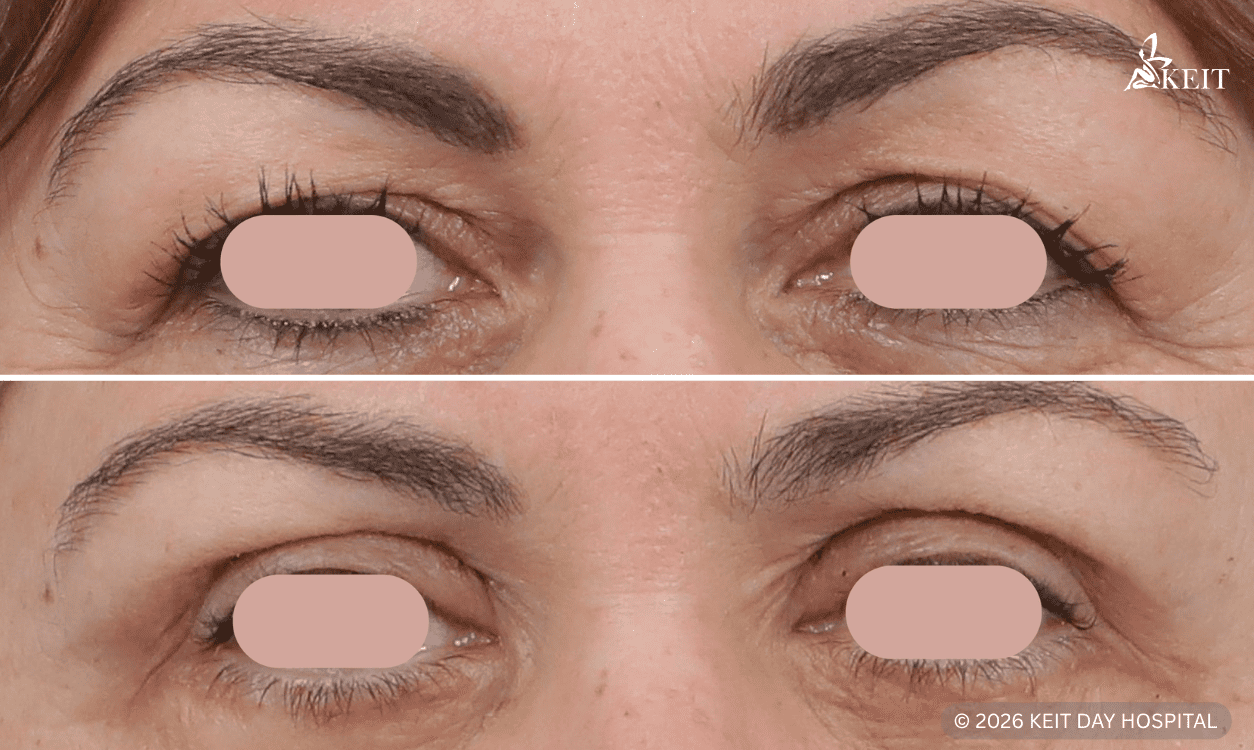
 Total Blepharoplasty
Bags under the eyes are lower-eyelid bulges or puffiness that may develop from fluid retention, skin laxity, ageing, genetics, or protruding fat pads. Treatment depends on the cause: temporary puffiness may improve with natural remedies, while persistent under-eye bags may require non-surgical treatments or lower blepharoplasty.
 Table of Contents:
-
1
 Bags under the eyes: What they are and how they present
-
2
What causes bags under the eyes? The main contributing factors
-
3
Types of eye bags: Fat, fluid, skin laxity and malar bags
-
4
How to get rid of bags under eyes: Natural remedies and eye creams
-
5
Bags under eyes: Non-surgical treatment options and when they help
-
6
Under eye bag surgery: Lower blepharoplasty for persistent eye bags
-
7
Best treatment for under eye bags based on the cause
-
8
Under eye bags: When should you see a specialist?
In this comprehensive guide, we explain what bags under the eyes are, what causes them, and the main types of eye bags. We also cover conservative measures, non-surgical treatment options, lower blepharoplasty, how to choose the best treatment, and when to see a specialist.
Bags under the eyes: What they are and how they present
Bags under eyes are visible swelling or bulging beneath the lower eyelids, commonly causing a tired or aged appearance. They may appear as mild puffiness, a soft under-eye swelling, loose lower-eyelid skin, or a more defined bulge. With age, the tissues that support the eyelids weaken, allowing fat around the eyes to shift forward and create persistent under-eye bags.
What causes bags under the eyes? The main contributing factors
Several factors can contribute to bags under eyes and puffy eyes, and identifying the exact cause is important before choosing the right treatment. The most common causes of bags under the eyes include:
- Ageing: The skin, muscles, and connective tissues around the lower eyelids weaken over time, allowing fat pads to protrude.
- Fluid retention (Edema): Fluid may collect under the eyes, especially after sleep, high salt intake, alcohol, hormonal changes, or dehydration.
- Genetics: Inherited facial anatomy can make the lower eyelid fat pads more prominent or the under-eye skin naturally thinner.
- Poor sleep: Lack of sleep can increase fluid buildup and make under-eye bags more visible.
- Skin laxity: Loss of collagen and elasticity can lead to loose skin beneath the eyes.
- Allergies: Allergic inflammation can cause swelling, itching, and rubbing, which may worsen puffiness.
Types of eye bags: Fat, fluid, skin laxity and malar bags
Under-eye bags are categorized by the main cause, including fat, fluid, hollowing, malar swelling, or medical swelling. The main eye bags types include:
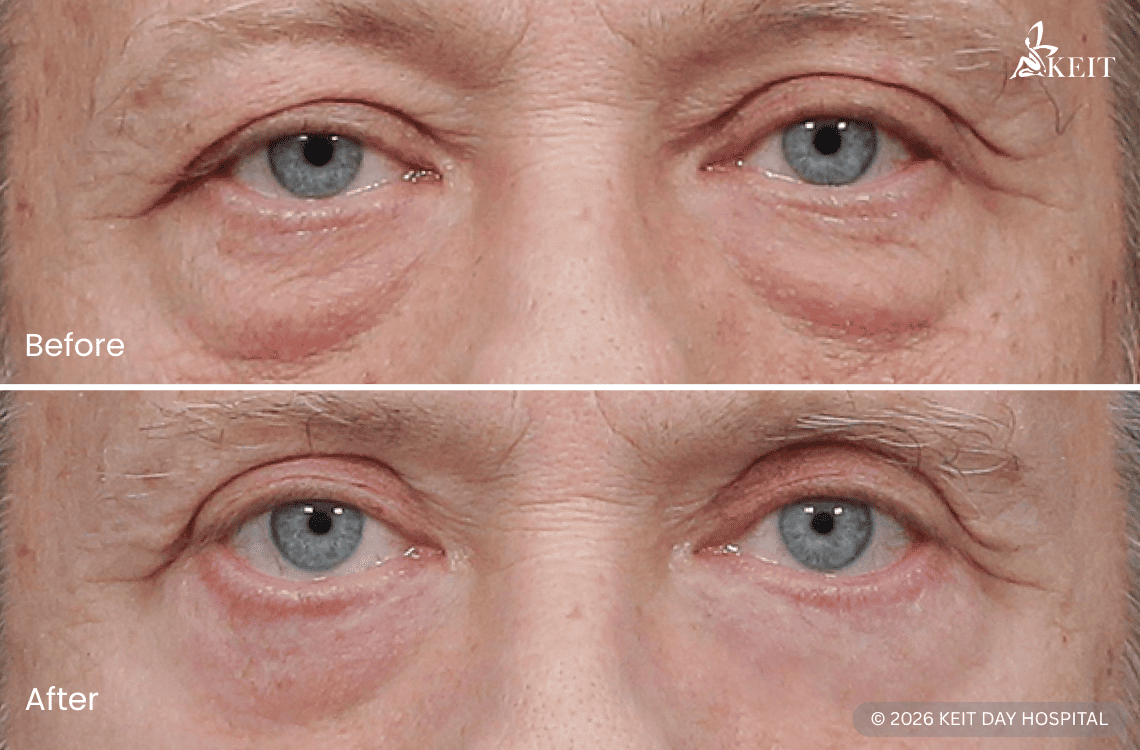
- Fat-based eye bags (True eye bags): Caused by protrusion of the lower-eyelid fat pads as the supporting tissues around the eye weaken, usually with ageing or inherited anatomy.
- Fluid-based eye bags (Oedema/Puffiness): Caused by temporary fluid buildup under the eyes, often linked to sleep position, salt intake, allergies, hormonal changes, alcohol, or dehydration.
- Festoons or malar bags: Caused by swelling and tissue laxity over the upper cheek, below the lower eyelid. These are different from true under-eye bags and often need a different treatment approach.
- Tear trough hollowing: Caused by volume loss below the lower eyelid, creating a hollow shadow that makes the eye bag appear more pronounced.
- Medical swelling: Caused by inflammation, infection, thyroid disease, sinus problems, kidney-related fluid retention, or other medical conditions.
How to get rid of bags under eyes: Natural remedies and eye creams
Natural remedies may reduce bags under eyes when puffiness is caused by fluid retention, sleep deprivation, or allergies. Methods such as cold compresses, head elevation, reduced salt intake, and proper hydration help manage temporary swelling.
While eye creams containing caffeine, retinol, or peptides can improve skin quality and mild puffiness, they cannot correct protruding fat pads or significant skin laxity. Persistent bags usually require a clinical assessment to determine if surgical or medical aesthetic treatment is necessary.
Bags under eyes: Non-surgical treatment options and when they help
Several non-surgical treatments can improve bags under eyes when the concern is mild to moderate and correctly matched to the underlying problem. The main non-surgical under-eye bags treatment options include:
- Dermal fillers (Tear trough filler): Hyaluronic acid fillers are injected into the hollow area between the lower eyelid and upper cheek to smooth the transition and reduce shadowing caused by volume loss.
- Skin boosters: Microinjections of hydrating compounds, usually hyaluronic acid-based, are placed into the under-eye skin to improve hydration, texture, and crepey skin quality.
- Laser resurfacing: Controlled laser energy removes or remodels superficial skin layers to improve fine lines, uneven texture, pigmentation, and mild lower-eyelid laxity.
- Radiofrequency or microneedling: Controlled heat or micro-injuries stimulate collagen production to improve firmness and mild skin laxity under the eyes.
- Chemical peels: Medical-grade peeling solutions exfoliate superficial skin layers to improve pigmentation, dullness, and uneven under-eye tone.
Book your FREE
Online Consultation Now

Under eye bag surgery: Lower blepharoplasty for persistent eye bags
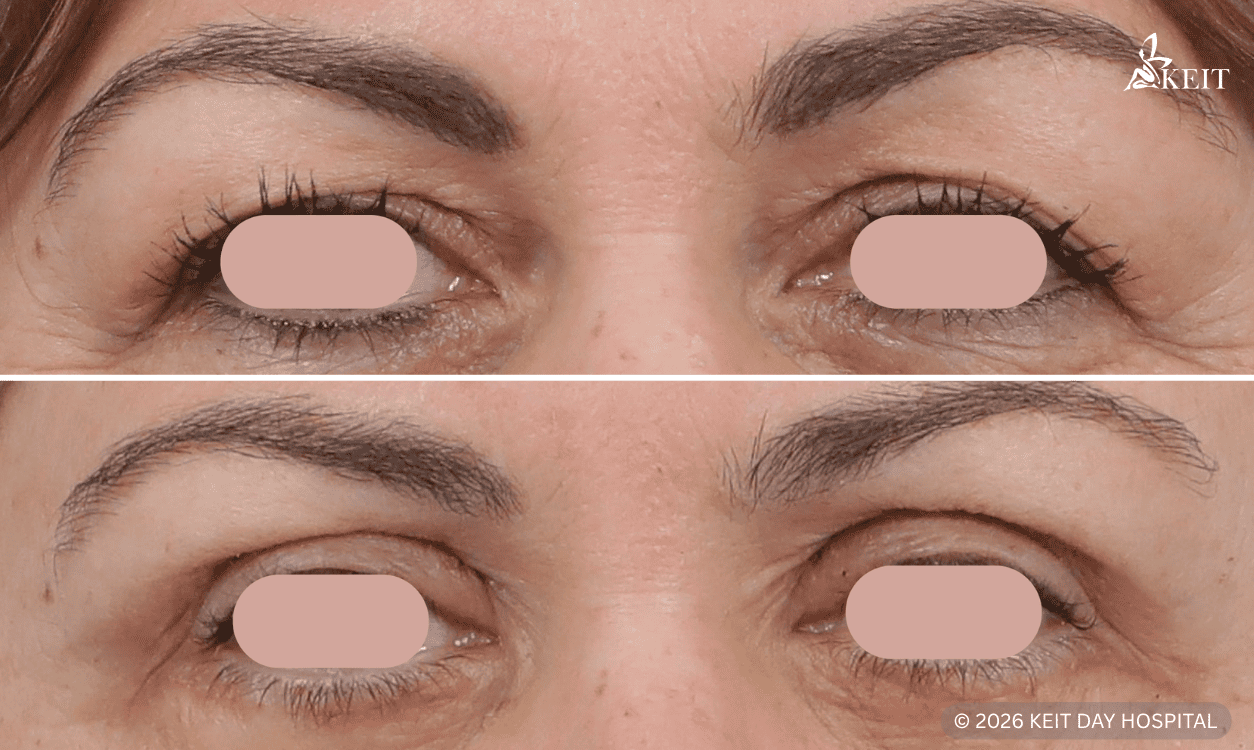
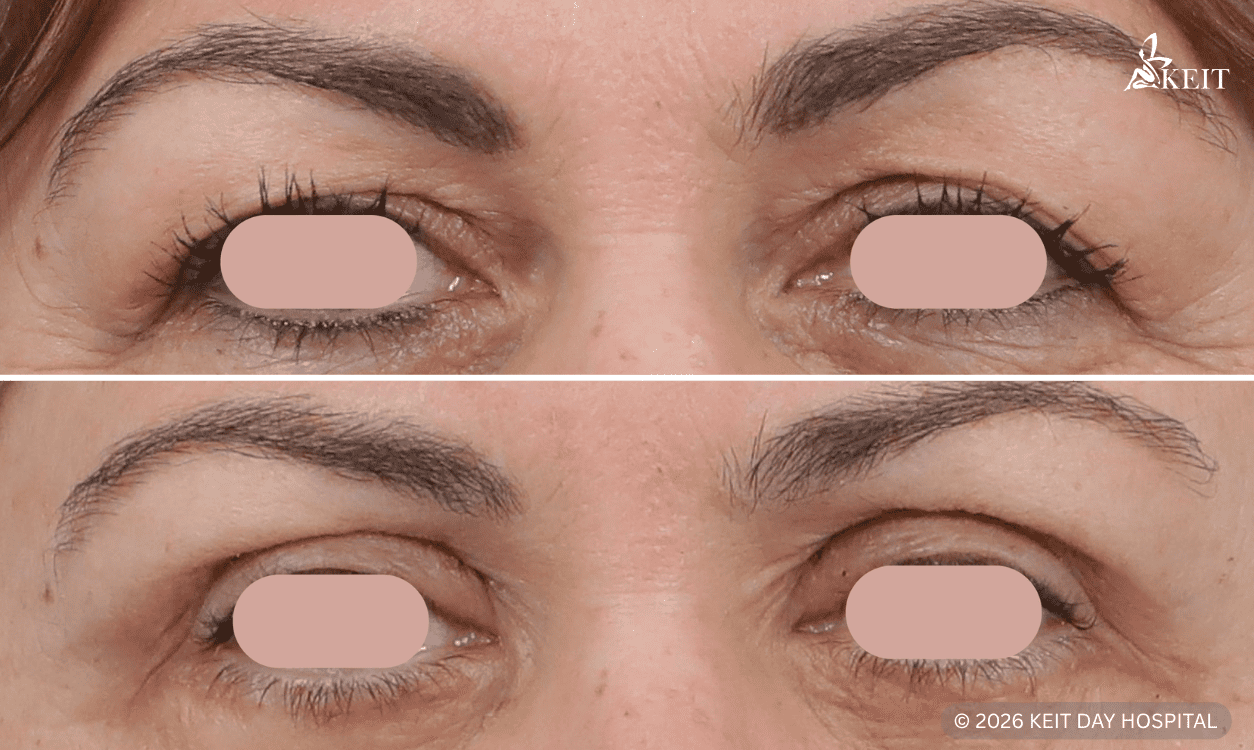
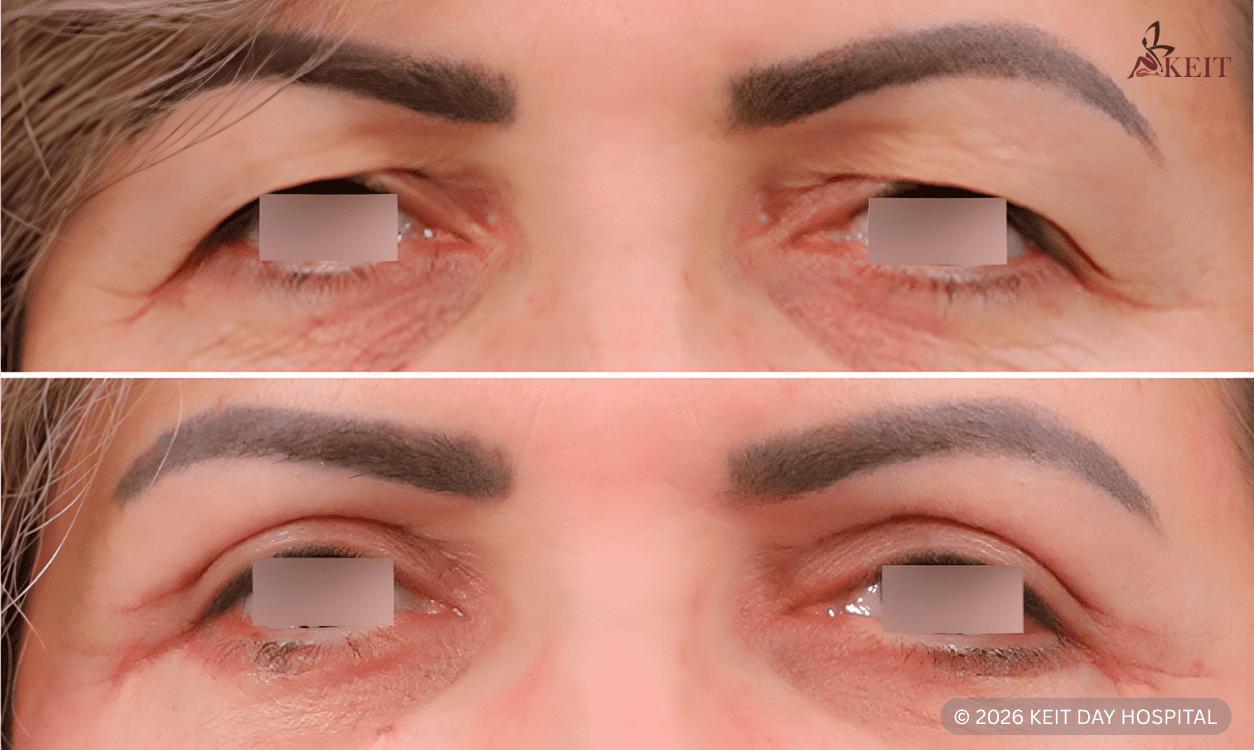
Lower blepharoplasty is the main surgical option for persistent bags under eyes caused by protruding lower-eyelid fat, excess skin, or weakened tissue support. Performed under anaesthesia, it usually takes 1–2 hours.
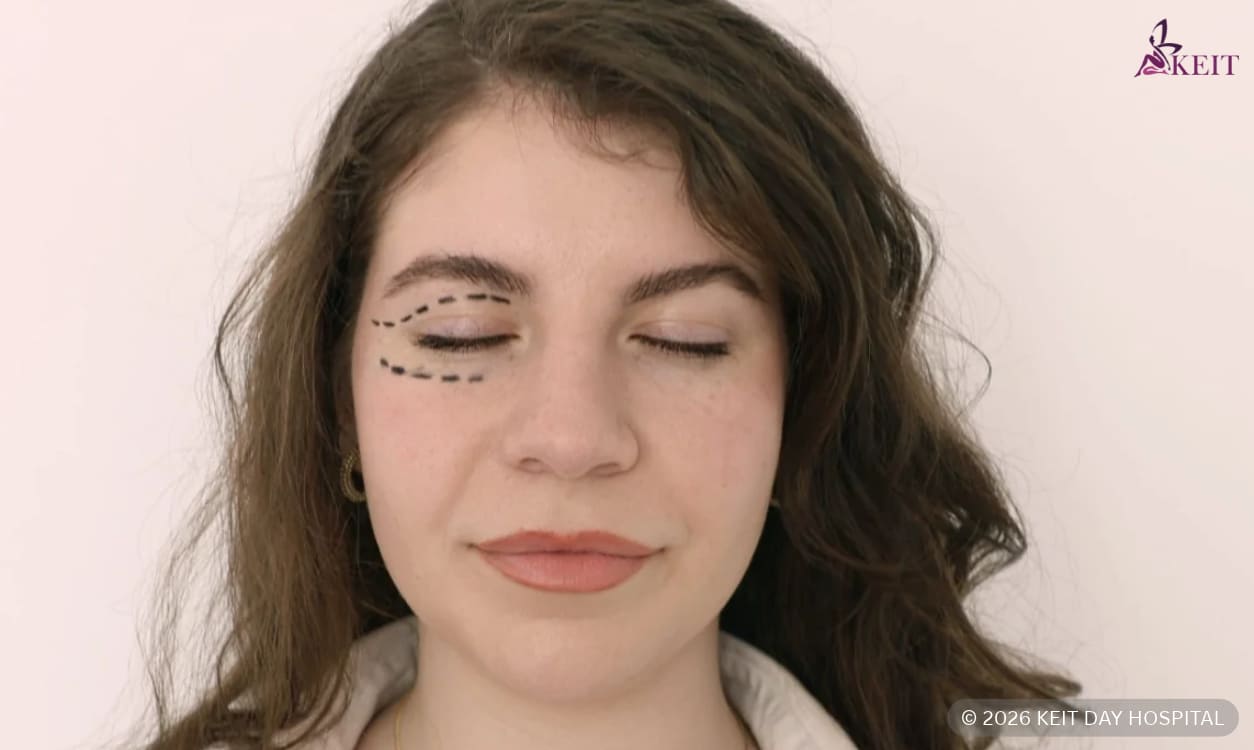
During the procedure, the surgeon makes an incision inside the lower eyelid or just below the lash line, then repositions or removes excess fat and tightens the lower-eyelid tissues. Loose skin may also be removed when needed. Recovery usually takes 1–2 weeks, with temporary swelling, bruising, and gradual improvement over the following months.
Best treatment for under eye bags based on the cause
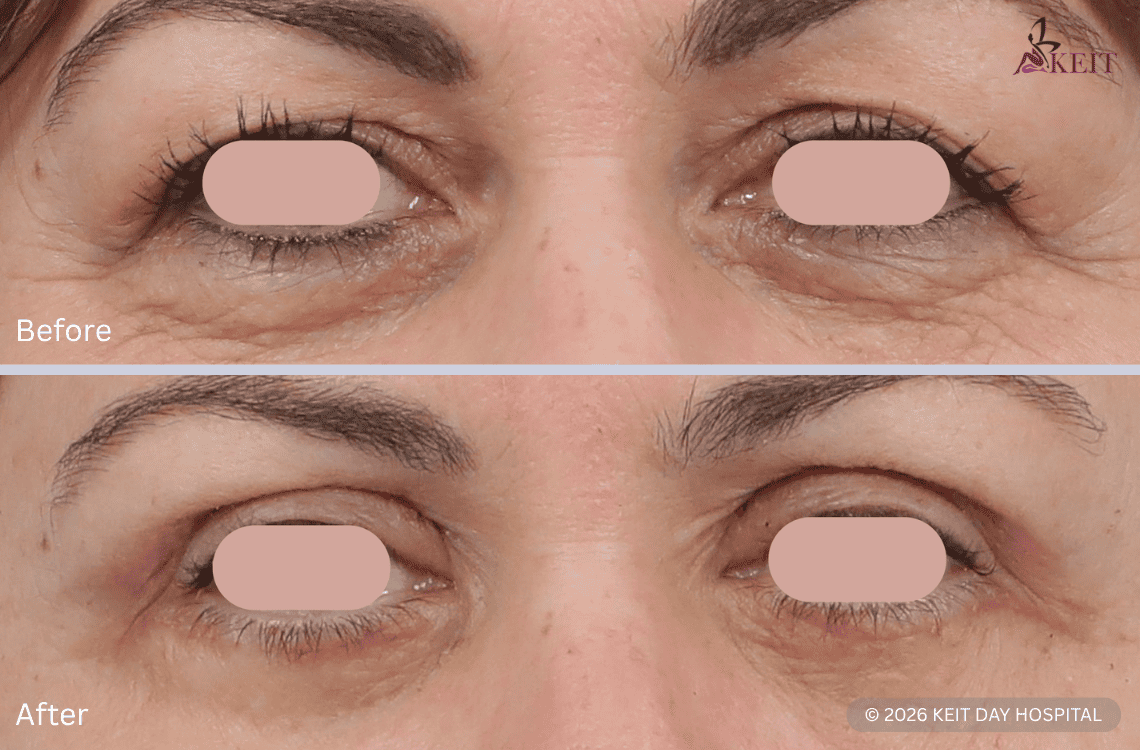
The most appropriate treatment for under eye bags depends on the severity and cause of the concern. Natural methods are most suitable for temporary puffiness linked to fluid retention, sleep, salt intake, or allergies. Non-surgical treatments are better for mild hollowing, thin skin, pigmentation, or early skin laxity. Lower blepharoplasty is usually the most appropriate option for persistent bags caused by protruding lower-eyelid fat pads or excess skin. A clinical assessment is essential to identify the cause and choose the safest, most effective treatment.
Under eye bags: When should you see a specialist?
Under-eye bags should be assessed by a specialist if swelling is sudden, painful, one-sided, persistent, red, or associated with vision changes. A lump under the eye, recurrent swelling, thyroid-related eye changes, or puffiness with general facial swelling may indicate a medical cause rather than a cosmetic concern.