Published on:

 Reading Time: 5 min
 Breast augmentation
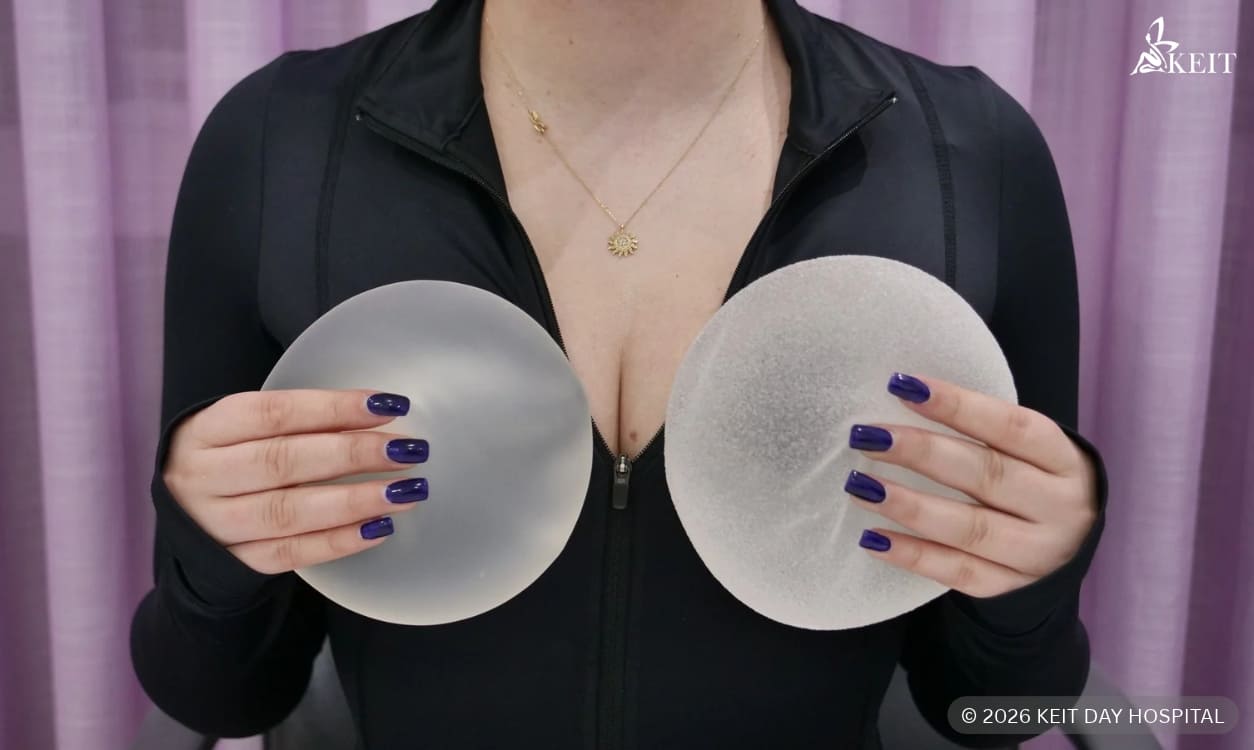
The right breast implant size depends on your chest and breast anatomy, available tissue, desired volume, implant dimensions and profile - not cc volume alone. During consultation, the surgeon combines precise measurements with implant sizers, photographs and, where available, 3D imaging to select an implant that fits your anatomy and desired result.
 Table of Contents:
-
1
 What is a breast implant?
-
2
What determines the right breast implant size?
-
3
Breast implant dimensions: width, height and projection
-
4
Breast implant size chart: what do 300cc, 400cc and 500cc implants look like?
-
5
How much will breast implants increase your breast size?
-
6
Can a breast implant size calculator tell you what size you need?
-
7
How do you choose between breast implant sizes?
-
8
What happens if a breast implant is too large?
In this article, we explain what a breast implant is, which factors determine the right size, and how implant width, height and projection affect the result. We also cover breast implant size charts, expected breast size changes, implant size calculators, the sizing process and the potential problems associated with choosing an implant that is too large.
What is a breast implant?
A breast implant is a medical device used to increase breast volume or restore breast shape. It consists of a silicone outer shell filled with either silicone gel or saline and is placed beneath the breast tissue or chest muscle. Breast implants are available in different volumes, shapes, profiles and dimensions to suit individual anatomy and aesthetic goals. Implant volume is measured in cubic centimetres (cc), but the cc number alone does not determine the final breast size or appearance.
What determines the right breast implant size?
The right breast implant size is determined by your breast and chest anatomy, available soft-tissue coverage, and the result you want to achieve. Implant selection is individualized and should not be based on cup size or implant volume alone. Important factors include:
- Breast base width: The implant needs to fit within the natural width of the breast without extending excessively beyond the breast boundaries.
- Chest dimensions: Chest width and overall body proportions influence which implant dimensions are appropriate.
- Existing breast tissue: The amount and thickness of natural tissue affect implant coverage and how the result will look and feel.
- Breast shape and asymmetry: Differences between the breasts may require different implant sizes or dimensions.
- Skin and soft-tissue quality: Skin elasticity and tissue characteristics affect how well the breast can accommodate additional volume.
- Desired result: The preferred degree of fullness, projection and overall breast shape is considered alongside the anatomical measurements.

Breast implant dimensions: width, height and projection
Breast implant dimensions refer to the implant’s width, height and projection, which influence how it fits the breast and affects its final shape.
- Width: The base diameter of the implant, measured from side to side. Depending on the implant model, widths can range from approximately 9–15 cm or more and should be matched to the patient’s breast base.
- Height: The vertical measurement of the implant. With round implants, height and width are equal, while anatomical implants have a height greater than or equal to their width, creating a more naturally sloping breast shape.
- Projection: The distance the implant extends forward from the chest. Different profiles provide different levels of projection, from lower to higher projection, allowing the surgeon to adjust breast fullness and contour.
These dimensions are considered together with implant volume and shape when selecting the appropriate implant for each patient.

Breast implant size chart: what do 300cc, 400cc and 500cc implants look like?
300cc, 400cc and 500cc implants represent progressively larger volumes, with 300cc generally providing a modest increase, 400cc a more noticeable increase in fullness, and 500cc a fuller, more pronounced augmentation.
| Implant size | General effect |
|---|---|
| 300cc | Modest increase in breast volume and relatively subtle augmentation. |
| 350cc | Moderate increase in volume with more noticeable fullness. |
| 400cc | Moderate-to-full increase in volume with more pronounced augmentation. |
| 450cc | Greater volume and fullness than a 400cc implant. |
| 500cc | Fuller, more pronounced increase in breast volume. |
| 550cc+ | High-volume augmentation with substantially increased breast fullness. |
The final appearance is also influenced by implant dimensions and profile, so implants with the same volume can have different shapes and projection.
How much will breast implants increase your breast size?
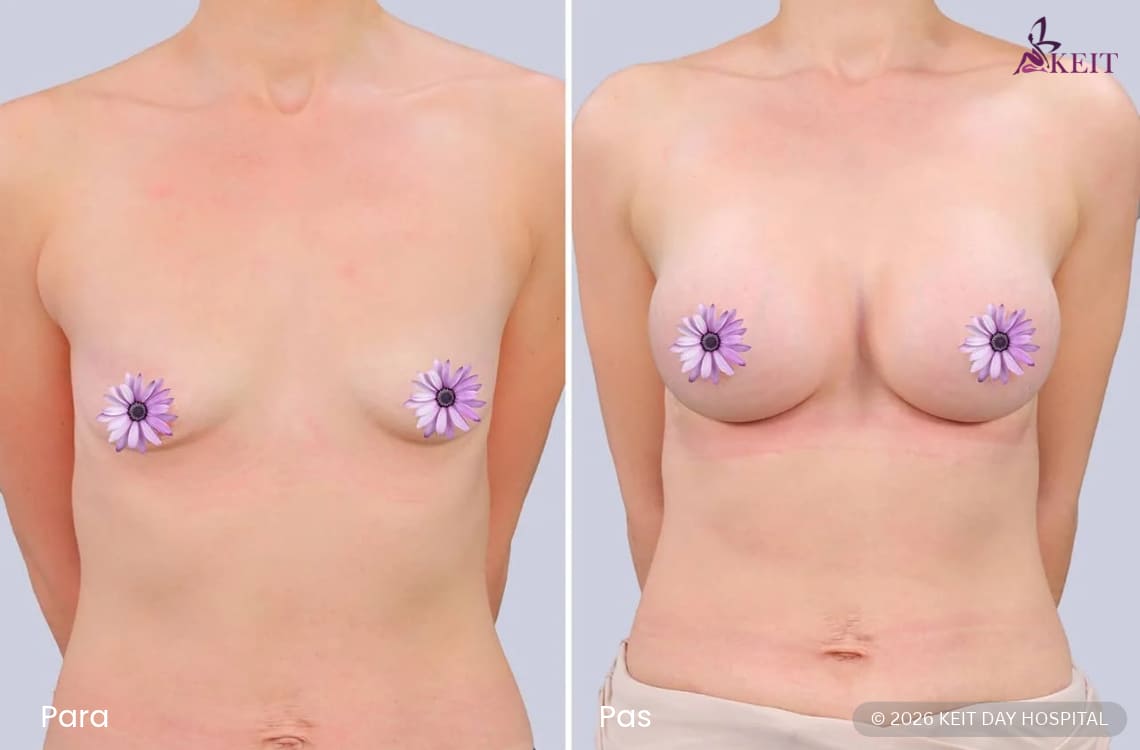
Breast implants can increase breast size by about one to two cup sizes, although larger increases are possible with higher-volume implants. The amount of enlargement is influenced by the implant volume, starting breast size, chest dimensions, implant profile and existing breast tissue.
For example, a 300cc implant produces a smaller increase in breast volume than a 400cc or 500cc implant, with larger implants generally creating greater overall fullness. However, the same implant volume can produce different breast proportions in different patients.
Can a breast implant size calculator tell you what size you need?
A breast implant size calculator can give you an approximate idea of implant volume, but it cannot determine the right implant size for you. It can be useful as a starting point, while the final implant choice is made during a consultation using clinical measurements and sizing methods such as implant sizers or 3D imaging.
How do you choose between breast implant sizes?
The right breast implant size is chosen by combining anatomical measurements with the patient’s desired appearance. During the consultation, different implant sizes and profiles can be compared using implant sizers, photographs or 3D imaging where available.
Patients should consider:
- desired breast volume and fullness;
- preferred level of projection;
- overall breast proportions;
- how the implant will complement their existing breast shape.

What happens if a breast implant is too large?
A breast implant that is too large for the patient’s anatomy can place excessive stress on the breast tissues and increase the risk of complications and an unnatural result. Potential problems include:
- implant visibility or palpability;
- stretching and thinning of the overlying breast tissue;
- rippling or wrinkling;
- implant displacement or malposition;
- increased breast sagging over time;
- breast proportions that appear disproportionate to the patient’s frame.
For this reason, implant size should be selected according to the patient’s anatomy, tissue characteristics and desired result rather than volume alone.