Published on:

 Reading Time: 5 min

 Breast augmentation
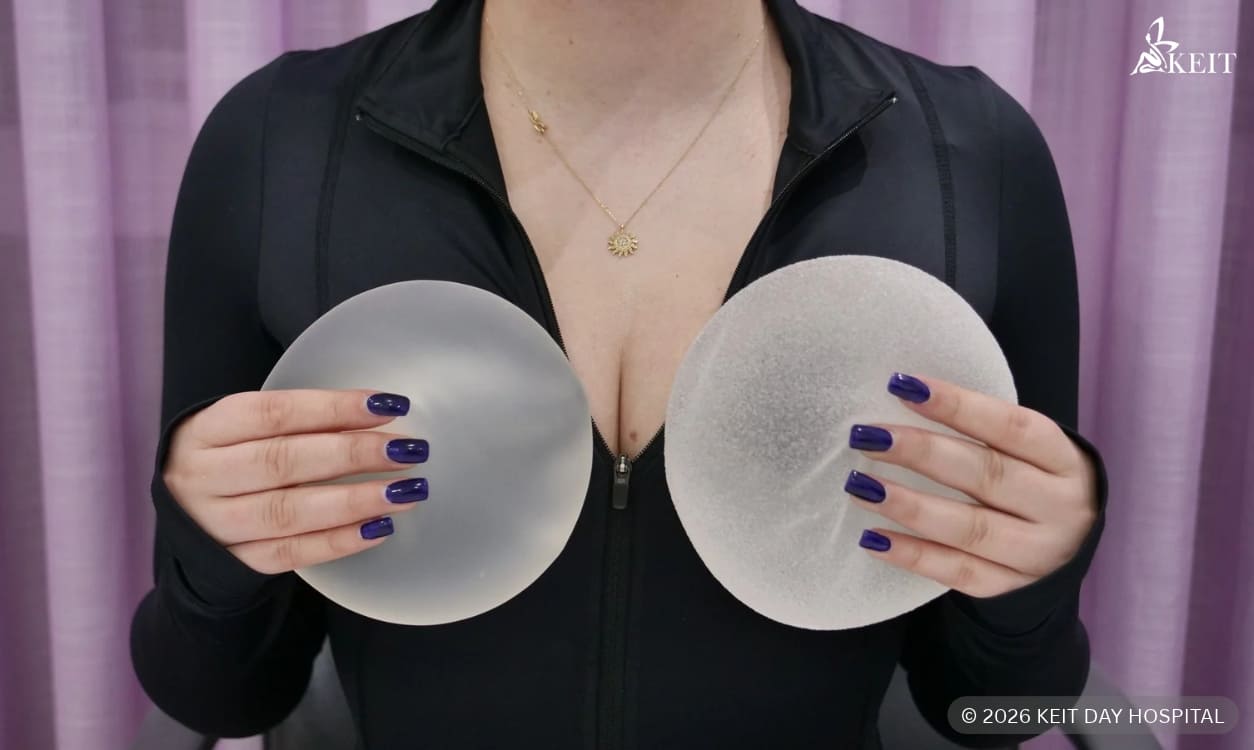
A breast implant rupture occurs when the outer shell of an implant develops a tear or hole, allowing its contents to leak. The effects depend on the type of implant: a ruptured saline implant usually deflates as the saline is absorbed by the body, while a silicone implant rupture may remain silent and require imaging for detection.
 Table of Contents:
-
1
 What is a breast implant rupture?
-
2
What causes breast implants to rupture?
-
3
What are the symptoms of a ruptured breast implant?
-
4
Is a ruptured breast implant dangerous?
-
5
How is breast implant rupture diagnosed?
-
6
How is a ruptured breast implant treated?
-
7
Can a ruptured breast implant be left untreated?
-
8
How can breast implant rupture be detected early?
In this article, we explain what breast implant rupture is, what causes it and which symptoms it can cause, including silent rupture. We also discuss whether a ruptured breast implant is dangerous, how it is diagnosed and treated, whether it can be left untreated, and how rupture can be detected early.
What is a breast implant rupture?
A breast implant rupture is a tear or opening in the implant shell that allows the filling material to escape. Rupture can occur in both silicone and saline implants, but it presents differently depending on the implant type. Saline implants typically deflate when ruptured, while silicone implants may remain intact in shape because the gel can stay within the surrounding capsule, making the rupture less noticeable.
What causes breast implants to rupture?
Breast implants can rupture due to implant ageing, trauma, mechanical stress or damage to the implant shell. Factors that may contribute include:
- Implant ageing: The risk of rupture increases as the implant remains in place for longer.
- Trauma or pressure: Significant impact, compression or other mechanical forces can damage the implant.
- Capsular contracture: Severe tightening of the scar tissue around the implant can place additional stress on the shell.
- Surgical or procedural damage: The implant can be damaged during the initial surgery or during later procedures involving the breast, such as biopsy or fluid drainage.
- Mammography: Compression during mammography can rarely contribute to implant damage.
- Saline implant filling: Overfilling or underfilling a saline implant can increase mechanical stress on the shell.

What are the symptoms of a ruptured breast implant?
The symptoms of a ruptured breast implant depend on whether the implant is saline or silicone.
Saline implant rupture
Saline implants are filled with sterile salt water (saline). When a saline implant ruptures, the saline usually leaks out and is absorbed by the body, causing the implant to deflate. Symptoms may include:
- Breast deflation: The affected breast decreases in size.
- Change in breast shape: The breast may appear less full or become asymmetrical.
Silicone implant rupture
Silicone implants are filled with silicone gel. When they rupture, the gel may remain within the surrounding capsule, meaning the rupture may not cause noticeable changes in the breast. Possible symptoms include:
- change in breast size or shape;
- breast asymmetry;
- pain or tenderness;
- swelling;
- firmness or lumps;
- changes in sensation, such as numbness, tingling or burning.
A silicone implant rupture can also be silent, meaning it causes no noticeable symptoms or external changes.

Is a ruptured breast implant dangerous?
A ruptured breast implant is not usually an immediate medical emergency, but it requires medical evaluation to determine whether treatment is needed.
Saline implant rupture is generally not harmful to the body, although the resulting changes to the breast may require surgery to remove the ruptured implant and, if desired, replace it.
Silicone implant rupture can cause local inflammatory reactions and, if silicone extends beyond the surrounding capsule, may affect nearby tissues or lymph nodes. Medical assessment is therefore important, even when there are no noticeable symptoms.

How is breast implant rupture diagnosed?
Breast implant rupture is diagnosed through a clinical examination and, when needed, imaging such as ultrasound or MRI. The choice of imaging depends on the type of implant and whether symptoms are present.
For saline implants, rupture is usually easier to identify because the implant deflates and the breast loses volume. Routine imaging is generally not required to screen for rupture in an asymptomatic saline implant.
For silicone implants, ultrasound or MRI can be used to detect rupture, including ruptures that do not cause noticeable symptoms. MRI is particularly useful when rupture is suspected or ultrasound findings are uncertain.
How is a ruptured breast implant treated?
A ruptured breast implant is treated primarily through surgical removal and, depending on the individual case, may be replaced or followed by breast reshaping. The main treatment options include:
- Breast implant removal: The ruptured implant is surgically removed without inserting a new implant.
- Breast implant replacement: The ruptured implant is removed and replaced with a new implant when appropriate.
- Breast reshaping without replacement: The implant is removed without replacement, and breast reshaping surgery, such as a breast lift, may be performed to improve the breast contour.
The most appropriate option depends on the type and extent of rupture, the condition of the breast tissue and the patient’s preferences and goals.
Can a ruptured breast implant be left untreated?
A confirmed breast implant rupture should be medically evaluated, and surgical removal is generally recommended, although the timing and treatment approach depend on the type and extent of the rupture.
For saline implants, rupture usually causes noticeable deflation, and removal of the ruptured implant is generally recommended.
For silicone implants, rupture may be silent and therefore difficult to detect without imaging. When a rupture is confirmed, removal is generally recommended, with replacement considered according to the individual case and the patient’s preferences.
How can breast implant rupture be detected early?
Early detection of breast implant rupture involves monitoring for changes in the breasts and following recommended imaging for silicone implants. For patients with silicone gel-filled implants, an ultrasound or MRI is generally recommended 5–6 years after implantation and every 2–3 years thereafter, even when there are no symptoms. MRI may be recommended when symptoms are present or ultrasound findings are uncertain.
Patients should also seek medical evaluation if they notice changes in breast size or shape, swelling, firmness, pain or other unexplained breast changes.