Published on:
 Modified on:

 Reading Time: 3 min
 Hair transplant
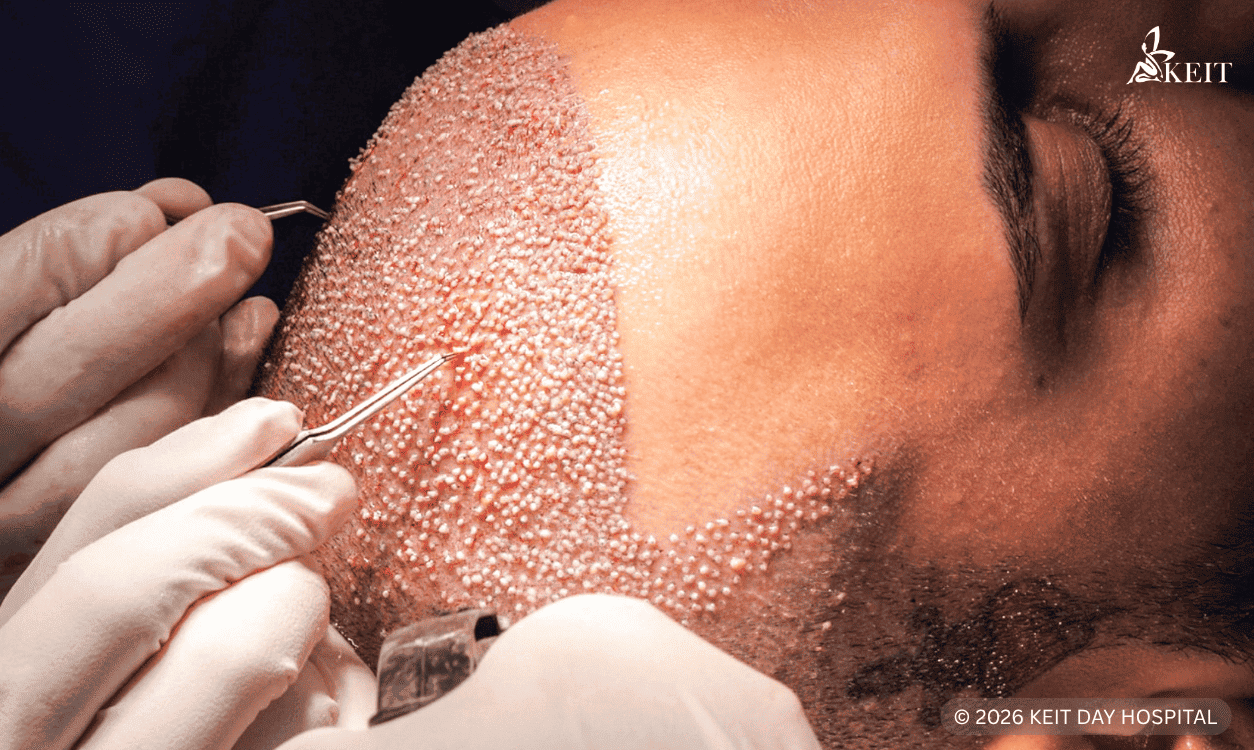
 for curly or Afro-textured hair requires specialized techniques due to the natural curl pattern of the follicles. FUE is the preferred method, using careful extraction and implantation to preserve follicle integrity, maintain natural curl, and achieve a seamless hairline with high graft survival.
 Table of Contents:
-
1
 Can curly or Afro-textured hair be transplanted?
-
2
Curly hair transplant: why curl pattern affects extraction
-
3
FUE technique challenges in curved follicles
-
4
Afro hair transplant: hairline design for textured hair
-
5
Donor area considerations for curly and afro hair transplant
-
6
Risks and limitations of Afro and curly hair transplants
-
7
How to choose an experienced clinic for your hair transplant
In this article, you will learn whether curly and Afro-textured hair can be successfully transplanted, how curl pattern affects extraction, the challenges of FUE in textured follicles, and best practices for hairline design and donor selection. We also cover risks, limitations, and how to choose an experienced clinic for safe, effective, and natural-looking results.
Can curly or Afro-textured hair be transplanted?
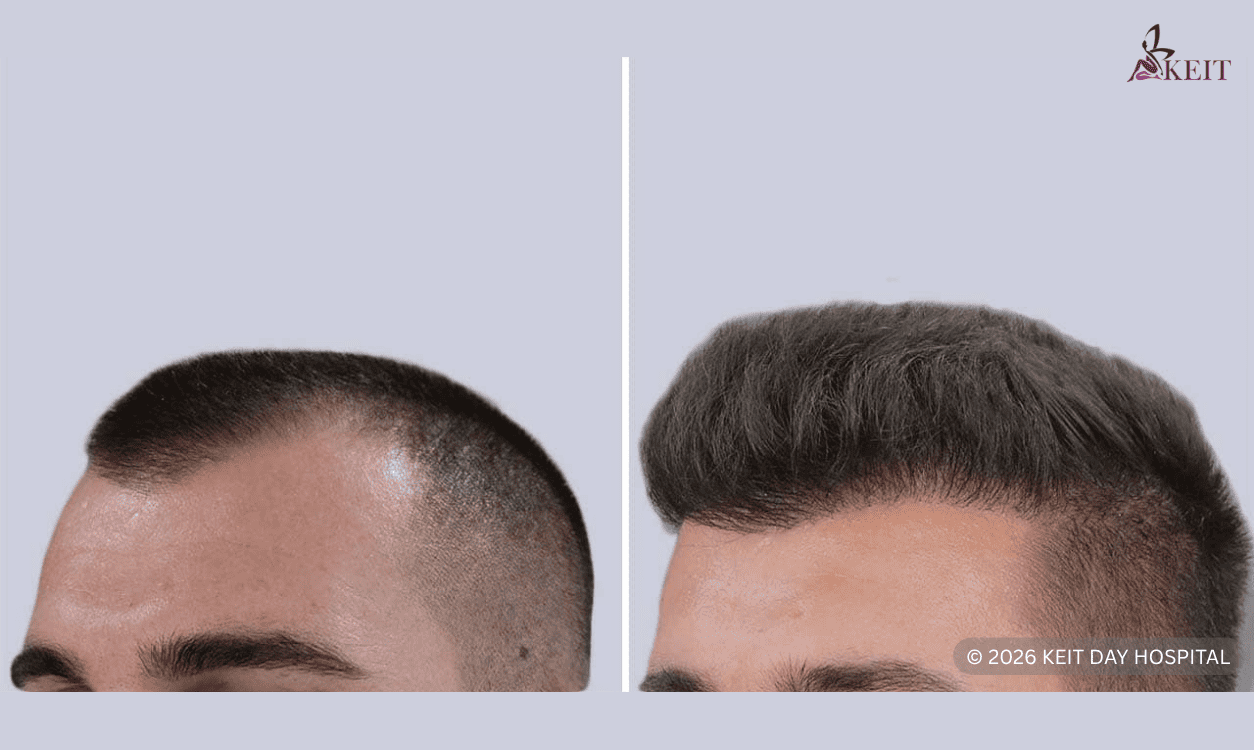
Curly and Afro-textured hair can be successfully transplanted, but the procedure requires specialized expertise. Follicles in these hair types grow in curved or spiral shapes, which makes extraction more delicate compared to straight hair. With proper technique, FUE can restore density and natural appearance, preserving the hair’s natural curl and pattern for optimal aesthetic results.
Curly hair transplant: why curl pattern affects extraction
The curvature of Afro and curly hair follicles increases the risk of transection during extraction. Key factors include:
- Follicle orientation: Curved follicles require precise alignment of the extraction angle to avoid damage.
- Follicle fragility: Spiral-shaped roots are more delicate and prone to injury if standard tools or angles are used.
- Extraction technique: Specialized FUE punches and careful handling minimize trauma and maximize graft survival.
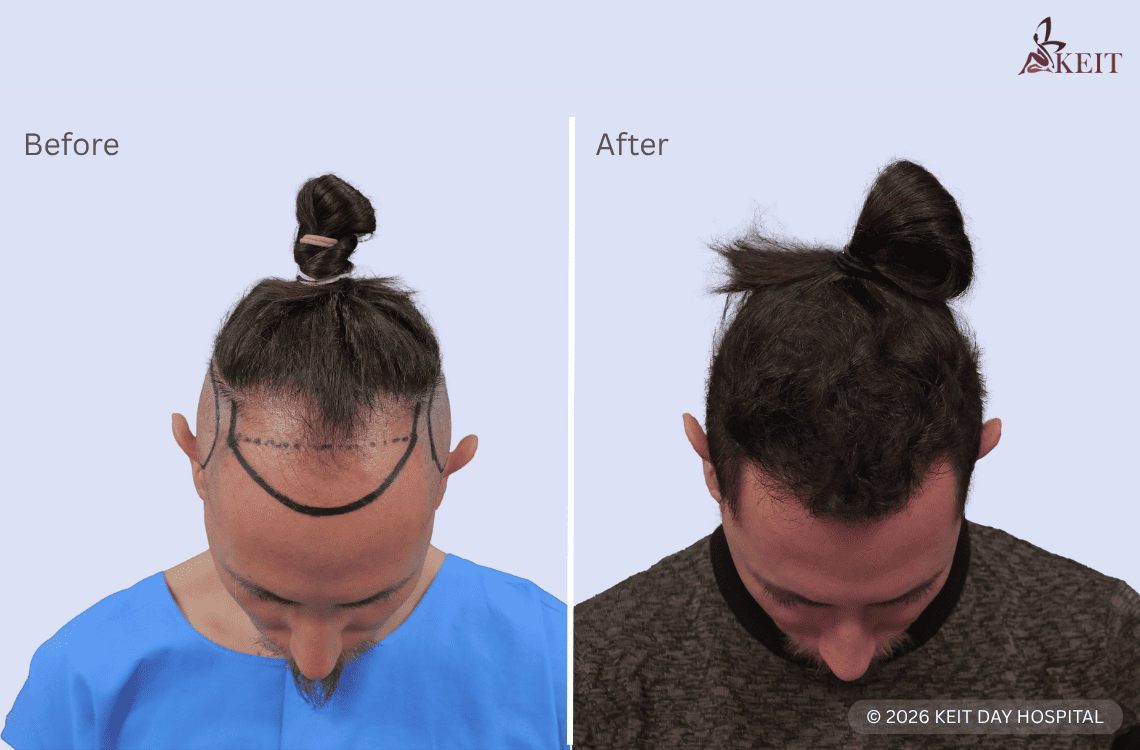
FUE technique challenges in curved follicles
Curled and Afro-textured hair presents specific challenges for FUE, as the curved shape of the follicles requires precise extraction and implantation to prevent damage and ensure graft survival:
- Transection risk: Curved follicles are more prone to accidental cutting during extraction.
- Punch selection and rotation: Using smaller, ultra-sharp punches with controlled rotation is essential to preserve follicle integrity.
- Graft quality: Maintaining the structure of curved follicles is critical to ensure natural growth and density.
- Density limitations: Achieving high-density coverage may require multiple sessions due to the delicate nature of textured follicles.

Afro hair transplant: hairline design for textured hair
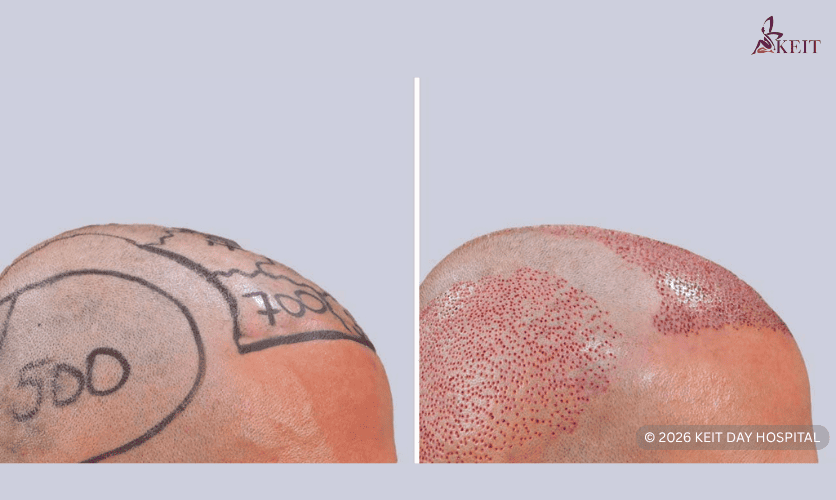
Designing a natural hairline for curly and Afro hair requires consideration of curl pattern, growth direction, and density:
- Follicle angulation: Follicles must be implanted following their natural curl for a realistic look.
- Smooth transitions: Gradual tapering at temples and forehead ensures a seamless appearance.
- Customized shape: Hairline design should complement facial structure while respecting the flow of natural curls.
Donor area considerations for curly and afro hair transplant
Careful selection of the donor area in curly and Afro-textured hair transplants is essential for optimal results:
- Adequate density: Sufficient healthy follicles must be available for extraction.
- Hair characteristics: Donor hair should closely match curl pattern, thickness, and texture.
- Extraction spacing: Proper spacing reduces visible thinning and promotes even healing of the donor site.
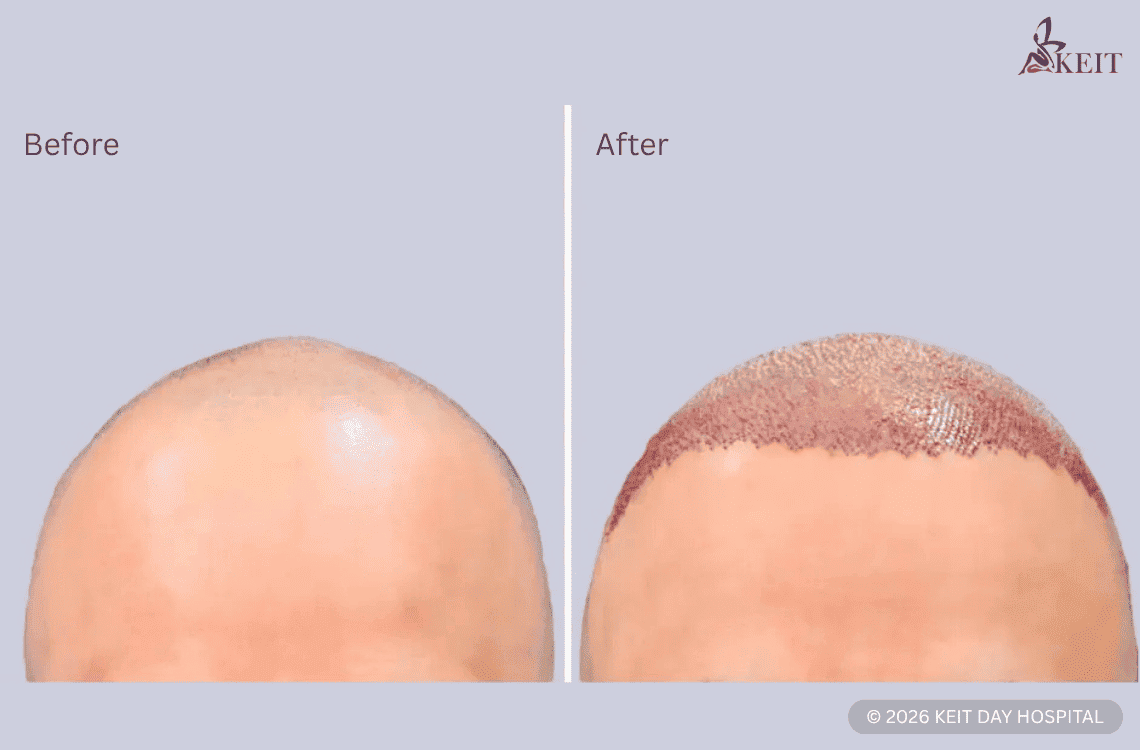
Risks and limitations of Afro and curly hair transplants
While hair transplant for Afro and curly hair is generally safe, potential complications include:
- Transection and follicle damage: Improper extraction can reduce graft survival.
- Uneven growth: Variations in curl pattern or follicle orientation can cause subtle irregularities if implantation is imprecise.
- Shock loss: Temporary shedding of surrounding hairs may occur but usually recovers naturally.
- Scarring: Although minimal with FUE, small circular marks may remain at donor sites.
How to choose an experienced clinic for your hair transplant
Selecting the right clinic is critical for successful results in Afro and curly hair transplantation:
- Specialized expertise: Surgeons must have extensive experience with textured hair.
- Advanced tools: Use of sharp, small-diameter punches and high-precision extraction devices.
- Customized planning: Individualized hairline design and graft placement account for curl pattern and density.
- Comprehensive care: Structured pre- and post-operative guidance ensures safety and consistent results.