Published on:
 Modified on:

 Reading Time: 4 min
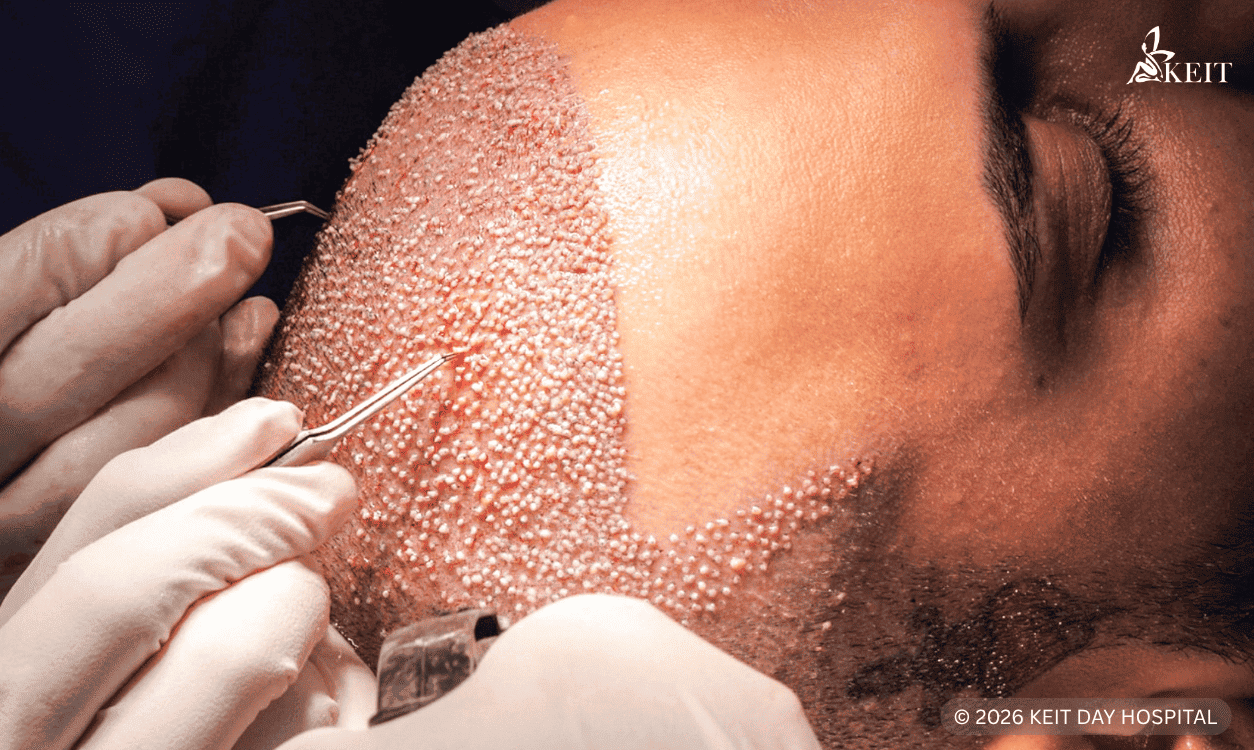
 Hair transplant
The donor area is the portion of the scalp, usually at the back and sides, where hair follicles are sourced for transplantation. Proper evaluation, careful extraction, and post-operative care are critical to preserve donor density, minimize scarring, and ensure optimal hair transplant results.
 Table of Contents:
-
1
 What is the hair transplant donor area?
-
2
How the donor area is evaluated before hair transplant
-
3
What makes a good donor area and how it affects results
-
4
Does donor hair grow back after extraction?
-
5
Post-operative care of the donor area after hair transplant
-
6
Donor area overharvesting and poor management
-
7
How long does the donor area take to heal?
-
8
FUE donor area vs FUT donor area
-
9
How KEIT Day Hospital protects donor area density
This article explains what the hair transplant donor area is, how it is evaluated, and what constitutes a good donor site. We cover hair regrowth after extraction, post-operative care, risks of overharvesting, healing timelines, differences between FUE and FUT donor areas, and KEIT’s approach to protecting donor density.
What is the hair transplant donor area?
The hair transplant donor area is the region of the scalp, typically the back and the sides, from which healthy hair follicles are harvested for transplantation. These follicles are genetically resistant to hair loss, ensuring long-term stability when moved to thinning or bald areas. Preserving the donor area is essential to maintain sufficient grafts for future procedures and optimal overall results.
How the donor area is evaluated before hair transplant
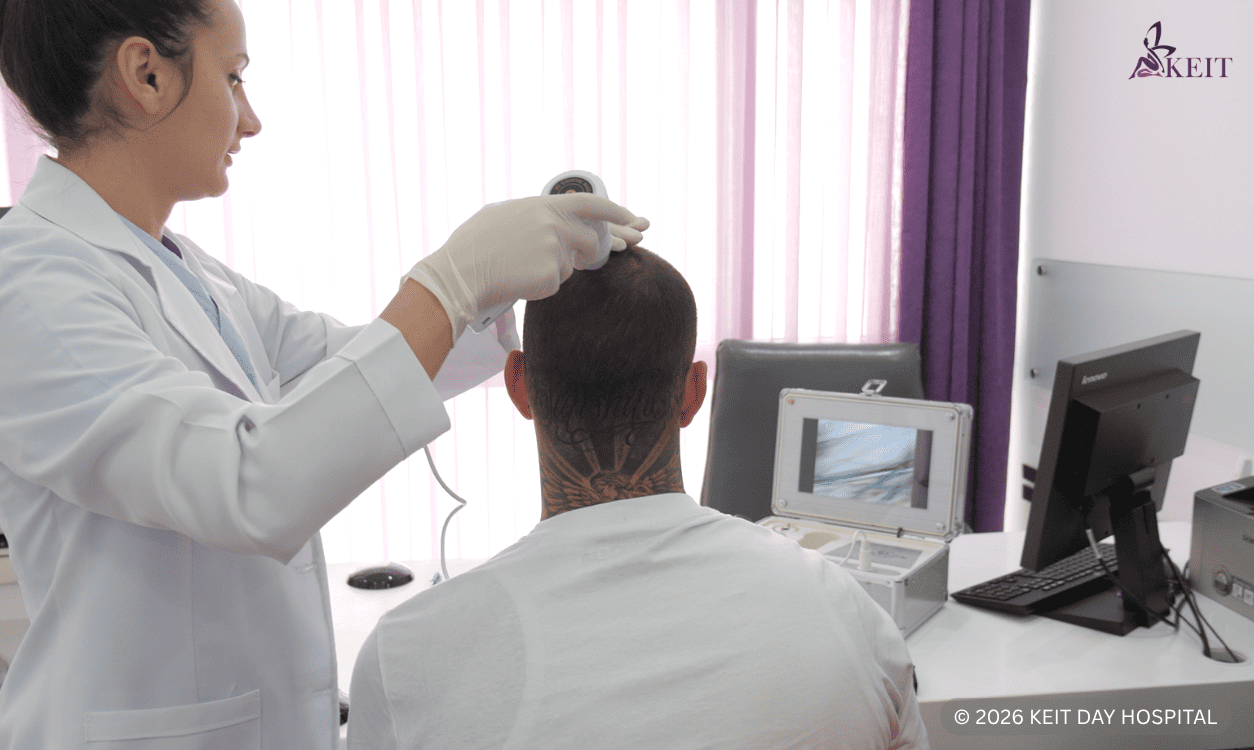
A hair transplant donor area is evaluated by measuring hair density, shaft quality, and scalp elasticity to ensure safe and effective graft extraction.
- Density: Adequate follicular units for desired coverage without overharvesting.
- Hair characteristics: Thickness, curl, color, and growth direction are evaluated to ensure transplanted hair blends naturally with recipient areas.
- Scalp laxity and elasticity: Determines ease of extraction and closure in FUT procedures, affecting healing and scar formation.
- Donor limits: Assessment ensures safe extraction volumes to preserve future transplant potential.
- Hair shaft quality: Strong, resilient hair shafts improve graft survival and long-term results.
- Vascularization and scalp health: Adequate blood supply and absence of dermatological conditions are crucial for healing and graft viability.
What makes a good donor area and how it affects results
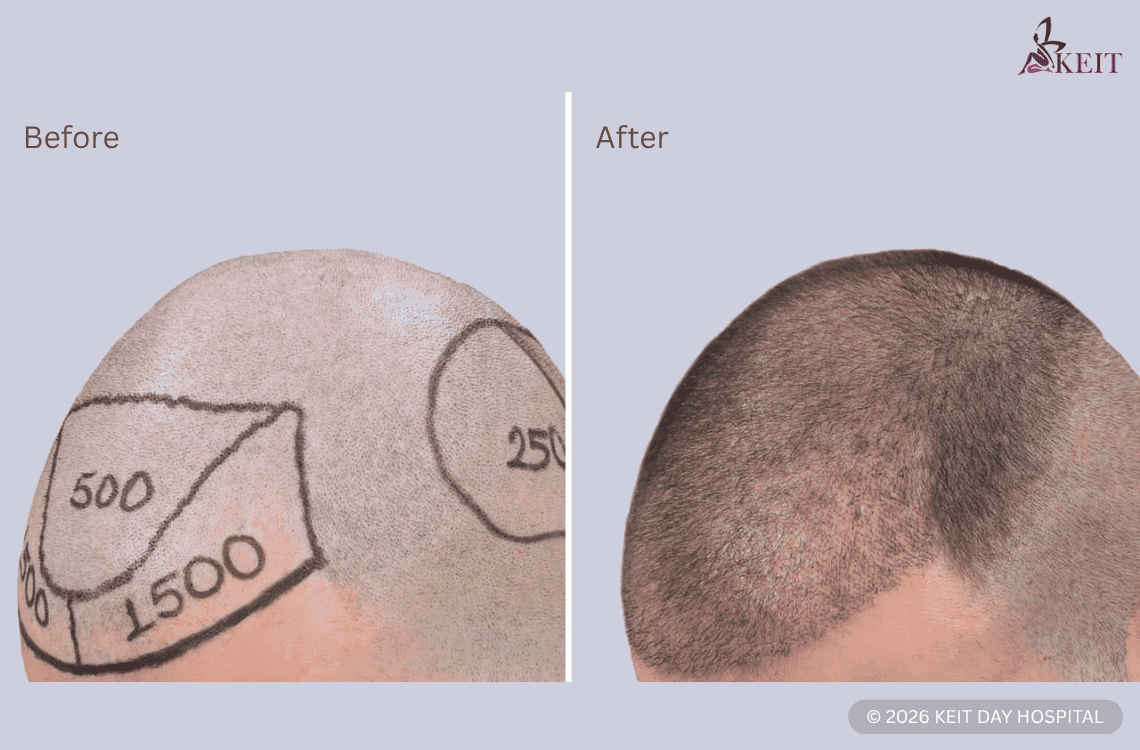
A good donor area provides sufficient, stable, and healthy hair for successful transplantation:
- Stable follicles: Hair resistant to future thinning ensures longevity of transplanted grafts.
- Adequate density: Donor density of 80–100 follicular units per cm² allows coverage without risking visible thinning.
- Healthy scalp: Free from dermatological conditions, infections, or inflammation to promote graft survival and optimal healing.
- Sufficient supply: Enough follicles must be available to achieve desired hairline and overall coverage without overharvesting.
- Optimal hair characteristics: Hair thickness, curl, color, and growth direction should match recipient areas for natural integration.
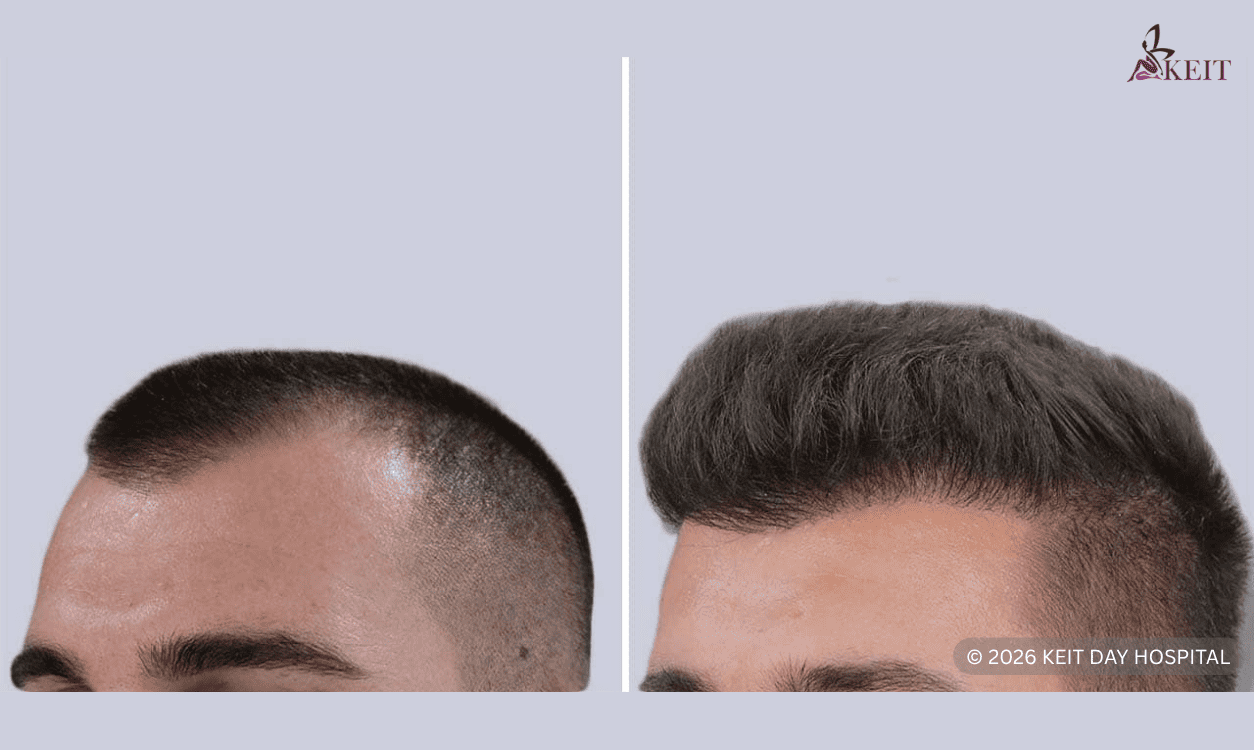
The donor area’s quality determines the success of a hair transplant. A dense, healthy donor site enables uniform coverage and high graft survival, while poor quality or overharvesting increases the risk of visible thinning and reduced graft viability.
Does donor hair grow back after extraction?
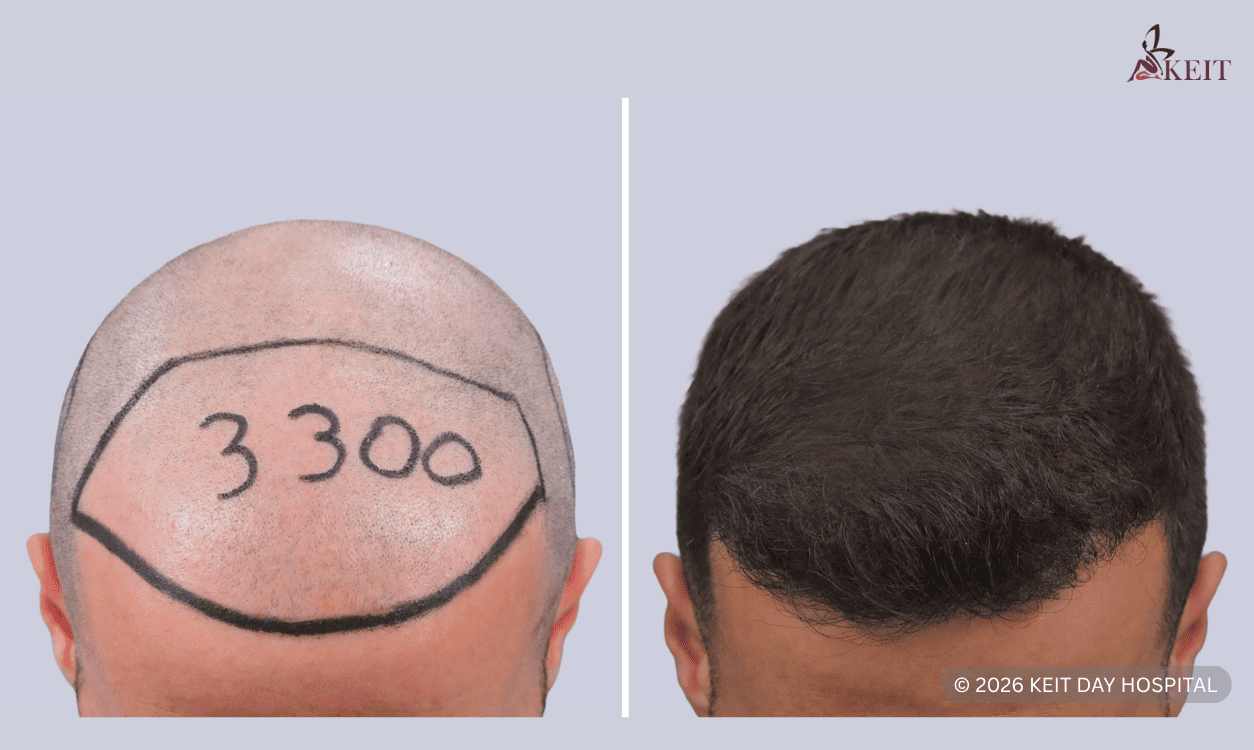
Hair follicles removed during a hair transplant do not grow back in the exact locations they were extracted from. However, the donor area generally maintains a natural appearance because the surrounding hair conceals extraction sites, preserving overall density and visual fullness.

Post-operative care of the donor area after hair transplant
Proper care of the donor area after a hair transplant minimizes complications and supports healing:
- Gentle cleansing: Wash lightly without scrubbing for the first 7–10 days.
- Sleeping position: Avoid pressure or friction on the donor area; keep the head elevated if possible.
- Avoid sun exposure: Protect from direct sunlight until healing is complete.
- Monitor for infection: Watch for redness, swelling, or discharge and contact your surgeon promptly if these occur.
Donor area overharvesting and poor management
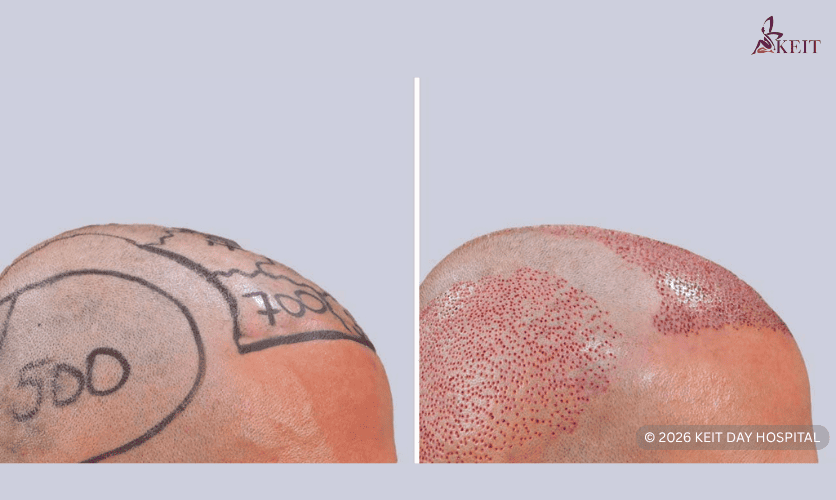
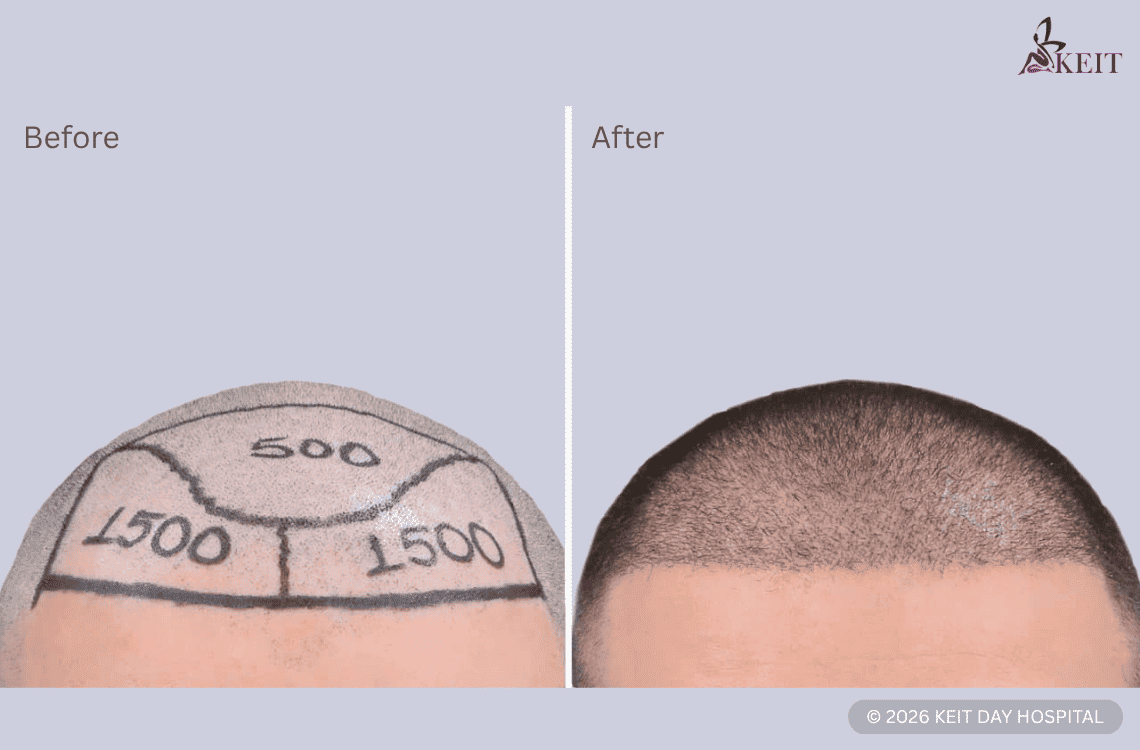
Overharvesting occurs when too many follicles are extracted from the donor site, permanently reducing density and limiting options for future procedures. Poor management of the donor area can further compromise results. Signs include:
- Visible thinning or patchiness at the donor site.
- Increased scarring or widened FUE puncture marks.
- Uneven extraction that affects natural hairline appearance.
How long does the donor area take to heal?
The donor area after a hair transplant shows significant healing within 7–14 days, with redness, tenderness, and minor scabbing gradually resolving. Complete recovery leaves the area looking natural, though healing time may vary slightly depending on the number of grafts extracted and the patient’s individual response.
FUE donor area vs FUT donor area
The primary difference between FUE and FUT is how the hair follicles are harvested, which affects healing, scarring, and extraction strategy.
| Feature | FUE | FUT (Strip) |
|---|---|---|
| Scarring | Tiny, circular punctures, often invisible |
Linear scar, may be noticeable if hair is short |
| Healing | 7–14 days | 10–14 days for sutures; scar maturation longer |
| Donor density | Allows selective follicle harvesting |
Larger graft extraction in single strip |
| Flexibility | Multiple sessions possible without major visible scarring |
Limited by strip length and scalp elasticity |
How KEIT Day Hospital protects donor area density
At KEIT Day Hospital, we maintain donor area integrity through precise extraction planning and controlled harvesting by:
- Limiting extraction to approximately 1 out of every 4 hair follicles in a given section, distributing harvesting across multiple zones to prevent visible thinning.
- Using high-precision FUE punches to minimize trauma to surrounding follicles.
- Carefully monitoring spacing to maintain uniform donor density and natural appearance.
- Providing individualized post-operative care to optimize healing and graft survival.