Published on:

 Reading Time: 5 min
 Hair transplant
A hair transplant consultation helps determine whether the procedure is suitable, which technique is recommended, how many grafts are required, and what results can realistically be achieved. Asking the right questions before booking helps patients choose a qualified clinic, understand their treatment plan, and avoid unrealistic expectations.
 Table of Contents:
-
1
 Why hair transplant consultation quality matters
-
2
Questions about hair loss diagnosis and suitability
-
3
Questions about donor area assessment
-
4
Questions about graft numbers and hair transplant planning
-
5
Questions about the hair transplant technique
-
6
Questions about surgeon involvement and clinic expertise
-
7
Questions about hair transplant cost and package details
-
8
Questions about recovery and aftercare
-
9
Red flags to consider before booking a hair transplant
-
10
How KEIT Day Hospital structures the hair transplant consultation process
In this article, we explain the most important questions to ask during a hair transplant consultation before booking surgery. We cover hair loss diagnosis, donor area assessment, graft planning, recommended techniques, surgeon involvement, clinic expertise, cost, aftercare, and the warning signs to consider when choosing a hair transplant provider.
Why hair transplant consultation quality matters
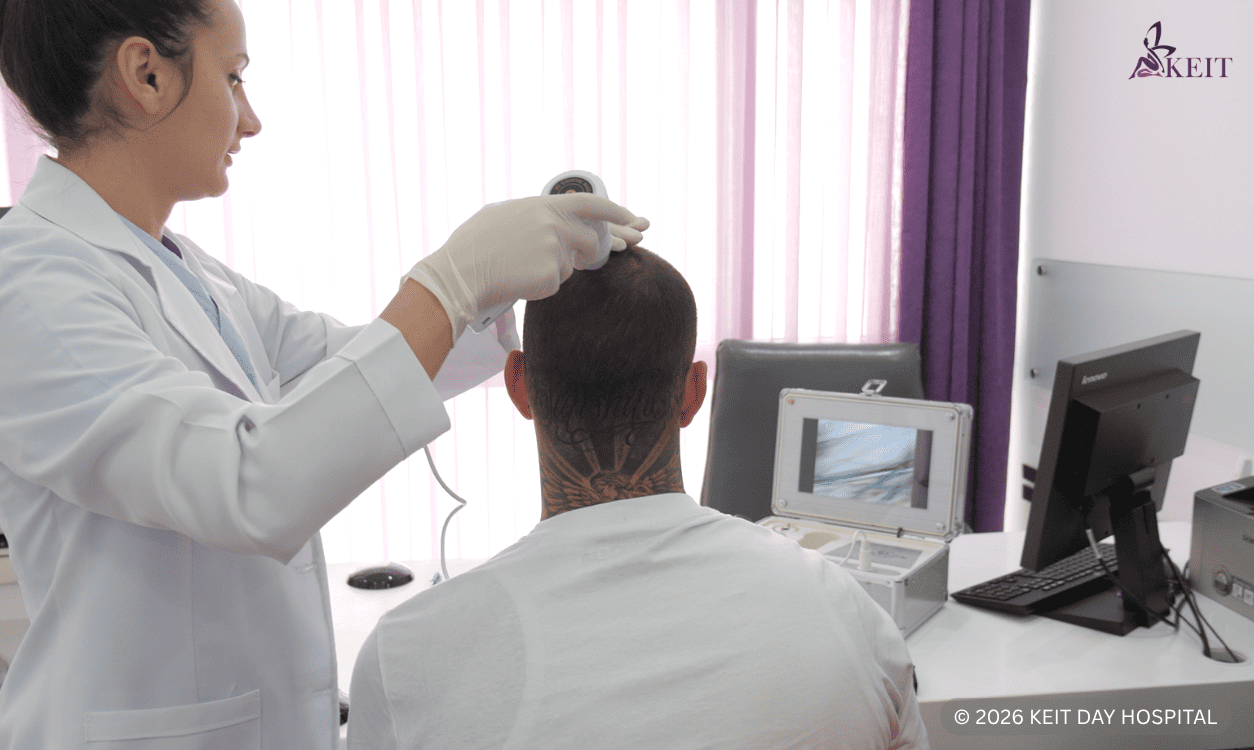
A high-quality hair transplant consultation is important because it determines whether the procedure is suitable and ensures the treatment plan is tailored to the individual’s hair loss pattern, donor area, and expected results. During the consultation, the surgeon assesses the cause and progression of hair loss, donor area availability, required graft numbers, suitable technique, and realistic long-term outcomes. A detailed assessment helps create a safer surgical plan and improves the chances of achieving natural-looking results.
Questions about hair loss diagnosis and suitability
A hair transplant consultation should begin with an accurate diagnosis of hair loss and an assessment of whether transplantation is a suitable option. Important questions to ask include:
- What is causing my hair loss?
- Am I a suitable candidate for a hair transplant?
- Will my hair loss continue progressing after surgery?
- Do I need any treatment before undergoing a hair transplant?
The consultation should clarify the cause of hair loss, assess suitability, and recommend a treatment plan based on the individual’s condition and goals.
Questions about donor area assessment
The donor area assessment is essential because it determines whether sufficient grafts are available for transplantation and how they can be safely harvested. Important questions to ask include:
- Is my donor area suitable for transplantation?
- How many grafts can be safely extracted?
- Will graft extraction affect the appearance of my donor area?
- How will the donor area be protected for future hair loss needs?
The surgeon should evaluate donor hair density, quality, thickness, and available follicular units to create a safe and sustainable transplant plan.
Questions about graft numbers and hair transplant planning
Graft planning is essential because the number of grafts required depends on the extent of hair loss, the treatment area, and the desired level of density. Important questions to ask include:
- How many grafts do I need?
- Why is this number of grafts recommended for my case?
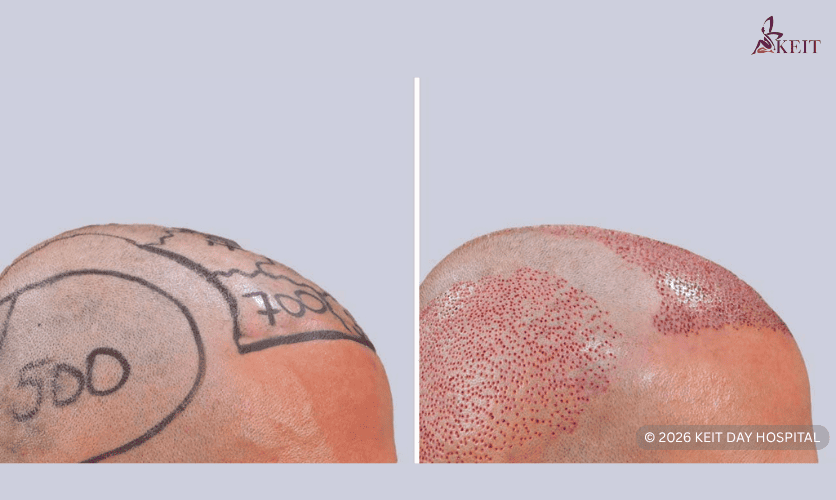
- How will the grafts be distributed across the scalp?
- Will the treatment plan consider future hair loss?
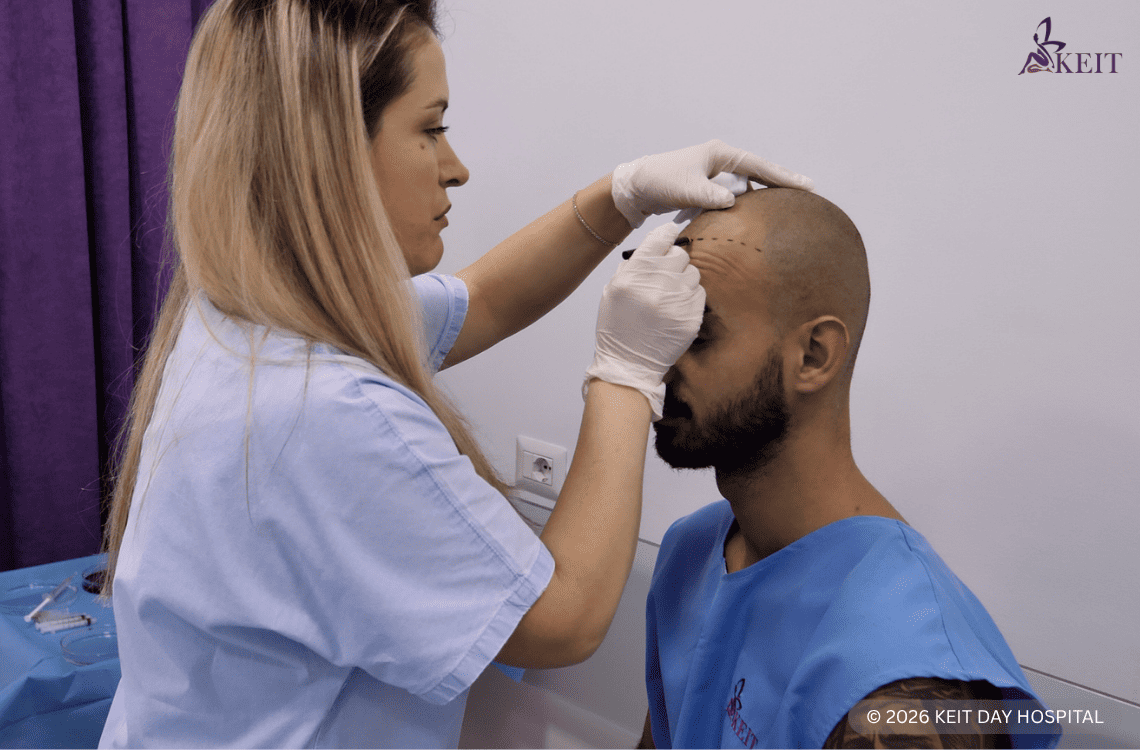
A personalised graft plan should consider the current hair loss pattern, donor area availability, and long-term goals rather than focusing only on increasing the number of grafts.
Questions about the hair transplant technique
The recommended hair transplant technique should be selected based on the individual’s hair loss pattern, donor area characteristics, and treatment goals rather than promotional claims. Important questions to ask include:
- Which technique is most suitable for my case and why?
- Would FUE, DHI, or Micro FUE be appropriate for my hair loss pattern?
- Who will perform the extraction and implantation stages?
- How will the chosen technique affect my final results?
Questions about surgeon involvement and clinic expertise
The surgeon’s experience and involvement in planning and performing the procedure are important factors when choosing a hair transplant clinic. Important questions to ask include:
- Who will perform my hair transplant?
- Will the surgeon be involved in planning and performing the procedure?
- How much experience does the surgeon have with hair transplantation?
- Can I see previous results from patients with similar hair loss?
A reliable clinic should provide experienced medical professionals, transparent treatment planning, and consistent results supported by previous patient outcomes.

Questions about hair transplant cost and package details
Understanding the full cost of a hair transplant helps patients compare clinics accurately and avoid unexpected expenses. Important questions to ask include:
- What is included in the total treatment package?
- Does the price include aftercare and follow-up support?
- Are there any additional costs I should expect before or after surgery?
- Does the price reflect the number of grafts and technique recommended for my case?
The final cost depends on factors such as graft requirements, technique used, surgeon expertise, clinic facilities, and the level of aftercare provided. A reputable clinic should provide transparent pricing with clear information about what is included.
Questions about recovery and aftercare
Understanding the recovery process helps patients know what to expect after surgery and how to protect the transplanted grafts during healing. Important questions to ask include:
- What does the recovery process involve?
- How long does healing typically take?
- What aftercare instructions will I need to follow?
- How are follow-up appointments managed after surgery?
A clear aftercare plan should include guidance on scalp washing, protecting newly implanted grafts, returning to normal activities, and monitoring healing progress.
Red flags to consider before booking a hair transplant
Certain warning signs may indicate that a clinic does not provide a personalised or medically appropriate approach to hair transplantation. Red flags to consider include:
- Promising guaranteed results
- Offering extremely low prices without explaining treatment details.
- Not providing information about the surgeon performing the procedure.
- Recommending a fixed number of grafts without proper assessment.
- Focusing only on sales rather than medical evaluation.
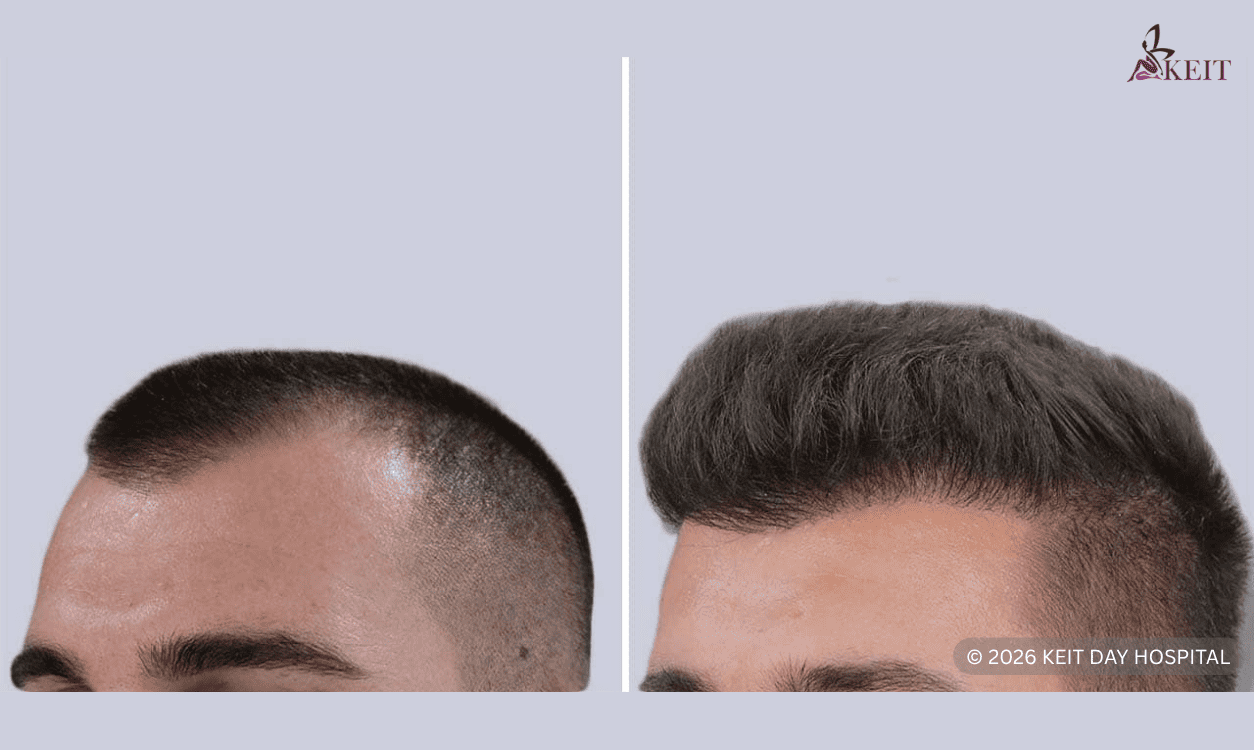
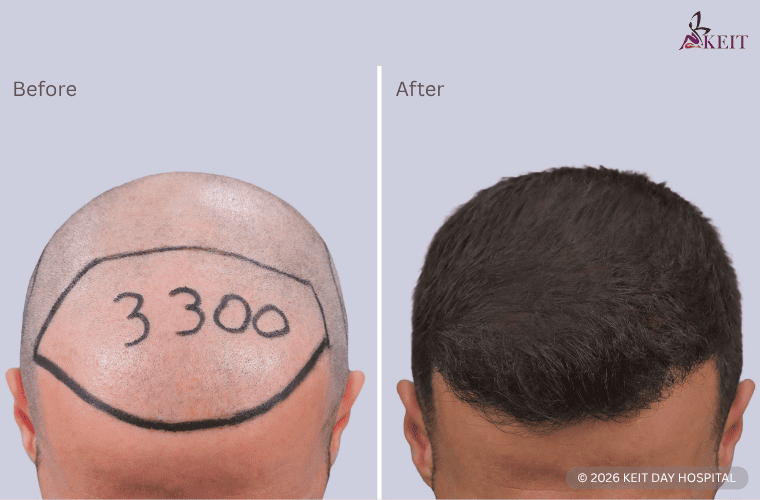
- Showing unrealistic or misleading before-and-after results.
Choosing a hair transplant clinic requires evaluating surgeon expertise, treatment planning, safety standards, and aftercare support rather than relying only on price.
How KEIT Day Hospital structures the hair transplant consultation process
At KEIT Day Hospital, we structure each hair transplant consultation around personalised assessment, treatment planning, and realistic expectations for each individual case. The consultation includes:
- Evaluation of hair loss pattern and progression.
- Assessment of donor area quality and graft availability.
- Planning of graft requirements and hairline design.
- Explanation of the Micro FUE technique and its role in achieving the planned outcome.
- Discussion of expected results, recovery, aftercare, and follow-up support.
The aim is to create an individualised treatment plan based on the patient’s anatomy, goals, and long-term hair restoration needs.