Published on:
 Modified on:

 Reading Time: 6 min

 Scientific Articles
Lipofilling (fat grafting) in cosmetic surgery is an autologous adipose tissue transfer technique widely used for volume restoration and the correction of tissue defects. PubMed meta-analytic evidence shows a low rate of major complications, with adverse events being predominantly local and variability in outcomes related to graft survival.
 Table of Contents:
-
1
 Evidence selection criteria and PubMed search strategy
-
2
Overall safety profile of lipofilling in cosmetic surgery
-
3
Local complications and biological variability of lipofilling
-
4
Brazilian Butt Lift (BBL): the highest-risk procedure
-
5
Breast lipofilling: oncological and clinical safety
-
6
Technical determinants of complications in lipofilling
-
7
Technical strategies for prevention and optimization of surgical safety
-
8
Clinical implications and practical considerations
-
9
Summary of the meta-analytic evidence and conclusions
-
10
Bibliography: The five PubMed-indexed meta-analyses considered
Evidence selection criteria and PubMed search strategy
A targeted PubMed search was conducted to identify only systematic reviews, meta-analyses and pooled analyses published between 2021 and 2025 relating to autologous lipofilling in cosmetic and reconstructive surgery. Studies reporting pooled rates of complications, local and systemic adverse events, data on the safety of breast lipofilling, evidence regarding the risk associated with Brazilian Butt Lift (BBL), and technical factors related to graft survival and the development of complications were included. The final body of evidence comprises five PubMed meta-analyses focused on overall safety, procedure-related complications and the technical variables influencing clinical outcomes.
Overall safety profile of lipofilling in cosmetic surgery
The available meta-analytic evidence indicates that autologous lipofilling has an overall favorable safety profile, with a low rate of major complications. The observed complications are predominantly local and related to the response of adipose tissue to transfer, including fat necrosis, oil cyst formation, contour irregularities, partial resorption of the grafted volume, as well as seroma, hematoma and rare local infections. Systemic complications are uncommon and, when reported, are more closely associated with technical aspects of the procedure (harvesting method, processing and, above all, the injection plane) than with the intrinsic properties of autologous adipose tissue.
Local complications and biological variability of lipofilling
The main limitation of lipofilling is not the safety of the procedure, but the biological variability of the achievable outcome. The available meta-analyses indicate that volumetric outcomes are not completely predictable and depend on a combination of biological and technical factors. In particular:
- Fat resorption is a physiological, expected and only partially predictable process;
- Graft survival is significantly influenced by the harvesting technique, adipose tissue processing and reinjection technique;
- Fat necrosis is the most frequently observed local complication;
- Tissues with lower vascularity are associated with greater volume loss over time.
In light of these findings, lipofilling should be considered a procedure with biologically variable outcomes rather than a technique capable of producing completely standardized results.
Brazilian Butt Lift (BBL): the highest-risk procedure
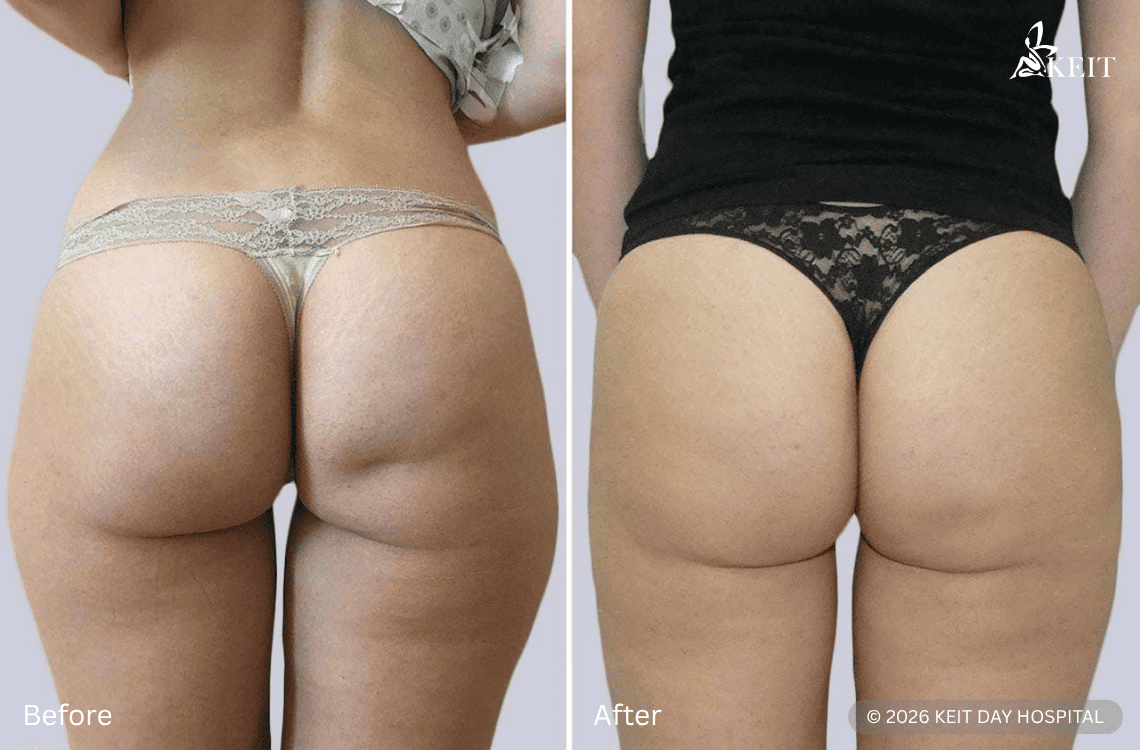
Gluteal lipofilling, or Brazilian Butt Lift (BBL), is the application of fat grafting that, according to the available meta-analyses, has the highest risk profile in cosmetic surgery. The most feared complication is pulmonary fat embolism, a rare but potentially fatal event that accounts for most of the serious clinical consequences associated with this procedure.
The evidence indicates that the risk increases particularly when specific technical factors coexist, including:
- Intramuscular injection or injection into unsafe deep planes;
- Transfer of large volumes of adipose tissue;
- Inadequate control of the anatomical plane during infiltration.
Overall, the literature consistently suggests that mortality associated with BBL is not related to autologous fat itself, but almost exclusively to the injection technique, particularly the depth and precision of the surgical plane.
Breast lipofilling: oncological and clinical safety
Meta-analyses on breast lipofilling indicate an overall favorable safety profile in both aesthetic and reconstructive settings. The available data do not show a significant increase in the risk of tumor recurrence among treated patients, while the rate of major complications remains low.
The evidence, however, reports several recurrent clinical and radiological findings, including:
- No significant increase in the risk of oncological recurrence;
- Low incidence of major complications;
- Relatively frequent occurrence of fat necrosis and post-treatment calcifications;
- Possible radiological changes that may mimic suspicious lesions during follow-up imaging.
Overall, the main clinical limitation of breast lipofilling does not concern oncological safety, but the correct radiological interpretation of the tissue changes induced by the procedure over time.

Technical determinants of complications in lipofilling
Meta-analytic evidence consistently indicates that the outcomes of lipofilling are determined primarily by technical variables rather than patient-related factors. In particular, the safety and predictability of the procedure depend on a set of closely interconnected surgical factors, including:
- The injection plane, which represents the most important determinant of the risk profile;
- The total volume of fat transferred;
- The techniques used for harvesting, processing and reinjecting adipose tissue;
- The anatomical site being treated;
- The degree of standardization of the surgical procedure.
Overall, the meta-analyses agree that the injection plane is the main factor associated with severe complications, particularly in higher-risk settings such as gluteal lipofilling.
Technical strategies for prevention and optimization of surgical safety
The prevention of complications in lipofilling is based almost exclusively on technical principles and the correct surgical execution of the procedure. The strategies supported by the literature include:
- Strict adherence to safe anatomical planes;
- Avoidance of intramuscular injection in the gluteal region;
- Use of blunt cannulas to reduce the risk of tissue and vascular injury;
- Distribution of fat in multiple small-volume deposits to improve graft survival;
- Standardization of adipose tissue harvesting and processing techniques;
- Adequate surgeon training and adherence to the learning curve.
Overall, the meta-analytic evidence does not support the use of pharmacological strategies for preventing complications, emphasizing that the safety of lipofilling depends primarily on surgical technique.
Clinical implications and practical considerations
Overall, lipofilling is a generally safe procedure, but its clinical reliability depends substantially on the surgical technique used. The available evidence suggests that:
- Major complications are rare and, in most cases, preventable through correct surgical technique;
- Brazilian Butt Lift represents the application with the highest risk profile within fat grafting;
- Breast lipofilling has a favorable oncological profile in both aesthetic and reconstructive settings;
- Variability in outcomes is primarily related to biological factors of the graft and the recipient tissue;
- Standardization of surgical techniques contributes significantly to reducing the overall risk and improving the predictability of outcomes.

Summary of the meta-analytic evidence and conclusions
Overall, the PubMed meta-analyses published between 2021 and 2025 converge on a favorable safety profile for lipofilling in cosmetic surgery. The available data indicate that:
- Lipofilling is associated with a low overall complication rate;
- Most adverse events are local and clinically non-severe;
- Systemic complications are rare and occur almost exclusively in Brazilian Butt Lift procedures;
- The risk profile is largely determined by technical aspects of the procedure;
- Breast lipofilling is considered oncologically safe according to the available evidence;
- Standardization of surgical techniques significantly improves both safety and the predictability of outcomes.
Bibliography: The five PubMed-indexed meta-analyses considered
Bechar J, Kidd T, Chu H, Hardwicke J. A Systematic Review of the Literature and Meta-Analysis of Autologous Fat Transfer: Fat Transfer Confers a 4.2% Incidence of Complications. Cureus. 2025 Nov 17. PMID: 41255499.
Sun Y, Li Q, Zhang H, et al. Optimal Strategies for Autologous Fat Grafting in Breast Augmentation and Reconstruction: Network Meta-Analysis. Plast Reconstr Surg. 2025. PMID: 39874946.
Elsaftawy A, Kattakayam P, Barner R, et al. Gluteal Augmentation with Fat Grafting: A Systematic Review. Aesthetic Surg J. 2023. PMID: 41051287.
Chaghamirzayi P, Abdi H, Karimi Rozveh J, et al. Fat Embolism Following Fat Grafting: A Systematic Review of Reported Cases. JPRAS Open. 2024/2025. PMID: 39650861.
Seth I, Sinno S, Murphy D, et al. Autologous Fat Grafting for Breast Augmentation: Systematic Review of Safety, Radiologic Findings and Complications. PubMed. 2024. PMID: 37166041.