Published on:

 Reading Time: 4 min
 Liposuction
A lower belly pooch is a protrusion of the lower abdomen, typically caused by excess subcutaneous fat, loose skin or abdominal muscle separation. It can develop regardless of body weight and is particularly common following pregnancy, weight fluctuations and age-related changes.
In this article, we explain what a lower belly pooch is, why it develops and how to distinguish between fat, loose skin and abdominal muscle separation. We also discuss when lower abdominal protrusion requires medical attention and which non-surgical and surgical treatments can help correct it.
What is a lower belly pooch?
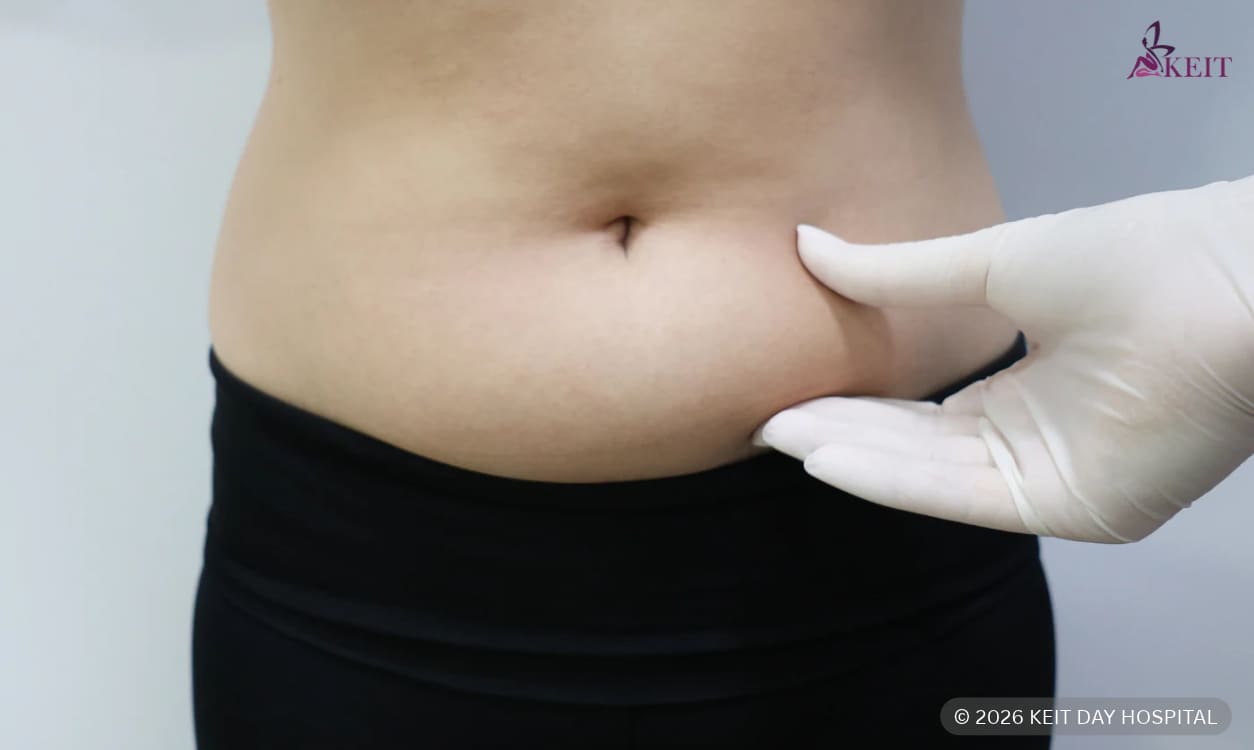
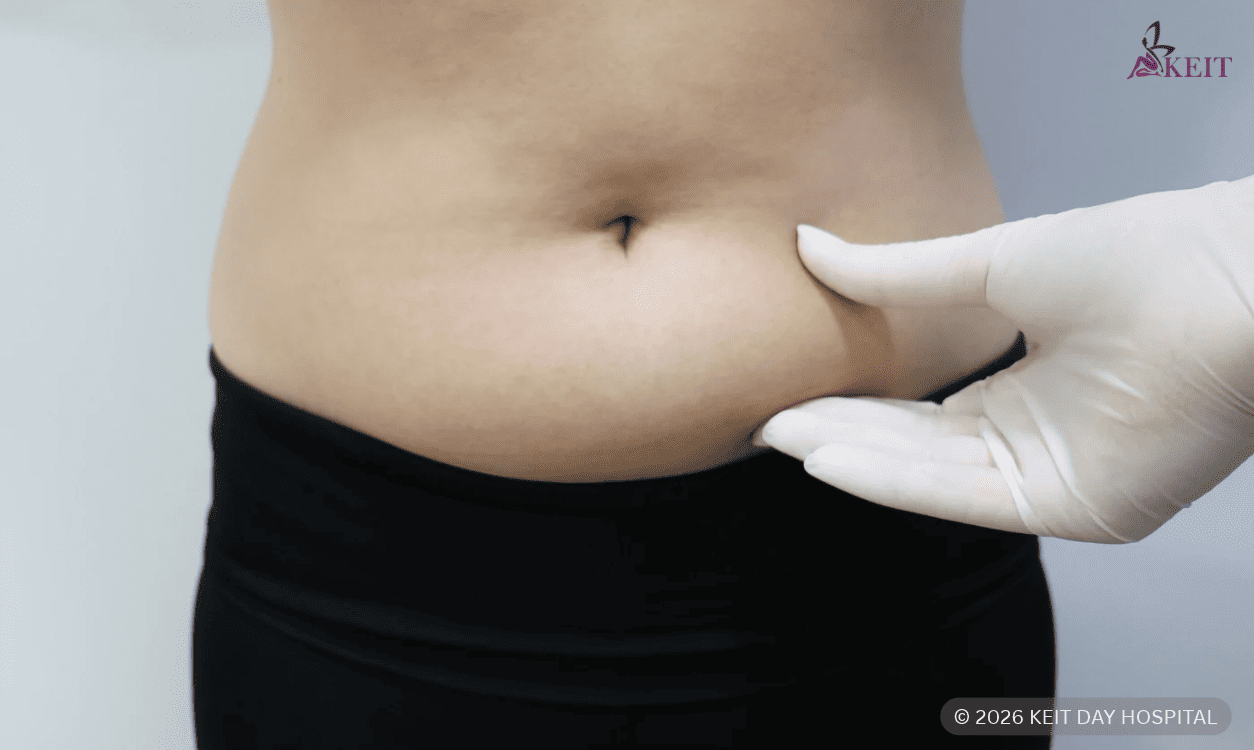
A lower belly pooch is a bulge in the lower abdomen that gives this area a rounded or fuller appearance. Depending on the underlying tissues, it may present as a smooth protrusion or a fold of skin and fat above the pubic area. Unlike general abdominal enlargement, a lower belly pooch is concentrated below the navel. It can be present even when the upper abdomen is relatively flat and the individual maintains a healthy body weight.
A certain degree of lower abdominal fullness is a normal anatomical variation, particularly in women, and does not necessarily require treatment.
What causes a lower belly pooch?
A lower belly pooch can result from excess abdominal fat, reduced skin elasticity, changes in the abdominal wall or abdominal bloating.
The main contributing factors include:
- Localised fat accumulation: excess subcutaneous fat in the lower abdomen.
- Genetic predisposition: inherited patterns of body fat distribution.
- Hormonal changes: changes in hormone levels, particularly during menopause, that favour abdominal fat accumulation.
- Pregnancy and childbirth: stretching of the abdominal skin, muscles and connective tissues during pregnancy.
- Diastasis recti: separation of the abdominal muscles due to stretching of the connective tissue between them.
- Skin laxity: loss of skin elasticity following pregnancy, significant weight loss or ageing.
- Abdominal bloating: abdominal distension caused by gas accumulation, constipation or other digestive conditions.
A lower belly pooch may result from a combination of these factors, particularly after pregnancy or significant weight loss.
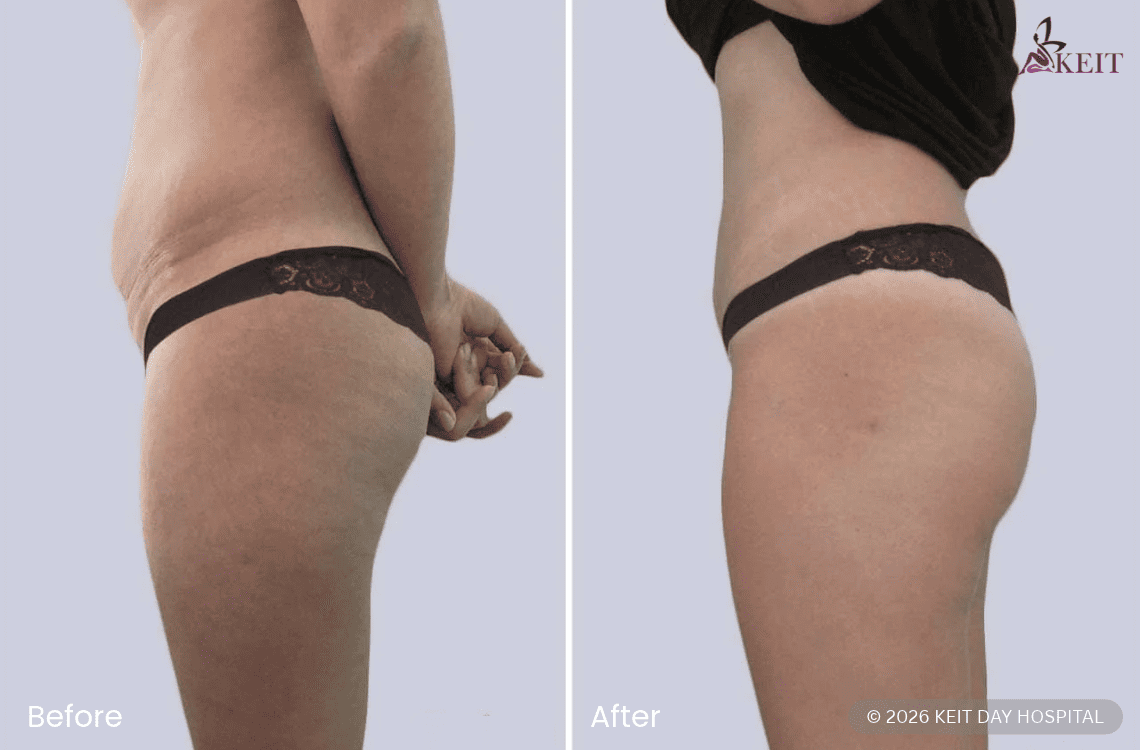
How to tell if your lower belly pooch is fat, loose skin or muscle separation
The underlying cause of a lower belly pooch can often be identified by assessing the appearance, texture and behaviour of the abdominal tissues.
| Cause | Main characteristics |
|---|---|
| Subcutaneous fat | Soft, pinchable tissue beneath the abdominal skin. |
| Visceral fat | More generalised abdominal protrusion caused by fat accumulation around the internal organs. |
| Loose skin | Sagging, wrinkled or folded skin, particularly when bending forward. |
| Diastasis recti | A midline bulge that becomes more pronounced during abdominal muscle contraction. |
Unlike these structural changes, lower belly bloating may fluctuate throughout the day, particularly after meals.
A clinical examination is essential to accurately determine the cause of lower abdominal protrusion, assess the condition of the abdominal tissues and establish the most appropriate treatment approach.
When is a lower belly pooch a medical concern?
A lower belly pooch may indicate an underlying medical condition if it develops suddenly, increases in size or is accompanied by other symptoms.
Signs that require medical evaluation include:
- Sudden or progressive enlargement of the lower abdomen.
- Persistent abdominal pain, pressure or a feeling of heaviness in the lower abdomen.
- A newly developed, hard or localised abdominal bulge.
- Persistent abdominal bloating or changes in bowel habits.
- Abnormal vaginal bleeding or persistent pelvic discomfort.
These symptoms may be associated with abdominal hernias, gastrointestinal disorders or gynaecological conditions rather than excess fat or loose skin.
Sudden, severe abdominal pain, particularly when accompanied by vomiting or a painful, firm abdominal bulge, requires urgent medical attention.

How to get rid of a lower belly pooch without surgery
A lower belly pooch may be reduced without surgery through dietary adjustments, regular physical activity, targeted physiotherapy or treatment of underlying digestive conditions.
The main non-surgical approaches include:
- Weight management: a balanced diet and a moderate calorie deficit, when appropriate, can help reduce overall body fat, including abdominal fat.
- Regular exercise: a combination of aerobic exercise and resistance training helps reduce body fat and strengthen the abdominal muscles.
- Abdominal physiotherapy: targeted exercises can improve abdominal muscle function and may reduce muscle separation in patients with diastasis recti.
- Treatment of digestive conditions: dietary adjustments and appropriate medical treatment can help reduce lower abdominal bloating caused by constipation or other gastrointestinal disorders.
While abdominal exercises can strengthen the core muscles, they cannot selectively reduce lower belly fat. Significant excess skin and persistent abdominal muscle separation may require surgical correction if non-surgical measures are insufficient.
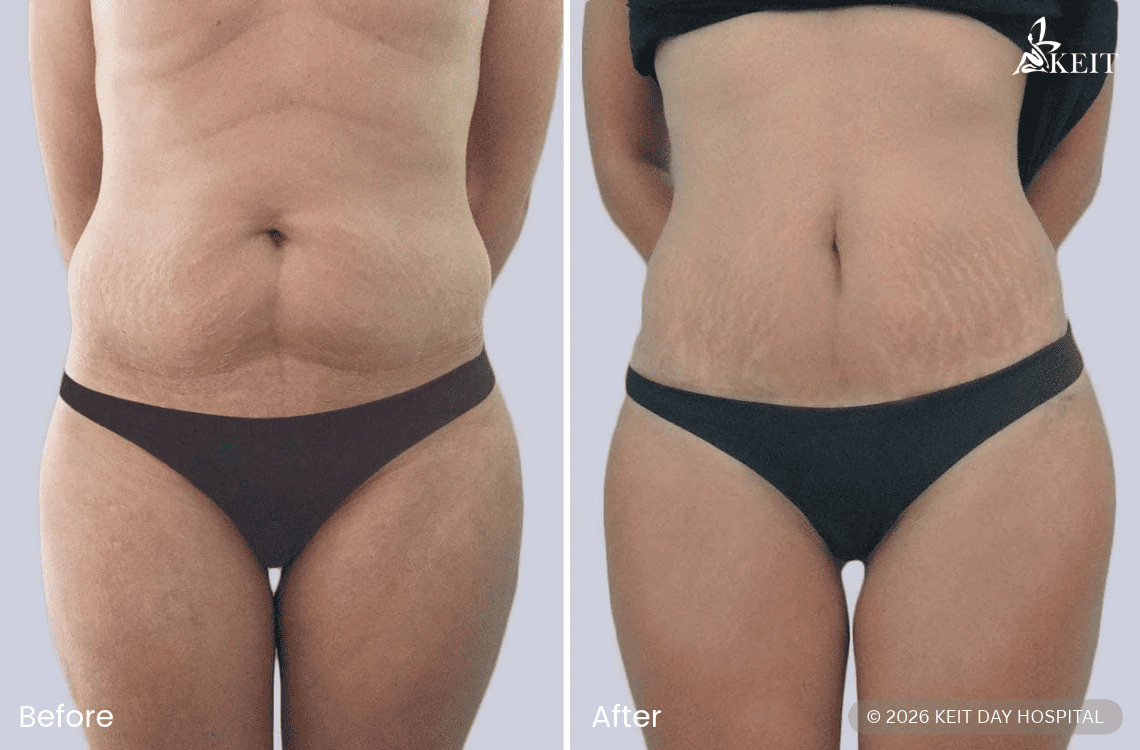
Surgical treatments for correcting a lower belly pooch
Surgery may be recommended when a lower belly pooch is caused by persistent fat deposits, excess skin or abdominal muscle separation.
The main surgical options include:
- Liposuction: removes localised fat deposits beneath the skin of the lower abdomen. It is suitable for patients with good skin elasticity.
- Mini tummy tuck: corrects mild to moderate skin laxity below the navel and allows tightening of the lower abdominal wall when necessary.
- Full tummy tuck (abdominoplasty): addresses more extensive excess skin and fat and allows repair of abdominal muscle separation (diastasis recti).
- Lipo-abdominoplasty: combines liposuction and abdominoplasty to remove excess fat and skin while correcting abdominal wall laxity when indicated.
The choice of surgical procedure is based on a thorough clinical assessment of fat distribution, skin elasticity, abdominal muscle separation and the patient's general health.