Published on:

 Reading Time: 4 min
 Liposuction
Body contouring with liposuction is a surgical procedure that removes localised fat deposits to improve the shape and proportions of specific areas of the body. It is suitable for patients with stubborn fat and good skin elasticity, but it does not remove significant loose skin or serve as a weight-loss treatment.
 Table of Contents:
-
1
 What is body contouring with liposuction?
-
2
Who is suitable for body contouring with liposuction?
-
3
Which areas can be treated with liposuction?
-
4
What can body contouring with liposuction correct?
-
5
How is liposuction performed for body contouring?
-
6
Liposuction for body contouring vs. non-surgical body contouring
-
7
When is liposuction combined with skin removal surgery?
-
8
Body contouring with liposuction: recovery and healing
This article explains what body contouring with liposuction involves, who may be suitable, which areas can be treated, and what liposuction can correct. It also covers how the procedure is performed, surgical and non-surgical body contouring, when skin removal surgery may be needed, and what to expect during recovery.
What is body contouring with liposuction?
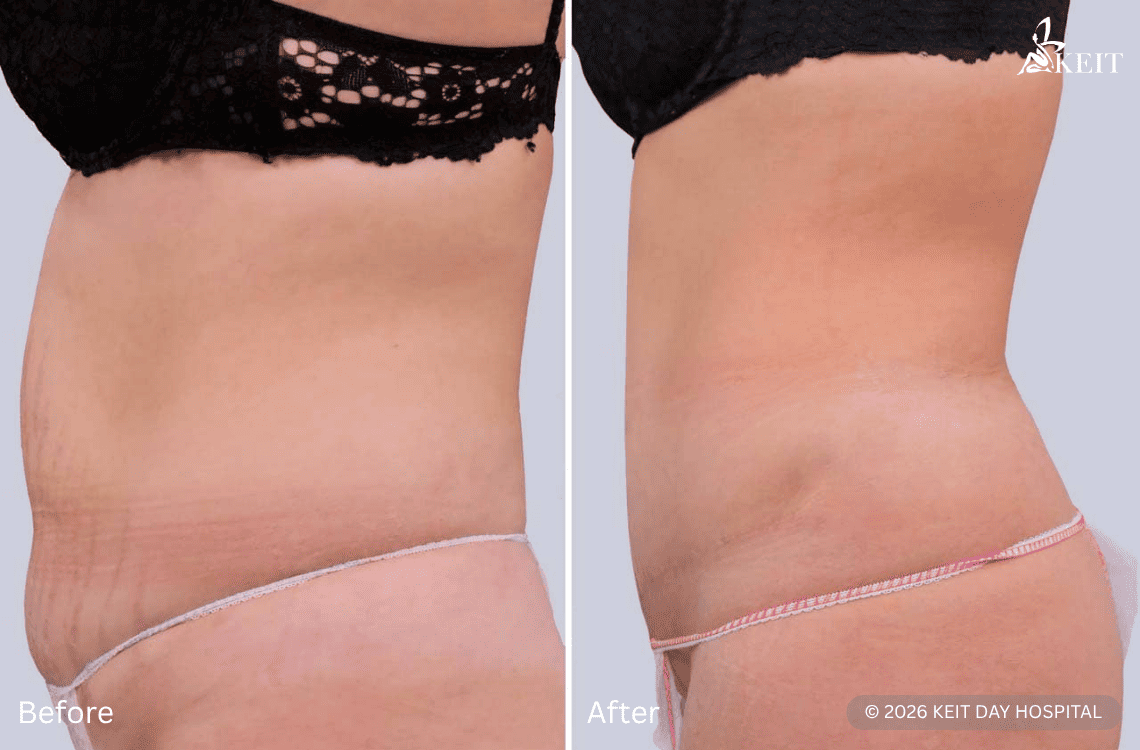
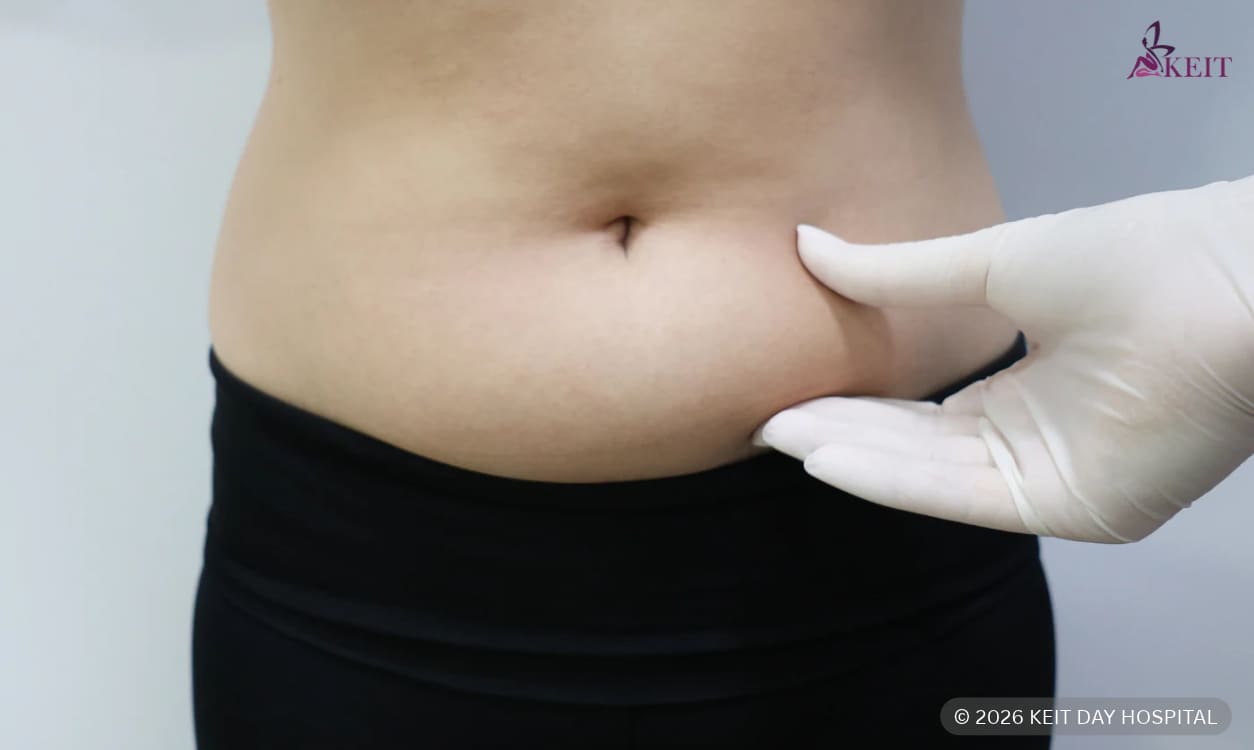
Body contouring with liposuction is a surgical procedure that removes localised fat deposits to improve body shape and proportions. Liposuction targets areas of excess fat that have not responded adequately to diet and exercise, while the overlying skin remains in place. Unlike body contouring procedures that involve skin removal, liposuction primarily addresses excess fat.
Who is suitable for body contouring with liposuction?
Liposuction is most suitable for healthy adults with localised fat deposits and sufficient skin elasticity to adapt after fat removal. Suitable patients generally have:
- Localised fat deposits: Areas of excess fat that persist despite a healthy diet and regular physical activity.
- Good skin elasticity: Adequate skin elasticity to allow the skin to contract after fat removal.
- Stable weight: A relatively stable body weight before surgery.
- Good general health: No medical conditions that would significantly increase the risks of surgery or impair healing.
- Realistic expectations: An understanding that liposuction is a body-contouring procedure, not a treatment for obesity or a substitute for weight loss.
Which areas can be treated with liposuction?
Liposuction can be used to remove localised fat deposits from several areas of the body, depending on the patient’s anatomy and treatment plan. Common treatment areas include:
- abdomen and waist;
- hips and flanks;
- thighs;
- buttocks;
- back;
- upper arms;
- inner knees;
- calves and ankles;
- chin and neck;
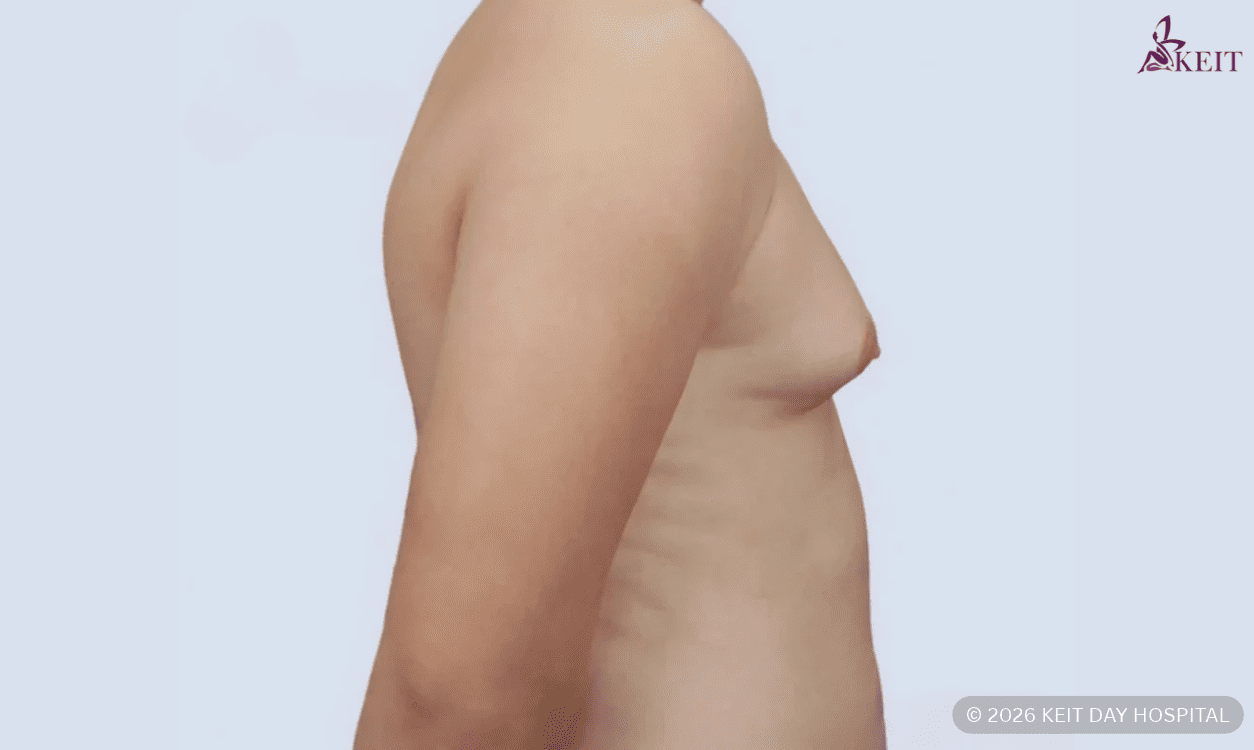
- chest.
Several areas may be treated during the same procedure when appropriate for the patient and considered safe based on the overall treatment plan.
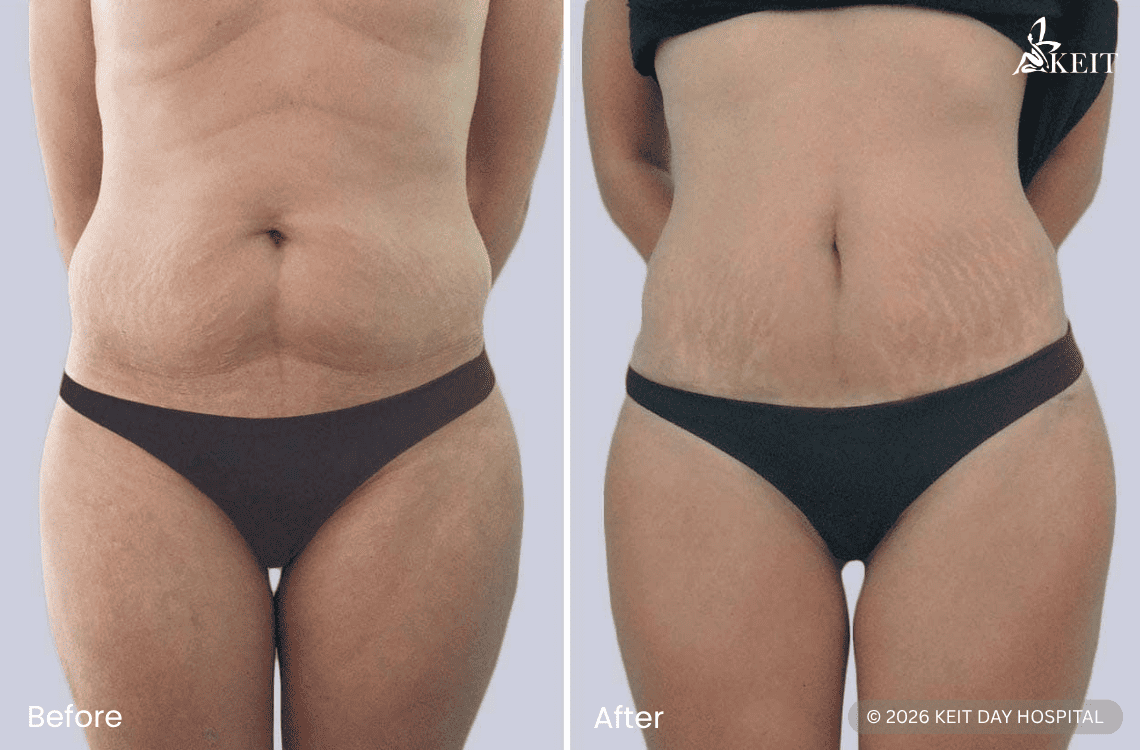
What can body contouring with liposuction correct?
Body contouring with liposuction can correct specific contour irregularities caused by localised fat accumulation, including:
- Disproportionate fullness: Reduces isolated fat deposits that make one area appear out of proportion with the surrounding body.
- Uneven contours: Improves irregular transitions between adjacent areas, such as the waist and hips or the abdomen and flanks.
- Persistent fat pockets: Targets fat deposits that remain despite maintaining a stable weight and healthy lifestyle.
- Lack of definition: Can improve the definition of naturally contoured areas by selectively reducing excess fat.

How is liposuction performed for body contouring?
Liposuction is performed through small incisions using a cannula to loosen and remove targeted fat deposits. The surgeon first marks the areas to be treated and injects a solution into the tissues to help reduce bleeding and facilitate fat removal. The cannula is then passed through the treatment areas to remove fat and refine the contour.
The technique and amount of fat removed are tailored to the patient’s anatomy and the areas being treated. Liposuction may be performed alone or combined with procedures such as a tummy tuck when both excess fat and loose skin need to be addressed.
Liposuction for body contouring vs. non-surgical body contouring
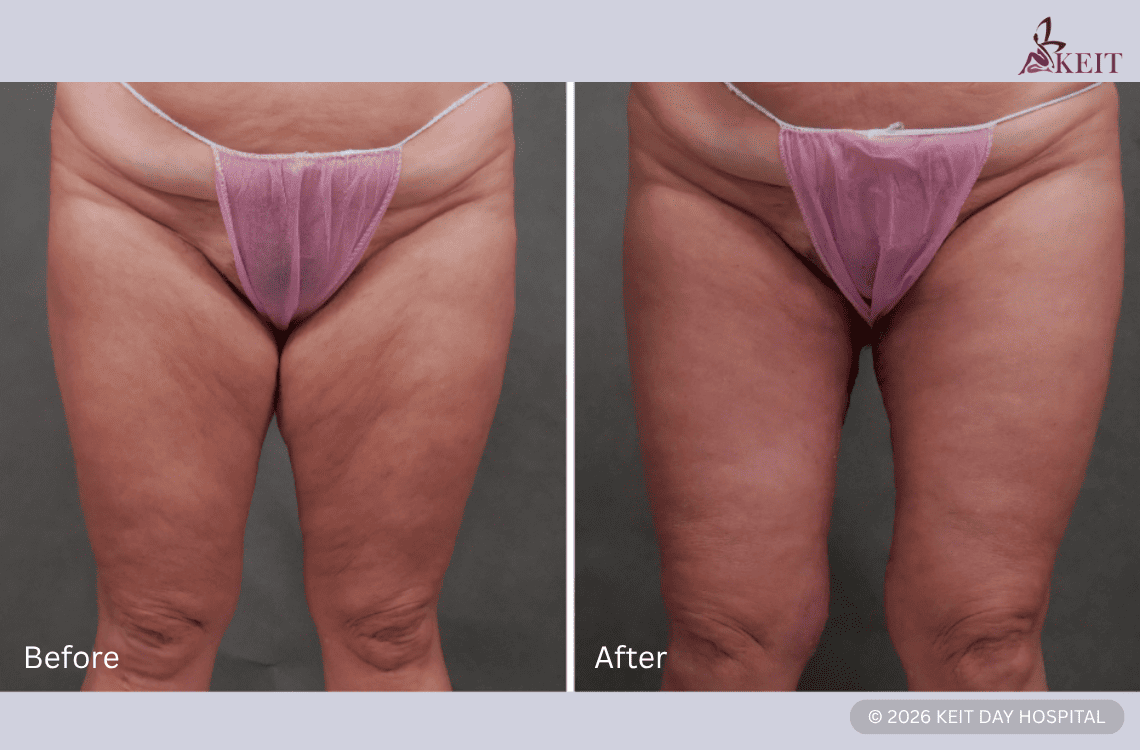
Liposuction is a surgical fat-removal procedure, whereas non-surgical body contouring uses external devices or energy-based treatments to reduce or reshape targeted areas without surgery. Liposuction physically removes fat and provides a more direct contouring effect, while non-surgical treatments may produce more limited fat reduction and often require multiple sessions. Neither approach is intended as a substitute for weight loss, and neither reliably corrects significant excess skin.
When is liposuction combined with skin removal surgery?
Liposuction may be combined with skin removal surgery when a patient has both localised excess fat and significant skin laxity. Liposuction can refine the underlying contour, while procedures such as a tummy tuck, thigh lift, arm lift or lower body lift remove excess skin and tighten the treated area.
The combination is considered according to the patient’s skin quality, fat distribution, degree of laxity and overall surgical plan. Liposuction alone is generally insufficient when significant loose skin is present.
Body contouring with liposuction: recovery and healing
Recovery after liposuction typically takes 2–6 weeks, while swelling and tissue remodelling continue for several months.
- First few days: Swelling, bruising and discomfort are expected. Gentle walking is encouraged.
- 1–2 weeks: Most patients can return to light daily activities, although strenuous exercise and heavy lifting remain restricted.
- 3–4 weeks: Light exercise can usually be resumed progressively if healing is satisfactory and the surgeon approves.
- 6 weeks: Most patients can gradually return to unrestricted physical activity, depending on the extent of treatment and individual recovery.
- 3–6 months: Residual swelling continues to settle, and the final body contour becomes increasingly apparent.