Published on:

 Reading Time: 4 min
 Liposuction
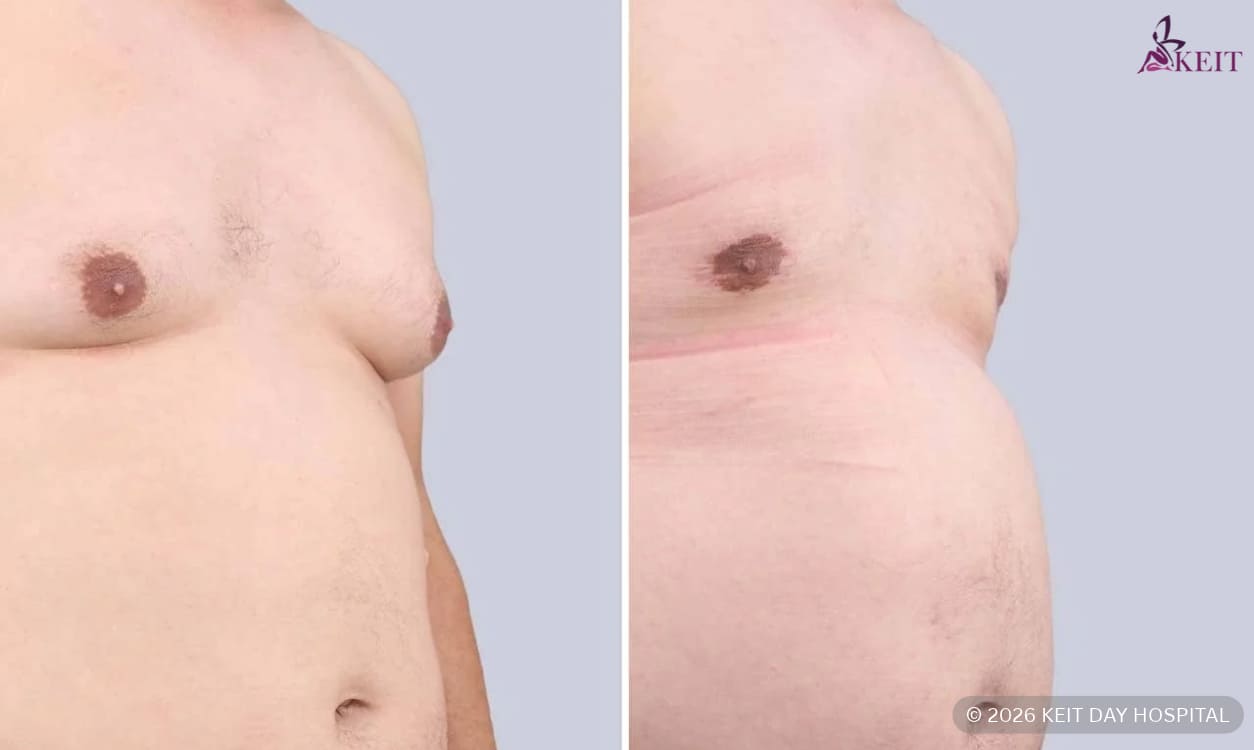
Pseudogynecomastia is an enlargement of the male chest caused by excess fatty tissue rather than increased breast glandular tissue. Also known as lipomastia, it is commonly associated with excess body fat and may improve with weight loss. When localized chest fat persists, liposuction may be considered after specialist evaluation.
 Table of Contents:
-
1
 What is pseudogynecomastia?
-
2
What causes pseudogynecomastia?
-
3
What is the difference between pseudogynecomastia and gynecomastia?
-
4
What are the symptoms of pseudogynecomastia?
-
5
How is pseudogynecomastia diagnosed?
-
6
Can pseudogynecomastia go away with weight loss or exercise?
-
7
What treatment options are available for pseudogynecomastia?
-
8
When is liposuction used to treat pseudogynecomastia?
-
9
When should you see a specialist for enlarged male breasts?
In this article, we explain what causes pseudogynecomastia, how it differs from true gynecomastia, and how to recognize its symptoms. We also discuss diagnosis, the effects of weight loss and exercise, available treatment options, when liposuction may be appropriate, and when to seek specialist assessment.
What is pseudogynecomastia?
Pseudogynecomastia is the accumulation of excess fat in the male breast area without abnormal enlargement of the glandular breast tissue. The condition causes the chest to appear fuller or more breast-like. It may affect one or both sides and is commonly associated with increased body fat.
Unlike true gynecomastia, pseudogynecomastia does not involve excessive growth of breast glandular tissue. However, fatty and glandular enlargement can occur together, making clinical evaluation important.
What causes pseudogynecomastia?
Pseudogynecomastia is primarily caused by excess fat accumulating in the chest area, most commonly in association with weight gain or increased overall body fat. The main contributing factors include:
- Weight gain and obesity: Increased body fat can lead to greater fat accumulation in the chest.
- Changes in body composition: Ageing and changes in fat distribution can alter the appearance of the male chest.
- Reduced physical activity: Lower levels of activity can contribute to increased overall body fat.
- Weight fluctuations: Repeated weight gain and loss may affect the amount and distribution of chest fat.
What is the difference between pseudogynecomastia and gynecomastia?
Pseudogynecomastia is caused by excess fatty tissue in the male chest, while gynecomastia involves enlargement of glandular breast tissue. Although both conditions cause male breast enlargement, they differ in their underlying tissue characteristics and clinical presentation.
| Feature | Pseudogynecomastia | Gynecomastia |
|---|---|---|
| Tissue involved | Excess fatty tissue | Enlarged glandular breast tissue |
| Appearance | Usually diffuse chest fullness | Often more prominent beneath the nipple and areola |
| Texture | Typically soft | May feel firm or rubbery beneath the areola |
| Tenderness | Usually painless | May cause tenderness or sensitivity |
| Underlying cause | Fat accumulation | Glandular growth, sometimes associated with hormonal changes |
Both conditions can occur together. A medical examination is necessary to distinguish them and determine the appropriate treatment.
What are the symptoms of pseudogynecomastia?
The main symptom of pseudogynecomastia is visible enlargement of the male chest caused by excess fatty tissue. Common signs include:
- increased fullness or size of the chest;
- soft fatty tissue beneath the skin;
- enlargement affecting one or both sides;
- reduced definition of the chest;
- increased chest fullness associated with overall weight gain.
Pseudogynecomastia is usually painless. A distinct hard lump, persistent pain, nipple discharge, or changes in the overlying skin are not typical features and require medical evaluation.
How is pseudogynecomastia diagnosed?
Pseudogynecomastia is diagnosed through a medical history and physical examination to determine whether the enlargement is caused by fat, glandular tissue or another condition. During the assessment, a specialist may evaluate:
- the distribution and consistency of the chest tissue;
- whether the enlargement is unilateral or bilateral;
- the presence of a firm area beneath the nipple;
- changes in the nipple or overlying skin;
- relevant medical conditions, medications and changes in body weight.
Imaging, such as ultrasound, may be recommended when the physical examination does not clearly establish the cause of the enlargement or when a suspicious finding requires further investigation.

Can pseudogynecomastia go away with weight loss or exercise?
Yes, pseudogynecomastia can improve with weight loss, as reducing overall body fat may also decrease fat accumulation in the chest. A balanced diet and regular exercise can help reduce body fat. However, chest exercises such as push-ups and weight training strengthen the pectoral muscles but cannot specifically target chest fat.
If chest fullness persists despite weight loss, residual fatty tissue or excess skin may be responsible. A specialist can assess whether further treatment is appropriate.
What treatment options are available for pseudogynecomastia?
Pseudogynecomastia can be treated through weight management or surgery, depending on the amount of excess chest fat and skin elasticity. The main treatment options include:
- Weight management: A balanced diet and regular physical activity can help reduce overall body fat, including fat in the chest area.
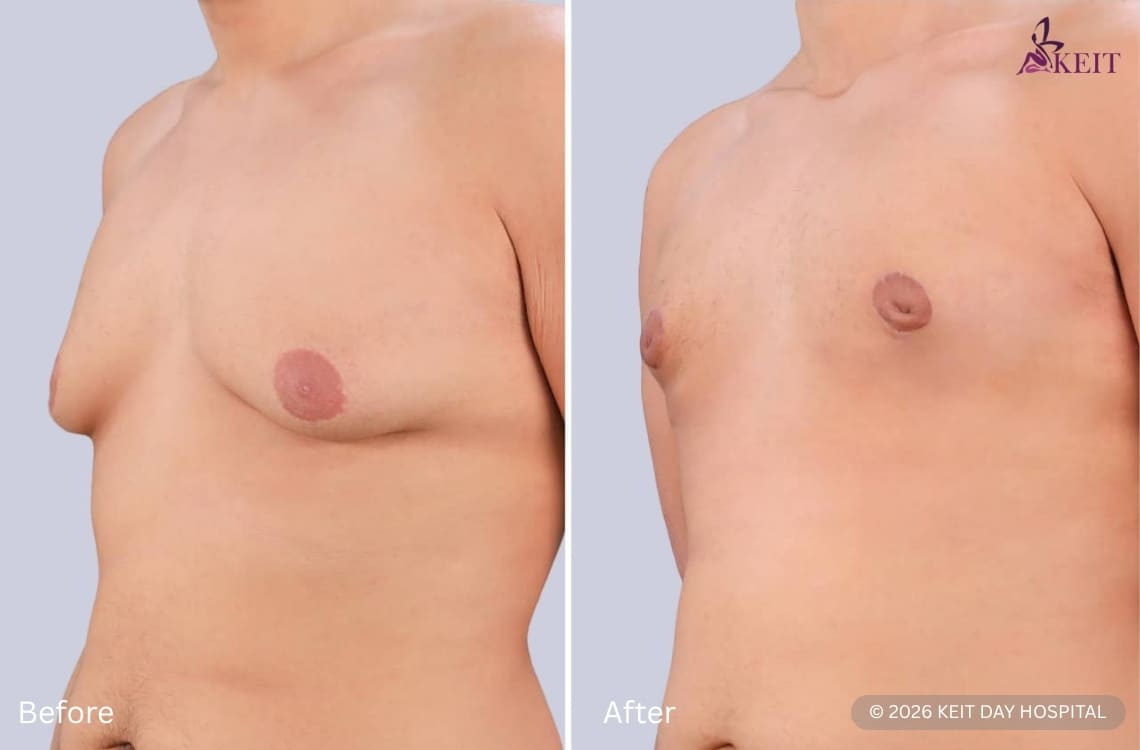
- Liposuction: Removes localized chest fat that persists despite weight loss, helping create a flatter, more defined chest contour.
- Excess skin removal: May be necessary when significant loose skin remains, particularly after substantial weight loss.
When is liposuction used to treat pseudogynecomastia?
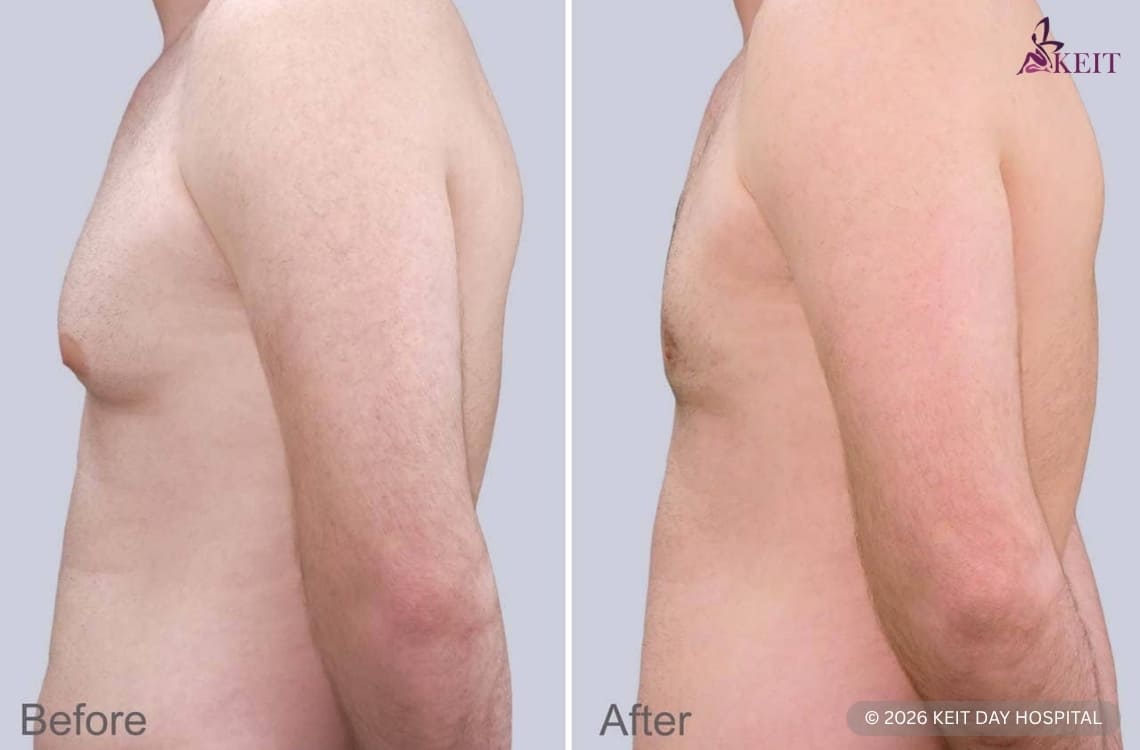
Liposuction may be used when persistent excess fatty tissue is the main cause of chest enlargement and does not improve sufficiently with weight loss. The procedure removes localised fat through small incisions using a thin cannula, allowing the chest to be reduced and reshaped while preserving a natural contour.
Liposuction is particularly appropriate when the skin has sufficient elasticity to contract after fat removal. If there is substantial glandular tissue or significant excess skin, liposuction alone may not provide the desired result and another surgical approach may be required.
When should you see a specialist for enlarged male breasts?
You should see a specialist if male breast enlargement is new, persistent, rapidly increasing or associated with a firm lump, nipple changes or other unusual symptoms. Medical assessment is particularly important if you notice:
- a firm or hard lump, especially if it is mainly on one side;
- nipple discharge or bleeding;
- nipple inversion or other new nipple changes;
- skin dimpling, ulceration or other skin changes;
- swelling in the armpit;
- rapid or unexplained enlargement;
- persistent or unexplained breast pain.
These features do not necessarily indicate a serious condition, but they should be assessed rather than assumed to be pseudogynecomastia.