Published on:
 Modified on:

 Reading Time: 6 min
 Aesthetic Treatments
A non-surgical facelift is a cosmetic treatment approach that improves mild to moderate facial ageing without surgical incisions. It can help restore volume, tighten skin, improve jawline definition, soften early jowls, and refresh facial contours using treatments such as dermal fillers, thread lifts, skin tightening devices, or combination therapy.
 Table of Contents:
-
1
 What is a non-surgical facelift and how does it work?
-
2
Who is a good candidate for a non-surgical facelift?
-
3
What areas can a non-surgical facelift treat?
-
4
Non-surgical facelift: The main treatment options
-
5
Non-surgical facelift recovery and downtime
-
6
Non-surgical facelift before and after: what results can you realistically expect
-
7
Non-surgical facelift vs surgical facelift: which option is more suitable?
-
8
Non-surgical facelift cost in the UK: what affects the final price?
-
9
How to choose the right non-surgical facelift treatment
In this guide, we explain how a non-surgical facelift works, who is a suitable candidate, which facial areas can be treated, and the main treatment options. We also cover recovery, before and after results, non-surgical vs surgical facelift differences, UK cost and how to choose the right approach.
What is a non-surgical facelift and how does it work?
A non-surgical facelift is a cosmetic facial treatment that creates a lifting and rejuvenating effect without surgery. Instead of surgically repositioning facial tissues, a non-surgical face lift uses injectable treatments, threads, or energy-based devices to support the skin, improve firmness, and enhance facial structure.
It works by targeting the main causes of facial ageing:
- Volume loss: Dermal fillers restore support in areas such as the cheeks, temples, or jawline.
- Mild tissue descent: Threads can provide subtle lifting in selected areas.
- Skin laxity: Energy-based treatments stimulate collagen to improve firmness over time.
- Facial contour: Combination treatments can improve definition in the lower face and jawline.
Who is a good candidate for a non-surgical facelift?
A good candidate for a non-surgical facelift has early to moderate facial ageing, with enough skin quality to respond to lifting, tightening, or volumising treatments. It may be suitable for patients with:
- Early jowls: Mild softening along the jawline without severe skin excess.
- Lower-face laxity: Mild looseness in the cheeks, jawline, or upper neck.
- Volume loss: Reduced cheek, temple, or mid-face support.
- Loss of facial definition: A less defined jawline or flatter facial contour.
- Good skin quality: Skin that can respond to collagen-stimulating or tightening treatments.
- Realistic expectations: Understanding that results are subtle to moderate, not equivalent to surgery.
It may not be suitable for severe sagging, advanced jowls, heavy neck laxity, or significant excess skin. In these cases, a surgical facelift may provide more predictable correction.

What areas can a non-surgical facelift treat?
A non-surgical facelift can treat several areas of the face where ageing causes volume loss, laxity, or reduced definition. Common treatment areas include:
- Cheeks: Restores mid-face support and improves facial contour.
- Jawline: Improves definition and softens early jowling.
- Lower face: Supports mild sagging around the mouth, chin, and jawline.
- Neck: May improve mild looseness or crepey skin with tightening treatments.
- Temples: Restores volume loss that can affect upper-face balance.
- Nasolabial folds and marionette lines: Softens folds when they are partly caused by volume loss or tissue descent.
- Brow and eye area: Selected treatments may provide subtle lifting or skin tightening.
Non-surgical facelift: The main treatment options
A non-surgical facelift can involve different treatments depending on whether the main concern is volume loss, mild skin laxity, reduced collagen support, or early jowling. The main treatment options include:
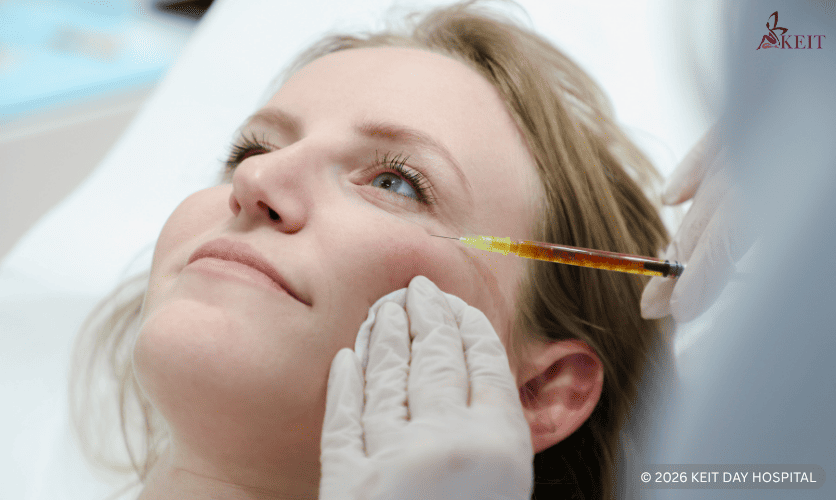
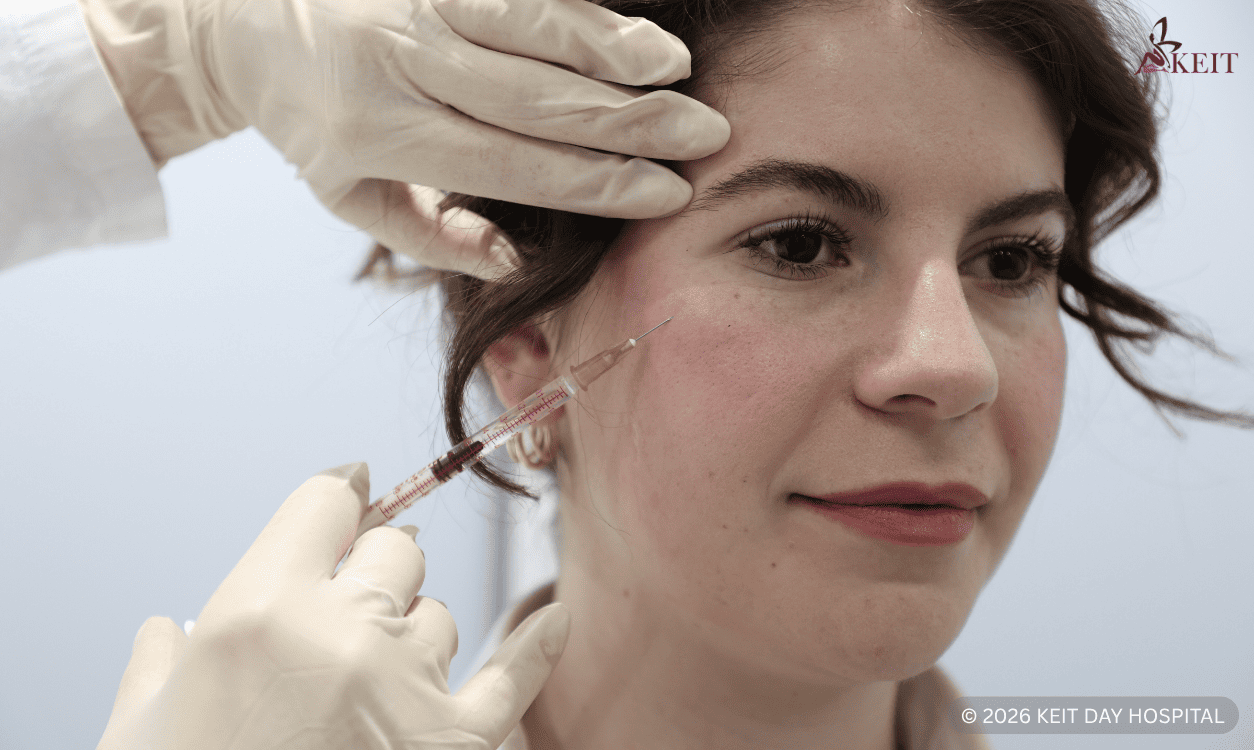
- Dermal filler facelift: Used to restore lost volume and support areas such as the cheeks, temples, jawline, and lower face.
- Thread lift: Uses dissolvable threads to provide a mild lifting effect in selected patients with early tissue descent or lower-face laxity.
- Skin tightening treatments: Radiofrequency, ultrasound, or laser-based treatments can stimulate collagen and improve mild skin looseness over time.
- Biostimulatory injectables: Collagen-stimulating treatments can improve skin firmness and support gradually.
- Botox lift: Botulinum toxin can create subtle lifting in selected areas by relaxing muscles that pull downward, but it does not replace structural lifting.
Non-surgical facelift recovery and downtime
Recovery after a non-surgical facelift depends on the treatment used, but downtime is usually shorter than facelift surgery. Typical recovery may include:
- Dermal fillers: Mild swelling, tenderness, or bruising can last 2–7 days. Most patients return to normal activities the same day.
- Thread lift: Tightness, tenderness, swelling, or bruising may last 1–2 weeks. Strenuous exercise and facial pressure are usually avoided during early healing.
- Skin tightening treatments: Redness, warmth, or sensitivity usually settles within a few hours to 2 days, depending on the device used.
- Laser or energy-based treatments: Redness, swelling, or peeling may occur; downtime can range from 1–7 days, depending on treatment depth and skin response.
- Combination treatments: Recovery may take longer when fillers, threads, or skin tightening are performed together.
Non-surgical facelift before and after: what results can you realistically expect
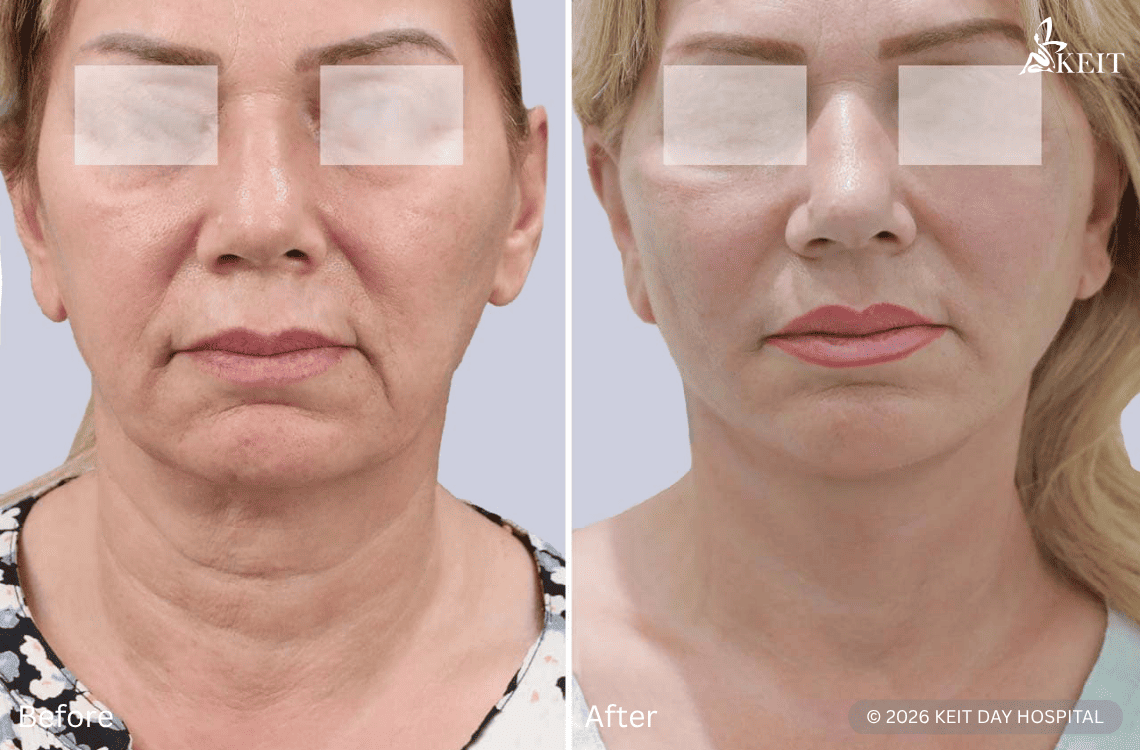
Non-surgical facelift before and after results show subtle to moderate improvement in facial definition, volume balance, and early skin laxity. Depending on the treatment used, patients may notice a more defined jawline, softer early jowls, improved cheek support, smoother lower-face contours, and mild neck tightening.
Results are not equivalent to surgery because non-surgical treatments do not remove excess skin or reposition deeper tissues. Longevity depends on the method used: fillers may last months to over a year, threads often last 12–18 months, and collagen-stimulating treatments improve gradually.
Non-surgical facelift vs surgical facelift: which option is more suitable?
A non-surgical facelift is usually more suitable for patients with mild to moderate facial ageing who want improvement without incisions, skin removal, or a long recovery period. It can improve facial definition, volume loss, fine lines, and early sagging, but the results are more subtle and usually require maintenance.
A surgical facelift is usually more suitable when there is advanced skin laxity, deeper jowls, loose neck skin, or significant tissue descent. It provides a stronger and longer-lasting correction because the deeper facial tissues are repositioned and excess skin can be removed.
The right option depends on the degree of ageing, skin quality, facial anatomy, downtime tolerance, and expected result.
Non-surgical facelift cost in the UK: what affects the final price?
Non-surgical facelift cost in the UK varies depending on the treatment used, the areas treated, and the level of correction needed. Typical prices may range from 1,200–2,400+ euro for filler-based lifting, 700–2,400 euro per area for thread lifts, and 500–3,000+ euro for energy-based skin tightening. The final price depends on:
- Treatment type: Fillers, threads, HIFU, radiofrequency, laser, or combined treatment.
- Treatment area: Lower face, jawline, cheeks, neck, or full face.
- Product or device used: Premium fillers or advanced tightening devices may cost more.
- Practitioner expertise: Experienced medical practitioners usually charge higher fees.
- Clinic location: London prices are often higher than regional UK clinics.
- Number of sessions: Some tightening treatments require more than one session.
How to choose the right non-surgical facelift treatment
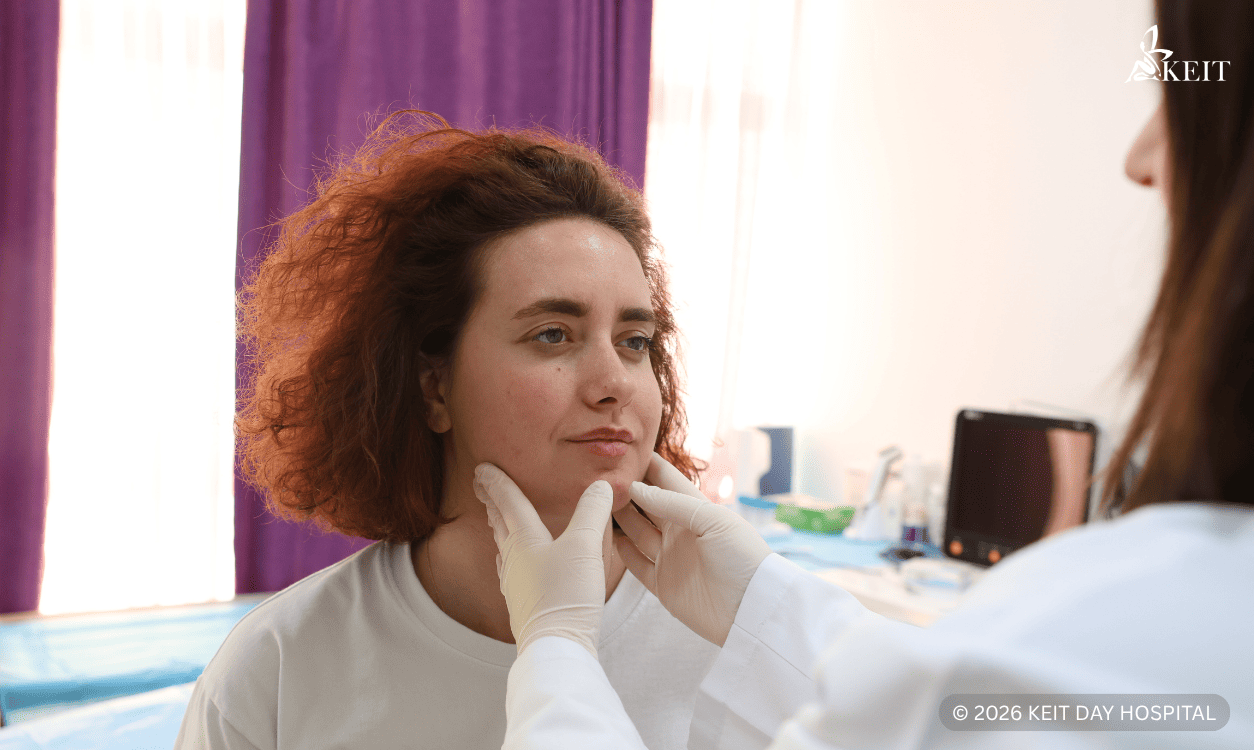
The right treatment should be chosen after a full facial assessment, not based on one trend or device. A safe treatment plan should consider:
- Cause of ageing changes: Volume loss, skin laxity, muscle activity, or all three.
- Facial anatomy: Cheek support, jawline definition, skin thickness, and neck laxity.
- Treatment suitability: Fillers, threads, or skin tightening are not suitable for every patient.
- Practitioner qualifications: Choose a qualified medical practitioner experienced in facial anatomy.
- Before and after results: Photos should show natural improvement, not overfilling or distortion.
- Complication management: The clinic should be able to manage filler complications, thread issues, swelling, asymmetry, or unexpected results.
- Transparent pricing: The quote should explain treatment areas, product amount, sessions, aftercare, and possible maintenance.