Published on:
 Modified on:

 Reading Time: 4 min
 Aesthetic Treatments
Postpartum hair loss is a temporary increase in hair shedding after childbirth, usually caused by hormonal changes that shift more hair follicles into the shedding phase. It often starts 2–4 months postpartum, improves gradually within 6–12 months, and usually regrows without permanent hair loss.
 Table of Contents:
-
1
 Postpartum hair loss: what is it and why does it happen?
-
2
When does postpartum hair loss start?
-
3
How long does postpartum hair loss last?
-
4
Postpartum hair loss treatment: what can help?
-
5
Postpartum hair loss products, vitamins and shampoos: are they effective?
-
6
Postpartum hair regrowth timeline: when does hair grow back?
-
7
Severe postpartum hair loss: when should you see a specialist?
In this guide, we explain why postpartum hair loss happens, when it starts, how long it lasts, and what treatments may help. Then we cover whether vitamins and shampoos are effective, when regrowth begins, and when severe shedding should be assessed by a specialist.
Postpartum hair loss: what is it and why does it happen?
Postpartum hair loss is a temporary increase in hair shedding after childbirth, caused by hormonal changes that affect the normal hair growth cycle. Medically, it is a form of telogen effluvium, a condition in which a larger number of hair follicles enter the resting and shedding phase simultaneously.
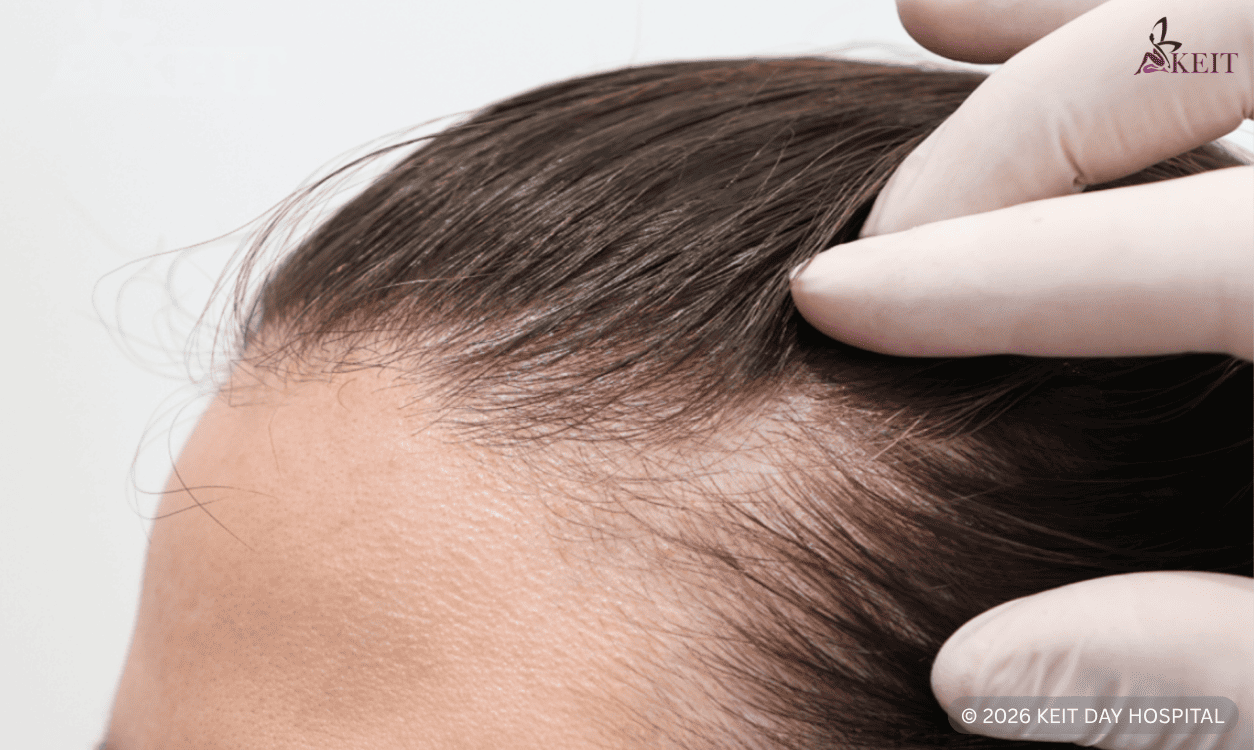
It happens when oestrogen levels drop after pregnancy, leading to noticeable hair loss after pregnancy, especially around the hairline, temples, or during washing and brushing. Low iron, thyroid changes, stress, poor sleep, or nutritional deficiencies can make shedding more noticeable or delay regrowth.
When does postpartum hair loss start?
Postpartum hair loss usually starts around 2–4 months after childbirth. Shedding is often most noticeable around the third month, when many hairs enter the shedding phase at the same time. The timing can vary depending on hormonal changes, stress, nutrition, sleep, and the individual hair growth cycle.
How long does postpartum hair loss last?
Postpartum hair loss usually lasts a few months and often improves within 6–12 months after birth. The active shedding phase commonly lasts 3–6 months, but visible thickness takes longer to return because new hair grows gradually. Regrowth often appears first as short baby hairs around the hairline.
Postpartum hair loss treatment: what can help?
Postpartum hair loss treatment focuses on supporting healthy regrowth and identifying any underlying cause that may prolong shedding. Helpful steps include:
- Medical assessment: Check for iron deficiency, thyroid imbalance, vitamin deficiency, or underlying alopecia if shedding is severe or prolonged.
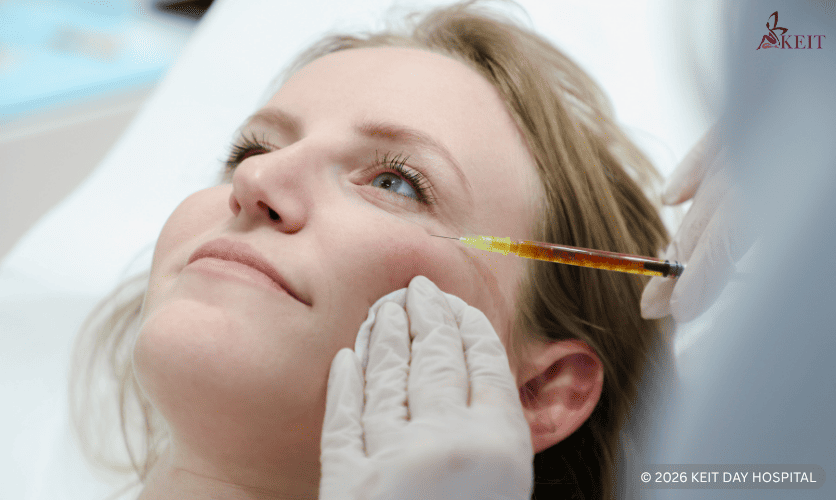
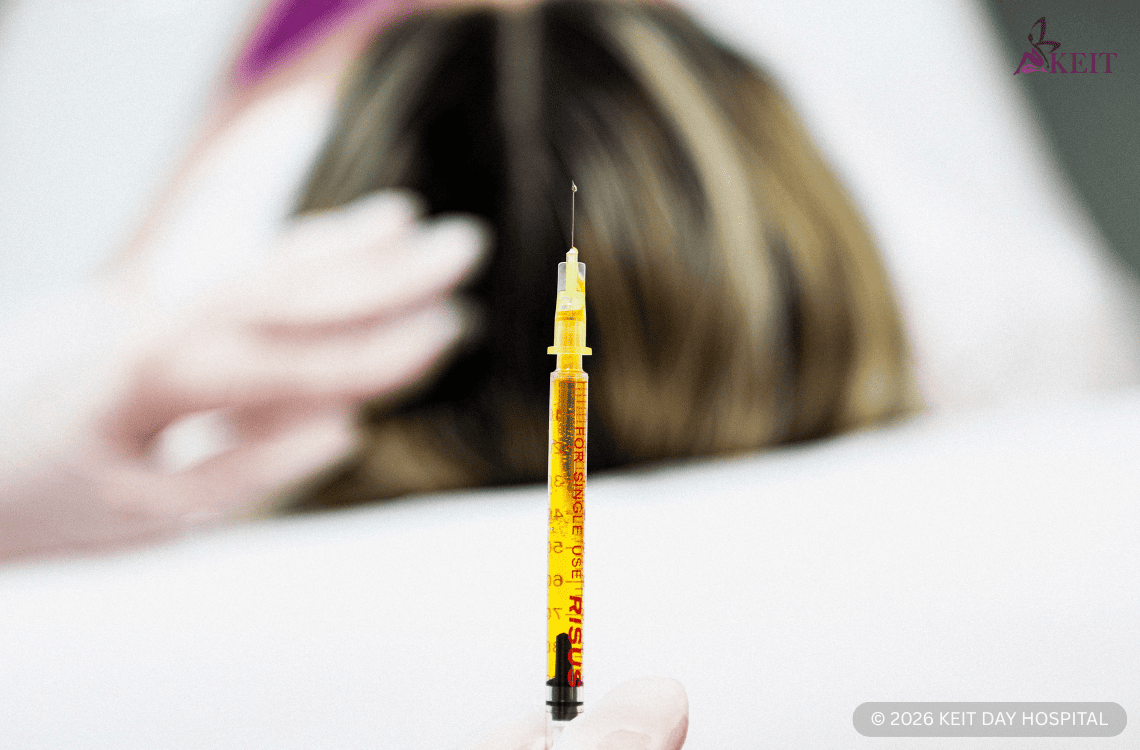
- PRP hair treatment: Platelet-rich plasma (PRP) may support hair regrowth in selected patients with postpartum hair loss, particularly when shedding is prolonged or recovery is slower than expected. A specialist assessment can determine whether PRP is appropriate based on the pattern and cause of hair loss.
- Balanced nutrition: Adequate protein, iron, zinc, vitamin D, and overall calorie intake support the normal hair growth cycle.
- Gentle hair care: Avoid tight hairstyles, harsh brushing, heat styling, and harsh chemical treatments to help limit breakage.
- Scalp care: Dandruff, itching, inflammation, or scalp irritation should be treated because scalp health can affect hair quality.
- Specialist treatment: A dermatologist may recommend targeted treatment if postpartum shedding is unusually severe, persistent, or linked to another condition.
Postpartum hair loss products, vitamins and shampoos: are they effective?
Postpartum hair loss products may improve hair quality and scalp comfort, but they do not directly stop hormonal shedding.
Vitamins may help when there is a confirmed deficiency, such as low iron, vitamin D, zinc, or other nutritional imbalance. “Taking supplements without a deficiency is unlikely to speed up recovery.
Shampoos can improve hair texture, volume, and scalp comfort, but they cannot change the hormonal hair cycle. Choose gentle, non-irritating formulas and avoid products that irritate the scalp or increase breakage.
Postpartum hair regrowth timeline: when does hair grow back?
Postpartum hair regrowth usually begins as shedding slows, with hair density improving gradually over several months.
- Months 3–4 postpartum: Shedding is often most noticeable, and the hair may look thinner around the hairline or temples.
- Months 4–6: Shedding usually begins to slow, and short new hairs may start to appear.
- Months 6–9: Regrowth becomes more visible as new hairs continue to lengthen and thicken.
- Months 9–12: Hair density often improves significantly, although fullness may still be rebuilding.
- After 12 months: Persistent shedding, patchy loss, or limited regrowth should be assessed by a dermatologist.
Book your FREE
Online Consultation Now

Severe postpartum hair loss: when should you see a specialist?
Severe postpartum hair loss should be assessed if shedding is excessive, prolonged, patchy, or associated with scalp symptoms. See a dermatologist or hair specialist if:
- Hair loss continues beyond 12 months after childbirth.
- Shedding becomes sudden, excessive, or progressively worse.
- Bald patches or a widening part line appear.
- The scalp is painful, itchy, red, flaky, or inflamed.
- Hair loss started during pregnancy or before delivery.
- There is fatigue, heavy bleeding, thyroid symptoms, or signs of nutritional deficiency.
- Regrowth is not visible after shedding begins to slow.