Published on:
 Modified on:

 Reading Time: 9 min
 Scientific Articles
Brachioplasty is generally considered an effective contouring procedure for upper-arm laxity, particularly after massive weight loss or age-related tissue descent, but its complication profile is not trivial. The strongest PubMed meta-analytic evidence shows that the most common adverse outcomes are aberrant scarring, ptosis/recurrence, wound dehiscence, and seroma, while serious events such as hematoma, skin necrosis, and nerve-related complications occur less often but remain clinically relevant for counseling and operative planning.
 Table of Contents:
-
1
 How the evidence was selected: Criteria for the latest PubMed evidence
-
2
Direct evidence: What the brachioplasty meta-analysis actually shows
-
3
The most common complications after arm lift: What patients most often experience
-
4
Procedure-related risk modifiers: What seems to raise or lower complications
-
5
Post-bariatric patients: A higher-risk brachioplasty context
-
6
BMI and obesity: Why patient selection matters
-
7
Rare but high-impact complications: What should still be discussed
-
8
Risk-reduction strategies: What the evidence supports in practice
-
9
Key predictors of brachioplasty complication risk across the evidence
-
10
Clinical implications: What the evidence means for practice
-
11
Bibliography: Recent PubMed-indexed meta-analyses considered
How the evidence was selected: Criteria for the latest PubMed evidence
A targeted PubMed-focused selection strategy was used to identify meta-analyses relevant to brachioplasty, arm lift, and closely related body-contouring complication risk. Priority was given to publications explicitly indexed in PubMed as Meta-Analysis and to studies most applicable to the clinical populations in which brachioplasty is commonly performed. Because brachioplasty-specific meta-analyses remain limited, the final evidence set combines the 2022 brachioplasty systematic review and meta-analysis with four PubMed-indexed meta-analyses on body-contouring complications that provide clinically relevant context, particularly for post-bariatric and higher-BMI patients. Although the evidence base is necessarily narrow, it represents the most robust and defensible PubMed-derived foundation currently available for this topic.
Direct evidence: What the brachioplasty meta-analysis actually shows
The main direct evidence comes from a 2022 meta-analysis that pooled data from 29 studies involving 1,578 patients undergoing brachioplasty. The findings show a complication profile dominated by scar-related and wound-healing outcomes, rather than by severe adverse events.
- Aberrant scarring: 9.9%
- Ptosis or recurrence: 7.79%
- Wound dehiscence: 6.81%
- Seroma: 5.91%
- Infection: 3.64%
- Nerve-related events: 2.47%
- Lymphedema or lymphocele: 2.46%
- Skin necrosis or delayed healing: 2.27%
- Hematoma: 2.06%
- Revision for aesthetic reasons: 7.46%
- Revision for non-aesthetic reasons: 1.62%
The clinical relevance of this pooled profile is straightforward: brachioplasty risk is driven mainly by visible scarring, delayed healing, fluid-related complications, and recurrence of tissue laxity. In other words, the outcomes that matter most in practice are usually not catastrophic complications, but the problems patients actually notice and remember: scars, prolonged wound care, recurrent arm descent, seroma, and the possibility of revision surgery. That is the real-world burden reflected in the meta-analysis.
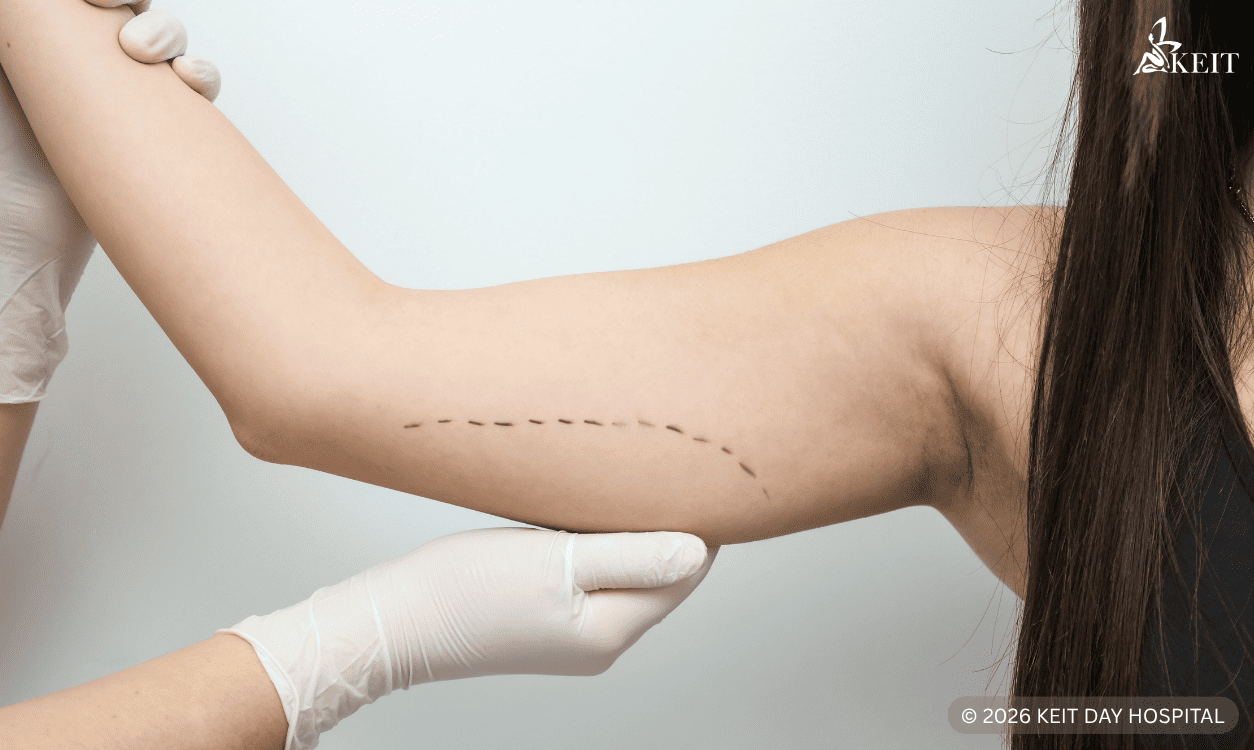
The most common complications after arm lift: What patients most often experience
The most frequent complications after arm lift include:
- Aberrant scarring (9.9%): Scarring is the most common pooled adverse outcome. Because brachioplasty leaves a long upper-arm scar under tension and in a visible location, scar quality is a central tradeoff of the procedure.
- Ptosis or recurrence (7.79%): Recurrence of tissue laxity remains a meaningful risk even after technically successful surgery, especially in patients with poor skin quality, massive-weight-loss history, or persistent tissue heaviness.
- Wound dehiscence and delayed healing: Wound dehiscence was reported at 6.81%, while skin necrosis or delayed healing occurred in 2.27% of cases. These findings reflect the healing-sensitive nature of brachioplasty and may prolong recovery or worsen scar outcomes.
- Seroma and infection: The pooled seroma rate was 5.91%, and infection occurred in 3.64% of cases. This pattern is consistent with broader body-contouring evidence, where fluid collections and wound complications are common postoperative problems.
Although less frequent, nerve-related events (2.47%) and lymphedema or lymphocele (2.46%) also remain clinically relevant. Their importance lies less in how often they occur than in their potential effect on sensation, swelling, function, and long-term comfort, which is why they still warrant explicit mention during preoperative counseling.
Procedure-related risk modifiers: What seems to raise or lower complications
Meta-analytic evidence suggests that brachioplasty risk is shaped by both operative technique and overall procedure burden. In the brachioplasty meta-analysis, medial incision placement was associated with higher complication risk, while adjunctive liposuction was associated with a lower incidence of some complications in meta-regression. Although these findings are associative rather than causal, they suggest that technique selection and tissue handling may influence outcomes.
Broader body-contouring meta-analyses show a similar pattern, with complication rates tending to rise in the presence of:
- Higher BMI
- Greater tissue-resection burden
- More extensive contouring
- Less favorable metabolic status
In a 2021 post-bariatric meta-analysis, BMI ≥30 kg/m² was associated with a 37% increase in complication risk, and greater tissue resection was likewise linked to more complications. Although these findings are not specific to brachioplasty, they remain clinically relevant because many brachioplasty patients fall within the same risk profile.
Post-bariatric patients: A higher-risk brachioplasty context
Brachioplasty is commonly performed after massive weight loss, and this subgroup has a higher complication burden than standard cosmetic patients. Meta-analytic evidence suggests that post-bariatric status is not just background history, but a meaningful marker of increased surgical risk.
Key findings from pooled analyses include:
- A pooled risk ratio of 1.60 for overall complications in post-bariatric versus non-bariatric body-contouring patients
- A higher risk ratio of 1.87 in analyses restricted to single body-contouring procedures
- An overall weighted complication rate of 31.5% across post-bariatric body-contouring studies
- Seroma among the most frequent postoperative complications
- Lower complication rates in patients with BMI <30 kg/m²
- Lower complication rates with lower mean resection weight
For brachioplasty, the clinical implication is straightforward: in massive-weight-loss patients, tissue quality, residual tissue burden, and metabolic reserve all influence postoperative risk. Preoperative optimization therefore functions as part of complication prevention, not as a purely preparatory step.
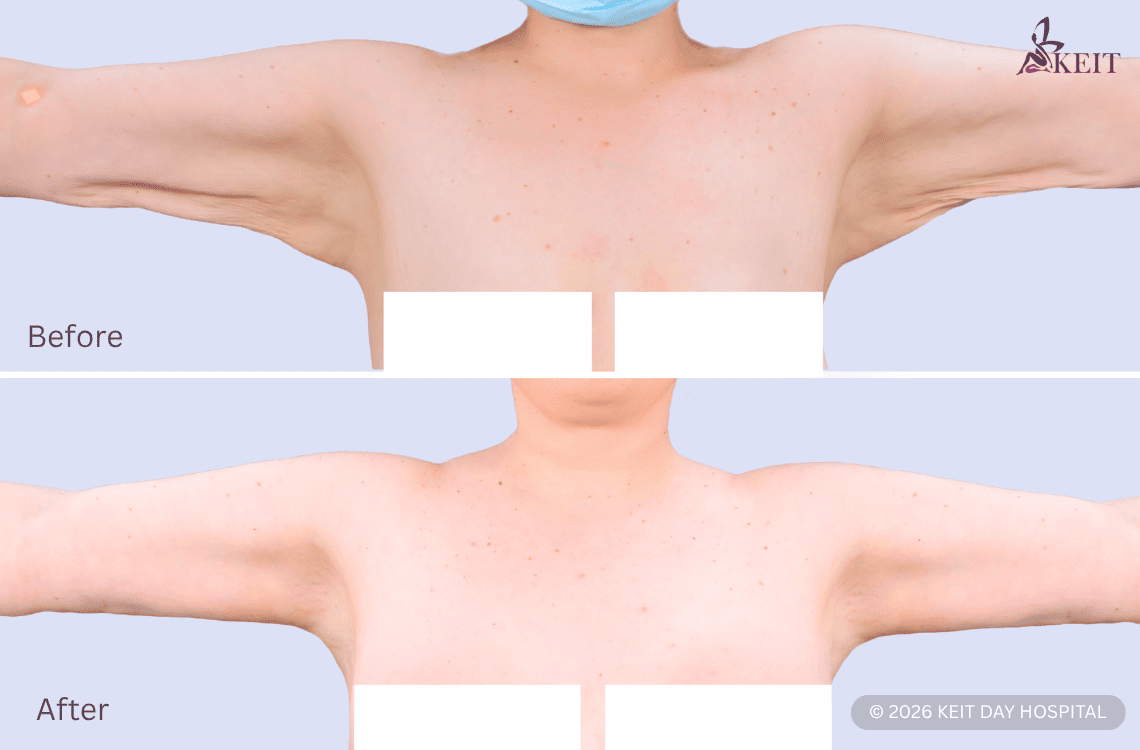
BMI and obesity: Why patient selection matters
Although the most direct obesity-focused meta-analysis in this area examined cosmetic abdominal body contouring rather than brachioplasty specifically, its findings remain relevant because they show how excess adiposity influences wound- and fluid-related complications across contouring surgery. In that 2024 meta-analysis, obesity was associated with higher odds of seroma (OR 1.45), hematoma (OR 2.21), and overall surgical-site occurrences (OR 1.99). These estimates cannot be applied directly to brachioplasty, but they support the broader conclusion that higher BMI increases healing-related risk across contouring procedures.
For brachioplasty, this matters because many patients present with the same underlying risk factors seen across body contouring more broadly, including:
- Higher body mass
- Reduced tissue quality
- Greater tissue burden
- Higher incision tension
- More demanding wound-healing conditions
Taken together, the evidence supports patient selection as a central part of complication risk assessment in brachioplasty.
Rare but high-impact complications: What should still be discussed
Although less frequent than scarring, seroma, or wound dehiscence, several complications remain important because of their potential effect on recovery, function, and revision burden.
- Hematoma (2.06%) can require urgent evaluation or intervention and may complicate healing even when the pooled rate is relatively low.
- Skin necrosis or delayed healing (2.27%) may prolong wound care, delay recovery, and worsen final scar quality.
- Nerve-related complications (2.47%) are uncommon, but they remain clinically significant because they can affect sensation, comfort, and function.
These figures should not be transferred directly to isolated brachioplasty, but they support a practical clinical principle: combined procedures and larger operative burdens warrant more cautious counseling than standalone arm lift surgery.
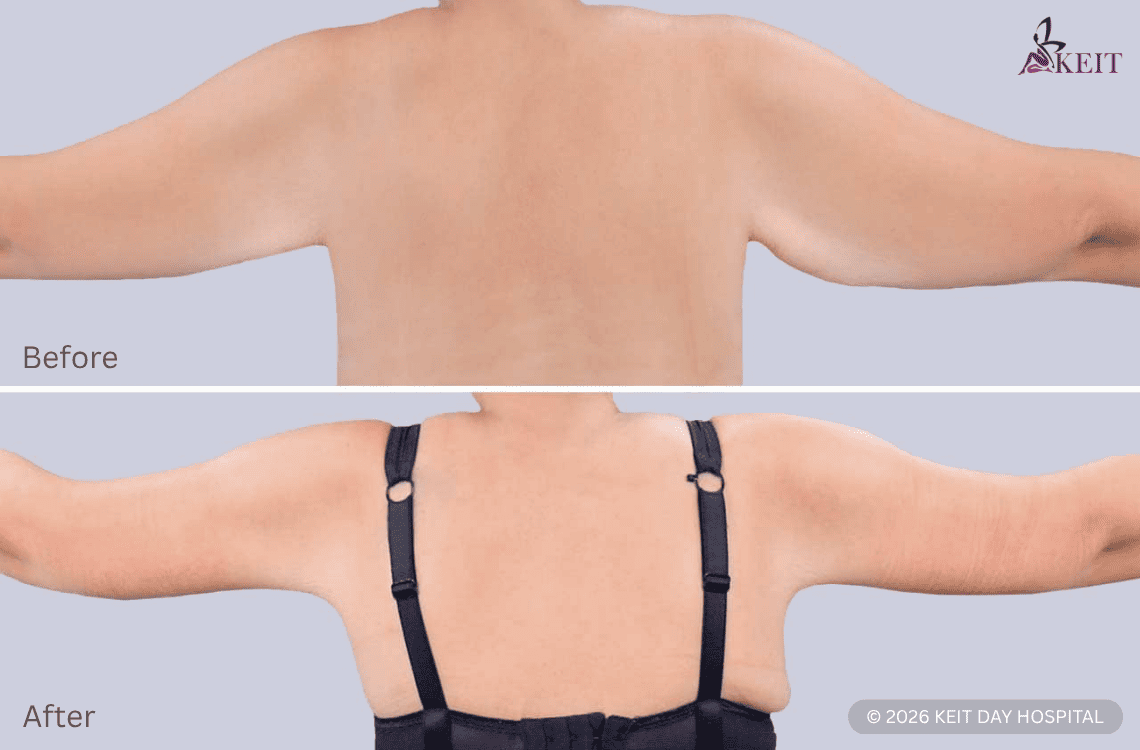
Risk-reduction strategies: What the evidence supports in practice
Across meta-analytic evidence, risk reduction in brachioplasty is primarily driven by patient selection, operative planning, and tension management, rather than isolated technical adjustments.
Key evidence-aligned strategies include:
- Patient optimization: In post-bariatric meta-analysis, BMI ≥30 kg/m² was associated with a 37% increase in complication risk, supporting surgery after weight stabilization and nutritional optimization.
- Limiting resection burden: Greater tissue resection was associated with higher complication rates, supporting restraint in tissue removal and staged surgery when operative burden is high.
- Technique selection: In the brachioplasty meta-analysis, medial incision placement was associated with higher complication risk, while adjunctive liposuction was associated with lower incidence of some complications in meta-regression.
- Tension and scar management: Because scarring (9.9%), wound dehiscence (6.81%), and recurrence (7.79%) are among the most frequent complications, tension reduction and realistic scar counseling are central to prevention.
- Expectation setting and follow-up: Revision for aesthetic reasons occurred in 7.46% of cases, supporting early counseling on scar quality, contour durability, and the possible need for revision.
In post-bariatric patients, these measures become more important. An overall weighted complication rate of 31.5% in pooled body-contouring studies supports delaying surgery until weight and nutritional status are optimized.
Key predictors of brachioplasty complication risk across the evidence
The PubMed meta-analytic literature identifies several recurrent predictors of brachioplasty complication risk:
- Patient selection: Risk varies substantially across patient populations, particularly between isolated lower-risk cases and post-bariatric or higher-BMI patients.
- Extent of contouring: Complication burden tends to rise as procedures become more extensive or are combined with broader body-contouring surgery.
- Tissue burden: Greater resection weight is consistently associated with higher complication rates.
- BMI and metabolic profile: Higher BMI repeatedly emerges as a risk amplifier, particularly for wound- and fluid-related complications.
- Technique choice: In direct brachioplasty evidence, operative factors such as incision placement and adjunctive liposuction show associations with complication rates.
Across direct brachioplasty evidence, the dominant complications are scar-related, healing-related, and recurrence-related. In adjacent body-contouring meta-analyses, higher BMI, post-bariatric status, and greater operative burden repeatedly emerge as the main risk amplifiers.
Clinical implications: What the evidence means for practice
- Brachioplasty should not be presented as a minor-risk aesthetic procedure. Although usually effective, its complication profile is defined by real tradeoffs, especially scarring, recurrent laxity, dehiscence, and seroma.
- Counseling should reflect the complications patients are most likely to experience. In pooled evidence, visible scarring, wound-healing problems, seroma, and recurrence are more relevant than rare catastrophic events.
- Risk stratification is more appropriate than generic consent language. Patients do not share the same complication profile simply because they are undergoing the same procedure.
- Isolated lower-risk cases should be distinguished from higher-risk body-contouring patients. A lean patient undergoing isolated brachioplasty does not carry the same risk burden as a post-bariatric patient with higher BMI, residual tissue heaviness, or more extensive contouring needs.
- Clinical counseling should match patient-specific risk context. Conflating low-risk and high-risk patients under one complication narrative weakens both informed consent and surgical planning.
Bibliography: Recent PubMed-indexed meta-analyses considered
Aljerian A, Abi-Rafeh J, Ramirez-GarciaLuna J, Hemmerling T, Gilardino MS. Complications in Brachioplasty: A Systematic Review and Meta-Analysis. Plast Reconstr Surg. 2022;149(1):83-95. PMID: 34936607.
Marouf A, Mortada H. Complications of Body Contouring Surgery in Postbariatric Patients: A Systematic Review and Meta-Analysis. Aesthetic Plast Surg. 2021;45(6):2810-2820. PMID: 34018015.
Niu EF, Honig SE, Wang KE, et al. Obesity as a Risk Factor in Cosmetic Abdominal Body Contouring: A Systematic Review and Meta-Analysis. Aesthetic Plast Surg. 2024;48(11):2121-2131. PMID: 37644187.
Hasanbegovic E, Sorensen JA. Complications following body contouring surgery after massive weight loss: a meta-analysis. J Plast Reconstr Aesthet Surg. 2014;67(3):295-301. PMID: 24211118.
Carloni R, Chaput B, de Runz A, et al. Are There Factors Predictive of Postoperative Complications in Circumferential Contouring of the Lower Trunk? A Meta-Analysis. Aesthet Surg J. 2016;36(10):1143-1154. PMID: 27402788.