Published on:
 Modified on:

 Reading Time: 6 min

 Scientific Articles
Laser-assisted liposuction (LAL) was introduced as an alternative to traditional liposuction (Suction-Assisted Liposuction, SAL), with the aim of improving adipose tissue removal and promoting skin retraction. Available evidence indicates that both techniques can provide satisfactory aesthetic outcomes, but they differ in their mechanisms of action, potential effects on tissues, and complication profiles. The final outcome depends primarily on patient selection, the technique used, and the operator’s experience.
 Table of Contents:
-
1
 How the evidence was selected: PubMed criteria for comparative studies
-
2
Laser-assisted liposuction vs traditional liposuction: technical differences and mechanism of action
-
3
Laser-assisted vs traditional liposuction: effectiveness in fat removal and body contouring
-
4
Skin retraction after laser-assisted liposuction: a potential advantage over the traditional technique
-
5
Complications of laser-assisted and traditional liposuction: comparison of safety profiles
-
6
Post-operative recovery, pain, and satisfaction after laser-assisted and traditional liposuction
-
7
Factors determining liposuction outcomes: patient, technique, and surgical indication
-
8
What does the scientific evidence indicate about choosing between laser-assisted and traditional liposuction?
-
9
Laser-assisted vs traditional liposuction: evidence-based conclusions
-
10
Bibliography: PubMed evidence on laser-assisted and traditional liposuction
How the evidence was selected: PubMed criteria for comparative studies
A targeted PubMed search was conducted for this review, including systematic reviews, meta-analyses, and comparative studies on laser-assisted liposuction and traditional liposuction. Studies evaluating the effectiveness of adipose tissue removal, improvement in body contour, skin retraction, skin quality, post-operative complications, pain, post-operative recovery, and patient satisfaction were considered. Because meta-analyses exclusively focused on the direct comparison between laser-assisted liposuction and traditional liposuction are limited, comparative systematic reviews focusing on the most relevant clinical outcomes of the two techniques were also included.
Laser-assisted liposuction vs traditional liposuction: technical differences and mechanism of action
Traditional liposuction uses a cannula connected to a suction system to remove adipose tissue primarily through mechanical action. Laser-assisted liposuction (LAL), by contrast, involves the preliminary application of laser energy, with the aim of promoting adipocyte disruption and generating a controlled thermal effect on the treated tissues.
From a theoretical perspective, this technology may offer several potential advantages, including:
- greater emulsification of adipose tissue;
- reduced mechanical trauma to the tissues;
- potential stimulation of skin retraction.
However, these potential benefits must be evaluated in consideration of the fact that the final outcome also depends on the amount of fat treated, the patient’s skin quality, and the overall surgical technique.
Laser-assisted vs traditional liposuction: effectiveness in fat removal and body contouring
Available comparative evidence indicates that both laser-assisted and traditional liposuction can effectively reduce adipose tissue and improve body contour. Current studies have not demonstrated definitive superiority of laser-assisted liposuction over the traditional technique in terms of the amount of fat removed. The choice of procedure should therefore be based on the area to be treated, aesthetic objectives, and the patient’s anatomical characteristics.
Traditional liposuction remains an established technique with extensive clinical experience, while laser-assisted liposuction represents a technologically advanced option that may be considered in selected patients.

Skin retraction after laser-assisted liposuction: a potential advantage over the traditional technique
One of the most extensively studied aspects of laser-assisted liposuction concerns its potential effect on skin retraction. The thermal energy generated by the laser may promote contraction of collagen fibres and remodelling of soft tissues, with a potential benefit particularly in patients with mild to moderate skin laxity.
Compared with traditional liposuction, some studies suggest potentially greater skin retraction with the laser technique; however, the extent of this effect varies between studies and also depends on individual patient characteristics. In cases of significant skin laxity, liposuction alone, regardless of the technology used, may not be sufficient to achieve an optimal aesthetic outcome.
Complications of laser-assisted and traditional liposuction: comparison of safety profiles
Both techniques generally have a favourable safety profile when performed by experienced operators in appropriately selected patients.
The main reported complications include:
- Seroma;
- Haematoma;
- Infection;
- Contour irregularities;
- Sensory changes;
- Burns or thermal injury associated with laser-assisted liposuction;
- Skin necrosis in more severe cases.
Laser-assisted liposuction presents a specific risk related to the use of thermal energy, whereas traditional liposuction is more commonly associated with risks resulting from mechanical trauma and tissue handling. Overall, the incidence of complications generally remains low, but the risk profile should be assessed according to the technique used, the treated area, and the individual characteristics of the patient.
Post-operative recovery, pain, and satisfaction after laser-assisted and traditional liposuction
One of the potential advantages associated with laser-assisted liposuction concerns post-operative recovery. Some studies suggest that this technique may reduce tissue trauma and post-operative discomfort compared with traditional liposuction, although these differences have not been demonstrated consistently across all available studies.
Patient satisfaction is generally high with both techniques when the final outcome is consistent with initial expectations. Satisfaction depends primarily on appropriate surgical indication, realistic expectations, skin quality, distribution of adipose tissue, and the aesthetic result achieved.
Factors determining liposuction outcomes: patient, technique, and surgical indication
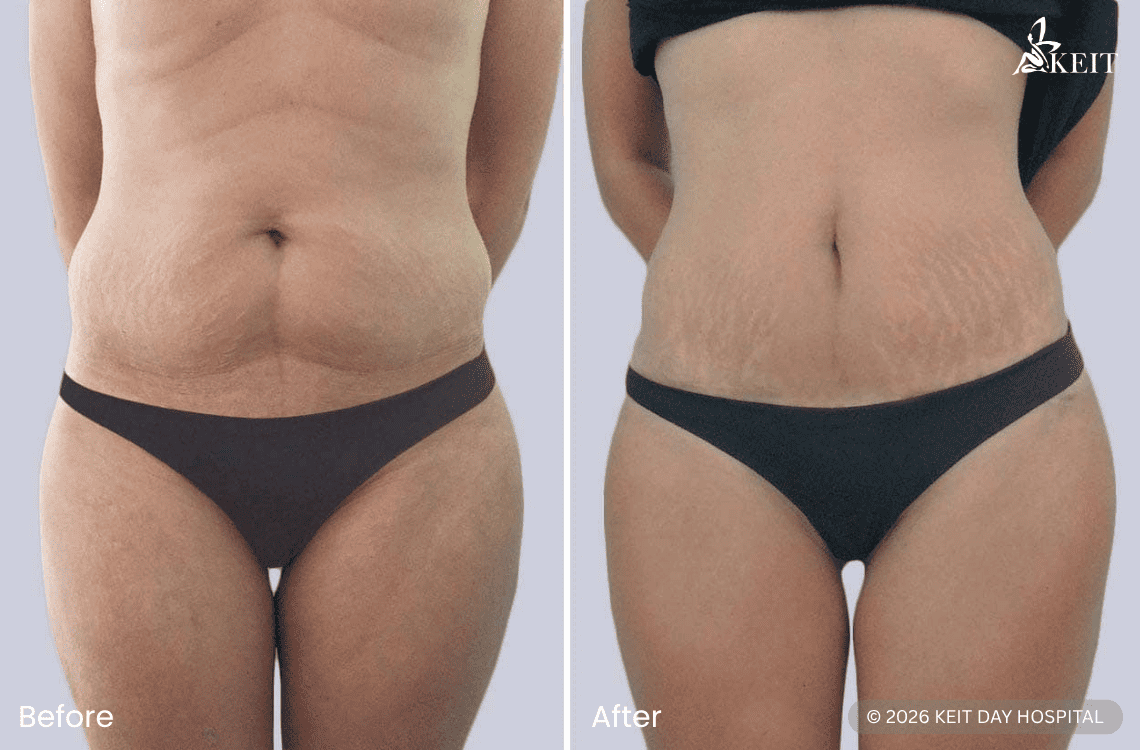
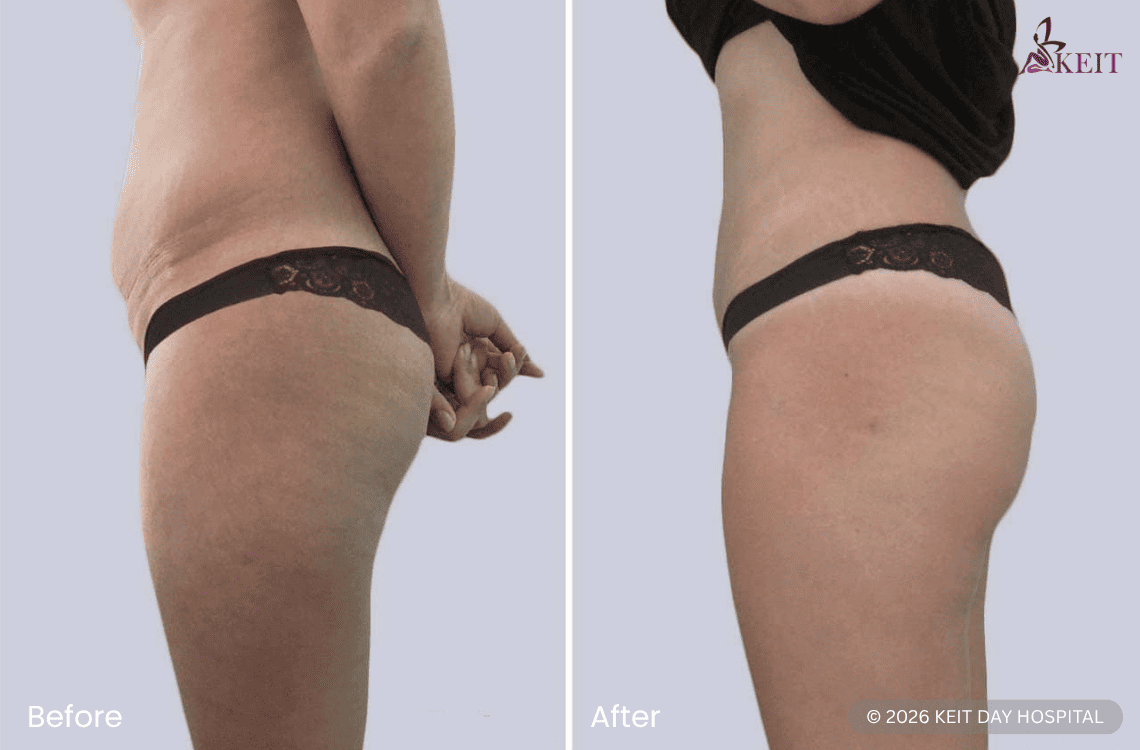
The outcome of liposuction depends on several factors beyond the technology used. The main factors influencing the aesthetic outcome include:
- Skin quality and elasticity: determine the skin’s ability to adapt to the new body contour after fat removal.
- Amount and distribution of adipose tissue: influence surgical planning and the achievable final outcome.
- Anatomical area treated: some areas have different tissue characteristics and technical challenges.
- Surgeon experience: technical precision and tissue handling play a fundamental role in the quality of the outcome.
- Surgical technique used: the choice between laser-assisted and traditional liposuction should be adapted to the aesthetic objectives and patient characteristics.
- Post-operative management: appropriate follow-up contributes to proper recovery and stability of the outcome.
The choice between laser-assisted and traditional liposuction should therefore be based on the individual characteristics of the patient and aesthetic objectives, rather than exclusively on the technology available.
What does the scientific evidence indicate about choosing between laser-assisted and traditional liposuction?
Available evidence suggests that laser-assisted liposuction is a safe and potentially useful technique, particularly in selected patients for whom the objective is to combine adipose tissue removal with a potential effect on skin retraction.
However, comparative studies have not demonstrated definitive superiority of laser-assisted liposuction over the traditional technique in terms of overall outcomes. The choice of procedure should therefore be guided by the patient’s characteristics, aesthetic objectives, and surgical indication, rather than by the availability of the technology alone.
Traditional liposuction remains an established technique with extensive clinical experience, while laser-assisted liposuction represents an additional option that may offer specific benefits in appropriately selected patients.
Laser-assisted vs traditional liposuction: evidence-based conclusions
Available evidence shows that:
- Laser-assisted liposuction and traditional liposuction can both provide satisfactory aesthetic outcomes when performed in appropriately selected patients with a suitable surgical indication.
- Laser-assisted liposuction may offer a potential advantage in terms of skin retraction, but this benefit is not consistent and varies according to patient characteristics and the technique used.
- Traditional liposuction remains an established procedure, supported by extensive clinical experience and predictable results in body contouring.
- The safety profile of both techniques depends primarily on patient selection, surgical technique, and peri-operative management, rather than on the technology used alone.
- Appropriate patient selection is the main determinant of the final outcome, together with the establishment of realistic expectations.
In conclusion, the choice between laser-assisted and traditional liposuction should not be based exclusively on the technology available, but on an individualised assessment that considers anatomical characteristics, aesthetic objectives, and the individual risk profile.
Bibliography: PubMed evidence on laser-assisted and traditional liposuction
Pereira-Netto D, Montano-Pedroso JC, Aidar ALS, Marson WL, Ferreira LM. Laser-Assisted Liposuction (LAL) Versus Traditional Liposuction: Systematic Review. Aesthetic Plastic Surgery. 2018;42(2):376-383. PMID: 29362943.
Mordon S, Plot E. Laser Lipolysis Versus Traditional Liposuction for Fat Removal. Expert Review of Medical Devices. 2009;6(6):677-688. PMID: 19911878.
Fakhouri TM, El Tal AK, Abrou A, Mehregan DA, Barone F. Laser-assisted lipolysis: a review. Dermatologic Surgery. 2012;38(2):155-169. PMID: 22093156.
Collins PS, Moyer KE. Evidence-Based Practice in Liposuction. Annals of Plastic Surgery. 2018;80(6 Suppl 6):S403-S405. PMID: 29369106.
Wong ZY, Murugan V, Wong ZN, Danpanichkul P, Faderani R, Kanapathy M, Mosahebi A. Impact of Laser Lipolysis With and Without Liposuction on Arm Circumference: A Systematic Review and Meta-Analysis. Aesthetic Surgery Journal Open Forum. 2025;7:ojaf097. PMID: 40927670.