Published on:

 Reading Time: 4 min
 Rhinoplasty
Swelling after rhinoplasty is a normal part of the healing process. Most visible swelling subsides within the first few weeks, although residual swelling, particularly at the nasal tip, may take 12 months or longer to fully resolve. Recovery time varies depending on the surgical technique, skin thickness and individual healing response.
 Table of Contents:
-
1
 How long does swelling last after rhinoplasty?
-
2
Rhinoplasty swelling stages: Recovery timeline
-
3
Why does swelling occur after rhinoplasty?
-
4
Nose tip vs. nose bridge swelling after rhinoplasty
-
5
What affects how long rhinoplasty swelling lasts?
-
6
How to reduce swelling after rhinoplasty
-
7
When is swelling after rhinoplasty a cause for concern?
In this article, we explain how long swelling lasts after rhinoplasty, the different stages of recovery and how swelling differs between the nasal tip and bridge. We also discuss the factors that affect healing, how to reduce postoperative swelling and when medical attention is necessary.
How long does swelling last after rhinoplasty?
Most visible swelling after rhinoplasty subsides within the first 2–4 weeks, although mild residual swelling can take 6–12 months or longer to fully resolve. Swelling is most pronounced during the first 2–3 days and gradually decreases over the following weeks and months. Complete resolution may take 12–18 months, particularly after extensive nasal reshaping or revision rhinoplasty.
Rhinoplasty swelling stages: Recovery timeline
Swelling after rhinoplasty gradually decreases as the nasal tissues heal. The following timeline outlines the typical stages of recovery during the first year.
- Days 1–3: Swelling increases and usually peaks on the second or third day, often accompanied by bruising around the eyes.
- Days 4–7: Swelling and bruising begin to decrease, although the nose remains noticeably swollen.
- Weeks 2–4: Most visible swelling subsides, and the nasal shape becomes more defined.
- Months 1–3: Residual swelling decreases, gradually revealing the new nasal contours.
- Months 3–6: Subtle swelling continues to resolve, although some areas may remain slightly rounded or firm.
- Months 6–12 and beyond: Remaining swelling gradually subsides, revealing finer details of the final nasal shape.
Swelling may fluctuate during recovery, and the nose may appear more swollen on some days than others. This does not necessarily indicate a problem if the overall healing process is progressing normally.
Why does swelling occur after rhinoplasty?
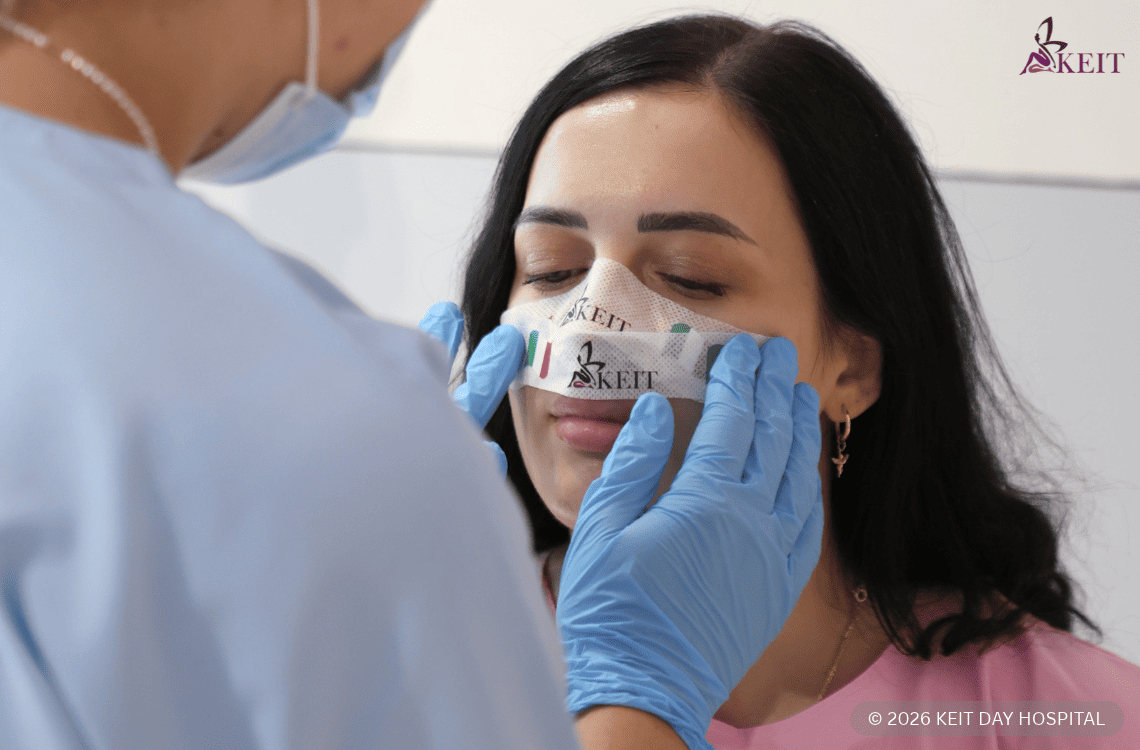
Swelling after rhinoplasty occurs because surgery causes temporary inflammation and fluid accumulation in the nasal tissues. During the procedure, the skin and soft tissues are manipulated to reshape the underlying bone and cartilage. This triggers the body's healing response and temporarily disrupts normal fluid drainage, causing postoperative swelling. As inflammation decreases and lymphatic drainage recovers, the accumulated fluid is gradually reabsorbed. However, tissue healing and scar remodeling continue for months, which explains why some swelling remains long after the initial recovery period.

Nose tip vs. nose bridge swelling after rhinoplasty
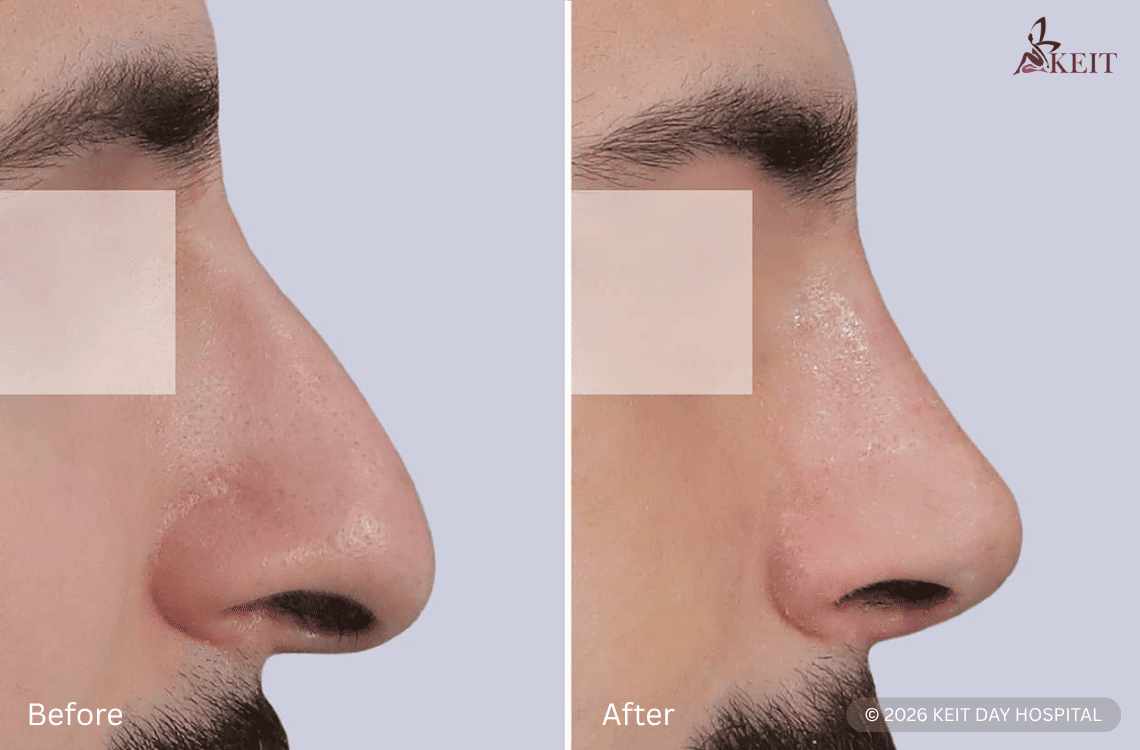
Swelling after rhinoplasty affects the nasal tip and bridge differently. Swelling along the bridge subsides sooner, while the nasal tip remains swollen longer due to differences in tissue structure and healing.
Nose tip swelling
Nose tip swelling typically lasts longer because the soft tissues around the tip are more prone to prolonged fluid retention and scar formation. During recovery, the tip may appear rounded, wider or less defined than expected. Swelling can be particularly persistent in patients with thick nasal skin or after extensive tip reshaping, delaying the appearance of the final tip definition.
Swelling on the bridge of the nose
Swelling on the nasal bridge is particularly common when rhinoplasty involves reshaping or repositioning the nasal bones. It may temporarily make the bridge appear wider, higher or less defined than intended. Unlike tip swelling, swelling along the bridge usually decreases more quickly, allowing its shape and definition to become apparent earlier in recovery.
What affects how long rhinoplasty swelling lasts?
The duration of swelling after rhinoplasty depends on the patient's nasal anatomy, surgical technique and healing response. The main factors include:
- Skin thickness: Thicker nasal skin tends to retain swelling longer, particularly around the nasal tip.
- Extent of surgery: More extensive reshaping of the nasal bone, cartilage and soft tissues may prolong swelling.
- Surgical technique: Procedures involving significant nasal tip work or bone repositioning can influence the pattern and duration of swelling.
- Primary vs. revision rhinoplasty: Revision surgery may involve existing scar tissue and more extensive dissection, potentially prolonging swelling.
- Individual healing response: Differences in inflammation, fluid retention and scar formation influence how quickly swelling resolves.
How to reduce swelling after rhinoplasty
Swelling after rhinoplasty cannot be eliminated immediately, but appropriate postoperative care can help control early swelling and support normal healing.
Recommended measures include:
- Keep your head elevated: Sleep with your head raised, particularly during the first few days, to reduce fluid accumulation.
- Use cold compresses: Apply them to the cheeks or around the eyes as instructed by your surgeon, avoiding direct pressure on the nose.
- Avoid strenuous activity: Limit exercise, heavy lifting and bending forward during early recovery to prevent increased swelling.
- Limit salt intake: Avoid excessive sodium, which can contribute to fluid retention.
- Avoid smoking and nicotine: Nicotine restricts blood flow and can delay healing.
- Follow postoperative instructions: Take prescribed medications as directed and attend follow-up appointments.
Do not massage, tape or apply pressure to the nose unless specifically instructed by your surgeon.
When is swelling after rhinoplasty a cause for concern?
Swelling after rhinoplasty may indicate a complication if it suddenly increases, becomes unusually painful or is accompanied by signs of infection.
Contact your surgeon promptly if you experience:
- Sudden or significant swelling, particularly on one side of the nose.
- Increasing pain rather than gradual improvement.
- Redness, warmth or swelling accompanied by fever.
- Foul-smelling drainage or discharge from the surgical area.
- New or worsening nasal obstruction after an initial period of improvement.
Severe breathing difficulty, uncontrolled bleeding or rapidly progressing facial swelling requires urgent medical assessment.