Published on:
 Modified on:

 Reading Time: 4 min
 Abdominoplasty (small)
Significant weight loss can leave loose, excess skin that does not fully retract as the body becomes smaller. A total body lift provides comprehensive body contouring by removing excess skin and reshaping multiple areas affected by significant weight loss.
 Table of Contents:
-
1
 What is a total body lift after weight loss?
-
2
Why does significant weight loss cause loose skin?
-
3
Who is a candidate for total body lift surgery after weight loss?
-
4
Which areas can a total body lift treat after weight loss?
-
5
What is the difference between a lower body lift, upper body lift and full body lift?
-
6
How is total body lift surgery performed?
-
7
What is recovery like after a total body lift?
-
8
What are the risks and complications of total body lift surgery?
In this article, we explain why significant weight loss can leave excess skin, who may benefit from body lift surgery and which areas can be treated. We also cover the different body lift approaches, how surgery is performed, recovery and potential complications.
What is a total body lift after weight loss?
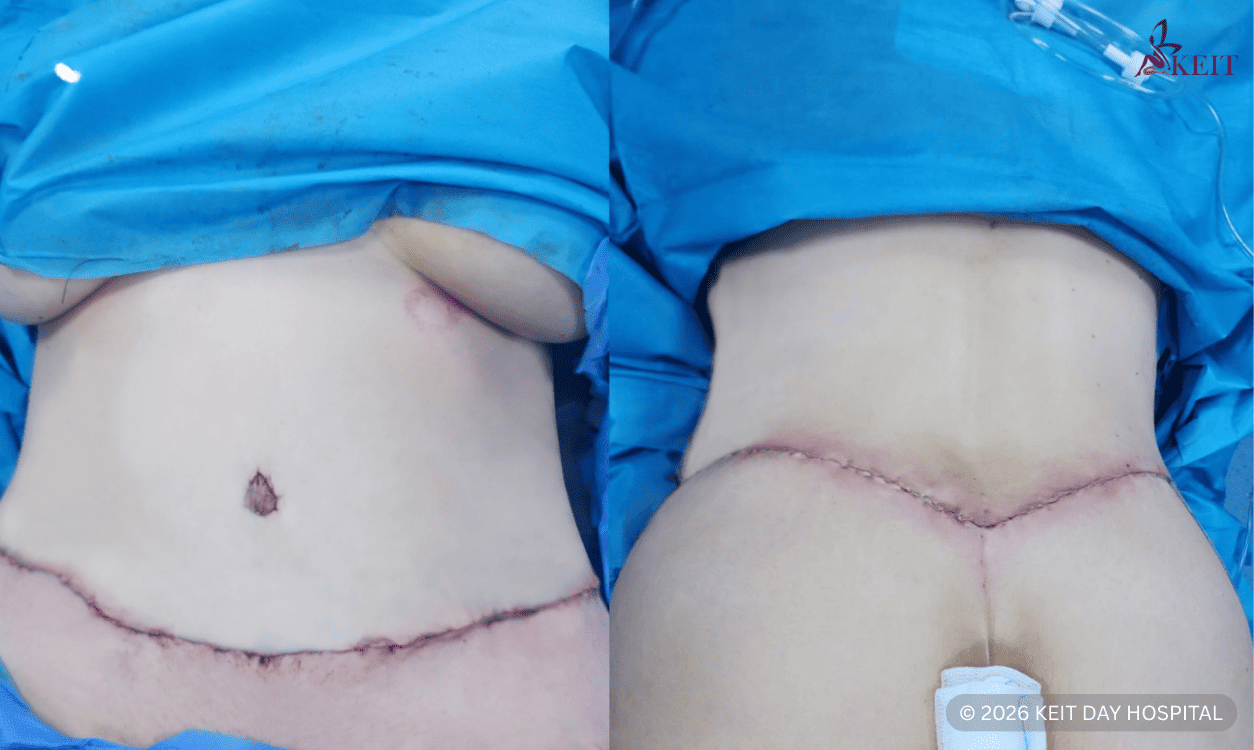
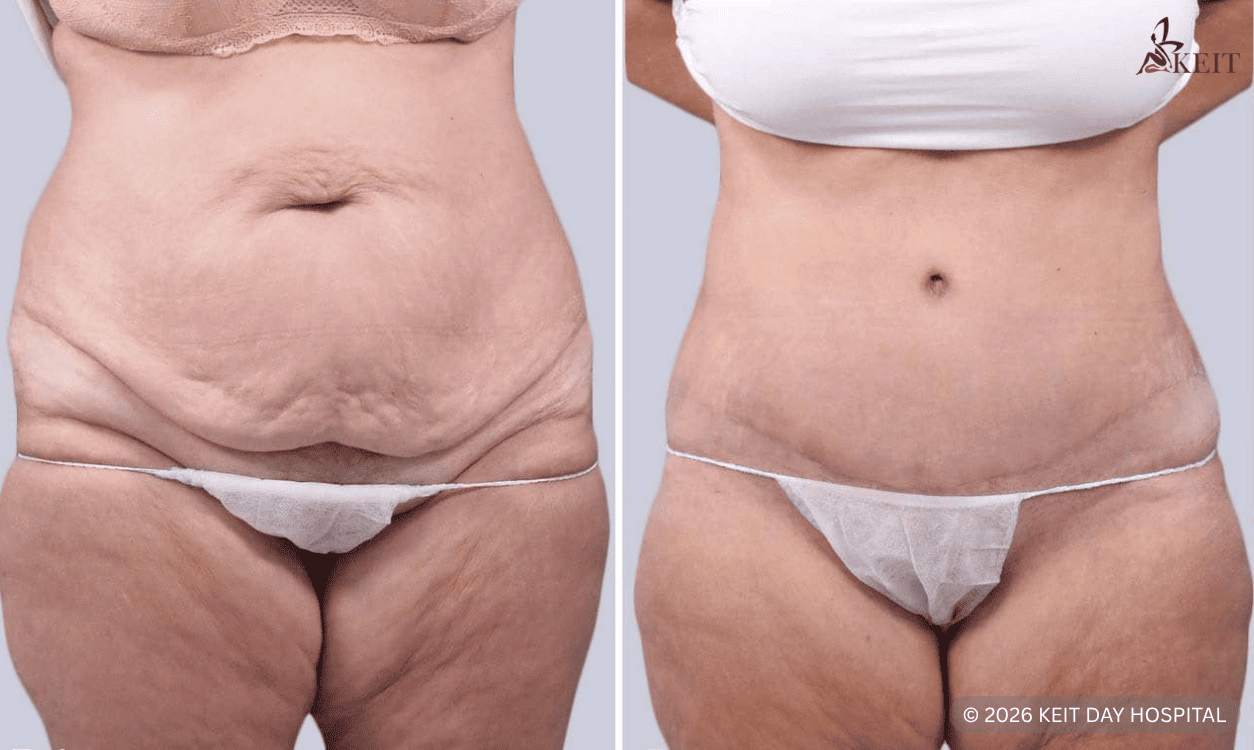
A total body lift is a comprehensive body-contouring approach that removes excess, sagging skin and reshapes multiple areas of the body after significant weight loss. It addresses excess skin that does not retract sufficiently after weight loss, which can affect areas such as the abdomen, waist, back, hips, buttocks, thighs and upper arms. Unlike fat removal surgery, body lift surgery primarily addresses excess skin and body contour rather than localised fat.
Why does significant weight loss cause loose skin?
Significant weight loss can leave loose skin because the skin has been stretched for a prolonged period and may not have enough elasticity to contract fully after the underlying volume decreases. The amount of loose skin varies between individuals and depends mainly on the degree and duration of weight gain, age, genetics and the skin’s elasticity.
Who is a candidate for total body lift surgery after weight loss?
Total body lift surgery is considered for individuals who have significant excess skin across multiple areas of the body after weight loss and whose weight has remained stable. Suitable candidates have:
- substantial loose or hanging skin affecting multiple areas of the body that does not respond to diet or exercise;
- stable weight before surgery;
- adequate nutrition and no uncontrolled medical conditions affecting healing;
- realistic expectations regarding the result and surgical scars;
- willingness to follow postoperative instructions and maintain a stable weight.
Which areas can a total body lift treat after weight loss?
A total body lift can address excess skin in several areas affected by significant weight loss, including:
- Abdomen and waist: Removes excess skin and improves the contour of the central and lower abdomen.
- Back and flanks: Addresses loose skin and folds extending around the sides and back.
- Buttocks: Removes sagging skin and lifts the buttock contour.
- Thighs: Improves excess skin of the outer and, when indicated, inner thighs.
- Upper arms: Removes excess skin of the upper arms when post-weight-loss laxity extends to this area.
The areas treated depend on the distribution of excess skin following weight loss.

What is the difference between a lower body lift, upper body lift and full body lift?
Lower, upper and full body lifts differ mainly in the anatomical areas treated and the extent of skin removal.
| Procedure | Main areas treated |
|---|---|
| Lower body lift | Abdomen, waist, hips, buttocks and outer thighs |
| Upper body lift | Upper back, chest and lateral chest wall |
| Full body lift | Multiple areas of excess skin involving both the upper and lower body |
A full body lift is a comprehensive approach to post-weight-loss body contouring rather than a single standardised operation. It can involve a combination of procedures addressing different areas of excess skin, depending on the patient’s anatomy.
How is total body lift surgery performed?
Total body lift surgery is usually performed under general anaesthesia and involves removing excess skin and reshaping the tissues in areas affected by significant weight loss. The surgical plan is tailored to the distribution of excess skin and the areas requiring correction.
During surgery, the surgeon:
- makes carefully planned incisions around the areas being treated;
- removes the excess, redundant skin;
- lifts and reshapes the remaining tissues to improve body contour;
- closes the incisions to create the new body contour.
When excess skin affects multiple areas, the procedures may be combined when appropriate or performed in stages, depending on the patient’s anatomy, overall health and extent of surgery required.
What is recovery like after a total body lift?
Recovery after a total body lift involves managing swelling and discomfort, caring for the surgical sites and gradually returning to normal activity as healing progresses. Because multiple areas may be treated, patients may experience:
- swelling, bruising, tightness and discomfort;
- temporary limitations in movement and physical activity;
- wound care and drain management when required;
- gradual improvement in swelling and mobility as healing progresses.
The recovery period depends on the extent of surgery and the individual healing response.
What are the risks and complications of total body lift surgery?
Total body lift surgery carries risks related to extensive skin removal, wound healing and the treatment of multiple areas. These include:
- Surgical complications: bleeding or haematoma, infection and seroma.
- Wound and tissue complications: delayed wound healing, wound separation, skin or tissue loss and changes in skin sensation.
- Contour and scar complications: asymmetry, contour irregularities and unfavourable or widened scars.
- Circulatory complications: blood clots, including deep vein thrombosis and pulmonary embolism.
- Further treatment: some patients may require revision surgery to address complications or residual contour concerns.
The risk of complications depends on the extent of surgery, the areas treated and the patient’s individual health and healing response.