Published on:

 Reading Time: 5 min
 Abdominoplasty (small)
A 360 tummy tuck is a circumferential body-contouring procedure that removes excess skin and tissue around the lower torso, extending beyond the abdomen to the waist, flanks and lower back. It is particularly suited to patients with significant skin laxity around the torso, often after major weight loss, and can improve the overall contour of the midsection.
 Table of Contents:
-
1
 360 tummy tuck: what it is and how it differs from a traditional tummy tuck?
-
2
Who is a 360 tummy tuck suitable for?
-
3
What does a 360 tummy tuck correct?
-
4
How is a 360 tummy tuck performed?
-
5
When is a 360 FDL tummy tuck considered?
-
6
360 tummy tuck scars and incision placement
-
7
Recovery and healing after a 360 tummy tuck
-
8
360 tummy tuck before and after: expected results
-
9
How much does 360 tummy tuck cost? Pricing factors
This article explains what a 360 tummy tuck is, how it differs from a traditional tummy tuck, who may be suitable for the procedure, and which areas it can address. It also covers how the surgery is performed, when a 360 FDL tummy tuck may be considered, what to expect from the scars and recovery, the expected results, and the factors that influence the cost.
360 tummy tuck: what it is and how it differs from a traditional tummy tuck?
A 360 tummy tuck is a circumferential body-contouring procedure that removes excess skin and tissue around the lower torso, including the abdomen, waist, flanks and lower back. Unlike a traditional tummy tuck, which primarily addresses excess skin and laxity at the front of the abdomen, a 360 tummy tuck extends around the torso to address excess tissue beyond the abdominal area.
The main difference is therefore the extent of correction: a traditional tummy tuck focuses mainly on the abdomen, while a 360 tummy tuck addresses excess skin and tissue around a larger circumference of the lower torso.
Who is a 360 tummy tuck suitable for?
A 360 tummy tuck may be suitable for patients with significant excess skin and tissue extending around the lower torso. Suitable candidates meet the following criteria:
- Significant loose or hanging skin around the abdomen, waist, flanks, or lower back.
- Skin laxity that cannot be adequately addressed with an abdominal-only tummy tuck.
- A stable body weight before surgery.
- Good general health and adequate nutritional status.
- Realistic expectations regarding the procedure, recovery, and scarring.

What does a 360 tummy tuck correct?
A 360 tummy tuck addresses excess skin and tissue laxity around the lower torso. Depending on the distribution of excess tissue, it may correct:
- Abdominal skin excess: Removes loose skin from the front of the abdomen.
- Waist and flank laxity: Reduces excess tissue extending around the sides of the waist.
- Lower-back skin excess: Addresses loose skin that continues around to the back.
- Abdominal wall laxity: The abdominal wall may be tightened when muscle separation or laxity is present.
The procedure is planned according to where excess skin and tissue are located, so the areas treated can vary between patients.
How is a 360 tummy tuck performed?
A 360 tummy tuck is performed under general anaesthesia through a carefully planned incision extending around the lower torso. The surgeon removes excess skin and tissue, tightens the abdominal wall when necessary, and redrapes the remaining tissues to create a smoother, more defined contour. The umbilicus may be repositioned as part of the abdominal component, while the patient is repositioned during surgery to allow the front, sides, and back to be treated safely.
Liposuction may also be performed when appropriate to refine the contour, but it does not replace the surgical removal of significant excess skin.
When is a 360 FDL tummy tuck considered?
A 360 FDL tummy tuck may be considered when significant excess abdominal skin extends in both horizontal and vertical directions, particularly after major weight loss. The Fleur-de-Lis component adds a vertical incision to the circumferential tummy tuck, allowing the surgeon to remove excess skin from the central abdomen that cannot be adequately addressed with a horizontal incision alone. This approach can provide more complete correction when excess skin is concentrated across both dimensions of the abdomen.
360 tummy tuck scars and incision placement
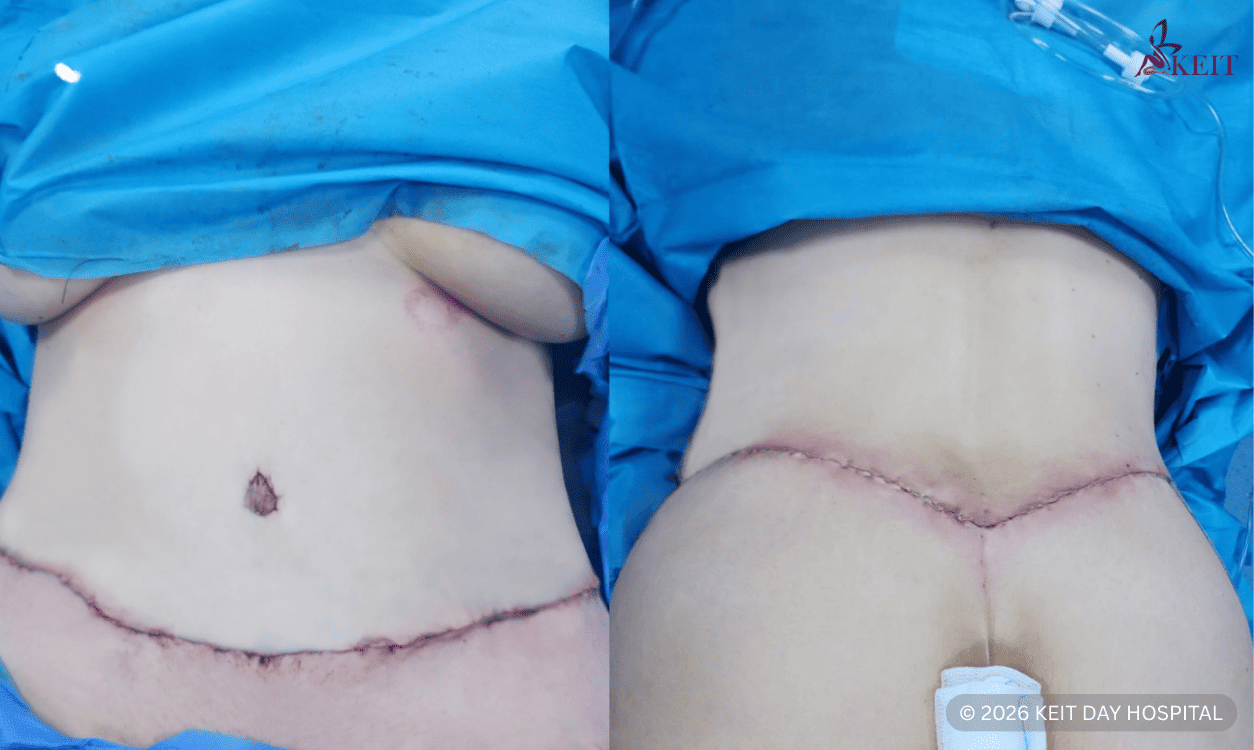
A 360 tummy tuck leaves a long scar that extends around the lower torso, reflecting the circumferential nature of the procedure. The incision is planned as low as possible and positioned so that it can be concealed by underwear or swimwear when anatomy permits. The final appearance of the scar depends on the amount and distribution of excess skin, the surgical technique and individual healing. The scar is permanent but generally becomes flatter and less noticeable as it matures.
Recovery and healing after a 360 tummy tuck
Recovery after a 360 tummy tuck takes several weeks, with swelling and discomfort gradually improving as the tissues heal.
- First 1–2 weeks: Swelling and discomfort are expected; gentle walking is encouraged.
- Weeks 2–4: Mobility improves, but strenuous activity and heavy lifting remain restricted.
- Around 6 weeks: Most patients can gradually return to normal activities and exercise, depending on healing and the surgeon’s advice.
- Following months: Healing continues, with residual swelling gradually decreasing and the final body contour becoming more apparent.
Recovery varies according to the extent of surgery and individual healing, so the surgeon’s postoperative instructions should guide the timing of activity.
360 tummy tuck before and after: expected results
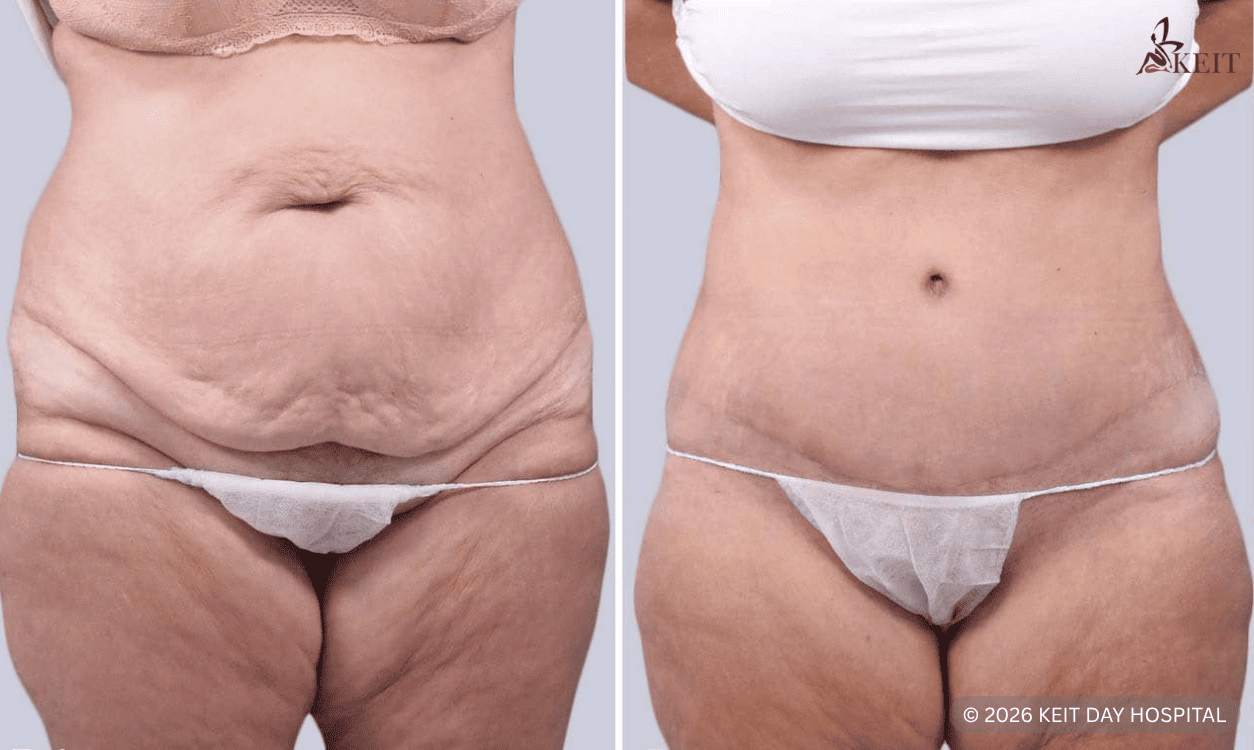
After a 360 tummy tuck, patients see a flatter and firmer abdomen, a more defined waist, and smoother contours around the flanks and lower back. The reduction in excess skin creates a more balanced contour around the lower torso. The final result becomes more apparent as postoperative swelling subsides and the tissues heal. Results are generally long-lasting when body weight remains stable, although significant weight changes or pregnancy can affect the outcome.
How much does 360 tummy tuck cost? Pricing factors
In the UK, the cost of a 360 tummy tuck is typically around 12,000–20,000 euro, depending on the extent of surgery and the procedures required. Factors that influence the cost include:
- Extent of skin and tissue removal: More extensive correction requires a more complex procedure.
- Abdominal wall repair: Muscle repair, when required, can add to the surgical complexity.
- Anaesthesia and hospital fees: These may be included in the surgical package or charged separately.
- Postoperative care: Follow-up appointments, compression garments and other aftercare can affect the total cost.
- Additional procedures: Combining the 360 tummy tuck with other body-contouring procedures increases the overall price.