Published on:
 Modified on:

 Reading Time: 4 min
 Abdominoplasty (small)
A mini tummy tuck targets the lower abdomen to remove excess skin and fat, offering subtle contouring, while a full tummy tuck addresses the entire abdominal wall, including muscle tightening, for comprehensive reshaping. Results vary by procedure, anatomy, and skin quality, with recovery and scar patterns differing between the two techniques.
 Table of Contents:
-
1
 What is the difference between a mini tummy tuck and a full tummy tuck?
-
2
Mini tummy tuck candidate: who is suitable for the procedure?
-
3
Who needs a full tummy tuck?
-
4
Mini tummy tuck vs full tummy tuck results: what to expect
-
5
Mini tummy tuck vs full tummy tuck recovery timeline
-
6
Mini tummy tuck scar vs full tummy tuck scar
-
7
Mini tummy tuck vs full tummy tuck cost in the UK
-
8
How to decide between mini and full tummy tuck
In this article, we explain the differences between a mini tummy tuck and a full tummy tuck, who is suitable for each procedure, what results patients can realistically expect, recovery timelines, scar characteristics, costs in the UK, and guidance on choosing the most appropriate procedure for individual goals.
What is the difference between a mini tummy tuck and a full tummy tuck?
A mini tummy tuck targets excess skin and fat below the navel, while a full tummy tuck addresses the entire abdominal wall, including skin, fat, and underlying muscle laxity, often requiring repositioning of the belly button. Key differences include:
- Extent of correction: Mini tummy tuck corrects only the lower abdomen; full tummy tuck treats both upper and lower abdominal areas.
- Muscle repair: Full tummy tuck tightens separated or weakened abdominal muscles (diastasis recti); mini tummy tuck rarely involves muscle repair.
- Belly button adjustment: Full tummy tuck includes navel repositioning; mini tummy tuck preserves the natural position.
- Incision length: Mini tummy tuck uses a shorter, lower incision; full tummy tuck requires a longer incision across the lower abdomen.
- Recovery and downtime: Full tummy tuck generally involves longer recovery due to extensive tissue manipulation and muscle repair; mini tummy tuck allows faster return to normal activity.
Mini tummy tuck candidate: who is suitable for the procedure?
A mini tummy tuck is appropriate for patients whose abdominal concerns are confined to the lower belly. Key suitability criteria include:
- Lower abdominal laxity: Excess skin and fat limited to the area below the belly button.
- Firm upper abdomen: No significant sagging or fat above the belly button.
- Absence of muscle separation: Minimal or no diastasis recti.
- Stable body weight: Patients with a consistent body weight and no significant future weight fluctuations planned.
Who needs a full tummy tuck?
A full tummy tuck is suitable for patients with significant abdominal laxity, excess skin, or weakened muscles affecting the entire midsection. It is recommended for those with:
- Widespread skin laxity: Loose or sagging skin across both the upper and lower abdomen.
- Muscle separation (rectus diastasis): Require repair of separated abdominal muscles for core stability and contour.
- Post-pregnancy changes: Skin stretching, stretch marks, or weakened abdominal muscles after childbirth.
- Significant weight loss: Excess, hanging skin following major weight reduction.
- Navel repositioning: When skin laxity or reshaping alters the belly button’s natural appearance.
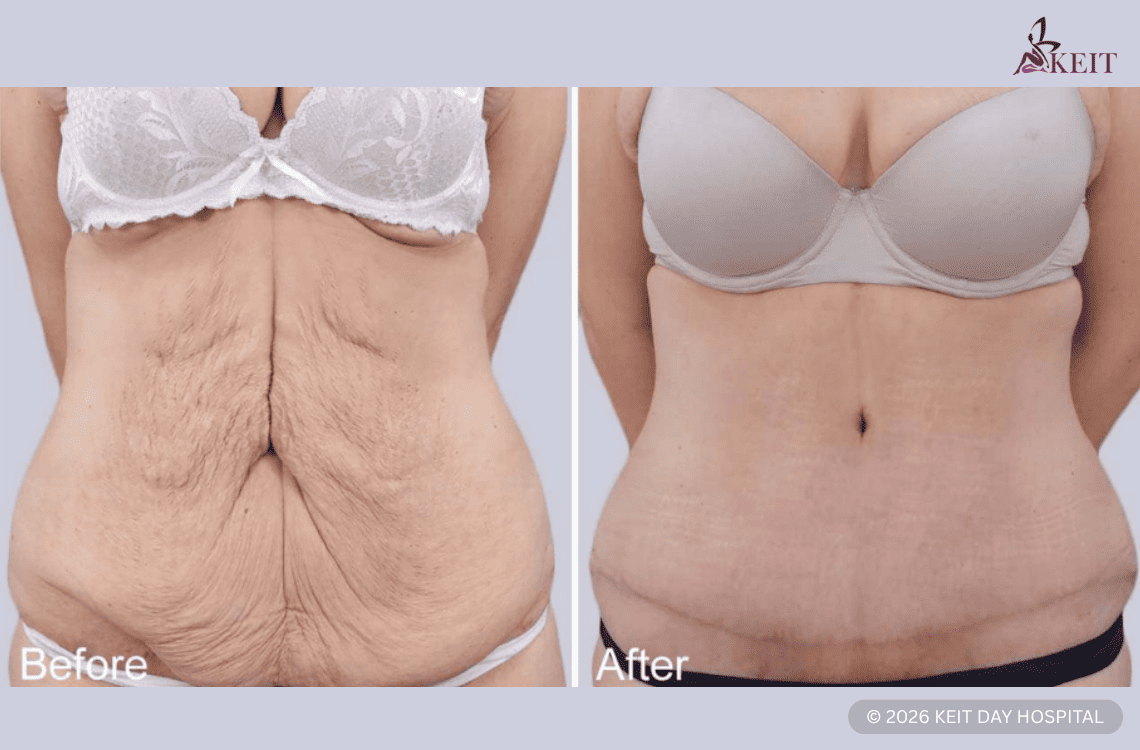
Mini tummy tuck vs full tummy tuck results: what to expect
The results of a mini or full tummy tuck vary based on the procedure type, individual anatomy, and skin quality.
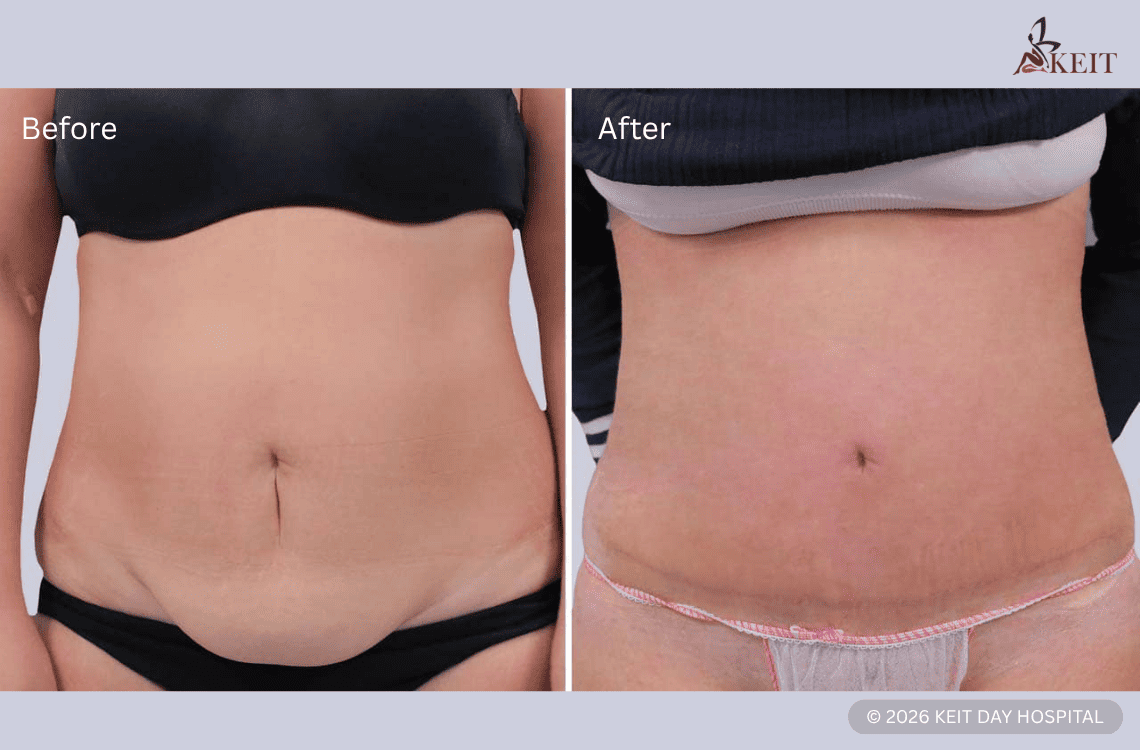
A mini tummy tuck delivers a firmer, smoother lower abdomen with reduced fat bulges and tighter skin. The improvement is usually subtle to moderate and mainly affects the area below the belly button.
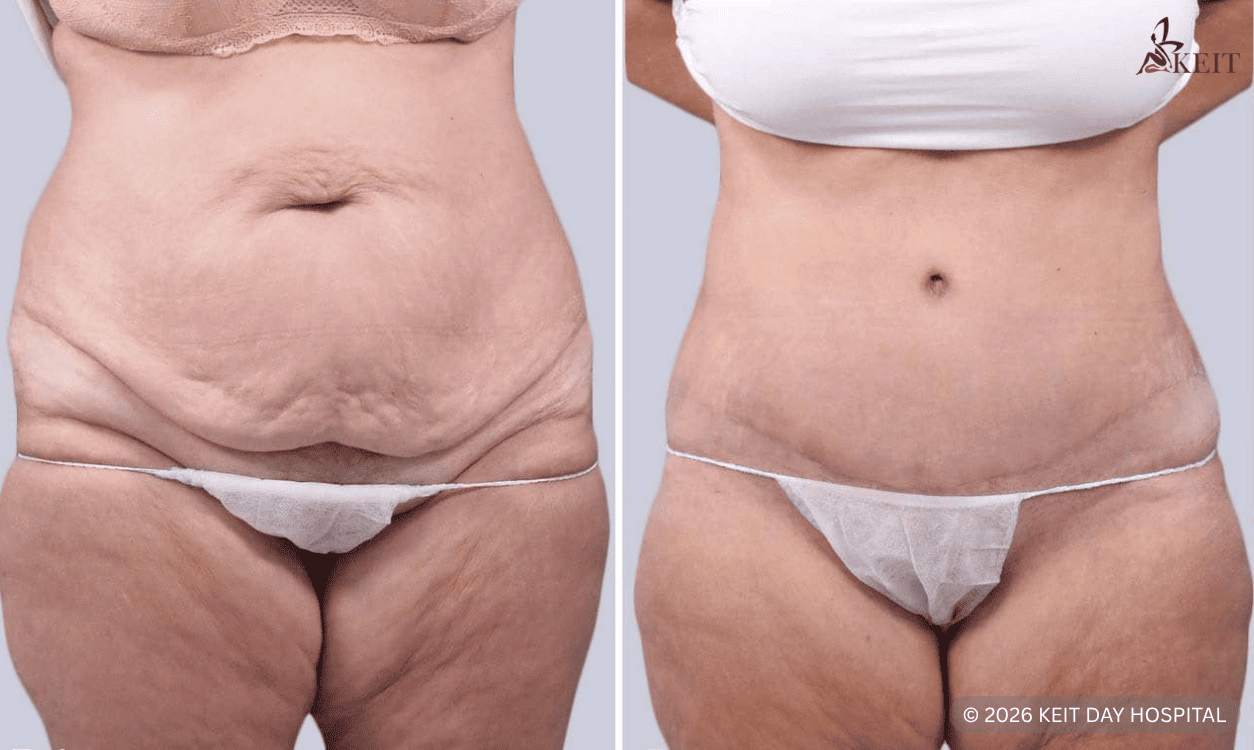
A full tummy tuck produces a flatter, firmer mid and lower abdomen, tightened abdominal muscles, and improved waistline definition. The procedure reduces excess skin above and below the belly button, giving a more comprehensive contouring effect.
Mini tummy tuck vs full tummy tuck recovery timeline
Recovery differs between mini and full tummy tuck due to the extent of tissue removal and surgical complexity.
- Mini Tummy Tuck: Limited activity for 1–2 weeks; normal daily activities resume in 3–4 weeks. Swelling generally subsides in 4–6 weeks. Scar maturation occurs over 6–12 months.
- Full Tummy Tuck: Limited activity for 2–4 weeks; strenuous activity resumes after 6–8 weeks. Swelling resolves in 8–12 weeks. Scar maturation takes 12–18 months.
Both procedures require compression garments, lifting restrictions, and adherence to post-operative care to optimise healing.

Mini tummy tuck scar vs full tummy tuck scar
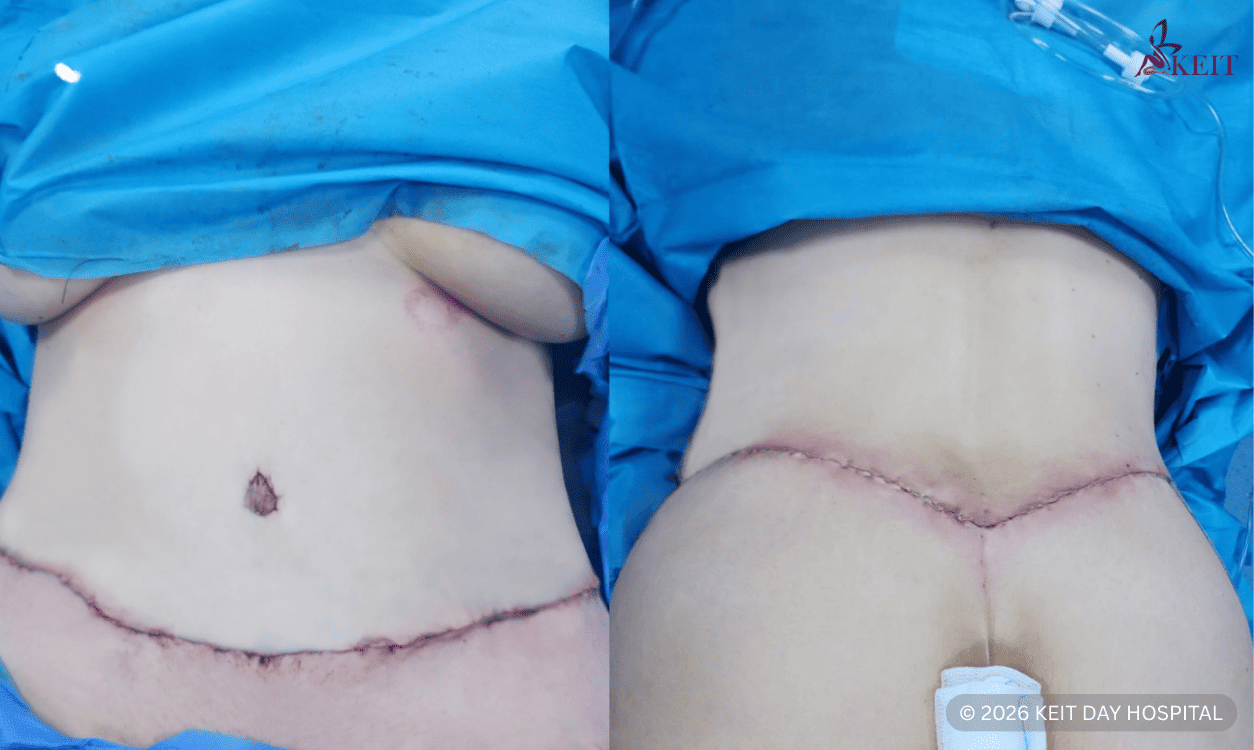
Mini tummy tuck scars are short and positioned low within the bikini line, making them easy to conceal under clothing. In contrast, full tummy tuck scars are longer, extending horizontally across the lower abdomen and potentially reaching from hip to hip depending on the amount of skin removed. Scar visibility and quality depend on skin type, healing ability, surgical technique, and proper post-operative care, with both procedures resulting in scars that generally soften and fade over time.
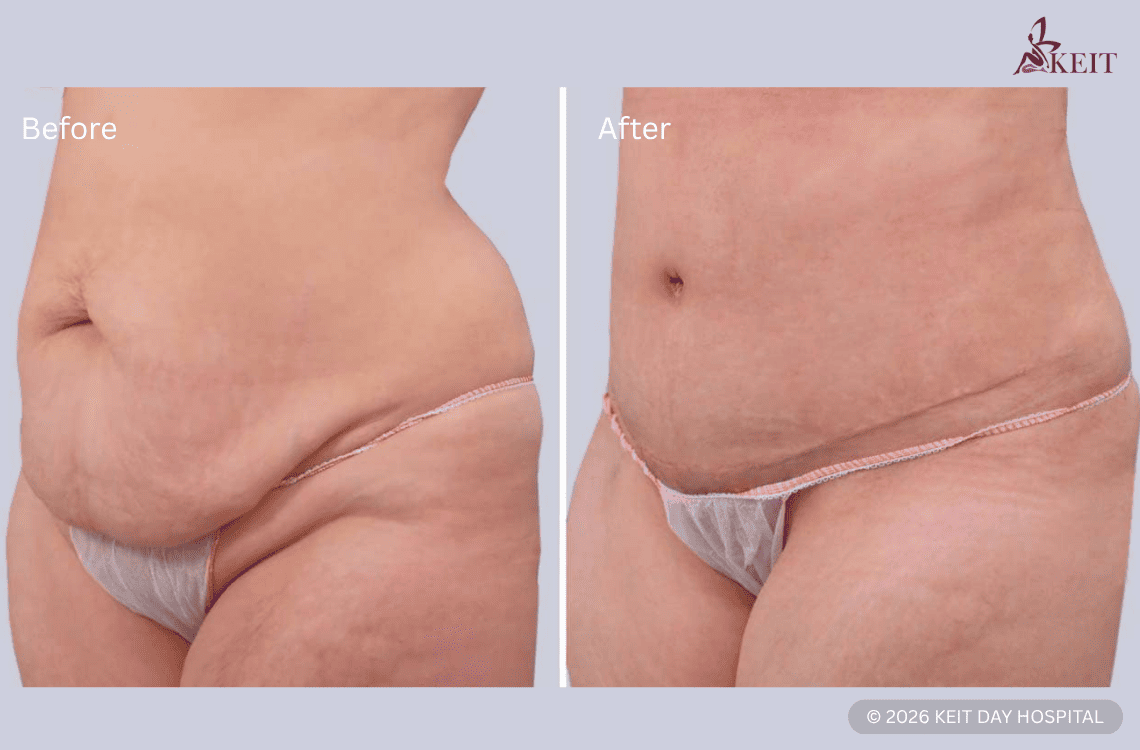
Mini tummy tuck vs full tummy tuck cost in the UK
A mini tummy tuck cost in the UK ranges between 3,000 and 5,500 euro, while a full tummy tuck ranges from 5,500 to 8,500 euro. Costs are influenced by the surgeon’s experience, clinic location, type of anaesthesia, and any additional procedures such as liposuction or muscle repair. Higher complexity or combined treatments can increase the overall cost, while simpler, standalone procedures generally fall at the lower end of these ranges.
How to decide between mini and full tummy tuck
Choosing between a mini and full tummy tuck depends on the extent of abdominal laxity, fat distribution, muscle separation, and your aesthetic goals. Key considerations include:
- Abdominal skin and fat: Limited lower abdominal excess favors a mini tummy tuck; widespread upper and lower laxity requires a full tummy tuck.
- Muscle separation (diastasis recti): Significant muscle laxity or separation necessitates a full tummy tuck for effective repair.
- Body contour and proportion goals: Consider whether correction of the upper abdomen is needed for balanced results.
- Recovery tolerance: Mini tummy tucks involve shorter downtime and less extensive scars, whereas full tummy tucks require longer recovery.
- Professional guidance: Consultation with a board-certified plastic surgeon ensures the procedure aligns with your anatomy and aesthetic expectations.