Published on:
 Modified on:

 Reading Time: 4 min

 Abdominoplasty
Recovery after a tummy tuck follows structured and progressive healing phases. Swelling, tightness, temporary discomfort and limited mobility are expected during the first weeks, especially when abdominal muscle repair is performed. With proper aftercare, realistic expectations and consistent medical follow-up, tummy tuck recovery is usually predictable and safe, allowing the abdomen to gradually regain stability, contour definition and long-term results.
 Table of Contents:
-
1
 What to expect immediately after tummy tuck surgery
-
2
Tummy tuck recovery time: What happens in the first hours, days and weeks
-
3
Drains, compression garment and pain management
-
4
Scar care and skin management after tummy tuck
-
5
Recovery from tummy tuck: Walking, standing straight and sleeping position
-
6
Tummy tuck recovery restrictions: What not to do
-
7
When can you return to work and normal daily activities after a tummy tuck?
-
8
When to contact your surgeon during recovery time for tummy tuck
This comprehensive guide explains what to expect immediately after tummy tuck surgery, how recovery progresses from the first hours to the later healing stages and what patients typically experience week by week. It also covers compression garments and pain management, safe movement, sleeping positions, recovery restrictions and when to return to work and daily activities. Finally, it highlights the symptoms that should be assessed promptly to keep recovery safe and predictable.
What to expect immediately after tummy tuck surgery
Immediately after tummy tuck surgery, the body begins adapting to anesthesia and abdominal tightening, leading to specific early sensations and positioning needs.
- You may feel groggy, tired or slightly dizzy as anesthesia wears off.
- The abdomen usually feels very tight and firm, with a strong “pressure” sensation.
- A compression garment is applied right away to support the tissues.
- Standing fully upright is not expected and posture is usually slightly bent at first.
Tummy tuck recovery time: What happens in the first hours, days and weeks
The post-operative phase includes a series of normal physical responses related to surgery and anesthesia.
- First hours: Abdominal tightness, pressure and fatigue are common. Standing fully upright is not expected. A compression garment is applied and discharge is usually the same day under medical supervision.
- Days 3–5: Swelling and tightness typically peak. Movement is limited and walking is slightly bent forward to protect the incision and muscle repair. Discomfort is expected and controlled with prescribed medication.
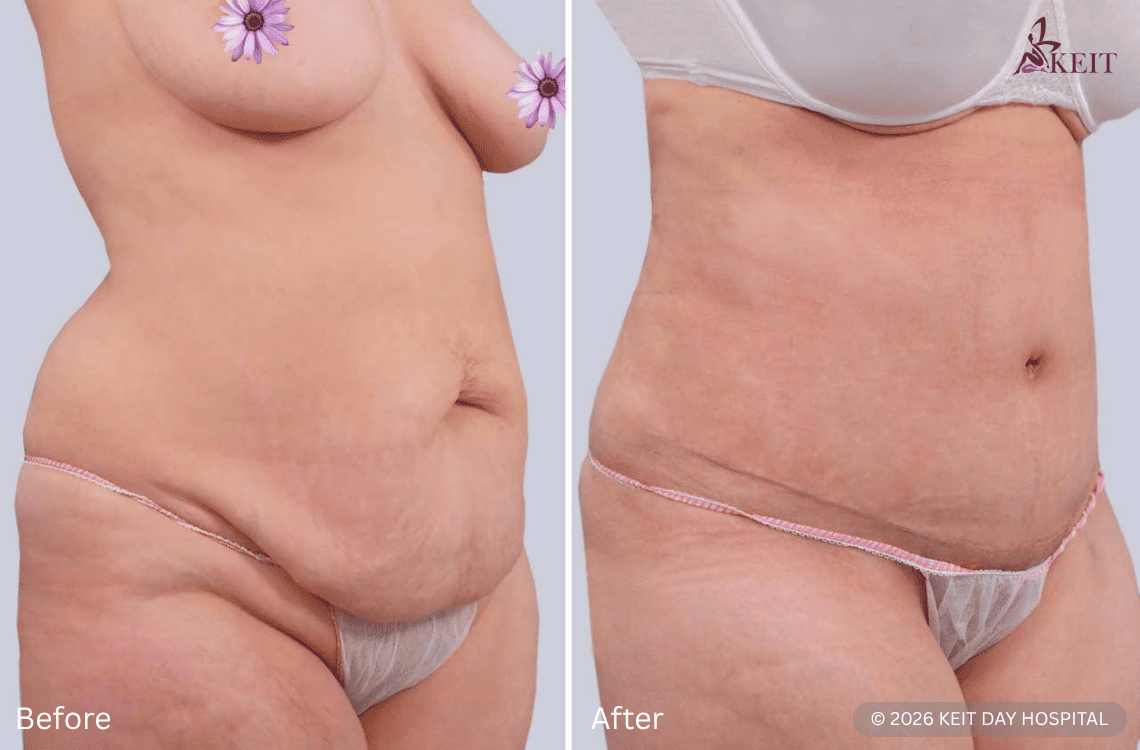
Tummy tuck recovery week by week
- Week 1: Noticeable swelling, bent posture and reduced mobility. Short walks are encouraged; lifting and strain are avoided.
- Weeks 2–3: Mobility improves and posture gradually straightens. Drains (if used) are often removed during this phase.
- Weeks 4–6: Swelling decreases and daily activities become easier. Light routines may resume with medical approval.
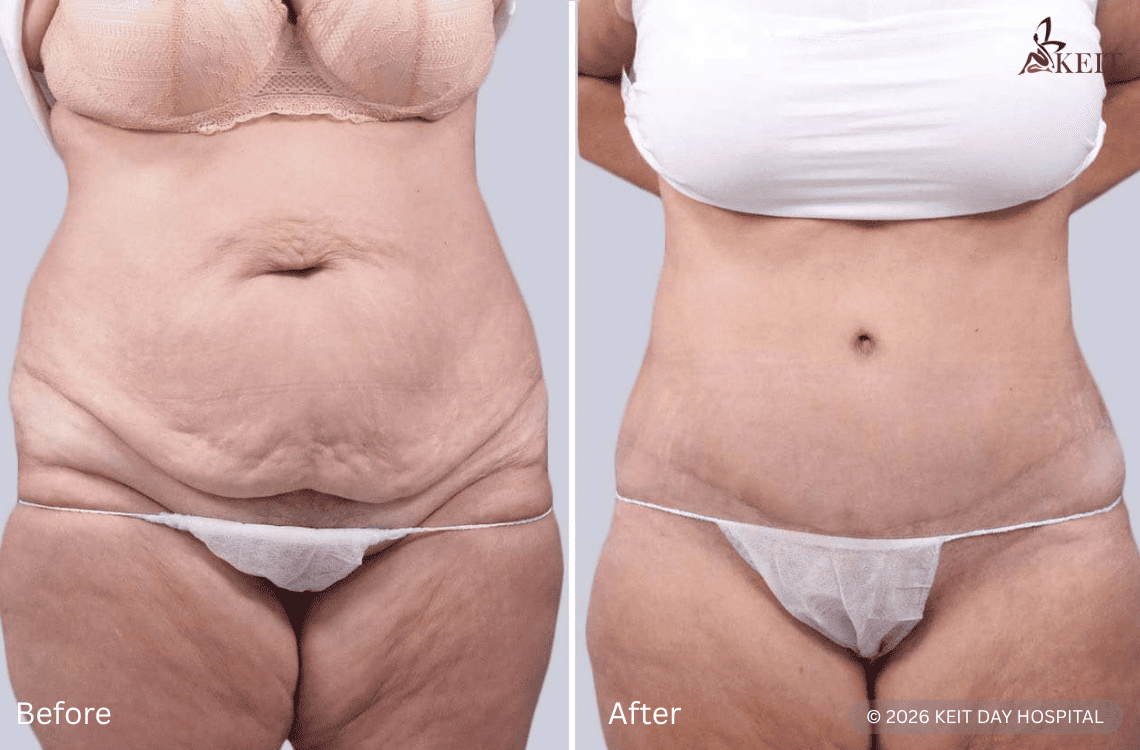
- Weeks 6–12: The abdomen feels more stable and less tight. Contour becomes clearer as residual swelling continues to reduce.
- Months 3–12: Gradual refinement of shape and scar maturation, with results stabilizing over time.

Drains, compression garment and pain management
Pain management after a tummy tuck is based on individualized protocols designed to control discomfort and reduce inflammation. Analgesics are commonly prescribed and antibiotics may be used when indicated.
Temporary surgical drains may be placed to prevent fluid accumulation and are usually removed within the first days once output decreases. Compression garments play a critical role in supporting tissues, minimizing swelling and improving comfort during healing. Proper pain control and compression support help protect muscle repair and contribute to a smoother recovery.
Scar care and skin management after tummy tuck
Scar healing follows a natural maturation process. In the early phase, scars may appear red, firm or slightly raised. Silicone gels or sheets are commonly recommended to support scar quality and sun protection is essential to prevent pigmentation changes.
Massage is not always required and should only be performed if advised by the surgeon. Timing is important, as premature massage may interfere with healing rather than improve outcom
Recovery from tummy tuck: Walking, standing straight and sleeping position
Walking is encouraged early, even during the first days, to support circulation and reduce complication risk. Short, frequent walks are preferred over prolonged activity.
Standing fully upright usually becomes more comfortable between the second and fourth week, depending on the extent of muscle repair. For sleeping, resting on the back with the upper body slightly elevated and knees supported is recommended during the initial weeks. Side sleeping is typically allowed later, once tension decreases and the surgeon confirms adequate healing.
Tummy tuck recovery restrictions: What not to do
During the first weeks after a tummy tuck, tissues are still healing and under tension, so certain activities can delay recovery or increase complication risk. Patients are usually advised to avoid:
- Heavy lifting, pushing or pulling, as this increases abdominal pressure.
- Core-engaging movements such as twisting, sudden bending, sit-ups or planks until cleared.
- High-impact exercise or intense workouts before medical approval.
- Forcing an upright posture too early, since straightening happens gradually.
- Smoking or nicotine exposure, which can impair circulation and scar quality.
- Skipping compression garment use if prescribed, as it supports swelling control.
When can you return to work and normal daily activities after a tummy tuck?
Returning to work and daily routines after a tummy tuck depends on the extent of surgery, muscle repair and the physical demands of the patient’s lifestyle.
- Desk-based or sedentary work: Many patients return within 2–3 weeks, as long as they can move comfortably, avoid long sitting and take regular breaks.
- Physically demanding jobs: Roles involving lifting, prolonged standing or physical effort usually require 4–6 weeks or longer before returning safely.
- Driving: Often allowed once patients are comfortable moving, no longer require strong pain medication and can react safely, typically after 2–3 weeks.
- Daily activities: Light household tasks can be resumed gradually, while strenuous chores should wait until cleared by the surgeon.
When to contact your surgeon during recovery time for tummy tuck
Most recovery symptoms improve gradually, but medical evaluation is recommended if any of the following occur:
- Increasing pain instead of gradual improvement.
- Swelling that worsens after initially decreasing or localized fluid buildup (possible seroma).
- Redness, warmth or unusual discharge from the incision.
- Wound edges separating or delayed closure.
- Persistent asymmetry or contour changes that worsen over time.