Published on:
 Modified on:

 Reading Time: 6 min
 Abdominoplasty
A tummy tuck, medically known as abdominoplasty, can create a smoother, firmer abdominal area by removing excess skin and tightening the abdominal wall. For many patients, the “before and after” changes are not only visible in the shape of the stomach, but also in how clothing fits and how the midsection feels after recovery.
 Table of Contents:
-
1
 Tummy tuck before and after: What really changes?
-
2
Full vs. mini tummy tuck before and after: How results differ
-
3
When do tummy tuck results become visible?
-
4
Tummy tuck recovery timeline: What to expect
-
5
Swelling, scars, and tightness after abdominoplasty
-
6
What to avoid during tummy tuck recovery
-
7
How to support better tummy tuck before and after results
-
8
When to contact your surgeon during recovery
In this article, we explain what changes to expect after a tummy tuck, when results become visible, how recovery develops, what is normal during healing, and when to contact your surgeon.
Tummy tuck before and after: What really changes?
A tummy tuck is designed to remove loose skin and improve the shape of the abdomen, especially after pregnancy, weight changes, or ageing. When needed, it may also include abdominal muscle repair for better firmness and support. However, abdominoplasty is not a weight-loss procedure; it is a body contouring surgery.
Common tummy tuck before and after changes include:
- less loose or hanging abdominal skin around the abdomen
- a flatter and smoother stomach shape, especially in the lower belly area
- firmer abdominal support when muscle repair is included
- better waist definition, depending on the patient’s anatomy
- improved clothing fit, especially with fitted clothing or swimwear
Every result is personal and depends on skin quality, muscle condition, body shape, surgical technique, and healing. Before and after photos can show possible improvements, but only a surgeon can assess what is realistic for your body.
Full vs. mini tummy tuck before and after: How results differ
A full tummy tuck and a mini tummy tuck both improve abdominal contour, but they treat different concerns. A full tummy tuck is usually recommended for more extensive loose skin affecting the upper and lower abdomen. It may also include muscle repair. A mini tummy tuck focuses mainly on mild loose skin or fullness below the belly button.
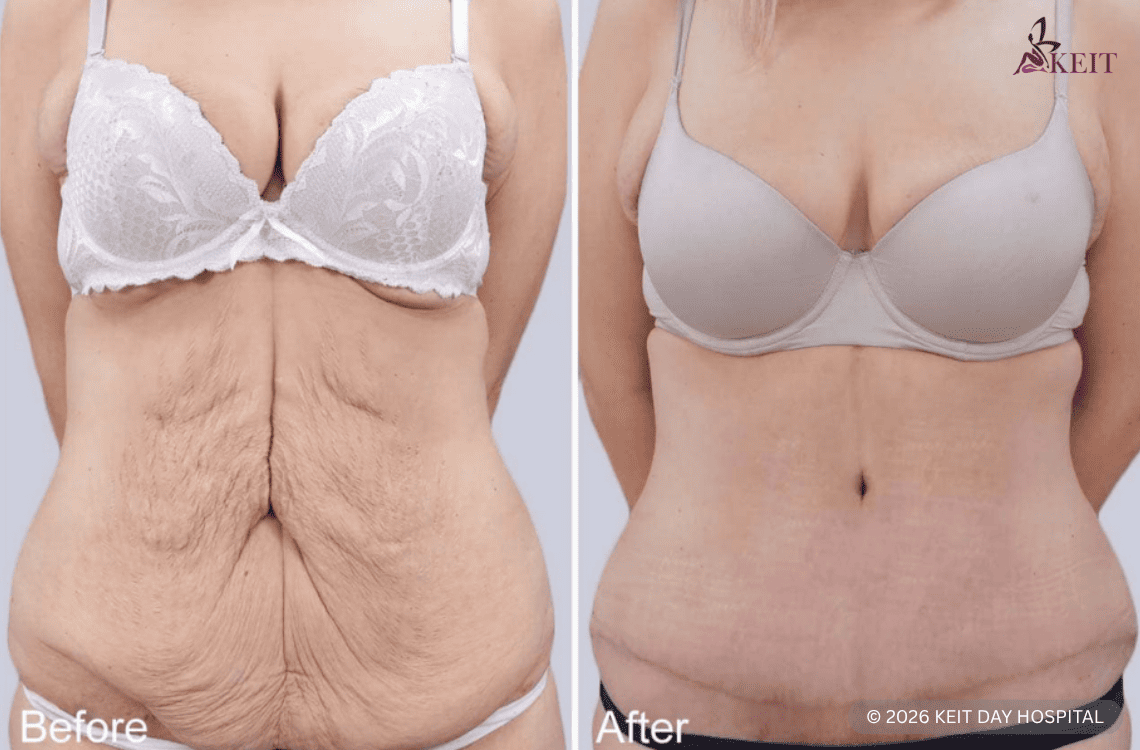
Before and after a full tummy tuck
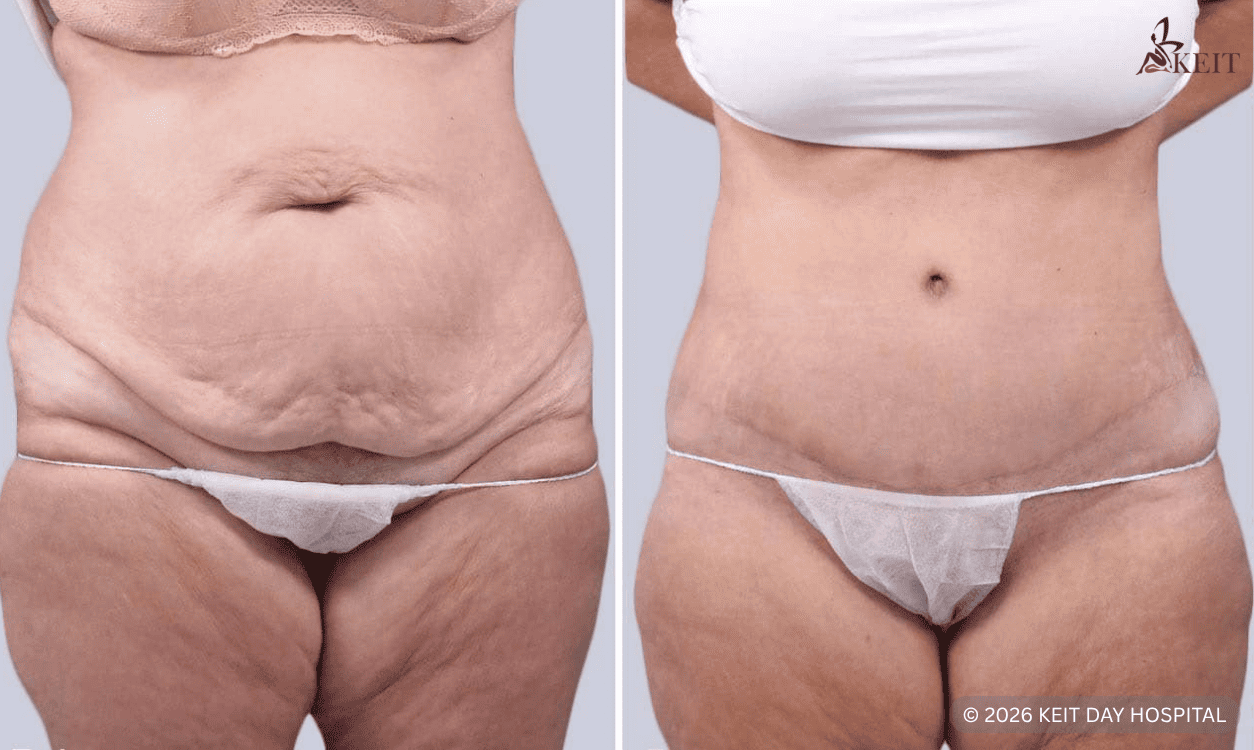
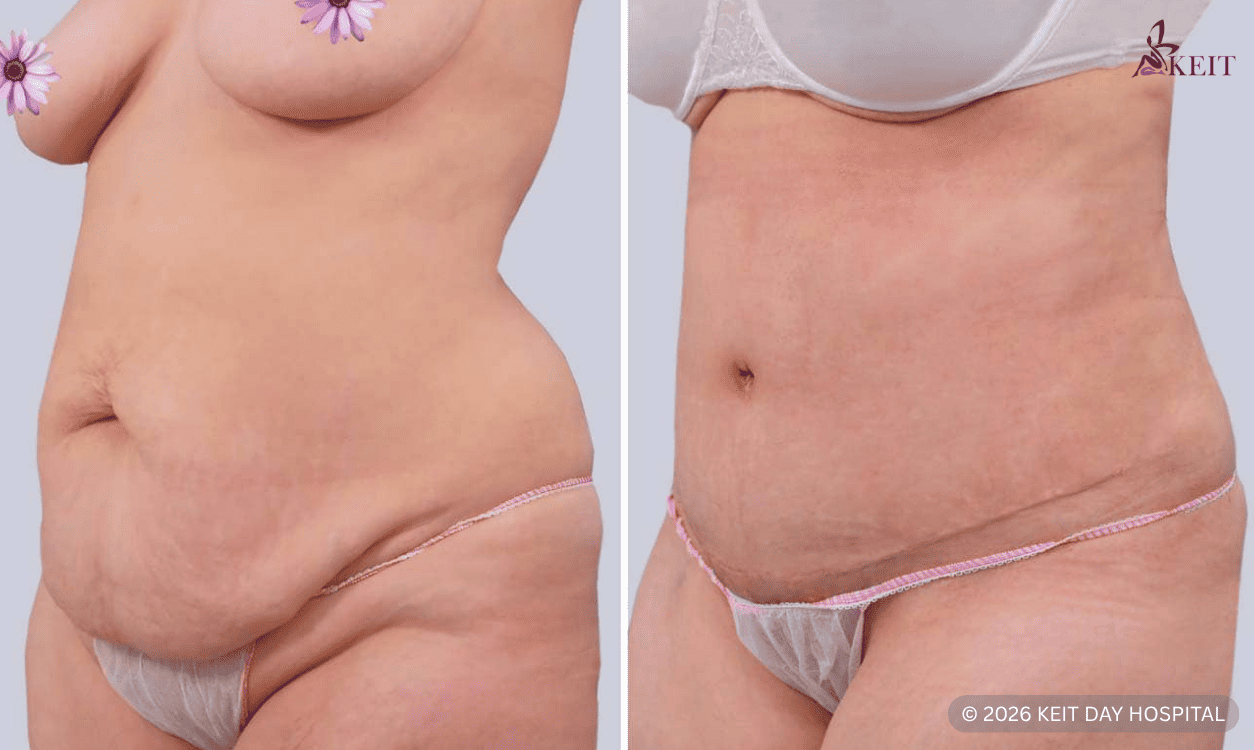
A full tummy tuck can create a flatter, smoother abdomen, improve waist definition, and provide better support when muscle repair is needed. In some cases, the belly button may be repositioned to match the new abdominal shape.
In the image below, you can see a before and after example of a full tummy tuck.
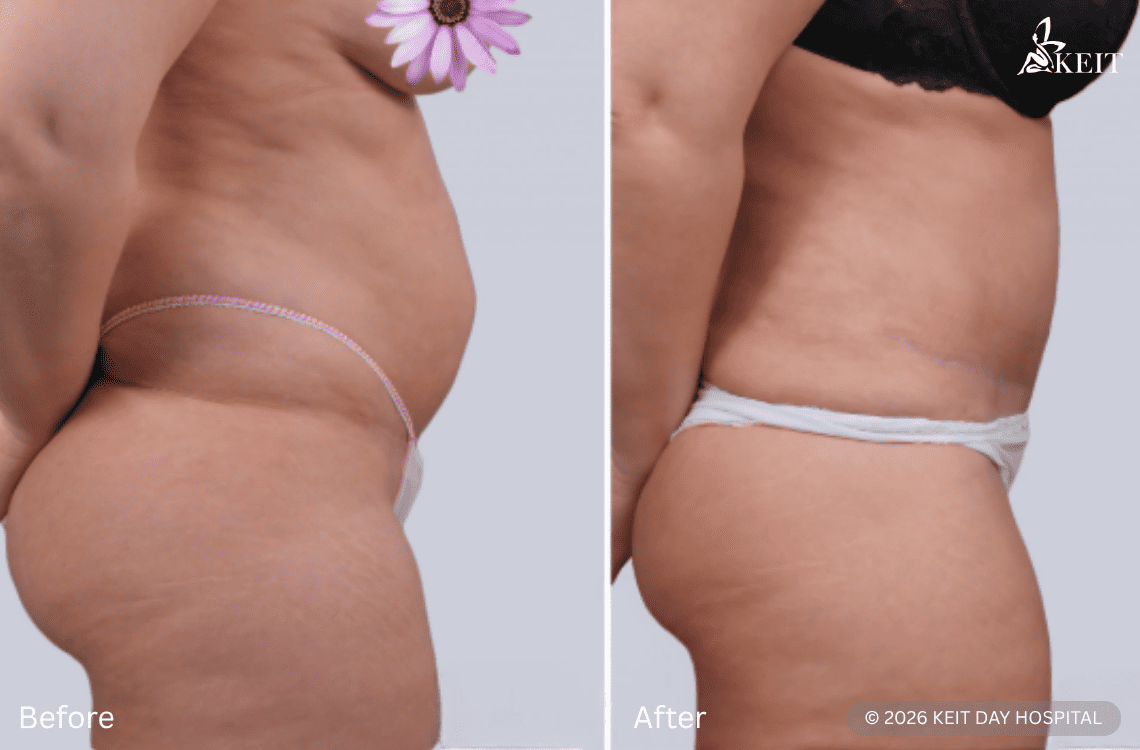
Before and after a mini tummy tuck
A mini tummy tuck gives a more targeted improvement in the lower abdomen. Patients may notice a tighter, smoother lower stomach with less fullness or loose skin below the belly button.
In the image below, you can see a before and after example of a mini tummy tuck.
When do tummy tuck results become visible?
Tummy tuck results may become noticeable within the first few weeks, as the abdomen begins to look flatter. However, swelling and tightness are expected at first, so the final contour develops gradually.
In general, results may progress as follows:
- First few weeks: early flattening, swelling, and tightness
- 6 to 8 weeks: reduced swelling, easier movement, and clearer shape
- 3 to 6 months: more defined contour and better clothing fit
- 6 to 12 months: final contour, softer tissues, and a more natural result
Patients should be aware that this is an individual journey, and the timeline is not fixed. Tummy tuck results should be viewed as a gradual process, not a fixed outcome that appears immediately after surgery.
Tummy tuck recovery timeline: What to expect
After a tummy tuck, recovery happens in stages. Most patients need several weeks before daily movement feels easier.
A general abdominoplasty recovery timeline may include:
- First few days: rest, careful walking, swelling, and tightness
- Week 1 to 2: less discomfort, continued incision care, compression garment use, and light movement
- Weeks 3 to 6: easier movement and gradual return to daily routines
- After 6 weeks: more activity may be allowed, including exercise, with surgeon approval
- After 3 months: improved comfort while internal healing continues
Recovery depends on the type of tummy tuck, whether muscle repair was performed, and how the body heals. Patients should follow their surgeon’s instructions and avoid returning to activity too soon.

Swelling, scars, and tightness after abdominoplasty
Swelling, scarring, and tightness are normal after abdominoplasty and are usually most noticeable during early recovery. These changes improve as the abdomen heals and the tissues settle.
Swelling can make the abdomen look fuller at first, so the final result is not visible immediately. The contour usually becomes clearer over the following weeks and months.
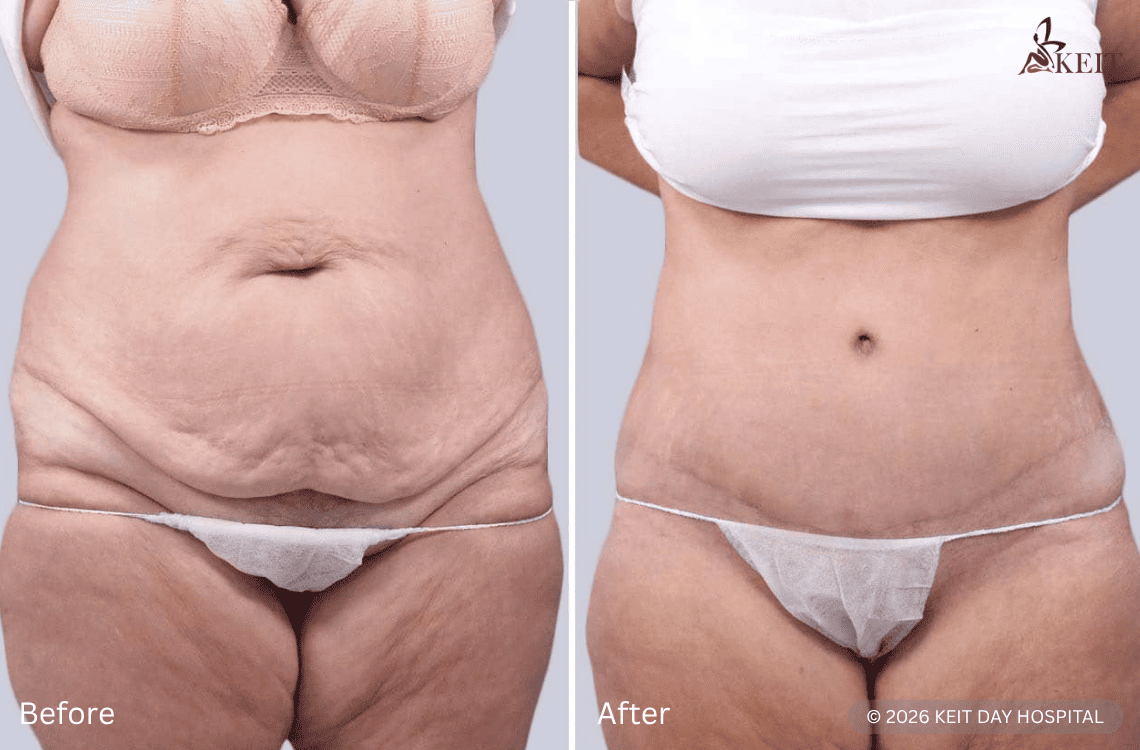
The tummy tuck scar is usually placed low on the abdomen, where it can be covered by underwear or swimwear. Although the scar is permanent, it typically becomes flatter, softer, and lighter over 12 to 24 months.
Tightness is also expected as the skin and tissues adapt to their new position. When muscle repair is included, this feeling may be stronger at first but usually improves with healing.
The image below shows an example of how an abdominoplasty scar may appear after tummy tuck surgery.
What to avoid during tummy tuck recovery
During tummy tuck recovery, patients should avoid anything that strains the abdomen, increases tension on the incision, or delays healing.
Patients should be careful with:
- Heavy lifting and intense exercise, especially when muscle repair has been performed.
- Sudden stretching or twisting movements that pull on the incision.
- Sleeping on the stomach, which can pressure healing tissues.
- Smoking or nicotine use, which can slow healing.
- Skipping aftercare instructions, including compression garments, incision care, medication, and follow-ups.
Recovery should be gradual. Giving the body enough time to heal helps protect the surgical outcome and supports a smoother tummy tuck before and after result.
How to support better tummy tuck before and after results
Good results depend on the surgery, healing process, and aftercare. Patients can support recovery by following their surgeon’s instructions and maintaining healthy habits after abdominoplasty.
To help protect the result, patients should:
- Follow all aftercare instructions, including incision care, medication guidance, compression garment use, and follow-up visits.
- Wear the compression garment as recommended to support the abdomen and help reduce swelling while the tissues heal.
- Keep movement gentle in the beginning, then increase activity only when the surgeon confirms it is safe.
- Eat balanced meals and stay hydrated to support healing, energy levels, and overall recovery.
- Maintain a stable weight after surgery, as major weight changes can affect the abdominal contour over time.
- Protect the scar from sun exposure while it is healing, as UV exposure can make scars darker or more noticeable.
Major weight changes or future pregnancy can affect the abdominal contour over time.
When to contact your surgeon during recovery
Contact your surgeon if symptoms become worse, appear suddenly, or do not feel like normal healing.
Seek medical advice if you notice:
- increasing pain or swelling after initial improvement
- redness, warmth, or discharge around the incision
- fever or feeling unwell
- opening, bleeding, or unusual scar changes
- shortness of breath, chest pain, or leg swelling
Follow-up appointments are important for checking healing and guiding each stage of recovery safely.