Published on:
 Modified on:

 Reading Time: 5 min

 Abdominoplasty
Many people want a flatter, firmer or more defined belly area, but the right treatment depends on what is causing the concern. In some cases, the issue is stubborn fat around the stomach, waist or lower abdomen. In others, it may be loose skin, stretched tissue or weakened abdominal muscles.
 Table of Contents:
-
1
 Belly fat, loose skin or abdominal sagging?
-
2
Can exercise tighten loose belly skin?
-
3
What is liposuction?
-
4
What is a tummy tuck?
-
5
Liposuction vs Tummy Tuck: What is the difference?
-
6
When are liposuction and tummy tuck combined?
-
7
Who is a good candidate?
-
8
What should you expect during recovery?
In this article, we compare liposuction vs tummy tuck surgery, explain the key differences between the two procedures, and cover when they may be combined. We also discuss who may be a suitable candidate, what recovery involves, and how to choose the right option for your body goals.
Belly fat, loose skin or abdominal sagging?
The appearance of the belly area can be affected by different factors. For some people, the main concern is localised fat that remains around the abdomen, waist or flanks despite diet and exercise. For others, it may be loose skin, reduced firmness or abdominal sagging after pregnancy, weight changes or ageing.
In many cases, more than one of these concerns may be present at the same time, which can affect the overall shape and contour of the abdomen.
Can exercise tighten loose belly skin?
Exercise can help strengthen the abdominal muscles, improve overall fitness and support weight management. In some cases, building muscle may improve the appearance of the midsection and create a firmer look.
However, exercise cannot remove excess skin or fully restore skin elasticity. When loose skin develops after pregnancy, significant weight loss or ageing, it may not tighten sufficiently through exercise alone. Similarly, localized fat deposits can sometimes remain despite a healthy diet and regular physical activity.
What is liposuction?
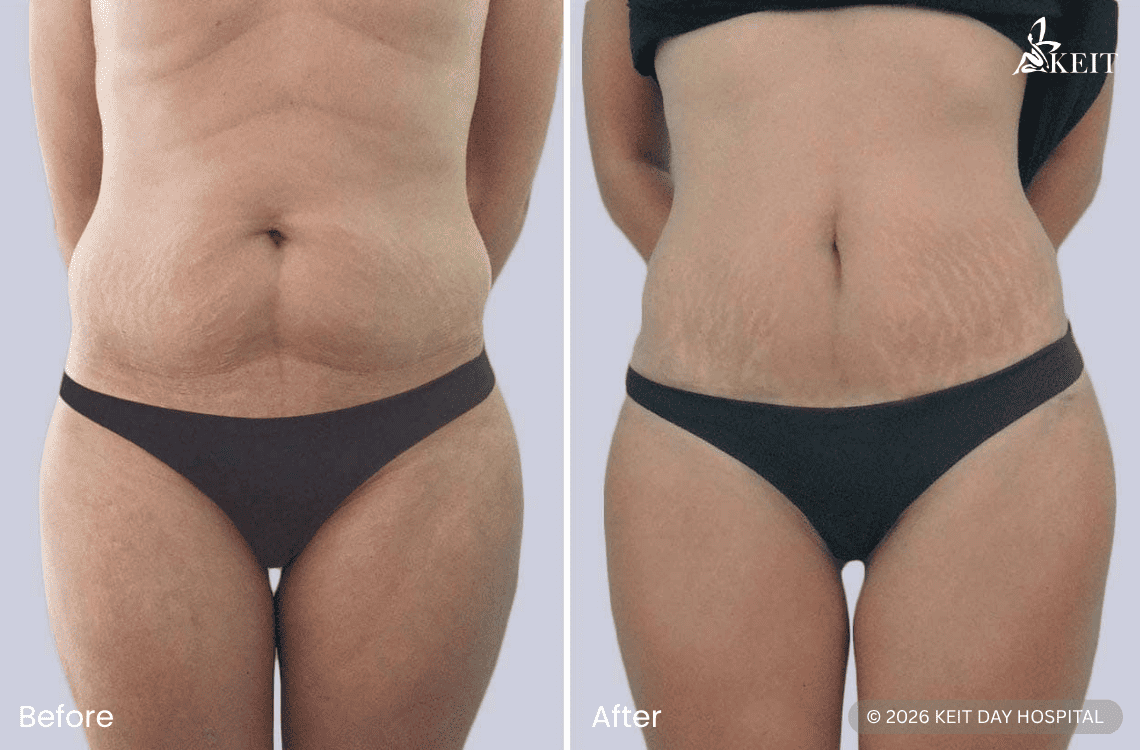
Liposuction is a surgical procedure that removes localised fat deposits from specific areas of the body. Tummy liposuction specifically helps reduce stubborn fat around the stomach, waist or flanks (love handles) to improve body contour and definition.
During the procedure, small incisions are made, and a thin tube called a cannula is used to remove excess fat. Liposuction is usually most suitable for patients who have good skin elasticity and want to improve shape and proportion rather than address loose skin or abdominal muscle laxity.

What is a tummy tuck?
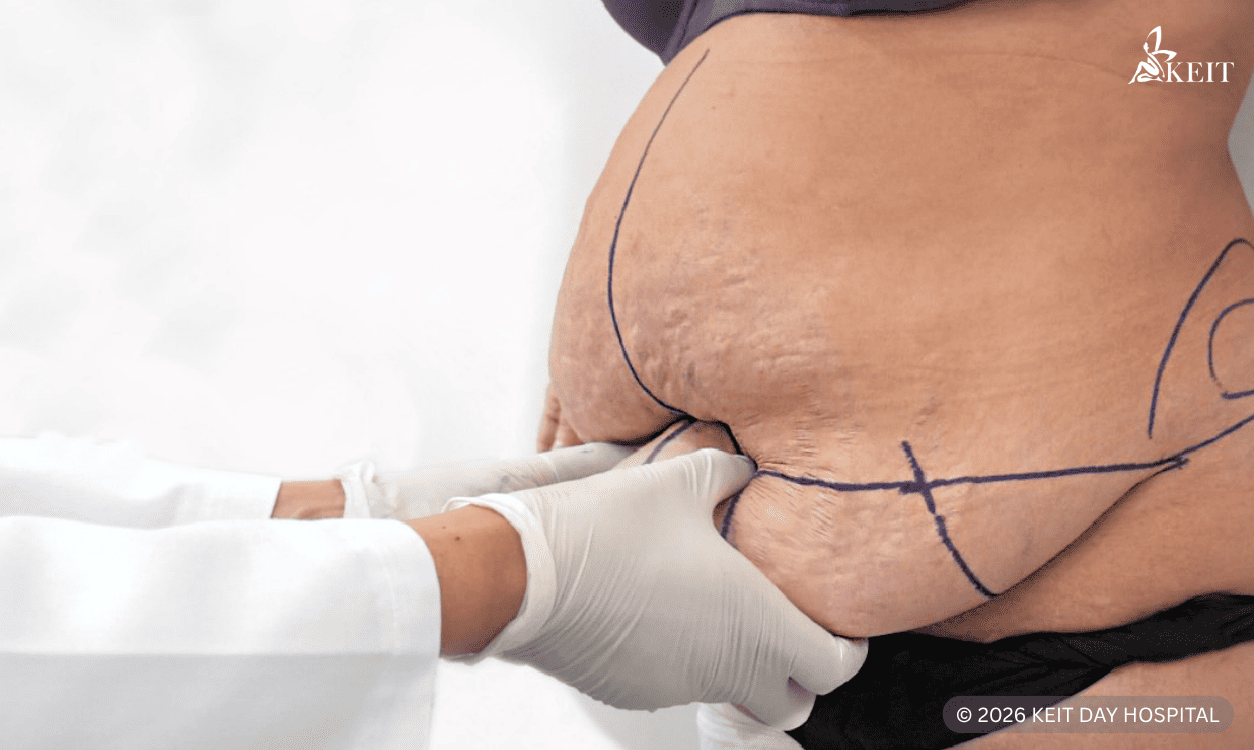
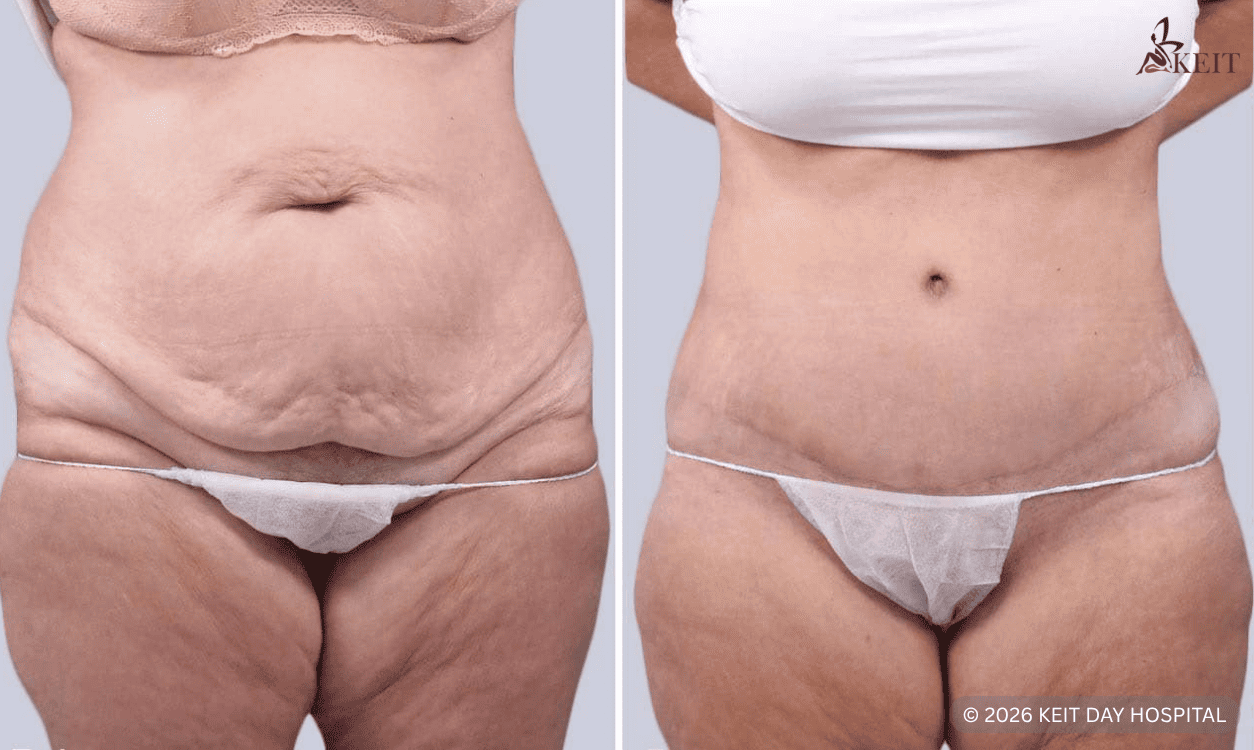
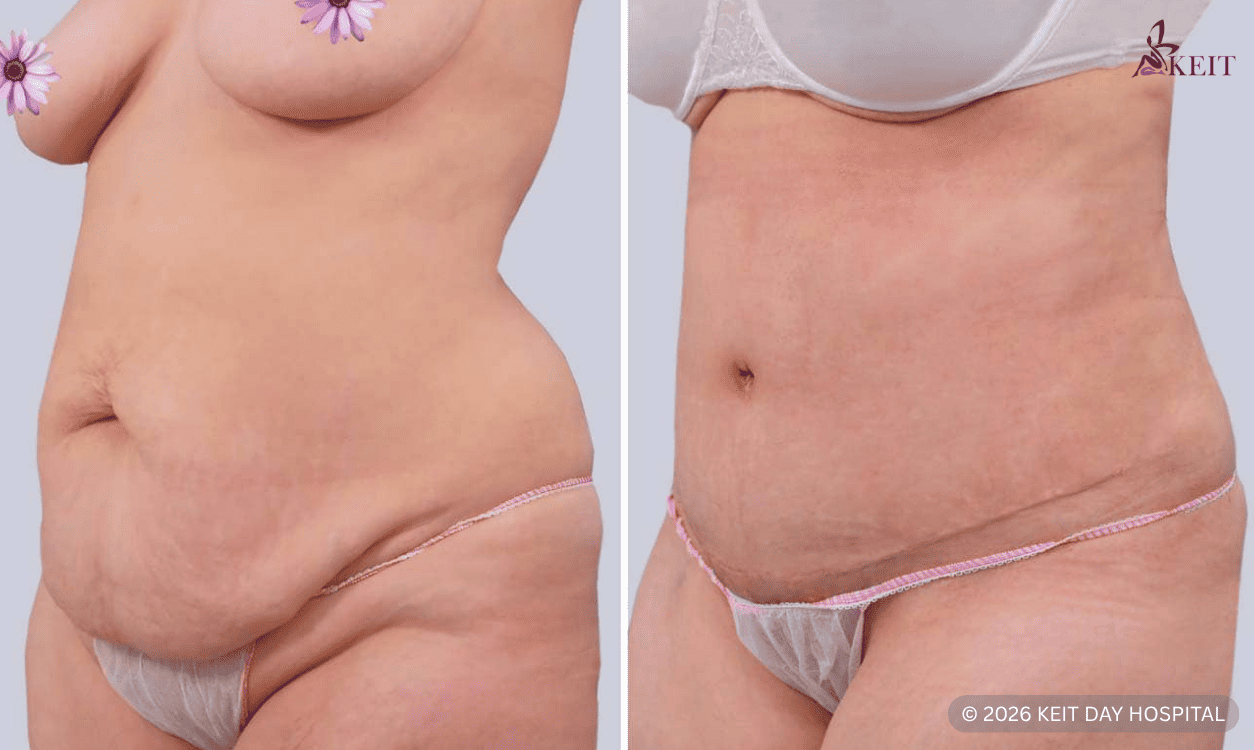
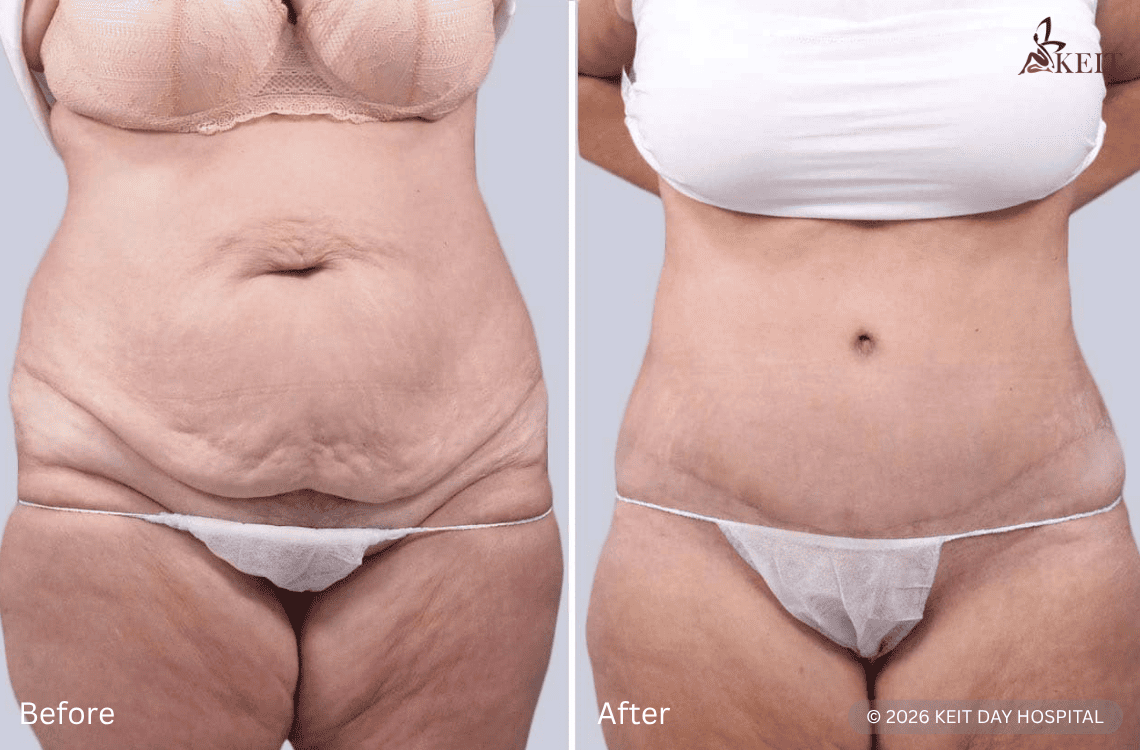
A tummy tuck, also known as abdominoplasty, is a surgical procedure that removes excess skin and fat from the abdominal area. It is usually considered when the main concern is loose or sagging skin that cannot be improved enough through exercise or weight management.
During the procedure, the surgeon removes excess tissue and tightens the remaining skin to create a flatter and firmer abdominal contour. In some cases, the abdominal muscles may also be repaired or tightened, depending on the patient’s anatomy and surgical plan.
Liposuction vs Tummy Tuck: What is the difference?
The main difference between liposuction and tummy tuck surgery is the concern each procedure treats. Liposuction is mainly used to remove localised fat deposits, while a tummy tuck is used to remove excess abdominal skin and may also tighten weakened muscles.
The comparison below highlights some of the key differences between the two procedures:
| Factor | Liposuction | Tummy Tuck |
|---|---|---|
| Main concern | Isolated fat pockets | Loose skin and abdominal laxity |
| Fat removal | Yes | Some fat may be removed |
| Loose skin removal | No | Yes |
| Muscle tightening | No | Possible, if needed |
| Best suited for | Patients with good skin elasticity | Patients with excess skin |
| Incisions | Small cannula incisions | Longer lower-abdominal incision |
| Scarring | Small cannula incision marks | Longer low abdominal line scar |
| Recovery | Shorter downtime | Longer healing time |
| Result | More defined body contour | Flatter and tighter abdomen |
When are liposuction and tummy tuck combined?
Liposuction and tummy tuck surgery may be combined when the abdomen has both localised fat and loose skin. This is often considered after pregnancy, significant weight loss, ageing or long-term weight changes, when the skin has stretched and fat remains around the stomach, waist or flanks.
In a combined procedure, liposuction can help refine areas such as the waist and love handles, while the tummy tuck removes excess abdominal skin and may tighten weakened muscles. This can create a more complete abdominal contour than either procedure alone in selected patients. The surgical plan depends on the patient’s anatomy, skin quality, fat distribution, medical history and aesthetic goals. In some cases, this combined approach may be referred to as lipoabdominoplasty.
Who is a good candidate?
A good candidate for abdominal contouring surgery is usually someone who is close to a stable weight but still has concerns about the appearance of the belly area. This may include stubborn fat, loose skin, abdominal sagging or changes after pregnancy or significant weight loss.
Abdominal contouring may be suitable for individuals who:
- have localized fat around the stomach, waist or love handles;
- have loose or sagging abdominal skin;
- have changes after pregnancy, ageing or weight loss;
- are in good general health;
- maintain a stable weight;
- have realistic expectations about the outcome;
- understand the recovery process and are willing to follow aftercare instructions.
Before any procedure, a consultation with a plastic surgeon is necessary. During this assessment, the surgeon evaluates skin quality, fat distribution, abdominal muscles, medical history and whether liposuction, tummy tuck surgery or a combined approach is more appropriate.
What should you expect during recovery?
Recovery after abdominal contouring surgery depends on the procedure performed and the extent of correction. After liposuction, many patients can return to light daily activities within a few days to one week, although swelling and bruising may continue for several weeks.
Tummy tuck recovery is usually longer, especially when abdominal muscle repair is performed. Many patients need around 2 to 4 weeks before returning to work and normal daily activities, although this depends on the extent of surgery and the nature of their job. Heavy lifting and strenuous exercise are typically restricted for longer.
In both cases, the surgeon may recommend compression garments, wound care instructions and follow-up appointments. Following post-operative advice is important to support healing and protect the final result.