Published on:
 Modified on:

 Reading Time: 5 min
 Abdominoplasty
Loose skin after weight loss is excess or lax skin that remains when the body contour changes after fat loss. It most often affects the abdomen, arms, thighs and breasts especially after major weight loss, rapid weight reduction or long-term stretching. Mild laxity may improve after weight stabilises, while significant excess skin requires clinical assessment to determine the most appropriate treatment.
 Table of Contents:
-
1
 Loose skin after weight loss: What it is and what causes it?
-
2
Fat vs loose skin: How to tell the difference
-
3
Loose skin after weight loss: The main areas affected
-
4
Does loose skin go away after weight loss?
-
5
How to avoid loose skin after weight loss: Natural approaches
-
6
Non-surgical treatments for loose skin after weight loss
-
7
Surgical options to remove loose skin after weight loss
-
8
Loose skin after weight loss: When should you see a specialist?
In this guide, we explain why loose skin develops after weight loss, how to distinguish it from residual fat, and which areas are most affected. We also cover whether it can improve naturally, prevention methods, treatment options, and when to see a specialist.
Loose skin after weight loss: What it is and what causes it?
Loose skin after weight loss is excess or lax skin that remains after body fat is reduced and the skin does not fully retract to the new body contour. It may appear as sagging skin, folds or stretched skin, most commonly on the abdomen, arms, thighs, breasts, face or neck.
The main factors that contribute to loose skin after weight loss include:
- Extent of weight loss: Significant fat loss leaves a larger skin envelope, increasing the risk of visible excess skin.
- Rate of weight loss: Rapid weight reduction may limit the skin’s ability to gradually contract.
- Age and skin elasticity: Collagen and elastin decrease with age, reducing the skin’s natural firmness and retraction capacity.
- Duration of skin stretching: Skin that has been stretched for many years is less likely to return fully to its previous shape.
- Genetic factors: Inherited collagen quality, skin thickness and elasticity influence how well the skin retracts.
- Lifestyle factors: Smoking and long-term sun exposure damage collagen and can worsen skin laxity.
- Pregnancy and weight fluctuations: Repeated stretching can weaken skin support and increase the likelihood of sagging.
Fat vs loose skin: How to tell the difference
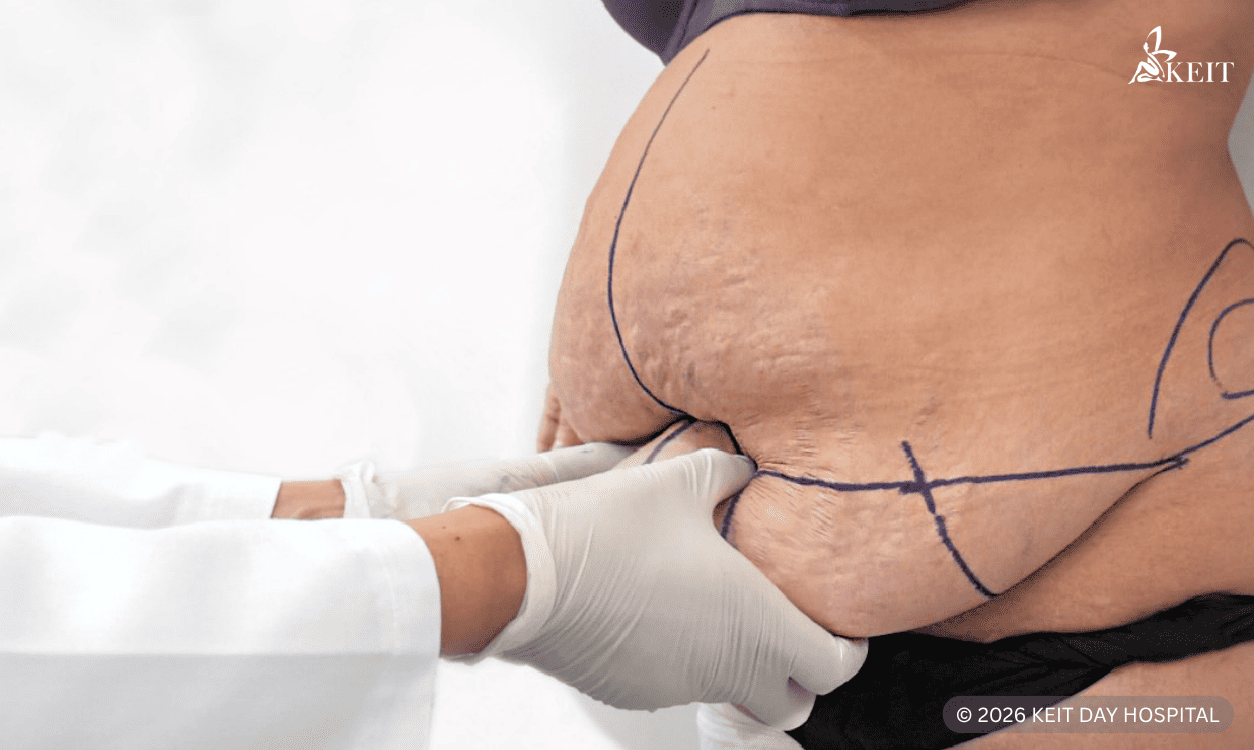
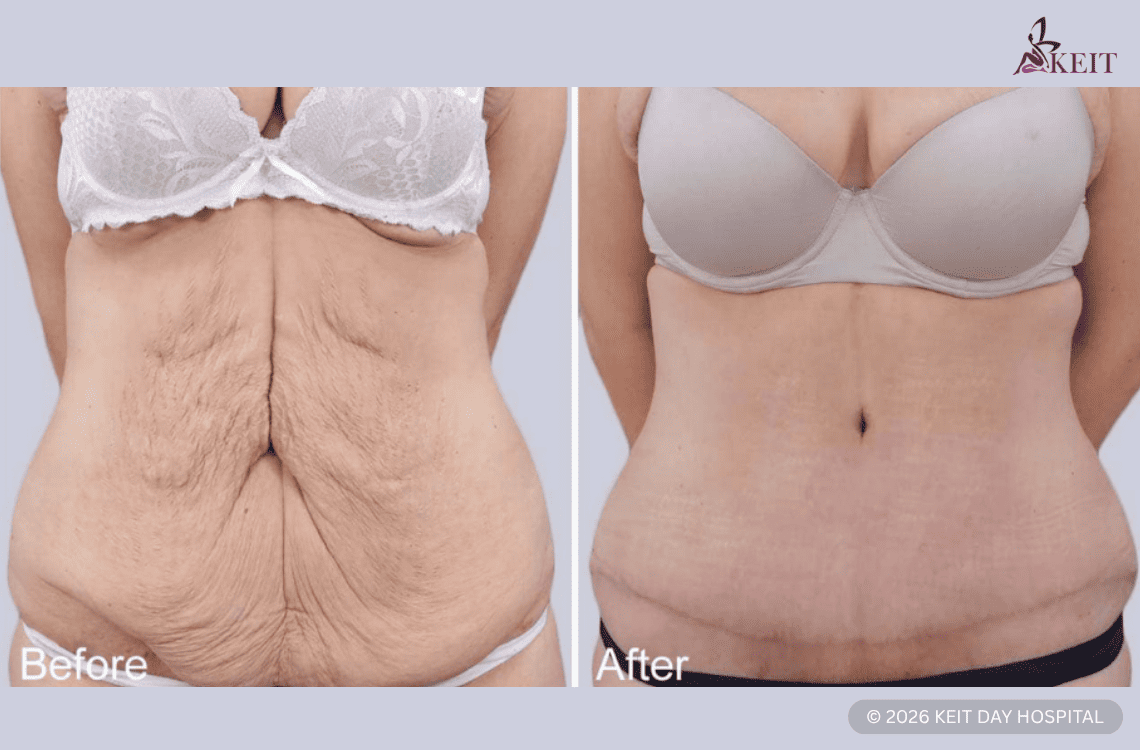
Fat and loose skin can appear similar, but they are clinically different concerns. Loose skin appears as thin, lax tissue that folds, hangs, or can be pulled away from the body with little resistance. Residual fat feels thicker and more filled because there is still a layer of fatty tissue beneath the skin. If the area has both fullness and sagging, there may be a combination of residual fat and excess skin. A clinical assessment is important because treatment depends on the cause.
Loose skin after weight loss: The main areas affected
Loose skin after weight loss can affect several body areas, depending on where fat volume was reduced and how well the skin retracts. The main areas include:
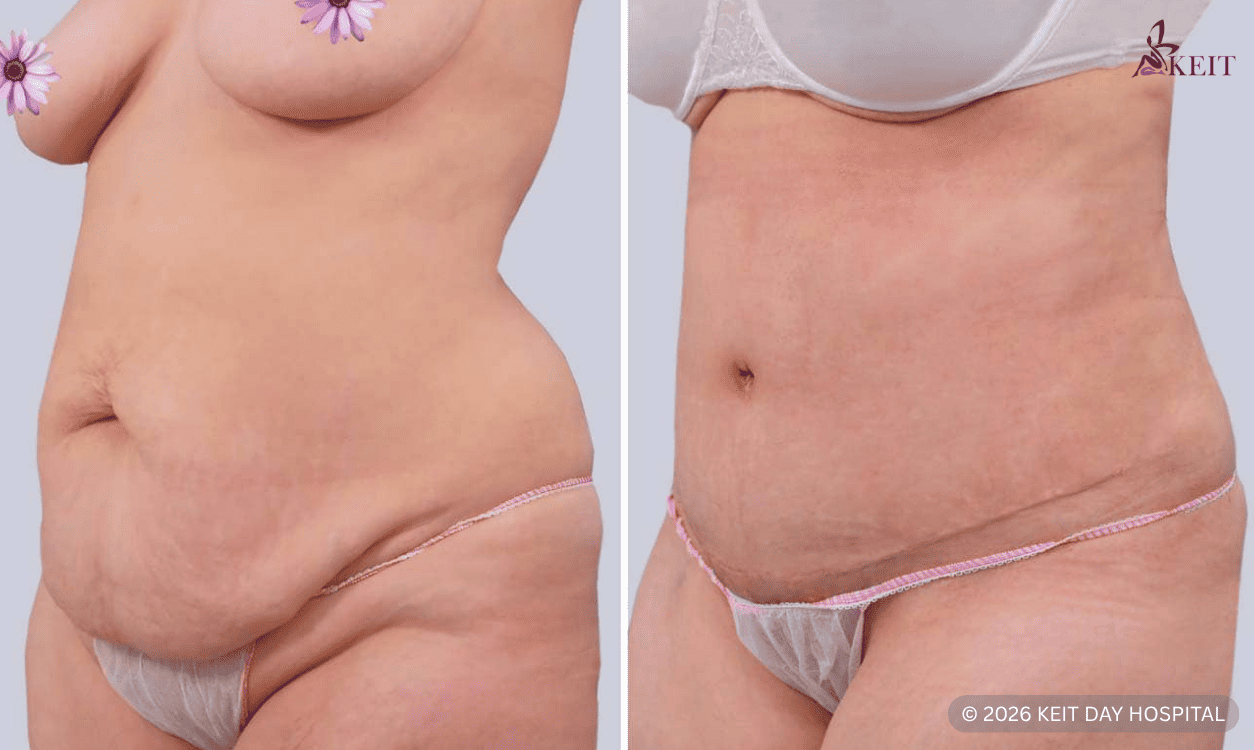
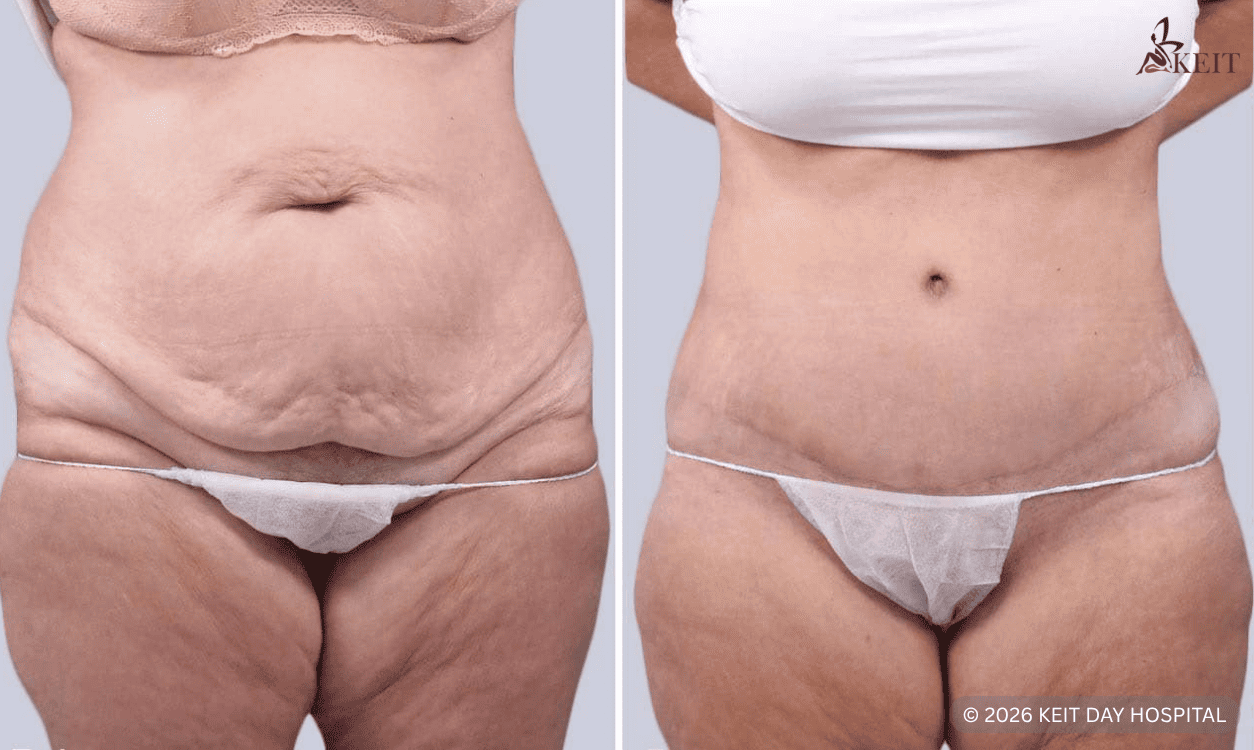
- Abdomen: Loose abdominal skin often appears as folds or laxity across the lower stomach, especially after major weight loss or pregnancy.
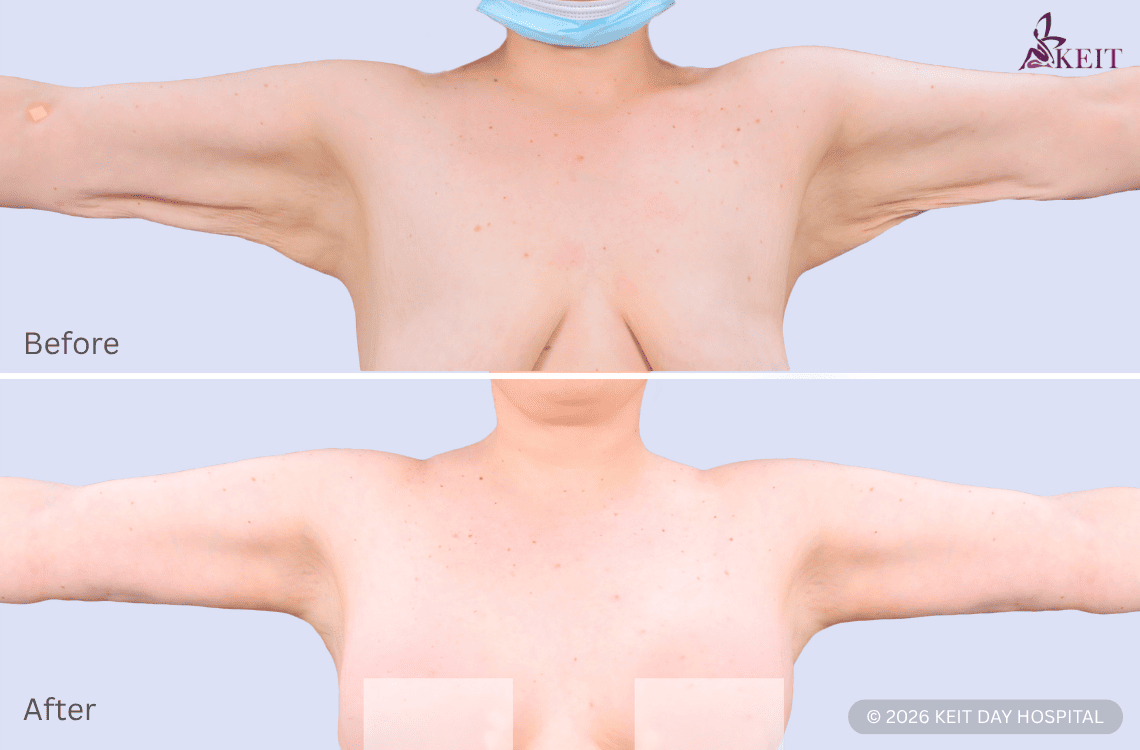
- Arms: Loose skin on the upper arms may create sagging along the inner arm, often called “bat wings”.
- Thighs: Skin laxity may affect the inner thighs, outer thighs, or knees after significant fat loss.
- Breasts: Loss of breast volume can lead to reduced firmness, skin excess, and breast ptosis.
- Face and neck: Fat loss can contribute to loose neck skin, jawline laxity, or sagging facial skin.
- Back and flanks: Excess skin may remain around the upper back, lower back, waist, or flanks.
Does loose skin go away after weight loss?
Mild loose skin may improve gradually after weight stabilises, especially in younger patients with good skin elasticity and moderate weight loss. Significant excess skin usually does not disappear on its own. Strength training, stable weight maintenance, hydration, and good nutrition can improve body contour and skin quality, but they cannot remove large folds of loose skin.
Depending on the cause and severity, treatment may involve non-invasive skin tightening for mild laxity or surgical removal when there is significant excess skin.

How to avoid loose skin after weight loss: Natural approaches
Loose skin cannot always be prevented, but certain measures can support skin quality during weight loss. The most important approaches include:
- Strength training: Building muscle improves the underlying body contour and may reduce the appearance of lax skin.
- Gradual weight loss: Slower weight reduction gives the skin more time to adapt to body changes.
- Adequate protein intake: Protein supports collagen formation, tissue repair and muscle maintenance.
- Stable weight maintenance: Avoiding repeated weight gain and loss reduces further stretching of the skin.
- Healthy lifestyle habits: Hydration, sun protection and avoiding smoking help preserve skin elasticity.
Non-surgical treatments for loose skin after weight loss
Several non-surgical treatments can improve mild skin laxity after weight loss by stimulating collagen production and supporting gradual skin tightening. The main options include:
- Radiofrequency (RF) therapy: Uses thermal energy to stimulate collagen remodelling and improve mild skin laxity.
- High-intensity focused ultrasound (HIFU): Delivers focused ultrasound energy into deeper tissue layers to support skin tightening.
- Fractional laser resurfacing: Uses laser energy to stimulate collagen production and improve skin texture and firmness.
- Radiofrequency microneedling (RF microneedling): Combines microneedling with radiofrequency energy to improve skin laxity and collagen production.
- Biostimulatory injectables: Injectable treatments that stimulate collagen production to improve mild skin laxity and skin quality.
Non-surgical treatments work best for mild to moderate laxity. They do not remove large folds of excess skin.
Surgical options to remove loose skin after weight loss
Surgery is the most effective option when loose skin after weight loss is significant, persistent, or forms excess skin folds. The main surgical options include:
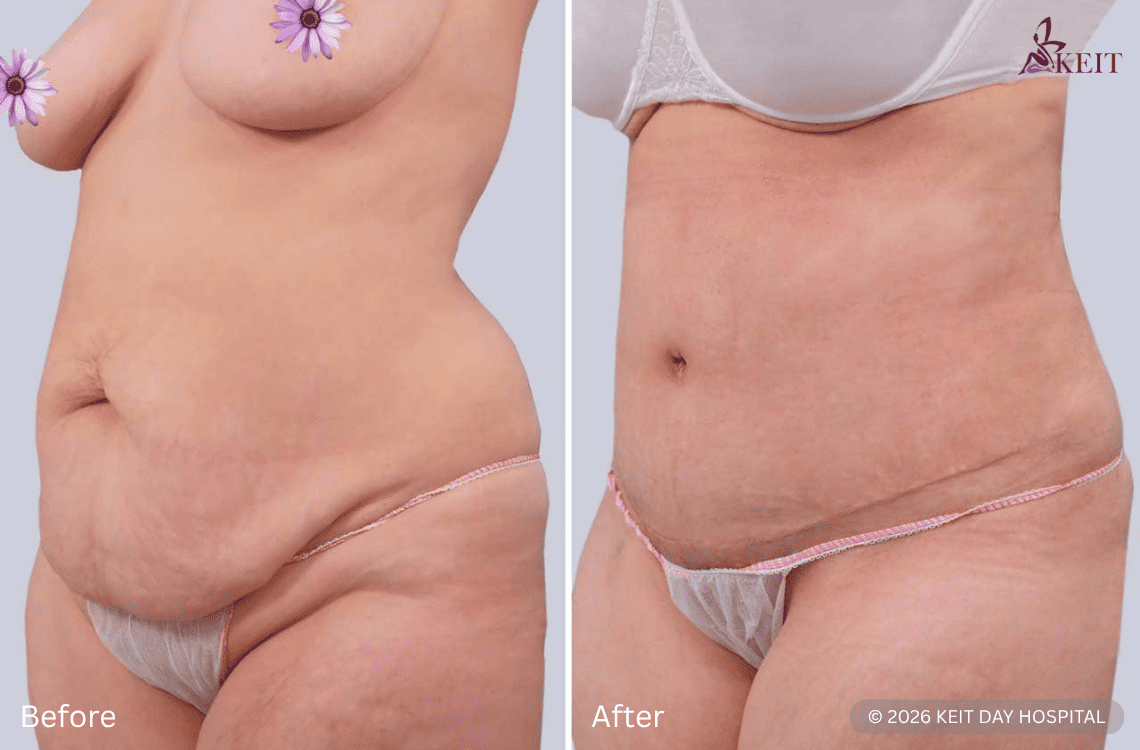
- Tummy tuck: Removes excess abdominal skin and may repair separated abdominal muscles when needed.
- Arm lift: Removes loose skin from the upper arms and improves arm contour.
- Thigh lift: Treats skin laxity of the inner or outer thighs to improve leg contour and reduce excess tissue.
- Breast lift: Repositions sagging breasts and removes excess breast skin after volume loss.
- Neck lift or facelift: Tightens loose skin on the neck, jawline, or lower face after facial weight loss.
Loose skin removal is often planned in stages after major weight loss, especially when several body areas need correction. Patients should reach and maintain a stable weight before surgery, as further weight changes can affect healing, safety and the long-term result.
Loose skin after weight loss: When should you see a specialist?
You should see a specialist when loose skin affects comfort, skin health, movement, hygiene, or body contour after weight loss. A consultation is recommended if you have:
- Persistent excess skin: Loose skin remains after your weight has stabilised.
- Skin irritation: Rashes, friction, infections, or moisture develop under skin folds.
- Functional discomfort: Loose skin interferes with exercise, clothing, hygiene, or daily movement.
- Abdominal weakness: Loose abdominal skin is associated with suspected muscle separation or poor core support.
- Multiple affected areas: Excess skin is present on the abdomen, arms, thighs, breasts, face, or neck.
- Treatment planning: You want to understand whether non-surgical tightening or skin removal surgery is appropriate.